
AI Companion
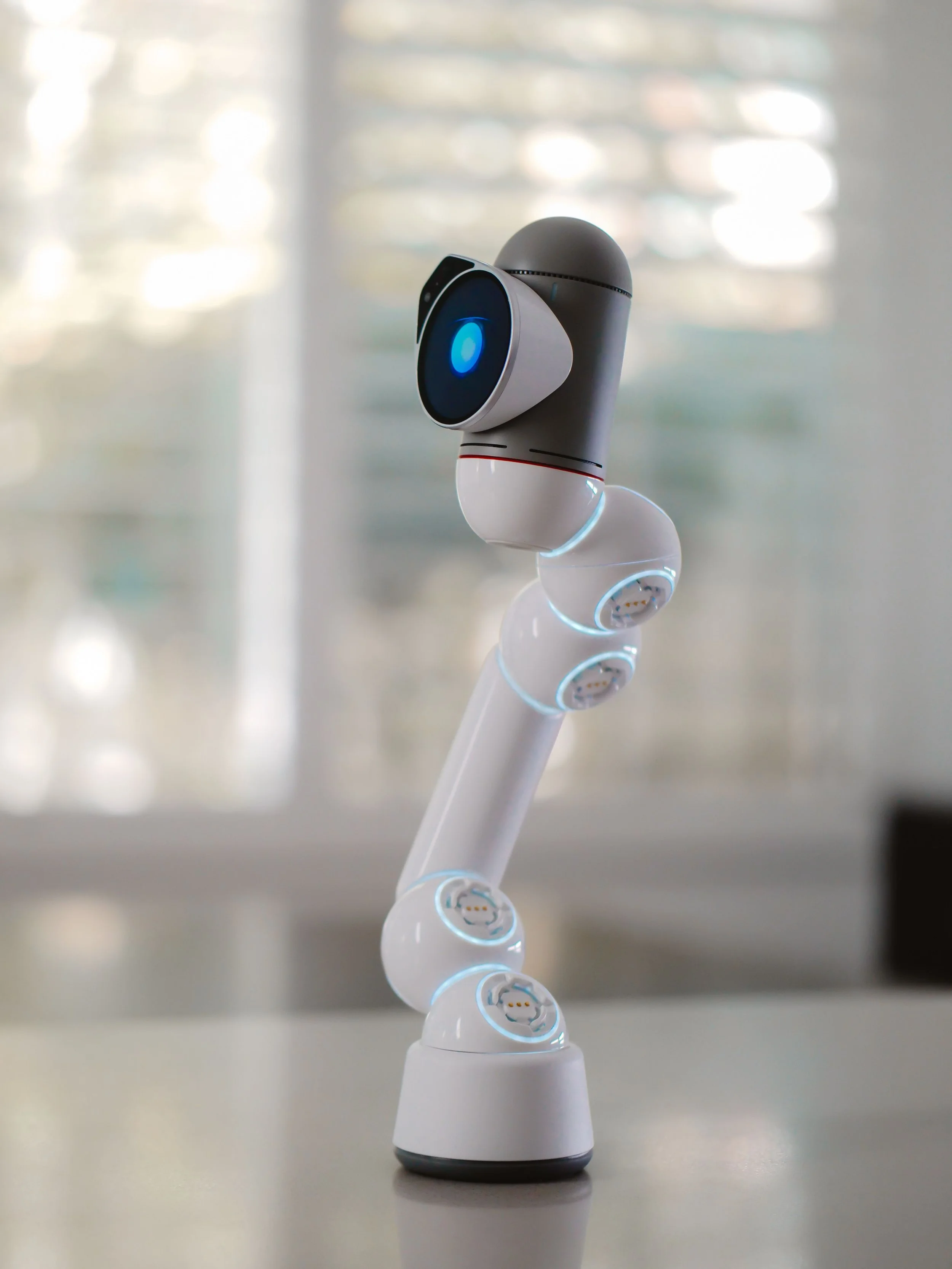
How do you feel about AI? Are you embracing the new technology? Are you running for the hills? Or are you cautiously waiting to see how things play out?
I have mixed feelings about it as I do for any new technology. Change for change sake? Sometimes I wonder if I were around when the combustible engine first became part of public use, would I have said, “get a horse”.
I most certainly appreciate modern technology. To travel around the world in hours rather than months. To speak to a loved one in another country or state at any time of day or night. To “throw” clothes into an automatic washer and have them clean without involving raw hands. To flip a switch and have electricity. I could go on and on about our wonderful modern technology that in essence, saves us time and possibly money.
The other week, I heard a news story on the Canadian Broadcast Company radio (CBC). The woman speaking had studied the effects of a companion AI bot partnered with an elderly person with dementia. Among the attributes of this set-up: The AI companion could hear over and over again, the same question and/or story without the human emotion of frustration. The AI companion could be programmed to engage the person in telling stories from the past- over and over again without any judgement or frustration. According to the report, the studied nursing home/assisted living place saw a 30% decrease in medications that would normally be given to this population to help reduce anxiety. According to the researcher it seemed to be a win-win.
I am not so sure.
While I certainly appreciate the sentiments of reducing the repetitive human interaction and thereby the human emotions of frustration, anger, despair of the caregivers, I cannot help wondering what that removal of emotion is doing to us as a family? To us as humanity?
In some sense, we have become a society where we separate our age groups. Infants, toddlers, pre-schoolers, etc are just as homogenized by age as are the elderly. Even the way we have children play- through organized age grouping sports, keeps each group separated. We have 55+ communities, community care facilities- taking the independent adult (usually 55 or 65+) all the way to total skilled nursing care. The homogenized senior group eats, plays and lives together. (All with a smile as they ride their bicycles, if the promo brochures at to be believed.)
Of course, there is benefit to that system. It is hard for a group of ten-year olds to play ball when a pre-schooler keeps getting in the way. But, there might be something important to our overall development to having children of different ages playing together. When children from a neighborhood have to organize themselves and to figure out what to do with little ones. Perhaps learning that one cannot do what one wants at the time one wants to do it, is a valuable skill in patience and understanding.
Such could be the case for the continual care communities. My experience is that the world becomes smaller for those who live there. The conversation and experiences mostly revolve around the individual’s health and not so much about others. Is it good or bad for the elderly to be around younger people? For the elderly and for the younger people?
There seems to be a community lose of perspective when we separate by ages.
In some way, if not for the interaction we have in our families, neighborhood or communities, where is the patience, empathy, or compassion lessons learned?
And so I wonder about companion AI. Having had three out of the four parents/in-laws with dementia/Alzheimers, I know of the frustration of the repeated questions and answers. I also know that I am incredibly fortunate to have had all of the parents in a continual care community (their choices). While I was running ragged with their medical demands, it was nothing compared to those friends and family who have had to become the 24/7 caregiver for their live-in family member.
But I wonder what might be lost in society when we do not have to learn to care for one another? What might happen to society if we decide to let another entity handle the “messiness” of life?
What about you? Have you ever given AI a thought? What do you think? Would you use an AI companion? Have you?
Interestingly, as our family was talking about AI, our son mentioned that Socrates was quite concerned about the new technology of “writing”. Socrates felt that once something would be written down, the skill of memorization through the oral tradition would be lost. To some extent, that is true. For thousands of years, humankind told and retold stories, that for the most part remained unchanged. Could we do that now? I know my memorization is rubbish. I would need to stretch that muscle a lot.
So, I still am processing the AI world. As with anything in the technology world, I feel like a lumbering dinosaur. I recognize that by my slowness I may be left behind. But, similar to leaving the Christmas lights up too long so that they are in place for the next Christmas, perhaps I am so far behind, I might just be ahead?