
Turkey Day

While this is not our deck, apparently the poop deck must be a common occurrence! Found a bunch of pictures of turkeys on a deck fence in the photo resources that I use.
While you might think Turkey Day aka Thanksgiving is on the fourth Thursday of November, in our household turkey day seems to be everyday.
In the last couple of years, the wild turkeys in our area of Cape Cod have increased like crazy. While it is fascinating to watch them waddle across the road with the “kids” in tow, recently they have become a nuisance to our home. *
Our little home is situated on Oak Street- aptly named due to the numerous oak trees throughout. We have quite a lot of them on our property. Apparently, turkeys LOVE acorns. They provide much needed nutrients for them. Unfortunately, all this eating has certain biological consequences.
The turkeys are very civilized. Not only do they like to eat and graze like normal foraging animals, but they seemingly also like to congregate, sit down and share a meal together as evident by the biological consequences on our deck! Not only did they mess the deck, but left evidence of their presence on every chair and table. With all the nautical themes on the Cape, we officially have a poop deck.
When we first discovered the detritus from their meal, we had arrived at our cottage for the weekend. Needless to say we were not planning on spending the entire time cleaning and disinfecting the deck. Once cleaned, we researched online for ways to discourage them and prevent from happening again, so we set up a very noisy distraction- a line tied with ribbons and clanging aluminum lids. It certainly would be a distraction for us humans as loud as it was.
Alas, on returning the following weekend to our cottage it appeared that the turkey preventer system did not work. In fact, it looked like it might have even attracted more of a crowd! As I grumbled and complained about the mess the birds had made, I looked up to see if there was anything else we could do. “Shoot them” our one son jokingly advised.
It appears that turkeys have a voracious appetite for ticks. So, while I am not a fan of their using our deck for their acorn orgies, I am grateful for their clearing the yard of ticks. I also like the way they aerate the lawn during their foraging sessions.
They have been a reminder to me that problems and life are not so binary- yes/no; on/off; black/white but rather a yes/and. Most times in life, one doesn’t experience absolute problems or absolute solutions. Rather, problems can be seen as yes, the birds have caused a major problem on our deck and furniture and they also remove the ticks from our yard. Many times situations in life are like that- there is some type of benefit even with a problem.
What about you? Have you ever had a situation that seemed to be the worst but discovering that it is not as bad as thought? What were the benefits, if any?
The apostle Paul reminds us to give thanks in everything. (1 Thessalonians 5:18) Sometimes we do not want to- there is too much poop on the deck to find the blessing. But there is something good out of our turkey visits- a decrease in ticks. I was reading a commentary on the 1 Thessalonians verse. Interestingly that the verse uses the little word, “in” as “in everything give thanks”. It doesn’t say “for” everything.
I am sure you would agree it would be very difficult to say, thank you for cancer. That would be too Pollyanna-ish. Rather we can give thanks that while we are in a difficult situation, God is with us in the middle and the muck. We can view the situation and find things for which to be grateful even if the solution of the situation seems unattainable. I do believe God works for good it is just that we might not see it- yet.
So, yes, we have a poop deck and we have a tick-free lawn.
Fun-facts: A group of turkeys are called rafter, crop, dole, gang, posse, raffle. Adolescents are called jakes, the tender young (under 4 weeks) are called poults, females called hens and males, toms.
Thanksgiving 2021
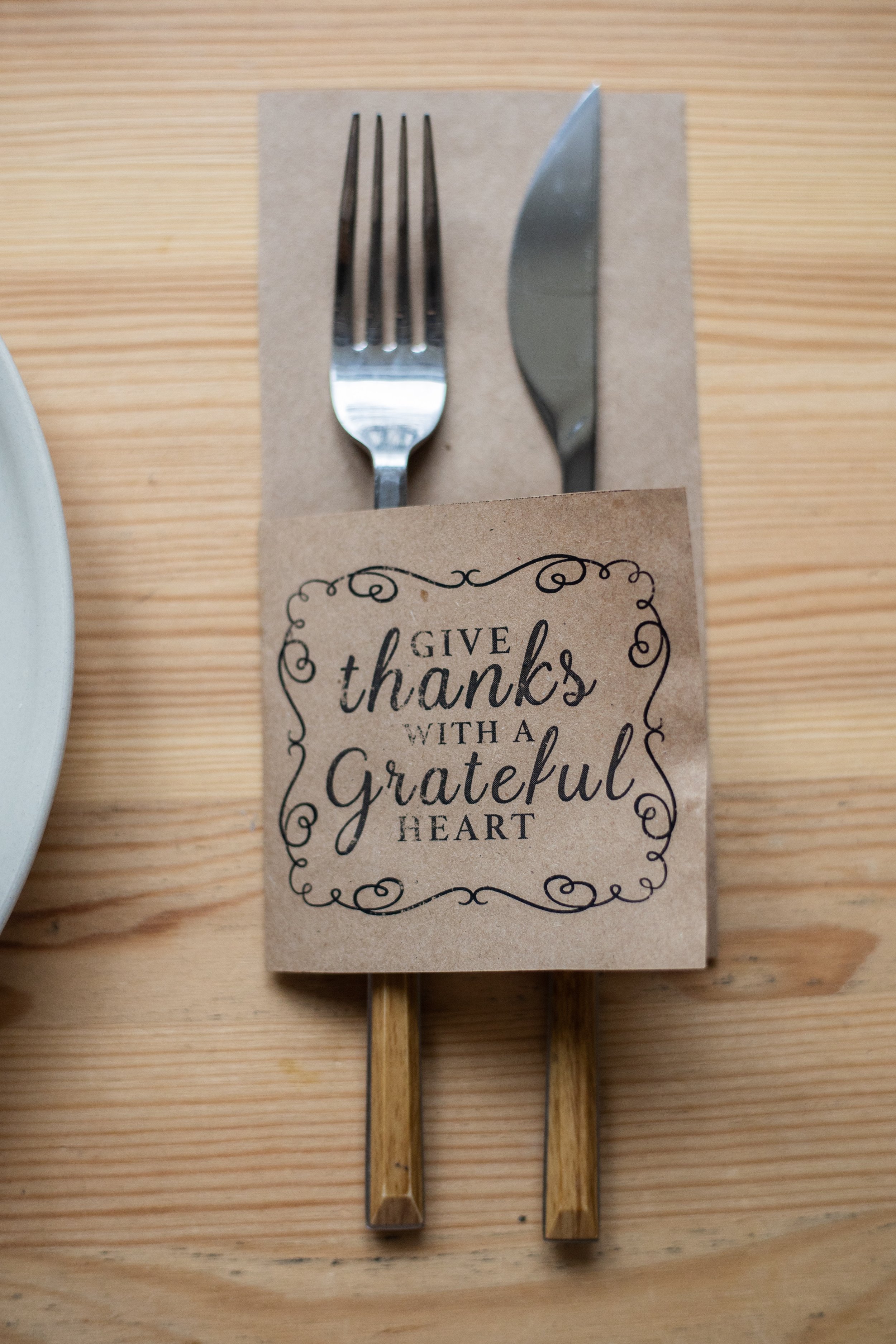
Tomorrow will be Thanksgiving. We hope to spend time with some of our family. We will have a small gathering with most of the traditional fixings, although my tradition is to mix it up a little and to try a new recipe for the sides. (Much to the chagrin of certain family members.)
Have you noticed that there are more decorative signs saying, “Be Grateful”. It seems that there is an influx of reminders to be grateful for everything. In every store there are tons of decorative items that remind you to be grateful. Googling gratitude home goods shows a plethora of items- napkins to wall hangings, offered from all sorts of vendors-Etsy to Neiman Marcus. All reminding us that gratitude is the best attitude. I hope that this is a by-product of Covid in the realization that life and all that we enjoy in life is precious. Hopefully gratitude will be an attitude that will prevail.
While I applaud the various manufacturers’ desire for all of us to be living grateful lives (I am sure that the CEOs of those companies are grateful for their third quarter earnings), there is a point of overkill and diluting the message.
By definition “grateful” means appreciation of benefits received; expressing gratitude. The definition of “gratitude” is the quality or feeling of being grateful and thankful. The etymology of the word comes from latin- gratus- meaning grace and the definition of “grace” means virtue coming from God. Unmerited divine favor.
While there are other definitions for grace, I think this first one of “virtue coming from God” is what makes gratitude such a powerful attitude. Because, left to our own devices, we humans are whiners, complainers, selfish, and just plain ingrates. Gratitude pulls us out of that behavior but only with help from above.
I find it interesting that almost every culture and religion has some ideology and theology about gratitude. I think because deep down, we know that gratitude aides humanity and we cannot do it alone. When an individual is grateful, she sees the world in a different way: she recognizes that none of the achievements or material things are truly hers alone, that what she has is enough and that she can and should share all things with others. When a society is grateful, there is a mutual benefit not only to the individuals but to the society as a whole. Gratitude evokes humility and hope.
In Egyptian culture they believed gratitude kept one in balance, while ingratitude would open the soul to negativity and sin. Once a year they were to offer five gifts to one of their goddesses Hathor. The priest would hold the person’s left hand and ask, “ Name the five things you would miss the most if you would die right now.” As the person quickly recited his list, the priest would remind him that his five fingers represented each of those five items and when he would look at his hand, he was to be reminded to be grateful.
Modern psychology talks about being grateful. There are all sorts of journals, apps and books regarding the practice of naming/writing/thinking about the three or five things for which one is grateful. And while I try to practice gratitude each day, some days I find are harder than others. It is a discipline and an intentional behavior.
Our dearest friend who is witnessing the active dying of her husband is remarkable. She, through God’s strength, is managing each day with grace and gratitude. Recently when I spoke with her, she recognized that she needed to do something to keep that balance Ancient and Modern societies strive to achieve. She is using a journal to write a simple list of things she has done in the day- for herself and for others. In some ways it is a slight variation on the gratitude list. I like it. For now it keeps her sane and keeps her life in perspective.
What about you? What are your thoughts about gratitude and grace? Have you ever stopped to think about the things you would most miss if you would die right now? Are they things? Or people? Have you ever told those individuals that? As you gather around the table this Thanksgiving, perhaps it is the year to tell the ones who mean the most to you, exactly that?
As you gather, perhaps you can have those around recite the five things each would miss if he/she would die right now? Or, have each person write or name: 1) one thing she did today for herself 2) one thing she did for someone else 3) one thing she is looking forward to 4) one thing for which she is grateful today.
Happy Thanksgiving.
Thanksgiving? Yeah Right..

The picture of the 2020 holiday celebrations. Not quite the Norman Rockwell of old.
Do you feel bah-humbuggish this holiday season? After all, for what in the world does one have to be thankful?
If you felt that way, I wouldn’t blame you. I know that I have felt that way. Often this year. Not just around the holidays.
2020 has been….? What? So many words have tried to explain it- weird, surreal, unbelievable, crazy. Dictionary.com has gone ahead and listed some words in describing 2020: unprecedented, apocalyptic, omnishambles, hellacious. I liked the word used by writer Grant Shimmin: Covpassion, meaning “compassion for those affected in some way by Covid-19, which, by extension, is all of us. I hope we have it in abundance.”
Covpassion- Do I have it? Am I compassionate to the “stretched-beyond-limits healthcare workers” when they do not communicate to us, the prevented-from-visiting family, about the status of our loved one? Am I compassionate when hearing about another COVID-related tragedy? Or just numb?
I read of an activity that seemed interesting: Describe 2020 in 5 words to someone comatose since 2016. Examples: Bought 2020 planner-wishful thinking. MacBeth Acts Four and Five. Good luck finding toilet paper.
Across history there are ideas and inventions that are birthed from the rubble of war, plague or difficulties. When life changes or one is thrown a curve, there becomes an imperative for explanation or reaction. An imperative for some type of necessity drawn from the tragedy. No wonder there is the old saying-“necessity is the mother of invention.” Dr. Thomas Latta performed the first intravenous therapy in response to the weakening dehydration that he saw with cholera patients during the 1830’s epidemic. Sir Isaac Newton spent the time of isolation during the bubonic plague continuing and refining his theories of mathematic and universal gravitation. Dr. James Naismith developed the game of basketball to challenge the needs of his rowdy pupils by providing a relatively safe activity that could be played in a small indoor space during the harsh New England winters.
Being the cockeyed-optimist*, I find that there are things for which to be thankful. While this has been a year of loss, grief, and sorrow for us as a family, it has also been a year of great joy in that we have had marriages, births, and fulfilled dreams. We have been blessed beyond measure. I have to remind myself not to let the troubles overpower the thanksgiving in our lives.
For the bah-humbugs in us all, here are a few suggested activities that might lift us from our weariness:
Write a lament. Take the time to recognize that this has been quite a year. For everyone. Globally. Nationally. And individually. You do not have to write anything cohesive or pretty. Just a listing would do. Some people can only write under the topics of a couple of the steps but the real work of the lament is thinking about each of the nine steps. The benefit of the lament is in writing your worst fears and complaints to God as well as the things for which you are thankful in this moment. Even if the word “nothing” is written. Laments provide a structure for acknowledging our feelings. Honestly and unscathed. For truly, God understands and hears every emotion we undergo. In time, laments can move us to see a bigger picture of life.
Here are the nine steps of lament: (taken from theglobalchurchproject.com)
Cry out to God (your address to God);
Complaint (your anger, pain, heartache, or sadness);
Affirmation of Trust (your remembrance of God’s presence in your past);
Petition/Request (your deepest desire);
Additional Argument (anything more, why God should intervene);
Rage against Your Enemies (bringing your enemies before God);
Assurance of Being Heard (what you need to feel heard);
Promise to Offer Praise to God (the promise you can offer to God); and
Assurance (the attribute of God you are thankful for in the moment).
Read the psalmists’ laments. The psalmists shared all their emotions. These were folks who wore their hearts on their sleeves. You can find the gamut- from self-doubt, self-loathing, despair, fear, to elation, joy, thanksgiving, praise and hope. Sometimes all within the framework of one psalm. Click here for a listing of different types of psalms.
Describe 2020 in 5 words. (@#$&!) are acceptable but not encouraged. The English language is too rich for merely “blue” words but at different times this year, I know I was tempted to let it rip.
Pick your favorite 1 word to describe 2020. Or make one up- a portmanteau, “ a word blending the sounds and combining the meanings of two others, for example motel (from ‘motor’ and ‘hotel’) or brunch (from ‘breakfast’ and ‘lunch’). (Thanks “You-Know-Who”- the fastest internet searcher I know.)
Write a note. If you find yourself alone or in a smaller gathering this holiday, take some time to write (yup- with pen and paper) a note of thanksgiving to a family member not present.
Go outside and take a walk. I am trying to lean into the expression- The weather isn’t inclement, you’re just improperly dressed. This year I am definitely going to get outside often, even if, and especially if it is inclement. Masked and dressed for whatever weather comes my way.
What about you this Thanksgiving? Are you celebrating? By yourself? With anyone? What will you do to celebrate the day?
While we are just celebrating with our pod we most likely will zoom to connect our families. (Just using those words “pod” and “zoom” is so surreal. I keep thinking that we are either in a StarTrek episode or Invasion of the Body Snatchers movie.) Our one son who lives alone has been with us for a couple of weeks. Our other son and his bride will be by themselves as will our daughter-in-law’s parents. So, we will all try to get together via the computer. No traditional way of gathering. No traditional foods. No traditional pattern to our day. But together.
For me, that is thanks giving.
A Cockeyed Optimist
Words by Oscar Hammerstein II & Richard Rogers
When the skies are brighter canary yellow
I forget ev'ry cloud I've ever seen,
So they called me a cockeyed optimist
Immature and incurably green.
I have heard people rant and rave and bellow
That we're done and we might as well be dead,
But I'm only a cockeyed optimist
And I can't get it into my head.
I hear the human race
Is fallin' on its face
And hasn't very far to go,
But ev'ry whippoorwill
Is sellin' me a bill,
And tellin' me it just ain't so.
I could say life is just a bowl of Jello
And appear more intelligent and smart,
But I'm stuck like a dope
With a thing called hope,
And I can't get it out of my heart!
Not this heart...
Happy Thanksgiving

Another year. Another Thanksgiving. Another gathering with family and friends to share a meal, to spend time together and to think about our lives. For many it is around the table that gratitude is expressed. Today is a great opportunity to reflect on where we have been and where we are going. Today is a good day to pause and think about how we view the blessings in our lives.
At a recent dinner one of our friends was sharing a story about a grandfather and his seven-year-old granddaughter. For some reason as the child’s grandfather was pouring the child some water he decided to test the “is the glass half-full or half-empty” theory on her. After the grandfather asked, the child pondered for moment and then said, “Depends on whether you are the one pouring the water or waiting to drink it.”
What a profound answer.
I know that I have to continually reframe my thinking to see life as “half-full”. Generally I am a half-full person but if I am tired, hungry or anxious I will start seeing life through a “half-empty, unfair, why am I the only one…” whining lens. Totally ridiculous and totally untrue. It is at those times that I need to step back, recharge and regroup in order to see the entire picture- all the blessings that I have undeservedly received.
When it comes to the water in the glass, the volume of liquid is the same whether it is half-full or half-empty. To use the commonly over-used expression, “it is what it is.” I cannot change the amount. What I have before me is just that- nothing more, nothing less.
What I like about the granddaughter’s response is a new take on the age old question. In the past, the question has been asked with the intention of what the viewer, as a third-person narrative, thinks. The question does not really ask if the glass is yours or not. It is a passive question. This new spin on the question has us ask with a first-person narrative- if we are the ones who are involved, how do we view the glass? What is our active participation with the glass? What is our attitude if we are providing the water? What is our attitude if we know that water is coming?
I know that when I am in a position to “pour out” blessings to others, I am more likely to be in a positive and helpful mood. I want to be able to provide blessing, assistance, or aide to others. “Pouring out” blessing almost always has me seeing the provision as half-full. And not only that specific provision, but other things as well. When I am feeling that I can bless others, I start to see the many blessings others have been poured out for me. It is in the act of my blessing that I begin to see blessing all around me.
When I am active as one waiting for the glass to be poured, I have an expectation that needs will be met. I am waiting for whatever comes into the glass. I don’t think of being short-changed (by half-empty or half-full) but grateful for what is in the glass. My thirst will be quenched. I can be grateful for the blessings because they are for me. They are not in comparison of what others have received.
On this day of Thanksgiving, what, “it is what it is” in your life? What are the things that are in your glass? Life? Health? Shelter? Money? Family? Friends? God? Material possessions? Job? Career? Respect in your community? Influence? Honor? Integrity? Love? Relationships?
On this day of Thanksgiving, what are the blessings in your life- whether they are ones you have “poured” out to others or that you are waiting to receive?
Thanksgiving
Today is Thanksgiving. Boy, am I grateful that Abraham Lincoln declared it a national holiday. For if he didn't, I wonder if I would ever be thankful? I would forget about doing it annually much less practicing it on a daily basis.
This week I heard that the community of Sutherland Springs, Texas was having a Thanksgiving dinner- "Feast of Sharing". The free meal was originally an event to get to know one's neighbors but this year it has become an opportunity for healing. What a witness to being thankful even in the midst of incredible grief.
Being thankful doesn't necessarily mean everything is sweetness and light. It doesn't look like a Hollywood movie. One can be thankful in the midst of deep hurt, grief, pain and adversity. There can still be hope in the middle of a pit.
The other day I heard someone talk about the difference between condemnation and conviction.
Condemnation is evil and creates absolutes in our thinking. Things are seen in terms of the superlatives always or never. We think of ourselves as always worthless or that our situation will never get better. We get stuck in that place where there is no point in trying. Condemnation pulls us down and keeps us down with no hope of getting up.
Not only is condemnation hurtful to ourselves but it is hurtful to others. There is a dismissal towards those who feel condemned or we feel should be condemned. "You are not worthwhile." Life becomes isolating for both the condemned and the accuser. There is no community. There is no opportunity for things to get better.
Confrontation is loving. It says even if what has happened through our choices or through our situations may not be good, it is not the final word. Confrontation says that this might be bad but it can get better. What has happened doesn't need to define us. There is hope for a future. There is hope for change. There is hope that this doesn't have to be.
Confrontation is loving to others. It says, you are worthwhile. You are worth the investment to help with the change. Even though there might be correction and help it is done with care in mind. "I care for you so I will lovingly help in making things better."
I am grateful for this Thanksgiving. I am grateful that even if I feel troubled in a situation, I have hope that things can get better. Click here to read my nephew's inspirational Thanksgiving message.
What about you? Where do you find yourself this Thanksgiving? Do you feel condemned or confronted in a situation or problem? How can you think about it in a way that gives you hope?
How To Give Thanks
Do you feel thankful this holiday? I am feeling conflicted this season. In the big scheme of things I am quite thankful- for my faith, my family, my health and all the material blessings I have. Yet in the microcosm of my life, I am not too grateful. I find myself grumbling, complaining and disappointed that my life is in the pattern it is.
I realize that I need an attitude adjustment. I need to learn contentment and gratitude. I need to learn how to give thanks.
I was doing my daily Bible reading and came across these verses from the book of Hebrews 13:5, "Keep your lives free from the love of money and be content with what you have, because God has said, "Never will I leave you; never will I forsake you."
It dawned on me. Perhaps I am not overly pursuing a life that reflects a love of money (or at least not intentionally) but I am most certainly trying to manipulate my future to go my way and when it doesn't, I find that I get annoyed and cranky. Part of the sin of loving money is that in its pursuit we forget that we are not in control. I wasn't leaning on God and trusting Him with my thoughts, dreams and plans. I was allowing my focus to be on the smallness of my life and all the "slights" against me causing me to try and handle it all myself like the Little Red Hen. I was idolizing me.
I came across an article in the November issue of "Real Simple". It was suggesting how to be grateful (when you really don't feel like it). I liked the ideas because cultivating gratitude lifts our thoughts from ourselves and can help shift our attitude to being thankful and grateful for our circumstances. It is then we can recognize contentment in whatever that situation might be. Below are some of those suggestions as well as my own:
- Gratitude can be simple and subtle. In Hebrew the term for gratitude is hakarat hatov, which means "recognizing the good". A reframing of our attitude might be to "reorient ourselves around things that we should already be grateful for". So, it might not be so hard to "find" gratitude rather look for the small things which already occur- e.g. a garaged car that keeps the windshield free from frost and the daily morning scraping that non garaged car neighbors have to endure.
- List your blessings. Focus on the big four- food, family, health and shelter. If you have to break them down to the smallest item, e.g. breathing without oxygen assistance, then do so.
- Cultivate a grateful eye. I was raking the leaves in our yard the other day. There is a neighbor's tree that drops the smallest sliver of leaves possible onto our front yard. The tines of the rake cannot pick them up. The only way to collect them is to use a gasoline powered mower. In the back of our house there is a HUGE sycamore tree on the adjacent county property. Not only is the tree big and drops limbs but the leaves are the size of dinner plates. As I was picking up the sycamore leaves I thought, "I am so grateful that the small tree is in front and the larger one is back here" as I had to pick up by hand the large sycamore leaves as they had fallen over the pebble walkway around our potting shed and pond. If I used a rake or any other type of machinery I would also denude the path of pebbles.
- Look at the way you say thank-you. Is it automatic or can you look at the way someone is helping you with a cost-benefit eye? Notice not just the money spent but the time and effort and energy it took. "Thinking about everyday kindnesses like that will make you way more grateful."
- Share your thanksgiving/gratitude stories with others. Here are some conversation starters for the Thanksgiving table:
- What's the nicest thing that anyone has done for you this year?
- What the nicest thing that you've seen someone else-friend, coach, family member, teacher- do for another person?
- If you had one super power that you could use to make a difference int he world, what would it be? What would you do with it?
- What are you most grateful for that doesn't cost money?
What about you? How's your attitude this Thanksgiving holiday? Do you need an attitude adjustment? What can you do? Have you ever counted your blessings? Actually written them down as assets? Have you ever shared your feelings of gratitude with others?
Why Give Thanks?

"The First Thanksgiving" (1915), by Jean Louis Gerome Ferris (American painter, 1863-1930).
Do you ever wonder why we have Thanksgiving? Sure, we have all learned about the Pilgrims and their first feast in Plymouth. We have read about George Washington's issuing a proclamation that November 26, 1789 would be a day of national thanksgiving for the role of providence in creating the United States. We know that Abraham Lincoln's declaration of an annual federal celebration the fourth Thursday in November is what prompts our yearly migration to home and hearth.
No, I am talking about why as humans we feel the need to have any type of thanksgiving celebration at all. Almost all cultures going back many millennium have the need to have some type of yearly festival. Whether it was to appease the gods or to share in extra harvest abundance, why did we feel the need to give thanks?
I think it is because on some basic biological level we as humans know that there is something larger than ourselves at work in the world. Deep down we know that there is more than just our small existence and that we intrinsically look to something else for the bounty and situations in which we find ourselves.
I think in trying to understand why we give thinks, we should look at whom we thank- the earth, the stars, the moon, a human-made deity, a specific religious person?
I am in the C.S. Lewis camp that although differing religions have many similar values- truth, goodness, kindness, etc., Christianity is the only religion that can point to its founder as alive and living among us. Not to go into apologetics but there is historic evidence that the prophet Jesus was seen walking, eating, talking after his crucification. He is the true living God.
I think that it is that pull to God and Jesus that subconsciously draws us to gather and give thanks. Whether we consciously recognize it or not, we cannot rely on ourselves for all that we have received, nor can we be the ones in charge of our lives. Similar to Blaise Pascal's quote which in the vernacular has been quoted as "there is a God-shaped vacuum inside all of us." Below are the actual words from his book, Pensees, published in 1670:
“What else does this craving, and this helplessness, proclaim but that there was once in man a true happiness, of which all that now remains is the empty print and trace? This he tries in vain to fill with everything around him, seeking in things that are not there the help he cannot find in those that are, though none can help, since this infinite abyss can be filled only with an infinite and immutable object; in other words by God himself” - Blaise Pascal, Pensées VII(425)
Sure we have the pull of the obligatory family Thanksgiving gathering, but it goes beyond that: the practice of thanksgiving is good for our souls.
- We recognize that the blessings we have are not all from our own doing.
- We recognize that others also receive blessings not from their own doing.
- We can recognize that our experiences are not so bad when hearing about others' situations.
- We recognize that difficult and bad situations may have some positive aspects and that time can smooth out rough patches.
- We are humbled by that knowledge and perspective of our lives.
- We can then be open, compassionate and vulnerable to others and grateful for what we do and do not have.
- We recognize that there are some things that bear no explanation- it is only through the grace of God we are in the place where we are.
- We can then experience the authentic and abundant life of a grateful and thankful heart.
What about you? Why do you give thanks? Have you ever done a yearly inventory of your life? What is important to you? What do you believe? What are the positive and negative things in your life? Are there situations or experiences in your life that have no explanation? Is it an abyss that can only be filled with God? How about the people you know and love? Why do they give thanks? For what are you and they grateful? Does that ever connect you?
Why give thanks? It is an opportunity to be connected to others, to ourselves and to God.