
Pretty Actions
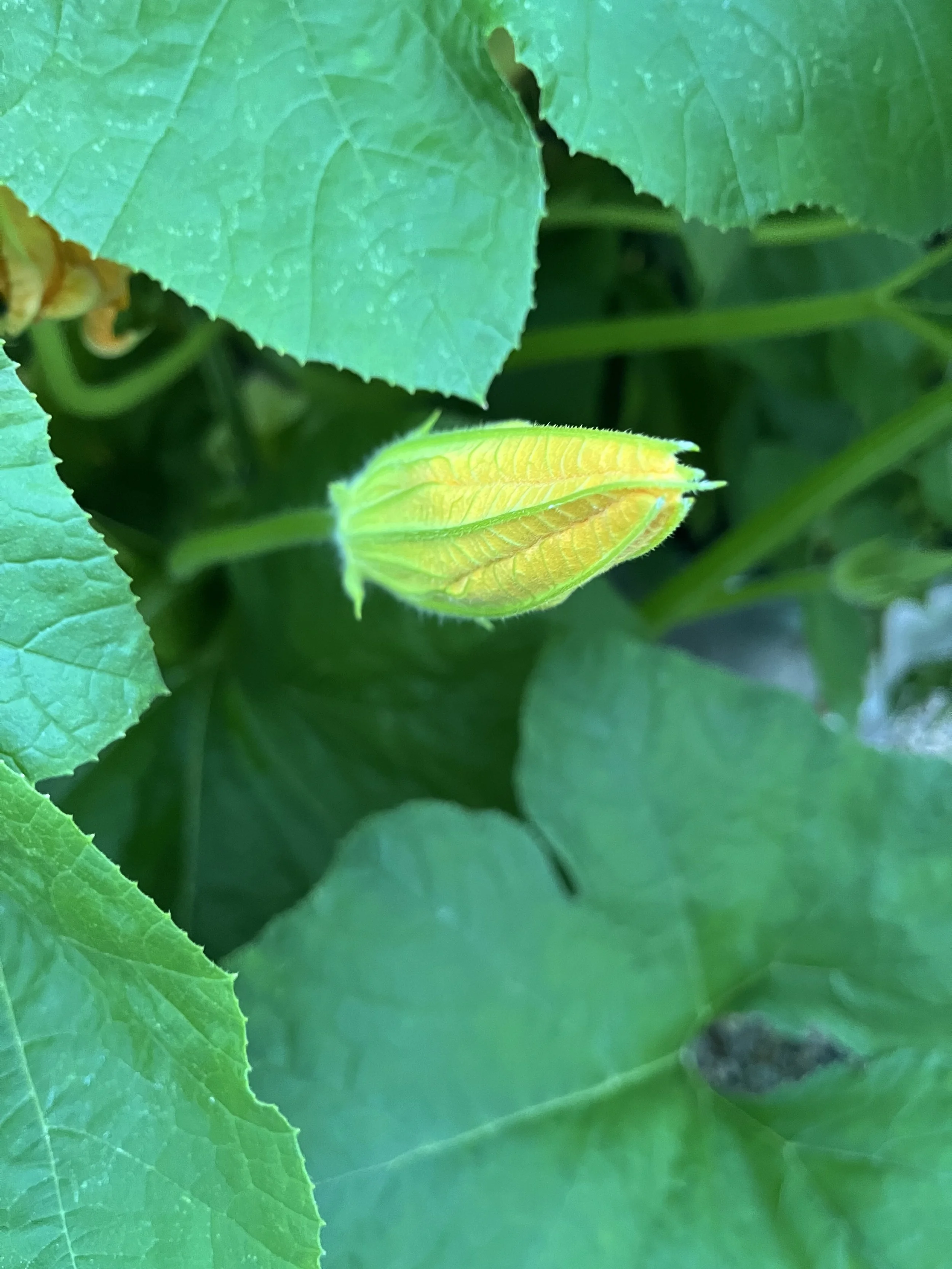
We have a volunteer squash plant in our garden. Not sure how it got there since I did not plant it. Regardless, for most of the summer it’s been growing and developing beautifully- healthy green leaves, solid stems and large yellow blossoms. Yet, for the longest time, in inspecting the blossoms, there were only male blossoms. No females. All show but no results.
But, then I thought, perhaps I could use the blossoms- either fry them or put them in a salad.
One evening I decided to collect some blossoms. By evening the blossoms close up but I wasn’t concerned, since I was going to slice it rather than stuff, bread and fry. As I opened the first one to begin slicing, I met, not one, but two unhappy bees. Guess they were bedding down for the night- a little yellow blossom “hotel”. I quickly put the bees outside. When I started the same process on the next blossom- once again I met two bees inside. Guess I uncovered a bees’ convention.
My idea for at least using up parts of the sterile squash was foiled. I now had a decision- do I just pull the plant as it is beginning to block my tomatoes? Or leave it, since the bees are enjoying the blossoms? It really looks healthy. Being the indecisive gardener that I am (I HATE to pull any plant) I left it alone.
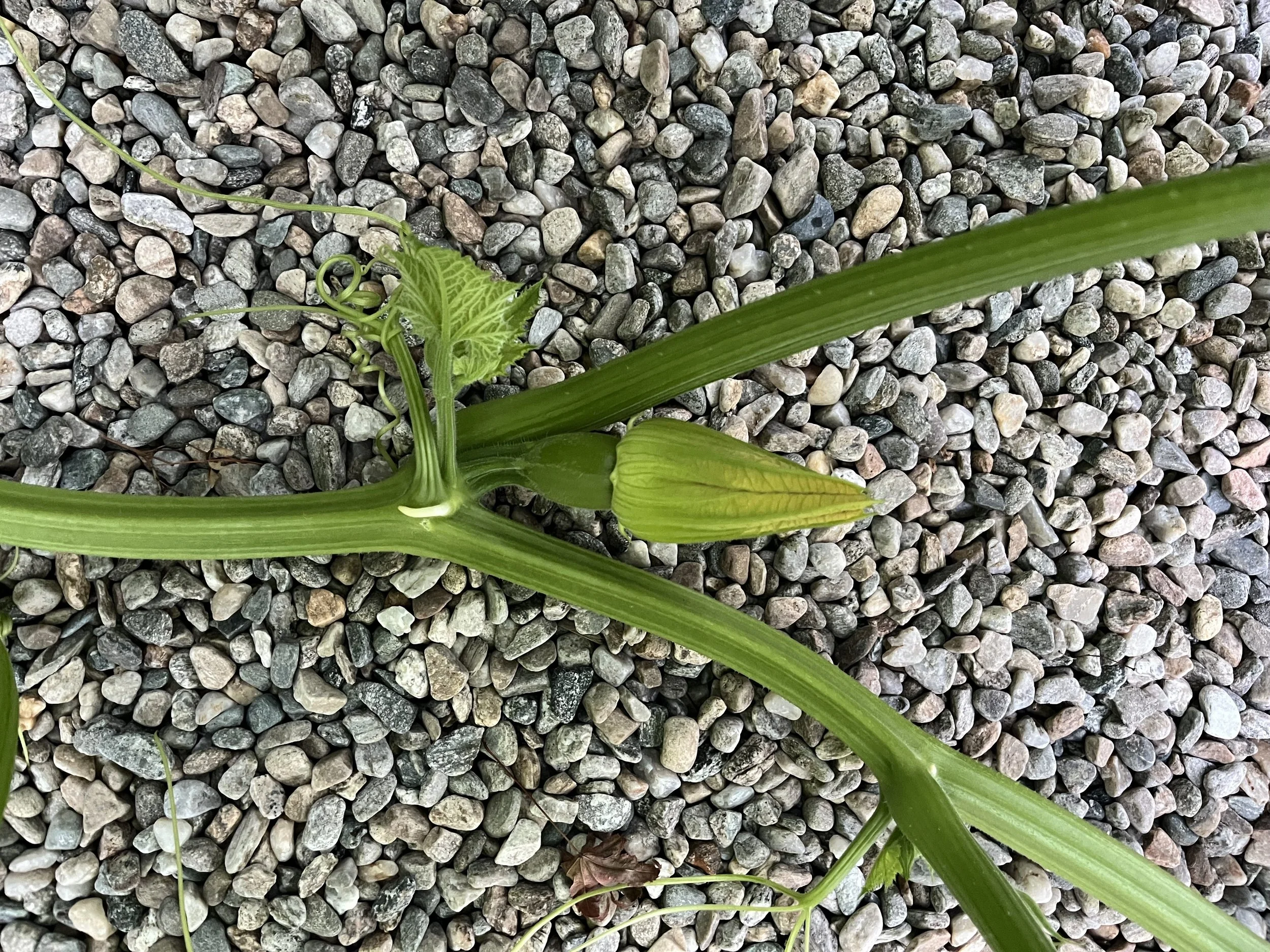
Well, low and behold- the girls have arrived! Last evening I noticed that bulbous end of one the blossoms that indicates a female. Hopefully we will finally see what type of squash this is.
But before this new arrival, every time I looked at the healthy yet unproductive plant, I was thinking of the old adage, “pretty is as pretty does.” The plant might have been beautiful, but without the fruit, it’s “actions” weren’t good.
I thought of those people who are touted as wonderful based on either their looks or some type of external feature like wealth. People who are judged and treated differently just because of their outward appearance. But if their behavior, character or actions are not sterling, it doesn’t matter what their exterior looks like.
In this social media culture of doctored pictures- either through filters, lenses, deep fakes or AI- it is harder and harder to know what is the truth? What is real/unreal? What is just a facade and “unproductive”? What is just a masquerade?
The issue of knowing what is true and what is real is nothing new. And it is nothing new for something to be just a facade. Jesus talked about how one can tell another’s character by their “fruit”. In other words, by their actions. A person can talk a great game but if they do not have the actions to back it up, they are just like the beautiful but unproductive squash.
In exploring our new home state, we have gone to Newport a couple of times and have toured the mansions of the “Gilded Age”. But gilded is not golden. Gilded is “having a pleasing or showy appearance that conceals something of little worth.” Sadly, gilding can fool people into believing what lies underneath is solid, true, even golden when it really isn’t.
Ironically I found online the following resources on how to find reliable sources. Sources which are true and real. (Source: https://screensanity.org/blog/social-media-fact-checking/ Good website for parents navigating the online world )
Practice “click restraint.” Wait 15-30 seconds before you click, looking for the most reliable sources.
Pause before you repost. Though it can be easy to quickly repost something that sparks your emotion, it’s best to pause and fact-check before you do.
Verify the source. Look for a blue badge next to the profile image. This means the account is widely known, and not a fake account. (For a fun quiz to test your ability to spot fake news accounts — known as “Trolls” — check out spotthetroll.org)
Evaluate the source’s feed. Click on the profile linked to the source of information. Who is behind the account and what do they have to profit? Look at the follows and read the conversation in the comments. Is this sponsored content? What are they selling? Is this account someone you trust? Why?
Ask a trusted adult. Let your child know they can come to you for advice when they are in doubt about whether or not news is credible. Even if you don’t know the answer, this can be an opportunity to model fact-checking and mentor your child in the online world.
Additional Sources:
https://utopia.ut.edu/FakeNews/factcheck - University of Tampa
https://help.unhcr.org/czech/safe-online/information/- good definitions for misinformation and disinformation.
Even with the techniques and tools to try and discover what we are reading, seeing or hearing is solid and true, we still can be fooled. At those times, it just comes down to waiting: eventually the truth will prevail and show up- much like my late blooming ladies.