
Ping Pong Diplomacy and other simple acts
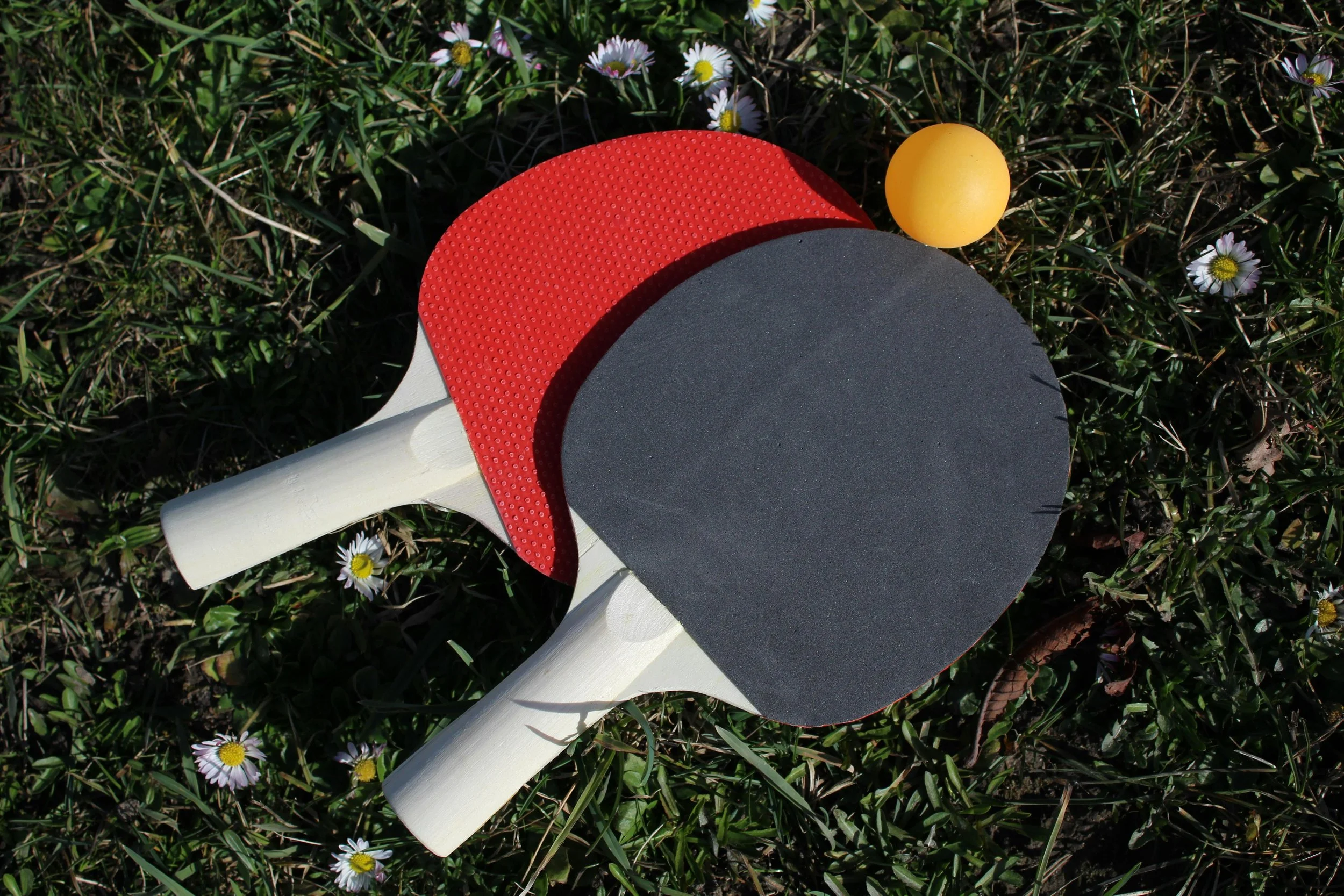
I heard an interesting story on the BBC radio talking about how the game of ping pong was instrumental in changing the course of diplomacy. The year was 1971 and the US had little interaction with China since the 1949 revolution. There had been no diplomatic ties, little trade and few contacts between the US and China. Yet, due to a single act of kindness, the US Ping Pong team was the first delegation in decades to visit the country.
According to the BBC story, one of the nine American players missed his bus to the World Championship being held in Japan that year. A Chinese player invited the American to join them on their bus which was also traveling to the tournament. From that little interaction a friendship was formed. In less than a week afterwards, the Chinese government invited the US team to China and to play in exhibition matches. In turn, those exhibitions paved the way for US and Chinese diplomatic interactions.
In listening to the story, I was reminded that it is the little things in life that make the big difference. I also am reminded that it doesn’t take much, or not as much as one would think, to make a change in the world.
Dr. Erica Chenoweth is a public policy professor at Harvard. She has co-written a book: Why Civil Resistance Works: The Strategic Logic of Nonviolence Conflict. In it, she and her team of researchers looked at all world conflicts- violent and non-violent campaigns from 1900- 2006. They were surprised that the most effective for lasting change were those non-violent campaigns. And what was more surprising it didn’t take that many people- 3.5% of the population to affect change. There just has to be certain criteria and preparation in place.
Dr. Chenoweth’s findings suggest that the individual can make a difference. She was researching conflicts and political campaigns. I think her research can also be applied to various societal norms: it doesn’t take that many people to affect change. I think of Nancy Brinker, sister to Susan G. Komen. Nancy made a promise to her sister to do something to help the women in the hospital who had breast cancer. Suzy Komen wanted the waiting rooms to look better. Nancy Brinker did more than that. After Suzy died, she established the Susan G. Komen Foundation in 1982. Two years’ later was the first Race for the Cure with 800 participants. By 2014 there were over 150 race events worldwide and the foundation has raised billions of dollars for research.
Nancy Brinker is a mover and shaker. But we all have the opportunity to make an impact with our actions. I think it is a matter of concentric circles- little actions, kindnesses, steps that each of us take daily which can/may lead to more people being kind and thoughtful which in turn can lead to a change in society. Individually, it is a good practice to intentionally do kind, small actions. Obviously, it is good for the recipient but more importantly it is good for the one doing the kindness. There is a feeling of goodwill (as well as all the “feel good” endorphins, dopamine, serotonin) for oneself and others. It provides purpose (as in Nancy Brinker’s case) and brings people together in a sense of belonging and community.
In the past it would’ve been called positive peer pressure (not sure if it is still called that): the group norm affects the individual behavior and visa versa. One’s friends or peers encourages one to engage in positive and beneficial behaviors.
Recently, my sister returned from a trip to Norway. She said that Norwegians are very much engaged in practicing sustainability. They have an unofficial campaign: “five items per year” which encourages individuals to purchase only five new (to them) items a year. For the one thing newly purchased, another item has to go. (Presumably for someone else to find “new”.) She said that a friend might comment on a new jacket- “Is that new?” one might ask. “What did you get rid of?” Positive peer pressure encourages the individual to think sustainably and intentionally before purchasing something.
What about you? Do you practice any small actions? What are they? Have you seen any impact from them?
A couple of months ago, I had an idea of putting two plastic storage boxes on my front lawn with a sign on them saying that I was collecting for our local food bank. The idea came to me as I was walking our dog and remembering that at our previous home, various neighborhoods would have food drives. Someone on the street would have a collection sign and box. So, I placed my box on our lawn, sent out an email to my friends in my neighborhood bookclub, invited them to purchase an extra can or box whenever they went to the store, asked them to fill the box and to share the idea of gathering food with their networks. In the past couple of months, we have collected over 150 pounds of food for the local food bank.
The other day, I was alerted by a neighbor that my boxes were missing. Not sure if a newly hired, ambitious trash collector picked it up or if someone took it. Regardless, my boxes were gone. I sent a note out to the local “Nextdoor Neighbor” site asking if anyone inadvertently took the boxes, to keep the food if they need it but please return the boxes. Meanwhile I put out another box.
I received a message from a woman who wanted to help with the cost of the new boxes. Instead I encouraged her to start her own collection box in her neighborhood.
Little things and positive peer “pressure”. I remembered how one person made a difference in my old neighborhood. Hopefully I am making a difference in my current one. And now there might be impact in another neighborhood.
While my food box may not change global relations like the US Ping Pong team or lead to global medical research, the thought behind those acts of kindness are the same. It only takes a simple act- sponsoring a charity race, giving a ride to one who needs it or putting out a box for food - to be part of change.
"...Nor Any Drop to Drink."

Thus is the sentence ending of the line “Water, water everywhere…” from The Rime of the Ancient Mariner by Samuel Taylor Coleridge.
For a week, such was our lives. We had to have our water turned off due to a leak in our main pipes which required a water main line change. Of course, the leak would occur right before the Memorial Day weekend and the water company had a typical bureaucratic response. While it was most inconvenient, our neighbors were extremely kind to let us use their outdoor spigots to water our newly installed flower garden and fill containers so we could flush toilets.
It was interesting my thought process during this “home drought.” I was saying to one of the neighbors, “Well. This is a first world problem.” Then I stopped and thought. “No. Actually this is a third world problem that many people live with all the time.” I thought of those who never had running water, those who have lost water due to drought and war torn places, and those refugees who are struggling to find food and water. The rationing water made me think of the time I spent visiting my sister in Africa. She had limited electricity (rationed throughout the day) as well as limited running water. I remember filtering our kitchen water and learning to take cold showers.
I was also reading The Nightingale, by Kristin Hannah (highly recommend). Set in Occupied France during WWII, The Nightingale tells the story of two sisters as they navigate the war. The account of the deprivation/starvation/rationing of the people was fascinating, made all the more real since we were rationing our water.
In some ways it is amazing how quickly I forget basic survival skills. It just takes some planning and thinking. I can survive without water flowing from the tap. I just have to fill buckets and think of what water I will need through out the day. Of course, the beauty of consistently running water is that you do not have to think about it. And that can make us too compliant and wasteful.
For instance, how long does it take for running hot water to get hot? According to This Old House, if you ran your shower for 10 seconds you could collect between 1 1/3 and 1 2/3 gallons of water or 8-10 gallons per minute. All that water down the drain while you wait. (Of course, being on the public water system, the waste water is recycled to some extent.) But having had to lug gallon jugs of water from our neighbor to do the washing up in the kitchen, the number of gallons per minute, even for a quick shower seems obscene.
(In the past I have used pitchers or old milk bottles to collect the water as it warm and then use that water to water my plants. Reading about the number of gallons per minute, I am rethinking my plan and how best to collect and “save” all that water.)
As the pipe was being replaced I spoke with the water inspector. One of the things that I did not know was that our water flows due to gravitational force. To me that is unbelievable. How can we (or any of the other 60,000 town residents) get any water pressure at all. But we do.
While earlier civilizations in Egypt and India had aqueducts, it was the Romans who perfected the system: using gravitational force- through building pipes, tunnels, canals, bridges and the natural structure of the land. And that type of system (with some moderations, no lead pipes) is still being used today. What an engineering marvel.
I think of all the other type of “modern” conveniences that I take for granted: electricity, transportation, communication, refrigeration, heating, cooling- many inventions that came during the industrial and post industrial age. I very rarely give any of those services/utilities a thought. And perhaps it is a good thing that I do not spend too much time worrying about the day-to-day existence.
Yet this water situation has me thinking about other resources that I use/abuse. Do I turn off the lights when I leave a room? Have things delivered when I could wait and pick up a grouping of items during an one-errand trip? While we generally have at least one meatless meal a week, I am committed to regularly plan for meatless meals. I also intend on using my bicycle for local errands (fortunately there are two grocery stores nearby). I also want to find out more information about helping global communities obtaining drinkable water. Here is a start: Click here.
What about you? Have any water or electricity issues? What happened? Did you appreciate the service when it came back on? For how long?
I know that there are the skeptics who say that doing a little change in our behavior is a “drop in the bucket”. Yet, I firmly believe that if everyone did a little thing, it would add up to big change, because little things matter. You can find plenty of examples in the natural world: microscopic organisms (phytoplankton and the like) feeding the entire ocean food chain; millions of insects supporting the animal food chain as well as our agricultural system; 10^27 (billions of billions of billions) atoms making up one human body. If any of these organisms are depleted, lacking or harmed, the larger system suffers.
The older I get, the more I'm conscious of ways very small things can make a change in the world. Tiny little things, but the world is made up of tiny matters, isn't it? ~ Sandra Cisneros
Great things are done by a series of small things brought together. ~ Vincent Van Gogh
It's The Little Things...
A while back I attended a lecture by the CEO and Dean of Medicine at one of our nation's top hospital/medical school. He was talking about the future of medicine. It was fascinating to hear not only what will be coming down the path in the next twenty years but also to hear the history of medical breakthrough. According to him, the average lifespan for the first 199,000 years of human existence (give or take a couple thousand of years) was about forty-five years of age. In the last 100 years we have seen life expectancy almost double- at least in the "developed" countries. Many things play into that, good public health policies, cleanliness and vaccinations as well as the role of modern technology.
He reiterated how key it is to have basic research. To be researching small, seemingly insignificant findings that develop and lead into larger medical applications. For instance, he spoke of the research in looking at the phosphorescence of jelly fish. It is one of those phenomenas that just happen, that was overlooked as something small and that no one thought about it. One might think that is a waste of National Institutes of Health money exploring these creatures but in essence that green glow from the jelly fish has enabled scientists to track brain functioning which in turn can benefit those people with Alzheimer's, Parkinson's and other neurological diseases.
Made me think of the little things in life and how important they truly are: Fresh ingredients are key to a healthy meal. Please and thank-you's are the back-bone of manners and civility. Daily sleep and rest are essential to proper mental functioning. Weeding is mandatory for a tame and plant identifiable garden. Learning a little information over a sustained period of time is better retained than through an intense cramming session. Watching the ball upon contact with the racquet is essential in getting the ball over the net.
What about you? Have you noticed the little things in your life? Are they necessary? Or do you find them insignificant? What small steps can you develop in your life that might benefit you in the long run? Getting out of your chair for 5 minutes every 90 minutes of sitting? Reducing your dessert intake by one a week? Smiling and saying hello to your neighbor? Reading a verse in the Bible every day? Holding the door for a stranger? Playing a game with a child?
There is an old nursery rhyme attributed to Benjamin Franklin who included it in his Poor Richard's Almanac. The earliest known written version of the rhyme is in John Gower's "Confesio Amantis" dated approximately 1390. It speaks to the consequence of not paying attention to the little things. In essence, life is all about the little things.
For want of a nail the shoe was lost.
For want of a shoe the horse was lost.
For want of a horse the rider was lost.
For want of a rider the battle was lost.
For want of a battle the kingdom was lost.
And all for the want of a horseshoe nail.