
Back in the Day
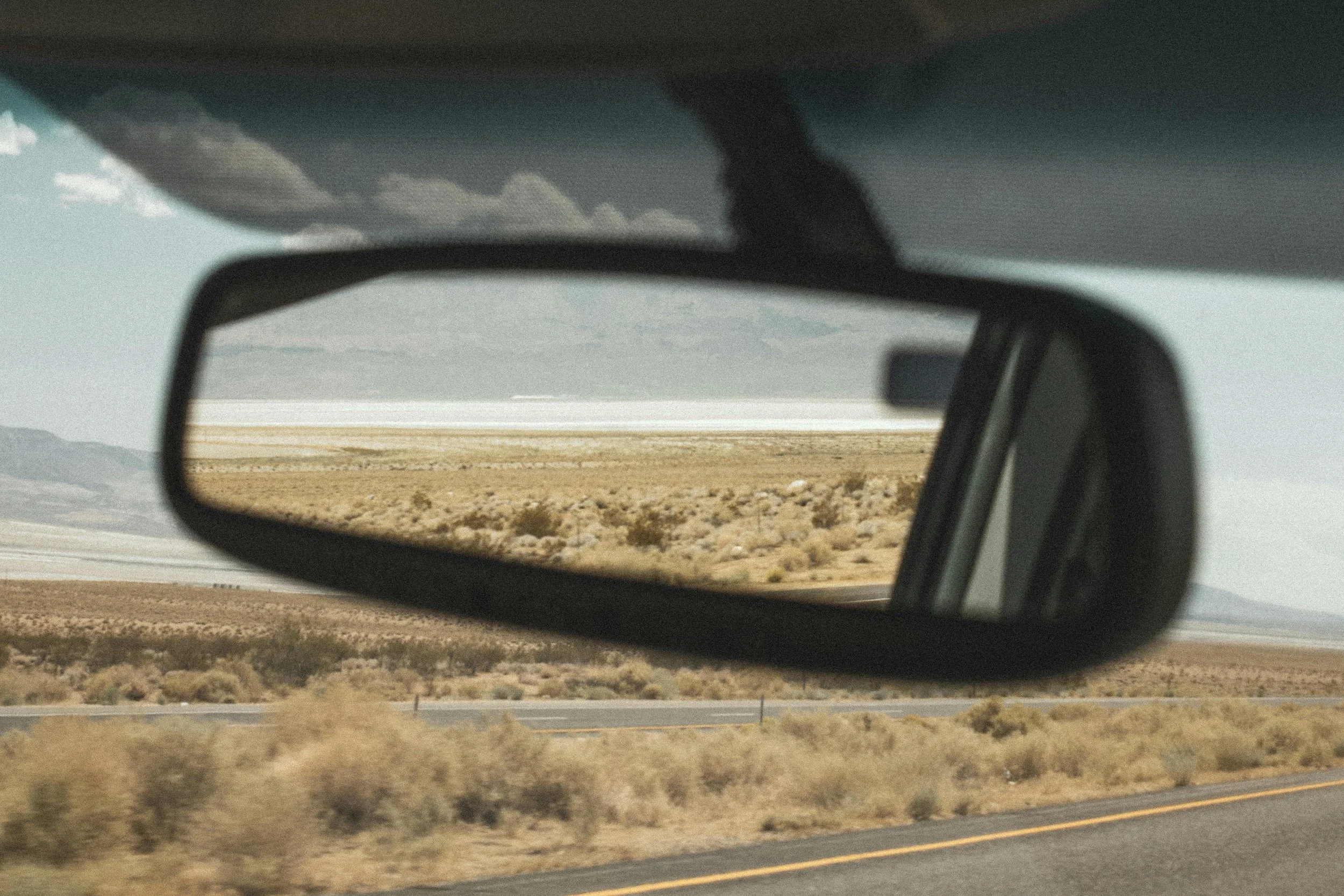
Have you heard of the expression, “Back in the day…”. Back in the day, times were simpler. Back in the day, this place was hopping. Back in the day I could eat anything and not gain weight.
Recently, I have been hearing from different folks, in different settings, all referring to some type of back in the day. The theme through all these laments is a wistful look at the past and how much better things were than in the present experience.
I get it. I have been in new settings where the people in the new situation don’t know my past, my background or even what I looked like. There have been times when I want to preface every explanation- “if you knew me then…, if you knew my family history…, I used to…” Many of us end up driving through life looking at our rear view mirror. I know that I have been guilty of that at times.
I had once heard a gentleman say, if you drive a car by constantly looking in the rearview mirror, you cannot go forward for very long without running into something.
As much as I miss some things from the past, I don’t want to stay there. I need to look forward. I need to live into my present reality.
It makes me think of the Hebrew people and their journey out of Egypt. For much of their time in the wilderness, they kept looking back at their time in Egypt and not seeing their present and future reality. While the past was slavery and their present and future was freedom, all they could see was the familiar provisions of the past and missed the miraculous present provisions.
I wonder, when I concentrate on missing the past, what am I missing that is right around me?
Of course, we should be retrospective at times. That can help in our current understanding. But to be continually focused on retrospection, will not move us forward much.
What about you? Do you think of situations, “back in the day…”? Do you lament a past? Are you so focused on what is behind you that you miss what is happening before you?
The thing is, most times the “back in the day” wasn’t so great. Just like the Israelites “forgot” about the horrors of being enslaved in Egypt, we can forget that the good ole days weren’t necessarily always so good. But, we can, with hope, look to our present and future, knowing that if we at least focus on where we are headed, there is a good chance we can get where we are going in one piece.
Review
I have been reviewing and looking over my past posts with the intention of pulling together thematic ideas for a book. The thought is to try and "work smarter" by using ideas I have already begun to explore and flesh out. But, I have a tendency to not look back on my work. Once created, any work is once and done.
Through this review I am noticing duplicate themes: not only that, but also duplicate exact topics. I am either passionate about a certain subject (which can be true) or I am a very slow learner (alas, which can also be true). I know that what I wrote was in earnest about what I was feeling and experiencing at the time.
By the repetition of my ramblings, it seems as if I haven't learned anything yet. I thought that I was moving forward in my quest for becoming more of the person God has made me to be. I thought that I had improved or completed some of my personal and professional goals.
Apparently not.
I am reminded of the quote by George Santayana: "Those who cannot remember the past are condemned to repeat it."
I am also reminded of the idea that keeping one's eye on the past is like driving a car by looking in the rear view mirror. It won't take too long before you hit something. (mangled version of a statement by Rick Warren)
What are we supposed to do? Never look back? Always look back? Resign ourselves to circular travel?
Once again (as I have previously written) it all comes down to balance. Balancing the remembrance of the past with the expectation and hope for the future. Having just celebrated Easter, I am reminded of the nature of people. Holy week is divided almost mid-week by the Last Supper which was the celebration of the Passover meal. Every time Christians celebrate communion or eucharist or the new covenant they are also (maybe not so noticeably) remembering the old covenant of the Passover. It is in looking forward to the unhindered relationship with God that we reflect on where we have been. We remember our state of dis-grace so that we can appreciate and enjoy our new state of grace.
What about you? Have you ever looked at the things which worried you in the past? If you would review your Christmas letters or past journals, would you find that you are writing about the same things? Are the topics the same- year in and year out? Do you feel that you are in a rut? Are you stuck in doing the same ole, same ole? Or are you the rolling stone gathering no moss as you keep moving forward? Are you the shark mentality- keep moving or you can perish? Either way, are you happy with that situation? What can you do about it?
I think reflection is good, both as individuals and as a society. It keeps us accountable. We have responsibilities for our actions and the remembrance of the past keeps us in check not to repeat detrimental action (or so we hope).
Refection also helps to understand new situations as they arise. Sometimes we may be in a quandary how to respond to the new predicament and we need the context of what has gone on before. We need to view the new through the lens, and possibly the actions of the old in order to accomplish our current and future goals.
In visiting the Nantucket Whaling museum some years ago, they had a display of old fashioned hand tools that the sailers used to carve up the whale once they harpooned and killed it. The tools were designed to get the most out of the carcass. The docent remarked that a few months prior to our visit a beached whale had died on the shore. They needed to clear the beach and wanted to remove sections of the whale for scientific study. None of the modern tools could accomplish what they wanted. They had to come to the museum and borrow some of the display tools. It was only through using the past could the present be helped.
I think in order to keep the balance, we do need to remember the past. To remember and learn from it.
However we cannot be heavy laden with that side of the balance. We need to reflect on what is on that side of the scale and move forward, learning what we should and shouldn’t do.
One thing that was eye opening in looking over past posts was that I could see growth and stagnation. It has helped inform my decision of my life choices for the couple of months. I am realizing that some of the things I haven't completed yet, need to get done. No more mucking about.
I think that is one of the blessings in keeping a journal. One can look back to see answered prayers, concerns, joys, cries of the heart. The blog has become a journal of sorts. I notice what I have commented upon and the date and it is a good remembrance of things done.
If you don't, I would encourage you to keep a journal. Try it. It doesn't have to be a lengthy epistle, just lists of what you are thinking would suffice. It would be interesting if you could keep it for at least a year so that you can go back and see what has happened in a year's time- your thoughts and reflections. If the journal is too daunting, why not jot a view things down each day on your calendar? Perhaps three words to describe your day? Three things for which you are grateful? Or have as a goal?
If you don't journal, do you have some record, demarcation or milestones of your past? Do you reflect on them? If so, does that inform how you go forward?
The Future is Now

Yesterday there was an interesting opinion in The New York Times Review section- "The Suburb of the Future" by Alan M Berger, a professor of landscape, architecture and urban design at Massachusetts Institute of Technology. What I found most interesting was his discussion of the use of technology to aid us in our future living environments.
While he didn't describe a "Jetsons" lifestyle (although the use of autonomous cars, delivery drones, smart energy efficient utilities, seems like it to me) rather I felt that what he described seemed to be much like an old-fashioned English village: common foot paths, public access areas, safe pedestrian walk ways, limited car access, car pull overs.
In some ways what he is describing is using the best of all that we know and love about our current existence: choosing the best of our technology yet not losing that which makes us human. We do not have to live like the sterile futuristic apocalyptic portrayals in movies or books.
I sometimes think we feel that in order to go forward there has to be amnesia of what has been past. It is that all or nothing mentality. I know of some people who, once books and information were online, they decided to rid their house and business of all "hard copies" of books, pamphlets, files, etc. They embraced the entire digital lifestyle. If that is what works for them, then by all means, do it. However, I find that doing anything in extremes very rarely results in being satisfied with anything.
I don't think we will ever be the futuristic society we think we can be. We may try to be extremely independent with our non-human encounters, but we still are needy of one another. We need and long for the human connection- to be known to one another. Sometimes the only way to do so is the time immemorial way of speaking face-to-face, eye-to-eye.
For all our trying to tame and control our landscapes, we still have the need to have access to green space and fresh air of nature's "wildness". The concrete jungle doesn't satisfy our inner soul.
We want to be conscientious in our care of our environment yet still have all the modern amenities. Just look at the areas who were hit by this latest spate of hurricanes. We certainly need our human invented alternatives of air conditioning and electricity to better our lives. We don't have to live like it is the 1800's yet if we continue living the way we have without any care to the resources we are using, we might not have a future.
He proposes that we will use technology in smart ways that will be conscientious of our environment, in how we distribute our goods and services and how we arrange our home situations. The future planners will "find beauty in the utilitarian." As Professor Berger says at the end of his article, "Planners need to view cities, suburbs and exurbs...as regions, with one integrated environmental and technological system. It's rare that such a profound change of vision for the future is so close to being achievable."
It got me thinking. Do I embrace the future and its changes? If I did, what would that look like? How can I take the best of what we currently know in science, sociology, medicine, psychology, etc. and still not lose sight of basic humanness? Can I find beauty in the utilitarian? What can I choose to make the most of the future I envision and embrace?
What good things can I glean from the past and tweak them to be used in the future?
What about you? What things from your upbringing or past experiences can help you in your present and future? Did you have a troublesome time as a child? Has that provided strength and resilience as you go forward in your life? What social norms do you like? Do you have to practice all the ones that society currently says everyone is doing? Can you pick the things that resonate with you so that you can create the future you want?
It is exciting to see the future unfold. What I find encouraging is that we live in a time that we can shape some of what our future holds: we can choose what we bring with us.