
Work-Life Balance
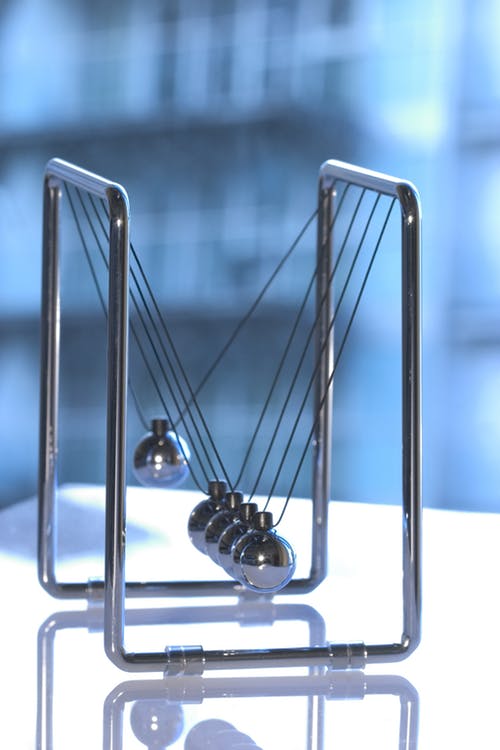
Sometimes I think work/life balance is not so much an either/or scale but rather a well adjusted pendulum. Each ball interacts and moves the other in rhythmic precision.
A couple of Sundays ago there was an article in the NYTimes about millennials and work. In it, the author posed the question- are millennials lazy or do they have the work-life balance correct? Are the rest of us in society so out of whack with our propensity to always be working that we think anyone who sets boundaries is lazy?
Lately I have recognized that I have a hard time relaxing. I guess for so long I had been juggling many different expectations, deadlines and projects and that to stop and not be constantly moving, planning, or thinking has been tough. Part of it is self-identity and self-worth. Part of it is upbringing. (Not blaming the Puritan work ethic too much.) What am I if not hardworking and accomplishing “something”?
As I was thinking about all of this I heard on the radio a country song, “Drink in My Hand.” Part of the lyrics: “To fill it up, or throw it down; I got a forty hour week worth of trouble to drown. No need to complicate it, I'm a simple man. All you got to do is put a drink in my hand“. In some ways it seems so sad that in order to get through each week, one needs to plan on drinking on the weekends. In essence, just about kill oneself over work for five days in order to have two days of freedom.
Wouldn’t it be better to have seven days of balance?
But how does one do that? Is that realistic in today’s society? The NYTimes article says that for some millennials, negotiating balance for the work load is not something that needs to be done. It is expected. Not from a sense of entitlement (although I suspect there are some workers that do feel entitled to days off, flex-time and more casual working), but because they have seen their parents in life-sucking jobs and the financial fall out of the Great Recession, debts, materialism, and have decided that there is more to one’s life than achieving financial success and possessions.
In the Bible, the Hebrew wiseman reminds us how to view our life: “For everything there is a season and a time for every matter under heaven… there is nothing better for them than to be joyful and to do good as long as they live; also that everyone should eat and drink and take pleasure in all his toil- this is God’s gift to man. “ (Ecclesiastes 3: 1, 12-13.) The ancient words remind us to balance that work (toil) and life (eat/drink). We can balance our work and life through the practice of gratitude (joy) and service (to do good). It is not all about the money (though money is necessary for living in this world) but how we think about each day and how we spend the time in those days. It is about a rhythm of life: keeping the pendulum balls moving and interacting with one another. Not in a harsh, clanging, one ball swinging higher and harder than the others but in a gradual, one touching and moving the next. Like Newton’s cradle (pictured above), the balls move equally and exhibit the same amount of movement energy.
Online there is an interesting TED talk that “tees up” the premise of striving for a better work-life balance. While the talk doesn’t really give a specific method for achieving and maintaining balance, he does spell out some fundamental issues:
Click here to listen to a TED talk by Nigel Marsh on Work-Life Balance.
I don’t know about you, but I don’t want to “wait until I retire, or until the kids move out, or until…. (fill in the blank) for starting to do what I feel led to do and which would help me achieve balance in my life. That is why about five years ago, I embarked on writing full-time. I realized what was the point in putting off that which I felt was a calling, just because I needed to find the “right” time. When is the “right time”?
Granted, I realize how blessed and fortunate I am to be in a position to do what I love. Especially since what I enjoy doing is not providing a necessary income to put food on the table. Many, many people are working in jobs that they do not like and possibly hate but find that their current job is the only work that is a) available b) capable of doing and c) necessary for survival.
Yet, I think part of the balance is to take each day as it comes and to enjoy the moments of each day. Some days I am quite aware of the moments and others, life is a blur. And so I must be intentional with balance. I don’t want to put off until tomorrow what I could do today but I don’t want today to be so rushed and filled that I am too exhausted to enjoy tomorrow. I think that gratitude and service does help keep our balance in check. Kind of like a spotter to ensure that we do not fall off the balance beam.
Gratitude and service are the guard rails. Gratitude helps us reflect on what we have: we can prioritize our values (e.g. family, health, material possessions). Service helps us distribute our work: we “do what is right and good” which can give us a satisfaction that work might not.
As is everything in life- it is about moderation. Not having it all at once. Quality versus quantity. Ensuring that one’s priorities are met each day. Setting boundaries. Being healthy in mind, body and spirit. Taking time to enjoy the moments.
What about you? How are you with balance? Work/Life? Family/Friends? Are you waiting for a specific time in your life to do what you feel called to do or want to do? Why is that? Is there some way you can moderately manage your day to day?
In the TED talk by Mr. Marsh, he reminds us that we have to take a longer view of our priorities. Not every day will be the “perfect” day. But, with intention, choices and care, I believe we can have “perfect” moments and daily joy. For me, that would be the right balance.
996

I have always loved rocks and stones. Here are three stones (like my “logo”) to remind us of balance and priorities. For me it is faith, family, friends.
Have you heard of the new working model for time at the office? No longer “nine-to-five” or 24/7 but 996: twelve hour days (9am-9pm), six days a week.
According to the head honchos at Alibaba and Tesla, long work hours are a necessity for company growth and success. Alibaba’s founder, Jack Ma wrote on a Weibo post, “To be able to work 996 is a huge bliss...If you want to join Alibaba, you need to be prepared to work 12 hours a day, otherwise why even bother joining,” He has also encouraged young people to work more than forty hours a week, until the government pointed out that working employees over a forty hour/week is against the law. Yet he has also been known to say, “ I'm coming to this world not to work. I want to come to this world to enjoy my life. I don't want to die in my office. I want to die on the beaches.” Seems like he is a little confused over his work/life balance.
Tesla’s Mr. Musk has scoffed at those people who think forty hours/week can contribute anything to society. He is an advocate of long working days. “Nobody has ever changed the world on forty hours a week.” He advocates people to work 80-100 hours a week.
There has also been controversial employment practices at Amazon. According to a New York Times’ insider report, “Many of those workers said Amazon had provided them with great work opportunities and found its boldness and inventiveness addictive. But they also said the culture at Amazon seemed almost punishing by design, and described a workplace characterized by frequent criticism, often excessive workloads and expectations the company itself calls ‘unreasonably high.’ “ Those who had worked for the company and have left describe their feelings as similar to the soldier or civilian who has witnessed battle and has come through it: a pride in going through hell and surviving yet glad it is over.
In all these companies, working longer does not allow for any type of work/life balance. If anything, there is a total imbalance. Zhou Hongyi, the chairman and chief executive of Internet security firm Qihoo 360, said striking the right balance was an impossible task.
Speaking at a media briefing last week, he said, “I’ll call you my big uncle if any of you seated here can say you truly balance family and work,” . (Referring to someone as “big uncle” – or da ye in Chinese – is a mark of great respect.)
However, there are other working models ones that seem to have more of a balance between work and life. According to the World Happiness Monitor (who knew?), the countries with the happiest people seem to be the ones who have this balance in order. They work forty or fewer hours a week and have a livable wage in order to spend time with family and friends when not working. Granted these are companies in countries that have a different set-up for health care, childcare and other employer and employee-type expenses. Do these countries have a lower expectation of what constitutes happiness? (https://www.cnn.com/travel/article/worlds-happiest-countries-united-nations-2019/index.html)
Is it only in the innovative companies and environment that we push ourselves over the limit? Do we have to subjugate our individual desires/needs/happiness for the greater good of company/innovation/advancement of society? Are we advancing society when we push the limits at all costs? Does that strategy backfire in the long-term of society or does it propel it forward?
I guess it comes down to what you want out of life? What do you feel is important? What is your purpose? Are you answering a higher calling or a greater good other than yourself?
At this stage of my life, I do find that I am questioning how I spend my time. Does it serve a purpose beyond myself? Does the activity align with my goals which I try to align with God’s calling?
In Ephesians 5: 16, Paul reminds us to “make the most of every opportunity”. Of course all scripture can be used for any and opposite arguments (making the most of every opportunity could mean for some to work ALL the time). The intention is that we make the most of our days- to live out our lives to benefit God and others. The Psalmist says, “Teach us to number our days, that we may gain a heart of wisdom.” I think that when we recognize our priorities for our time, we do gain wisdom.
Here are some tips found online regarding work-life:
1. Prioritize what’s important to you and let go of everything else. That is where my three stones come in. I have three stones in my office that remind me of my priorities: faith, family, friends. Stephen Covey would use the visual of filling a jar with stones, pebbles, sand and water. He would ask his audience in which order to fill the jar with all fitting and nothing spilling. In order to get all the solids and liquids in, one has to first put in the big rocks. Those are your priorities each day. Although lately, I have been wondering about my third “big rock”-friends and if, for the sake of analogy, I might need to trade that one for two smaller sized rocks. I am in the midst of reprioritizing. Another blog….
2. Pursue activities and opportunities that energize you. Frederick Buechner’s quote helps keep this point grounded for me: “ Vocation is the place where our deep gladness meets the world's deep need.” While there are some activities and opportunities that energize me, they may not necessarily be ones that encourage others and glorify God.
3. Set your own boundaries (no one will do it for you). This has been one of the hardest things for me to learn. It makes me feel incredibly selfish yet I recognize that I have to be the one who does it.
4. Embrace work-life integration. Trying to compartmentalize work and life separately can sometimes cause more stress. Depending on your job, you might have to have some overlap. Setting overlapping boundaries can sometimes take the stress out but also keep from both work-life melding into one mess. This one may take time as you assess how the balance is working.
The fact is- we all get twenty-four hours a day, one hundred sixty-eight hours in a week to accomplish whatever…
What about you? How will you spend it?
Bouncing Back Like Bozo. Part 2
Another thing that is helpful when life's various assaults hit us hard, is to be organized. When we have too much clutter, too many demands, too many things scheduled, too many obligations, too many of anything we become overwhelmed. Once overwhelmed have no extra reserves to bounce back to center. There can be such a feeling of helplessness and hopelessness. We forget that much of the disorganization is part of our own doing. If we contributed to it, we can also reverse the situation.
Being organized is subjective to your personality and temperament. There is a spectrum of disorganization on which some people can withstand more disorganization than another. For those people leaning more towards the obsessive compulsive side, a kitchen sink not wiped out dry with every use is considered a major stressor. While others on the hoarders side of the continuum see nothing amiss with cardboard boxes and newspaper piles stacked over the entire area of the living, dining, kitchen and bedrooms. No matter what is the trigger, eventually the clutter and disorganization will impact one's outlook and outcomes.
There have been studies that children and older individuals (ones with dementia) do well with the concepts of simplicity and organization for the simple fact that it causes less stress whether one recognizes it as such. When I was designing wellness programs for companies, many of the speakers on stress would talk about organizing one's workspace and keeping it (relatively) clutter free. It takes a lot of time and energy to try and find things when there is much to look through and things are not easily found.
Same can be said of our home keeping. Having a home that is organized with our stuff makes things so much easier. Even if chaos is swirling around us, we can rest among some semblance of peace and tranquility. Organization can spill over to how we plan our calendars, our meals, and our days.
Here are just a few suggestions that might help you get started in an effort to be organized:
- Make your bed in the morning. I heard a pretty highly ranked military man speak to a college graduation and his one word of advice, "make your bed every morning." The idea is that you have accomplished one thing already in your day. A bed is the largest piece of real estate in your bedroom. When it is unmade, it makes everything else disorganized. But once made, you can go forth knowing you already did something for the day plus you will have a more restful sleep that night with smooth sheets and blankets.
- Get rid of 1/4 of your stuff. Most people have way too much junk in their houses. I know that we do. If, God forbid, we had a fire and most of our stuff were ruined, I probably wouldn't replace it. Telling huh? I try and routinely go through sections of the house with a ruthless eye, "If I lost this in a fire, would I replace it?" If the answer is no and it is something that isn't useful or beautiful- out it goes.
- One thing in, one thing out. My mother-in-law has had this rule. For anything she brought into the house, she got rid of something from the house. Makes sense when you have limited space.
- Straighten your desk before you leave work for the day. You will come into your space the next morning prepared to tackle the day.
- Take time each week to plan the following week. This might include your food menu for the following week, your work schedule, items to complete on your to- do list. You should also put down your plan for balancing the needs of others (volunteer times) and your needs (your activity that brings you joy). If you are still in the mode of changing your exercise, eating and sleeping habits, add that to your weekly plan. Part of being organized is to let wiggle room in your schedule. Give yourself permission to not have the day completely jammed packed. You can always fill it up, but it is more difficult to eliminate things that take your time.
- Keep under notes all things pertinent and important. There are many different systems out there to help in organization of lists and files- charts, apps, documents, etc. If you google "organizing important documents" you can find one that fits your needs, personality and budget. Can be as simple as a piece of paper with a list kept in a folder. The point is to keep in one place the information of important documents: Doctors names and contact information. Prescriptions. Medical history. Passwords. Financial information. Tax information. Receipts for major purchases.
What about you? Do you feel overwhelmed with your schedule and obligations? What areas of your life? What do you need to do to get organized? What small steps can you take to achieve it? If you feel pretty organized in your life, what things do you do to stay organized?
Simplifying our lives and organizing what we have is another way to bolster our resilience to the onslaught of life. It is a way that we can bounce back like Bozo.
Fun
"What do you do for fun?"
Recently I was asked that by a new acquaintance. The question took me by surprise. For starters, usually I am the one who asks others loads of questions because I am curious and interested in people.
One time we were staying at a bed and breakfast. During the complimentary wine and cheese get-together we were mingling with the other guests. I was asking this one couple different questions based on their previous responses. Finally the husband turned to me and asked, "What do you do? Are you a news reporter?" He wasn't upset but rather was amazed that someone would ask in-depth questions to get to know another without the ulterior motive of "getting a story".
So, when this new acquaintance asked my about my fun, I first thought, "That's one of my questions for you". Then I had to really think about it for myself.
What determines fun? A fun activity for one might not be that much fun for another. My sister likes skiing. I do not. The thought of choosing to be in the cold weather, hurling down a snowy slope with out any brakes or form of control does not excite me. I know that there is a "just relax and go with it" attitude but that doesn't happen with me.
Part of what makes something fun for me is an activity that helps me "get in the zone". An activity in which time doesn't have any part: I have no recollection if I am spending ten minutes or ten hours doing the activity.
I also find things fun that enlighten me or provides physical activity (just as long as I don't have to be too cold and give up control- like skiing!). It is also enjoyable to complete creative projects, like my recent re-painting of the guest room.
Recently I just heard someone talking about the word, "amuse". In Latin, "a" means non or not. For example, amoral- no morals, complete lack of morals. "Muse" is to think, to ponder. So "a" +
"muse" is to not think. In the strict sense of the word, to be amused is to not think at all. To turn off the brain. Which is what we sometimes want to do when we are entertained via movies, books, or videos. ( I wasn't thinking Latin etymon when I would get annoyed at our boys that, after watching television, they would seem so dulled. "Huh" would be the common refrain to any question asked after the show.)
So, for me something that which is fun doesn't have to be amusing. Although at times it can be.
What we do for fun can mean, "What do we do outside of our work?" The implication is that our work isn't fun. Generally most people see work and fun as polar opposites. Certainly that can be true. Some work isn't fun although there might be aspects that can be fun. We can be serious about what we do but still have a sense of fun.
I think the word "play" should be asked when thinking about fun. Children have a wonderful sense of play even if they are doing a task. This past weekend our next door neighbor's five-year-old was helping raking the leaves. He was having a great time, balancing one leaf on the back of his rake and flipping it over onto the pile. Of course, not many leaves were raked but he sure had fun.
What about you? What do you do for fun? For amusement? For work? Can you bring in a sense of play to your work?
It reminds me of the Fish! Philosophy. The employee practices at the Pikes Peak Fish Market. click here to see a video. When I was working with employers to implement wellness programs, the Fish!Philosophy is a great employee management style for having work/life balance. It is more than just for employers/employees. It is a way of viewing life.
The four foundations of the Fish! Philosophy:
#1-- Be There
Be there mentally and physically, so you can seize opportunities and maximize your performance.
#2-- Make Their Day
Genuinely connect with customers and colleagues alike. Daily create an engaging work environment or delightful customer experience -- the kind that builds loyalty and repeat business.
#3-- Play
Embrace a playful state of mind that makes you more energetic, enthusiastic and creative. Result: enhanced customer relations and elevated productivity.
#4-- Choose Your Attitude
Cultivate self-sufficiency and control in consistently making smarter business decisions. A mental state optimized to "be there" with an attitude that ignites success.
Take Pleasure in Toil
For those of you who have faithfully subscribed to this blog, you have read of my struggles for work/life balance. Some of you have related to me your own struggles with this topic.
As I have been pondering this struggle a Bible verse came to mind, "I (the writer of Ecclesiastes) perceived that there is nothing better for them than to be joyful and to do good as long as they live; also that everyone should eat and drink and take pleasure in all his toil- this is God's gift to man." Ecclesiastes 3: 12 & 13.
In my Bible's commentary it notes that this verse suggests that "rather than becoming embittered by what God has not granted human beings (namely, the ability to comprehend all of reality), one should enjoy the gifts that God has given."
Touché. I realize that I am becoming embittered with my situation and towards others and myself because I can not comprehend all of my own reality. For me, comprehension includes control. If I am honest with myself, I want to be the one in control of my reality which means I need to know all and to be able to control others' decisions regarding my situation. Yet I know that certain things are beyond my control. Not only can I not comprehend all that is around me, I cannot comprehend why I cannot figure things out. I can strive to be balanced, but I may fail miserably.
This verse reminds me that I should just focus on the basics- enjoy the things that God has given me, strive to do good deeds and to work at my calling. For the immediate present, I might not be able to do all that I hoped to do- devote a single mindedness to full-time work- but I can do what I can.
I am slowly realizing that this smaller "action list" is a gift. There is no need to make myself anxious or upset with self-loathing over unaccomplished goals. All I need to be concerned about is being obedient to God's call on my life and enjoying the things that come my way and surround me, whatever that might look like.
What about you? Are you still struggling with balance? Do have difficulty enjoying the simple things? Why something so basic and seemingly easy is so difficult to do? Why is contentment so elusive?
What would it be like if we all asked, what can be done? Not to get discouraged or to think of the bigger reality, but what small thing can we do that takes pleasure in our toil?
I would encourage you (as I encourage myself) to enjoy this day and enjoy the toil, whatever comes our way.