
Adaptation
This year as it has in the past 25 years, the town of Mt. Olive, NC dropped a pickle from the Mt. Olive Fire Department Tower 23 to mark the ringing in of the new year. 2026 will mark the centennial of the Mt. Olive Pickle company which sponsors the drop.
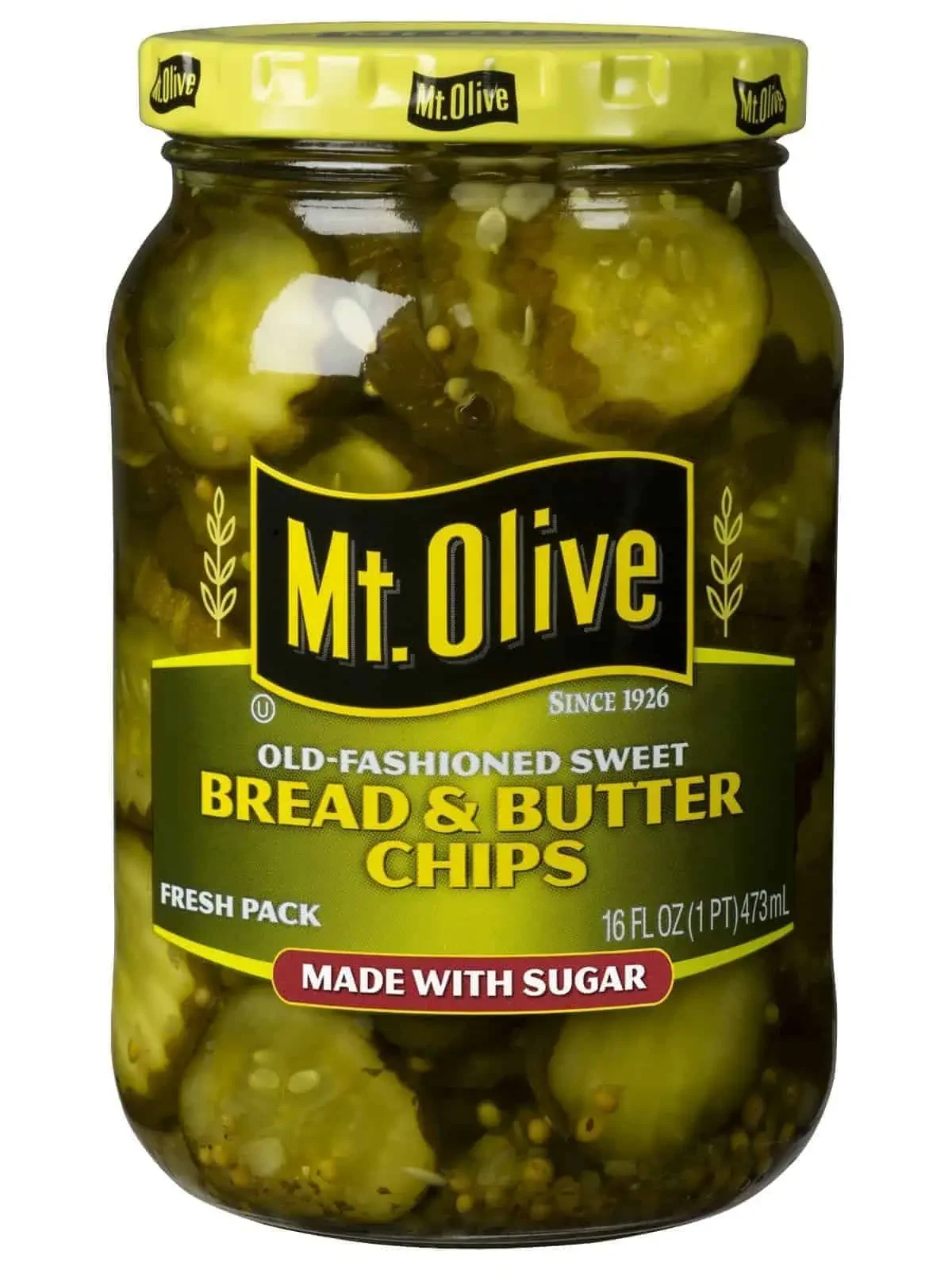
The company was originally started when an immigrant from a nearby town noticed that the surplus of local cucumbers were going to waste. He and another friend came up with the idea of brining the cucumbers and then selling them to other pickling firms. While that plan did not take off, a group of local people saw potential in the idea and decided to start their own pickle company. Thirty-seven business men put in the capital for the company. They called it a “community proposition”. The two gentlemen who originally came up with the idea became the factory superintendent and the company salesman, respectively. 100 years later, the company is still privately owned and has become the #1 pickle brand in the US.
Making lemonade out of lemons. Or, pickles out of excess cucumbers.
I love to hear stories of imagination, adaptation, and finding another solution. Finding repurpose.
Such was the case for Play-Doh. Originally, it was a putty-like substance for cleaning wallpaper. In the days before WWII, wallpaper would attract dirt and soot from coal and wood stoves/heaters. The cleaning compound which was made by a soap company, could be rubbed over the walls to clean the soot. After the war, new, easier to clean vinyl-type wall paper was introduced. Simultaneously there was a move from coal stoves to oil and natural gas, which reduced interior soot. There wasn’t a need for the compound and the company almost went out of business. The nephew of the inventor of the cleaning substance was hired to help keep the business from bankruptcy. The nephew’s sister-in-law was a nursery school teacher who had read an article that the wallpaper substance provided good modeling clay for students. And so, the nephew pivoted the company into making a child’s toy with the sister-in-law’s inspiration for the use and new name, Play-Doh.
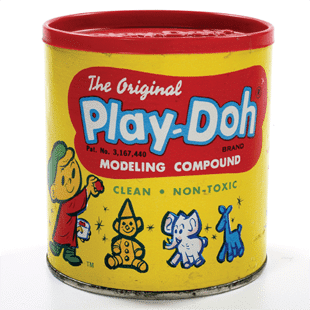
For those of you who grew up with the ubiquitous childhood modeling clay, remember the scent? Apparently the scent is so distinctive, in 2018 Hasbro (the toy company who now owns it) trademark registered the scent with the USPTO. It is described as “"combination of a sweet, slightly musky, vanilla-like fragrance, with slight overtones of cherry, and the natural smell of a salted, wheat-based dough.” Originally, it only came in an off-white color but shortly after marketing it to children, it was offered in blue, red and yellow. I remember upon first receiving Play-Doh for Christmas, (maybe I only received it once, but it seems to me it was always a stocking stuffer) keeping the colors separate for a little bit of time, but eventually I would have a massive ball of multicolor flecks and odd shades. There always seemed to be crusty dry pieces attached to the outside that never quite reintegrated with the rest of the mass.
Turns out, another childhood stocking stuffer was also a repurposed product- Silly Putty. Silly Putty was originally made to be an experimental rubber replacement. During WWII, America couldn’t access the rubber plants needed for tires, equipment, etc. Scientists were tasked with finding a replacement. While Silly Putty has a lot of rubber properties, it wasn’t quite the rubber replacement that was needed. Instead, it became marketed as a child’s toy, especially when it was advertised during the Howdy Dowdy Show.
It seems as if I have been lately hearing these types of stories of items that on first blush, appeared to be potential failures. For whatever reason, circumstances changed and the item wasn’t needed. Those people who invested in the items (not only financially, but time and resource-wise) could have given up. They could have decided that their past was wasted and that there was no hope for the future.
But someone was able to see the potential and adapt to the new reality.
It makes me wonder how adaptable am I? All of us at times either get ourselves into situations or have situations thrown at us that requires some adaptation. Situations that make what we are currently doing obsolete, irrelevant or not fully meeting new demands.
What about you? How adaptable are you to changes? Either in your life or in the world around you? Go with the flow? Dig your heels in? Find a new marketing strategy, like PlayDoh and Silly Putty? Turn an excess into a benefit, like Mt. Olive Pickles? When life gives you lemons, do you readily make lemonade? Or do you find yourself holding a rotting mess?
I would love to think that I make lemonade out of disappointment, hurt, or failures. That I have the hutzpah to keep going even when the going gets tough. But that can be quite hard. Especially when life throws us curves and difficulties. If we live long enough and with intentional empathy, we learn that no one goes through life without difficulties. Some people can adapt easily and others struggle.
According to various psychology articles, one can take that which we’ve negatively experienced and transform it into a positive future through what is called cognitive reappraisal. It is more than revisionist history. It is taking reality- based information and purposefully reframing the explanation of what happened in the past. It is in the reframing that we can find purpose for the past situation and can then, face the future.
According to Psychology Today, “Cognitive reappraisal—generating a positive, even absurdly incongruous, reinterpretation of a negative event— often underlies benign humor. And in fact, researchers find that the use of benign humor—pointing out the bright side of adversities—is good at both down-regulating negative emotion and amplifying positive emotion.
Below are some questions to think about when we are trying to repurpose our past and make cucumbers into pickles. Experts identify several questions you can ask yourself to stimulate a positive reappraisal for negative situations:
Are you engaging in some form of cognitive distortion, such as catastrophizing?
What is the evidence supporting your automatic appraisal of the situation?
Are any positive outcomes possible from the situation?
Are you grateful for any aspect of the situation?
In what ways are you better off than before the situation occurred?
What did you learn from the experience?
I don’t know about you, but I know so many people who are feeling discouraged- that their lives have not turned out the way they planned and/or thought. They are discouraged in the macro (world) and micro (individual) nature of life. For me, I am grateful for the Sovereign God who controls both the macro and micro in the world. I look at the questions of cognitive reappraisal and also ask, “What is True, what is Good, what is Honorable, what is Pure, what is Lovely? What in this situation do I know is of God? What is God teaching me in the situation?
If anyone is in the repurpose/adaptation business, it is God. God can take any of our problems, excesses, outdated, unused or worn situations and make them new.