
I Am Not John Wayne.

The Duke. Rugged and tough. Alas, i am not.
I am typing this post with a slightly efficient hunt and peck right hand (sorry Mrs. Lieberman, my 8th grade touch-typing teacher). While I will try and post on my regular Wednesdays (at the Well), I may be out of commission for a couple of weeks.
On Saturday I tripped down some marble steps, tried to catch myself in a classic Dick Van Dyke pratfall but didn’t quite make it. I landed on a twisted wrist, somewhat on/off a brick sidewalk, kissing a tree set in the sidewalk. As soon as I looked at my wrist I knew things were not good. Let’s just say my hand and wrist were not in alignment but looked like the letter “z”.
While it is a royal pain (literally and figuratively) to not have the use of my left hand, I am extremely grateful for our modern technology: knowledge and resources that will fix my bone with a titanium plate; rapid responding 911 emergency system, Xrays, pain medication, even the medical equipment that makes a difficult experience slightly less difficult. (the ambulance gurney hooks into a hydraulic lever so that as a rider, I was always level and evenly transported).
This experience has made me even more appreciative of the people who have to deal with difficulties or alternative daily living activities in order to accommodate changes in their health or mobility.
I am also in awe of all those who have had broken bones. Because, man. Whew, It hurts like the dickens. All those cowboys or action figures who shake it off, or bite the bullet and then carry on like nothing happened- absolute rubbish. Secretly, they are really calling for their mommy. I know I wanted too on Saturday.
What about you? Ever broken a bone? They say that a bone becomes stronger at the point of repair. Surely that is a lessen for all of us; don’t fight the difficulties in life, learn from it, become stronger. Although, right now I am just trying to ease the pain and get through one day at a time until my surgery.
‘t good
Connection and Community Part 2- Technology

We’ve come a long way baby… Or have we?
Community and connection. If we are made to have community, why then do we have difficulty in achieving it and what causes us to dis-connect with others?
In architecture they say “form follows function” but I almost think the opposite is true when it comes to designing a society: function follows form. How we build the structures in our society determines how we function in that society. The structure of modern society has been built around technology and technological advances. Consequently those technology structures determines how we function individually and collectively.
I am always fascinated with the question about innovation and change- does this new idea, technology, gadget enhance society or detract from it? Are new fangled things just creating change for change sake or do they serve a real purpose? What are the benefits and risks to society?
It seems we embrace the idea of something new sometimes before we think about the repercussions. And, it is not only thinking about the effect the new technology may have on what we currently experience but also the impact on the future.

Years ago I heard someone speak about the idea of transportation. For a time, train travel was king. There were railroads dotted across the country. Unfortunately, the various railroad companies didn’t think in terms of connection - just the possibility of their own travel line. The tracks were privately owned by different companies and so it was hard to connect from one station to the next. In Baltimore there were at least four different railroad stations across town, each associated with a different railroad company. There were no connecting tracks from one station to another. So if you came to town from a small town in Eastern Pennsylvania with the hope to travel by train to Ohio and beyond, you took the Maryland Pennsylvania RR (MaPa) to its station and then would have to take a horse drawn cab to the Baltimore Ohio station across town.
If the railroad innovators had thought about the goal of transportation, they would’ve focused on the idea of connection both in their current situation (connecting all rail lines) and connecting modes of transportation as the future unfolded. When air travel became prevalent the trains didn’t get involved and didn’t plan to expand the rail lines to the air fields. Wouldn’t it be nice now to travel to the airport without having to rely on congested highways? Trains can move more people much faster than the snarl ups and parking lot waits of the individual cars on the highways of today. It is a hassle to fly (forget about the TSA requirements) and part of it is the trouble in actually getting to the airport.
Technology can do that if we are not careful: the thing that is meant to make our lives easier and bring us together can make life harder and push us further apart. The telephone was made to bring us together. “Reach out and touch someone” the ads promised. Connecting by phone, hearing the actual voice of a loved one, distant relative or complete stranger living across the country or world is still amazing. Yet, the phone can keep a distance between speakers. You don’t get to see the eyes and the expressions on one’s face as the speaker talks. Consequently words can be spoken via the telephone that would never be said face to face. Many a household has heard the slam of a telephone in mid conversation as the listener became upset or enraged over the comment from the one on the other end of the line.
The future generation of the phone, the internet and all that it entails, has also brought the world together and apart. The technology of writing the words via email, twitter or Instagram can be even worse than what is actually said in a phone conversation. We are witnessing the outcome of vitriol towards one another- it tears at the fabric of community and civilization. And, all that can be accomplished via the internet can be done solo. Not only can we alienate others by our words, we can be physically alienated as we say them. That which was designed to bring us together has in fact, drawn us apart.
In pondering the question if technology makes us more lonely, I have come across conflicting ideas and studies. No surprise that some of the studies were sponsored by tech companies and therefore felt that technology/social media are good in bringing people together. And so technology can be. Many people have connected through finding lost friends or relatives via social media. People with common interests or concerns can find like minded individuals and discover that they are not the only one who thinks a certain way or has had a unique experience. I have met many wonderful, interesting and courageous people through this blog, which would not have occurred even twenty years ago.
I also saw studies looking at technology- Facebook and the like- and how being tied to social media and our computers affects individuals and their feelings of connection. The Atlantic magazine has a classic 2012 article about Facebook and loneliness. In it they noted that, “within this world of instant and absolute communication, unbounded by limits of time or space, we suffer from unprecedented alienation. We have never been more detached from one another, or lonelier.” They begin the article around the death of Yvette Vickers, a once B-movie actress who ended up dying alone in her home and was not found until @ six months after the fact by a neighbor. In finding the remains of Ms. Vickers, the neighbor also found the computer still on. Apparently, Ms. Vickers had no one in her life- no actual community or connection. She died as she was trying to reach out electronically to anyone who would listen.
With technology, it seems to be prudent to explore the idea of what tech is doing and not doing for us as a society. I am not advocating throwing the baby out with the bath water but perhaps we need a careful reasoning and thought process of what are the gains and losses with any new technology. Of course, there will always be cumulative problems or unforeseen/unpredicted outcomes but that shouldn’t negate the fact that we should think things through.
It makes me think of the Amish viewpoint of evaluating new technology. While I don’t agree with the lifestyle per se, I do like the idea that that we can (and should) pick what and how we choose to interact as part of being a modern society. I have heard that one of the reasons some of the Amish sects choose not to own or drive cars is that they feel that the automobile impacts the family and the way the community engages with one another. Certainly the solo driver going to work, stores, play, school, etc. bears out those fears.
There is an interesting project underway looking into using old and new technology in the shipping business: How can combining wind power and current boats be used in a way to reduce fuel consumption. By applying the modern sailing techniques (as learned through America’s Cup challenges) and more efficient engines, different companies from various countries (US, Japan, Denmark, Norway) are hoping to reduce fuel consumption on the large container ships by twenty percent or so. Click here to read the article.
What about you? Do you think about our fast pace technology and what it may or may not be doing to society? Have you seen technology impact your community or your connections with one another? Positively? Negatively?
Next week we will talk about ways to counter the negative effects of technology. Things we can do so that we can be in control and choose the best part of technology and maintain our sense of community and connection.
Connection and Community- Part 1
Have you ever noticed that when you might be thinking of certain themes/things, you then will see and hear that theme in all aspects of your life? I have heard people say that happens to them when they buy a new car- all of a sudden they see that exact car wherever they go.
Lately, it seems as if I am hearing about community every where I turn. Even in the ads at my local bank. No wonder the show “Cheers” was so popular. The place where “everyone knows your name”. People seem to long for community recognition yet we act in individual anonymity.
As a society, we are globalized. No other time in history is like now when the majority of the planet can know and connect with other parts of the world, yet we are also more isolated than ever before. We do not have to interact with anyone for anything- not even for acquiring basic goods and services. And if we choose to connect with others, those connections can take place in solo private settings. We have lost the shared experience of community.
I thought over the next couple of blog posts we can explore the idea of community and connection. I am treating the two together because you cannot have a community without connection to one another. What else is the purpose of human connection but to form some type of community? (recognizing that not all connection is necessarily deep).
So, what does community mean? Do we need it? What are the ramifications? Does our technology help or hinder? What can we do about it? How do we build connection with one another?
For most of my life I have felt that my nose was pressed against the window pane in observation of a gathering of others. No feeling of great connection or community. Oh sure. I have had my “group” - family, childhood friends, workplace colleagues, etc. But I have never felt that sense of deep connection that “these are my people and they get me.”
Not that it is a bad thing. For the most part, I am satisfied with my life and personality. I lean more towards being an introvert than extrovert. As much as I enjoy learning about people and their stories, I am basically shy and don’t want to impose my presence on anyone. I have to force myself out into community. I could go (and have gone) days without speaking to anyone and then when I do, my voice fails as well as my thoughts. I end up sounding like a babbling idiot. Use it or lose it.
Community used to mean one’s physical location: one’s “place” in the world. While that still is true, the word seems now to connote more of one’s identity: “A body of people or things viewed collectively,” (Oxford English Dictionary)
Author, Bill Bishop states, “It used to be that people were born as part of a community, and had to find their place as individuals. Now people are born as individuals, and have to find their community.”
I think that shift is what is causing some issues with our sense of community and connection. If each one of us, as a solo person have to find our community, we are picking and choosing what we want to be. That very choice can become exclusionary- some people will be in and some out. Even our sense of togetherness has a binary, all or nothing quality and can create anxiety and feelings of loneliness.
On a recent podcast of Hidden Brain, they explored the problem of American masculinity and how that creates a lonely man. While the explanation is specific to men, I think that there is a general observation that applies to all people- we all need some type of connection and community.
One of the things noted was the importance of community for a person’s health and wellbeing. They reported on a longitudinal social study that began over eighty years ago looking at the students at an elite university and if there were any predictions for personal success (They funders of the research wanted to find a way to predict good management professionals). Over the years, the focus and goals of the study changed and new discoveries were made yet the study was always concerned with the connection between emotional well-being and personality characteristics. One question they always asked, “Who would you call in the middle of the night if you were sick or afraid?”
According to the study, “We found that people who had warmer, closer connections lived longer, developed the diseases of middle age, those chronic diseases, less soon and had better health longer on average than people who didn't have warm, close relationships.”
Why connection? It is good for your health.
Why community? I think that there is something true about the independent streak that runs in all of us. I think that our current set-up for society has exploited that nature and whether intentionally or not has encouraged us to be solo . Look our for yourself because no one else will. You don’t need to be with others, you can get by with all that you need without them. Getting to know others can set yourself up to pain. Don’t be vulnerable. Hide behind the mask.
And so in the words of Henry David Thoreau, “the mass of men lead lives of quiet desperation.”
This is not how we were designed to live. Everything in the Bible and in its story is about relationships: relationships among God and his people- both as an individual with God but also as individuals living in community with others.
The Hebrew wiseman reminds us, “Two are better than one, because they have a good reward for their toil. For if they fall, one will life up his fellow…a threefold cord is not quickly broken.” Ecclesiastes 4: 9-12.
In Jesus’ last days on earth, He prays for the people surrounding Him and those who are yet to come. He prays that they will be unified and connected, that they would be one. You cannot be “one” without connection. “I do not ask for these only, but also for those who will believe in me through their word, that they may all be one, just as you, Father are in me, and I in you that they also may be in us, so that world may believe that you have sent me.” John 17: 20.
What about you? What are your feelings of community and connection?
Stay tuned for next week as we explore connection and community (part 2) through technology.
Customer Service?

Sergeant on left: How I wish I could respond to customer service but how I look after I hang up the phone…. Soldier on right: How I feel (depleted and demoralized) after I go through the phone machinations of just trying to get hold of a “real” person but what I imagine the customer service person doing- repeating the same old, same old line.
“Why don’t people do their jobs?” our son once asked after working a couple days on his first “real” job post college.
He had witnessed people in the workplace trying to get away with doing as little as possible. He saw that attitude translate into action which in turn made it difficult for him to do his job. The domino effect.
I do not think I am giving away any part of the plot of Downton Abbey when I tell you that the premise of the movie is the preparation of the Downton household for a visit from the King and Queen of England. There is a whole protocol on receiving the royal entourage. The servants are more than a little miffed that the royal servants have usurped their positions in their own household. The Downton servants want to work and serve the King and Queen of England when the royals dine at Downton.
As I recapped the movie to my husband ( I attended with some neighbors while my husband stayed home. He had seen enough of the Crawley family from the trailer to get the gist of the film without being subjected to watching the actual film), I reflected about the servants’ attitudes. I don’t think if this movie was set in today’s workplace that the Crawley servants would’ve been at all put out that they were given a couple days off. More time away they might say.
Most people I know would relish not having to work. Is it because they work too long and hard and are just worn out? Many people do not like their jobs and are looking for ways to earn money without that four letter word- w.o.r.k. In some ways it is so sad because our working lives/time takes up a big chunk of our lives.
Now I am not criticizing those people who have and have had horrible jobs- mean bosses, ditzy or cruel co-workers, unsafe working conditions. There are places of employment that swallow their workers and spit them out in a depleted overworked mess. Companies that do not care about those whom they serve, much less the people they put in the position to serve.
This summer, our beach house experienced a tornado. While a tree limb came down and pulled the utility lines off the house, we were quite fortunate that no structural damage happened to the house, neighbors’ homes or any cars parked.
In the aftermath of the clean-up, someone retied the cable TV/internet wire to a tree and left the remaining wire on the ground as it came up to the house. The wire was tied at only four feet off the ground and was a safety hazard: the height of the wire around the tree could garrote someone walking across the lawn. When I discovered the situation I called the cable company- explaining that while we did have service, this was a safety hazard and we would need someone to come out and rehang the wire.
When I made the initial call I was told that someone would come out to fix the problem within 24 hours. Needless to say, the twenty-four hours came and went. I called back and heard the same response that someone was scheduled to come out and the service representative gave me a date and time. The date and time would come and go and I would repeat the phone call. After each phone call I was asked if I would be willing to complete a survey, and each time I dutifully did. When asked, I would say that I would not recommend the company because they didn’t resolve my issue. Every time a well sounding customer service person would call back and express sorrow at my inconvenience and state that they have escalated my problem and it would be resolved.
I kept repeating the circle: call-customer service, receive scheduling, no show from technician, poor marks on the survey, inquiry from another customer service person about the survey, escalate problem, told that it “will be resolved”, problem not resolved, repeat. With the amount of times we went through this phone roulette and the amount of times I heard that the problem was escalated to another level, my issue should’ve been escalated to the CEO of the company (which I might add would’ve been welcomed by me. At this point in the charade, I had many suggestions on ways to improve the service.) It took over two months to rectify this situation.
I wish they would give those individuals an accurate title. Forget Customer Service Agent. How about: “Professional listener but powerless to do anything” or “Token listener for the company who has just duped you.”
The thing is, as a customer you become totally powerless and ineffective which leads to incredible frustration. I become conflicted: I do not want to appear unreasonable and do not want to play the demanding jerk card- yelling, threatening, huffing and puffing. And I know that the person on the other end of the phone can only do so much to help. They too are put into a powerless position. But, there are times when as a customer, one needs to hold a company to account. We all know that we get what we pay for but companies need to stand by their products or at the very least, fix situations that only they can fix. Of course, I know of people that are always trying to game the system and get work or items for free when that is not fair to those people who are doing the service, etc.
But this experience has also made me reflect on my attitude of work. Not just work for payment but any type of work. How am I in working with others? Do I do my job so they in turn can do theirs? Am I excited about my work that if I couldn’t do it, I would be “miffed” (like the Crawley servants)? Do I take pride in what I do? When/if I am in a position of power or decision making, do I look for the best interest of those I am serving? Do I allow those who I oversea to have autonomy?
Ecclesiastes 3: 13 tells us, “everyone should eat and drink and take pleasure in all his toil—this is God's gift to man.” The verse reminds me of the balance: go about your business of life- the day to day of living along with the pleasure of having work. We have talked about that balance in past posts. (see Work/Life Balance from October 2nd) But I also see this verse as an opportunity for a different attitude as we work. Work is a good thing. We are designed to work- to complete tasks, to create ideas and items, to join others in this “toil”.
Do I take pleasure in my toil? Do I see it as a whole expression of my devotion and gratitude to God? Do I work, not for a specific company, person or achievement but rather for God?
What about you? What has been your experience with customer service? Frustration? Resolution? Do you enjoy your toil? If so, what about it that you enjoy? How do you maintain that attitude? If not, what can you do to rectify that?
“Work heartily as serving the Lord.” Colossians 3: 23
P.S. Some of my suggestions for customer service:
Under promise and over deliver
Do not say anything that you do not mean or cannot carry out.
Think of the other person as yourself
Your suggestions?
10 minutes and 38 seconds

With my faulty memory, I sometimes wish everyone wore a name badge…
Recently I heard an interview with the author, Elif Shafak about her novel, “10 minutes and 38 seconds In This Strange World.” The title is how long the main character, who has been murdered, has to reflect on her life. The author had heard that it takes that long, 10 minutes and 38 seconds after the heart stops for the mind to stop thinking.
The novel becomes a telling of the main character’s story as she reflects on her life: her life is one of the forgotten. The author uses the Cemetery of Companionless in Istanbul, Turkey as inspiration. Apparently the cemetery is the final resting place for people with no name, no history or no “societal significance”. The buried receive just a number.
While it is a fictional story, the fact that there is an actual place for the buried nameless seems so sad. How awful to think that a person containing an entire life: loves, losses, ideas, etc., is reduced to just a number and no name.
It also made me think of the conversation that Imani Perry had with Krista Tippett on a recent On Being broadcast. Ms. Perry has written a book, “Breathe” which began as a letter to her two sons but really is for all black children and how to negotiate growing up. In the interview she recounts a story of racism that her one son encountered during preschool. A listener asks Ms. Perry in light of that encounter, what could’ve been done differently. Ms. Perry says, it starts with just saying hi and getting to know one’s name.
Knowing people’s names. Such a valid endeavor- to acknowledge what someone is called and to recognize someone’s worth in order to recognize the God in each one of us. After all, our purpose on this earth was to name and care for all that was created, even ourselves. In all cultures and all religions, names are important.
My Tuesday Women’s Bible Study has been studying the Biblical patriarchs. Interestingly that in the complex story of Abram, Sarai and Hagar, neither Abram or Sarai called Hagar by her name. They refer to her as their servant: she is known for what she does and not who she is. They have reduced her to being an heir surrogate and nothing more.
Do we do that to others? Do we assume we know who they are by what they do? Even the most “well-known” individuals (doesn’t that expression imply that a person is known even by complete strangers?) complain that they are not the people who others think they are.
In some ways, the ancient attitude of Abram and Sarai would go well in today’s society. One of the first things people seem to ask one another, “What do you do?” Almost before learning a name and certainly before learning about the character or personality of a person. I know that when I was a stay-at-home mom, I encountered many people who, once learning that my “job” was staying home, would move on to speak to someone else. They would barely ask my name and most certainly didn’t get to know me. It was as if I had either a contagious disease or immediately determined that I was totally not interesting.
Names. Knowing one’s name. It means so much more than what one does. In ancient times, names represented or foreshadowed a personality characteristic. It does so today. If you don’t think so, what is the first thing that comes to your mind when you hear the name, Adolf? Machiavelli? George? Ringo? Paul? John? Martha? Add someone’s last name and one can really identify the characteristics and personalities. And this is just the name. Imagine if we take the time to get to know the person behind the name?
I have a confession to make: I am terrible at remembering names. With initial encounters of people, I can remember pretty much everything a person has told me about themselves, even down to the details of where each one of us stood, clothing worn and expressions used. But what their name is, I blank. I am especially poor at it if there is no other context in which to associate the name.
I am trying to make more of a concerted effort in remembering people’s names. Even remembering character names from stories. Partly I have trouble with pronunciations. If I cannot pronounce the name, I cannot remember it. Not that I am excusing myself, but I do find that some of the more foreign sounding names or interpretive ones, I have such trouble remembering. But it is so disrespectful not to call someone by their name.
What about you? How are you with names? Remember them? How do you remember them? Do you interject a person’s name in the middle of conversations, “So, Mary, what did you think of the play?” Do you name associate? (I am always a little leery with that technique. I think I have shared this story before: My dad had a co-worker with a last name Longacre. He once was introduced as Mr. Shortmeadow.)
What do you remember about people? Their personality? Their names? Their profession? Or are people just a nameless face?
It makes me think of Hamlet’s line, “to be or not to be…” Shakespeare didn’t say, “to do or not to do…” Our being is tied up in our names. We need to honor the “be” of others. What better way than to start by remembering names.
Work-Life Balance
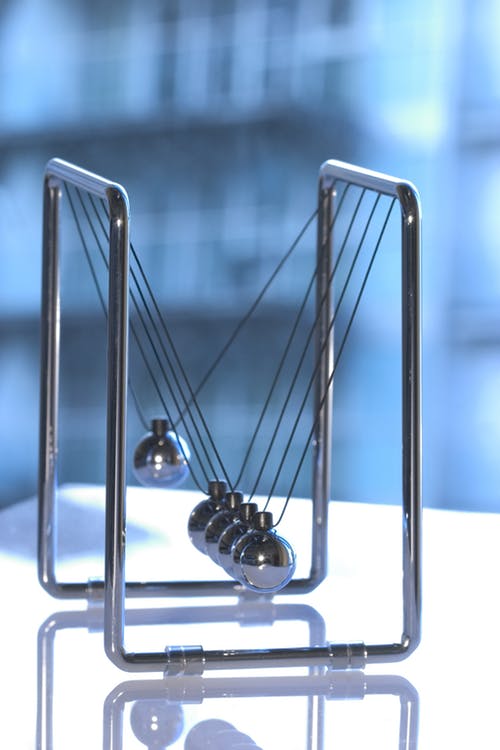
Sometimes I think work/life balance is not so much an either/or scale but rather a well adjusted pendulum. Each ball interacts and moves the other in rhythmic precision.
A couple of Sundays ago there was an article in the NYTimes about millennials and work. In it, the author posed the question- are millennials lazy or do they have the work-life balance correct? Are the rest of us in society so out of whack with our propensity to always be working that we think anyone who sets boundaries is lazy?
Lately I have recognized that I have a hard time relaxing. I guess for so long I had been juggling many different expectations, deadlines and projects and that to stop and not be constantly moving, planning, or thinking has been tough. Part of it is self-identity and self-worth. Part of it is upbringing. (Not blaming the Puritan work ethic too much.) What am I if not hardworking and accomplishing “something”?
As I was thinking about all of this I heard on the radio a country song, “Drink in My Hand.” Part of the lyrics: “To fill it up, or throw it down; I got a forty hour week worth of trouble to drown. No need to complicate it, I'm a simple man. All you got to do is put a drink in my hand“. In some ways it seems so sad that in order to get through each week, one needs to plan on drinking on the weekends. In essence, just about kill oneself over work for five days in order to have two days of freedom.
Wouldn’t it be better to have seven days of balance?
But how does one do that? Is that realistic in today’s society? The NYTimes article says that for some millennials, negotiating balance for the work load is not something that needs to be done. It is expected. Not from a sense of entitlement (although I suspect there are some workers that do feel entitled to days off, flex-time and more casual working), but because they have seen their parents in life-sucking jobs and the financial fall out of the Great Recession, debts, materialism, and have decided that there is more to one’s life than achieving financial success and possessions.
In the Bible, the Hebrew wiseman reminds us how to view our life: “For everything there is a season and a time for every matter under heaven… there is nothing better for them than to be joyful and to do good as long as they live; also that everyone should eat and drink and take pleasure in all his toil- this is God’s gift to man. “ (Ecclesiastes 3: 1, 12-13.) The ancient words remind us to balance that work (toil) and life (eat/drink). We can balance our work and life through the practice of gratitude (joy) and service (to do good). It is not all about the money (though money is necessary for living in this world) but how we think about each day and how we spend the time in those days. It is about a rhythm of life: keeping the pendulum balls moving and interacting with one another. Not in a harsh, clanging, one ball swinging higher and harder than the others but in a gradual, one touching and moving the next. Like Newton’s cradle (pictured above), the balls move equally and exhibit the same amount of movement energy.
Online there is an interesting TED talk that “tees up” the premise of striving for a better work-life balance. While the talk doesn’t really give a specific method for achieving and maintaining balance, he does spell out some fundamental issues:
Click here to listen to a TED talk by Nigel Marsh on Work-Life Balance.
I don’t know about you, but I don’t want to “wait until I retire, or until the kids move out, or until…. (fill in the blank) for starting to do what I feel led to do and which would help me achieve balance in my life. That is why about five years ago, I embarked on writing full-time. I realized what was the point in putting off that which I felt was a calling, just because I needed to find the “right” time. When is the “right time”?
Granted, I realize how blessed and fortunate I am to be in a position to do what I love. Especially since what I enjoy doing is not providing a necessary income to put food on the table. Many, many people are working in jobs that they do not like and possibly hate but find that their current job is the only work that is a) available b) capable of doing and c) necessary for survival.
Yet, I think part of the balance is to take each day as it comes and to enjoy the moments of each day. Some days I am quite aware of the moments and others, life is a blur. And so I must be intentional with balance. I don’t want to put off until tomorrow what I could do today but I don’t want today to be so rushed and filled that I am too exhausted to enjoy tomorrow. I think that gratitude and service does help keep our balance in check. Kind of like a spotter to ensure that we do not fall off the balance beam.
Gratitude and service are the guard rails. Gratitude helps us reflect on what we have: we can prioritize our values (e.g. family, health, material possessions). Service helps us distribute our work: we “do what is right and good” which can give us a satisfaction that work might not.
As is everything in life- it is about moderation. Not having it all at once. Quality versus quantity. Ensuring that one’s priorities are met each day. Setting boundaries. Being healthy in mind, body and spirit. Taking time to enjoy the moments.
What about you? How are you with balance? Work/Life? Family/Friends? Are you waiting for a specific time in your life to do what you feel called to do or want to do? Why is that? Is there some way you can moderately manage your day to day?
In the TED talk by Mr. Marsh, he reminds us that we have to take a longer view of our priorities. Not every day will be the “perfect” day. But, with intention, choices and care, I believe we can have “perfect” moments and daily joy. For me, that would be the right balance.
Inspiration in Unlikely Places

Lately I have been doing some longer distance driving. Much of my time seems to be spent on the NJ Turnpike. Like most travelers, pit stops for me are meant to be treated almost as quickly as a real pit crew: pull in, do what you need to do and get back on the road. As quickly as possible. No dawdling.
So, it always surprises me and gives me pause when I find something unexpected. Such was the case with the above quotation outside the restrooms at a newly renovated rest stop. How nice to think that the NJ turnpike authority is inspiring travelers. Who says NJ isn’t inspirational?!
What about you? Have you run into something that gives you pause? That has you thinking? Have you ever found something unexpected? Like a flower growing in a crack in the sidewalk? Or a nugget of truth in an outlandish scenario?
Nearby my one sister is a state park. On one side of the park there are steep rocky banks with little to no dirt or ground cover. What is always amazing to me is to see trees forcing their way through the cracks in the rocks, seemingly not rooted into any terrafirma. How can they grow? Where is the stability? How can they receive and distribute nutrients without a grounded root system?
Nature always has a way of inspiring me.

On a recent dog walk I came across some trees that from the striations on the bark must have had a vine deeply imbedded on its trunk. Somehow the vine died and fell, leaving deep cuts into the tree. Usually vines are the kiss of death for trees. However this tree seems to have survived and continues to grow. It is even crooked, bending towards the light.
What tenacity and innate desire to live! Makes me wonder if I would be so tenacious under trying conditions?
What are some inspirational vignettes, quotes or stories that have resonated with you? Where do you draw your inspiration?
Recently I found this quote. It has been inspiring me to be who God has made me:
“You are born an original.
Don’t die a copy.”
Carefully Planned
I am reading Anne Morrow Lindbergh book, War Within and Without. It is the last of her “diary/journal/memoir” five part series of books starting with her flight adventures with aviator husband Charles continuing through the kidnap, death and publicity craziness and grief of their first born son, then their living in England and France in “exile” to escape the prying eyes and now settling back in the states at the beginning of WWII when Europe is engaging into war.

Found book at a "Free Little Library”.
It is a fascinating look into the mindset of Americans during this period of history (the time before America entered the war), especially as Anne writes as the history is unfolding, almost in a “real time” viewpoint all the while we are reading it knowing the outcome of history. While Lindbergh has been vilified at times and definitely found with feet of clay (a decade or so ago it was disclosed of his three mistresses and their collective families). It is an honest look at a flawed hero and heroine of our time.
I am finding many parallels to our current political situation and while it is alarming (we as a society should take note), it is also comforting in knowing that if things should happen again we can prevail.
One light hearted anecdote occurs early on in the memoir. Anne is describing a delightful weekend that Charles and she experienced with a French diplomat. Anne, who was the interpreter for Charles and the guest thoroughly enjoyed the visit as this gentleman asked questions of her too, as a writer and about mutual books. The intellectual exercise in their discourse and discussions was enjoyed by all three of them.
At one point in the recounting, Anne says that all three of them were having a deep and lively discussion as they were driving from one location to another. The car suddenly stopped. The reason- out of gas. Charles had forgotten to fill up before they took off!
Anne doesn’t elaborate too much only that it was astonishing for Charles to be so unprepared and only underscored how intrigued he was in their discussions. After all, aviator Charles A. Lindbergh was the king supreme of the check-list. In fact, the preflight checks that are standard with airplanes were designed by Charles. He had checklists for everything. Even his discussions with his children and their goals and plans were kept in checklist form on index cards.
Just goes to show you that to ere is human.
I enjoy hearing about human foibles. Not for the purpose of gloating but more for the purpose of identity: we are all in the same boat and we are all in the position of needing humility. Any human who seems “perfect” is not. Just look at the news and the darling of yesterday is the scourge of tomorrow.
I also am encouraged when I hear that even planners forget to plan and that even the best laid plans can go awry. It is another way of remaining humble: we may carefully plan situations but most often they may take another turn. That isn’t to say that we shouldn’t plan what we can. It is just that we need to be open to whatever turns the plans may take.
The Bible has many verses talking about acknowledging plans and asking for guidance:
“I know the plans I have for you, says the Lord. Plans to prosper and not to harm you.” Jeremiah 29:11
“Ask and it will be given you” Matthew 5; 7
Although I think many people might view these verses as “ask the genie in the bottle”/fairy-godmother type verse. God is not like that. He is powerful and almighty and deserves and expects reverence. The thing is, His plans are the best. In our limited viewpoint, we sometimes think that we know the best for ourselves. After all, isn’t that what all the self-help books are about- the individual helping his/herself? Not that there isn’t good information in those type of books. It is just that while we are to “know thyself”, we need to rely on the One who created us and His knowing of ourselves.
I sometimes need to be reminded that it is in the spirit of humility when I ask, then I receive. When I trust, I do not worry about harm.
Proverbs 19:21 “Many are the plans in a person’s heart, but it is the Lord’s purpose that prevails.”
Proverbs 16:19 “In their hearts humans plan their course, but the Lord establishes their steps.”
Proverbs 16:3 “Commit to the Lord whatever you do, and he will establish your plans.”
Proverbs 3: 5,6 “Trust in the LORD with all your heart and lean not on your own understanding; in all your ways submit to him, and he will make your paths straight.”
What about you? Are you a planner? Do you have trouble relinquishing control of your life? Have you ever had an incident where the very thing for which you are known, you negatively experienced? (Like planner Lindbergh running out of gas?) How did that play out? Was it embarrassing? Did you laugh it off as another humbling incident?
I have recently taken Proverbs 19:21 to heart. While I have many plans in my heart- for myself, family and friends- I recognize that God’s purpose will prevail. And I choose that.
Your Phone IS calling…
Last week I heard a brief segment on NPR about the distracting pull of our smart phones. The statement didn’t surprise me since it validates my own and other’s observed behaviors.

The bane of modern life…
After all, it seems intuitive- the mere presence of our phones beckons us to keep checking it. Not only when we have a beep, ring or tone that alerts us to a new notification but even when it is silent. We check and double check thinking that we must “See if something is going on.” “Did we miss a text?” and even thinking, “It must be broken since I didn’t get anything.”
After hearing the story, I commented to my husband, “No one sits by their land line and keeps picking it up to see if there is someone on the other end.” Of course as I was speaking I was reminded of comedy skits where that is exactly what happens. The protagonist is waiting for an important call and sits by the phone. Every once in a while she will pick up the phone to see if someone is there. In the real old skits, the person on the other line is usually the telephone operator who will patiently explain that no one has called. (For those who aren’t familiar, back in the day- there were party lines. No such thing as direct calling. One had to speak to the operator. “Operator, get me ‘AMherst 355’ and the operator would connect you. Sometimes you had to wait to be connected and so the operator would ring you back with the connection.)
These social scientists realized that even though their phones were parked beside them and not making any noise, they still felt compelled to check them to ensure that they hadn’t missed a call.
I started thinking about my own practice with the cell phone. I, too am guilty of checking the phone for truly no reason. Although in fairness to me, I have missed calls. Either because I put my phone on silent and forgotten to return it to sound when I was expecting a call. Or it is deep in the bowels of my purse and I cannot hear it ringing or if I do, it takes me forever to unearth it. Just when I do the ring stops.
I find that having the phone next to me while working is distracting. I find myself checking to see messages and emails which is exactly what they discovered in their rudimentary experiment. The closer in proximity a smart phone was to a person, the more likely and the more frequent he would look at the phone.
Of course, time management suggests that one batches emails and phone calls at various times during the day. That is an admirable plan. One in which I try to adhere. Still, over the last fifteen years, because of caring for aging parents, I found that I needed to have the phone close. It would never fail that the times that I would forget my phone, have it charging in another room or have it on silence, would be the one time that I would receive an important phone call about their care.
There is something about out of sight, out of mind though that I find appealing. In some ways, by not having the phone in eye shot, it gives me permission to not be burdened by the information through the various forms of communication. For truly, if I analyze the information that I am reading, most of it is not that time sensitive.
It also gives me permission to really concentrate at the task on hand. I can control when I look and when I respond to various messages. It allows me to feel that I accomplished something rather than being harried and beholden to a text, email or message that doesn’t move me closer to completing the task.
I am also giving myself permission to analyze my time this week. I have started keeping track of my days: what I have done with each hour or so. I am looking for patterns of productivity and misuse. Is there something that seems to be taking larger chunks of my time? What is it? And why is it? Is there margin in my schedule? Times of down time? Time for self-care? For care of others? How many times am I checking my phone?
If you wonder where your time is going, you might want to try a time study. You can use your day planner, or just a sheet of paper. [ Of course, the irony of a time tracker app on one’s phone isn’t wasted on me! It is tempting to suggest it though. ] Or, you can download templates. Click here to download either an excel or word time sheet.
I am just using a piece of paper. For each day, I group my time into either hourly sections or into the amount of time it takes me to do an activity. (e.g. tennis= 2 1/2 hours with playing and traveling to and from time.) So far I haven’t found any patterns but I have realized that my days are packed. No wonder I fall asleep so quickly.
What about you? What is your relationship with your phone? Do you keep it in sight during your waking hours? What do you do about meal times? Meetings? I have heard that by putting the phone on the table for meetings or meals is the equivalent of setting other people at the table. Do you want them there or not?
Cultivating Patience

The mighty spider web. A study in tenacity and patience.
While I am not a big fan of spiders (especially indoors), I do not have arachnophobia. If a spider crosses my path I will enjoy watching it for a time. I am in awe of their construction and design skills. I am also awed by their tenacity to spin a web even when it gets torn apart or knocked down. Many times I have been working in the garden, felt and then inadvertently pulled apart a web that was built between two plants or between the shed roof and door. Of course the spider didn’t know that her web was built across a thoroughfare for my gardening. Yet, even when it has been continually knocked down by my passing, the spider will rebuild. Spiders are tenacious and incredibly patient. They will spin a web and wait until their prey gets stuck at which time they will wrap it with more webbing and will eventually eat it. I once watched a spider just hang out on her web for hours waiting for dinner.
I have been thinking about patience and tenacity. Two words that in my mind do not seem to go together yet they are synonyms. For some reason when I think of patience, I think of passivity, inactivity and submissiveness. With tenacity I think of strength, perseverance, and fierce determination. When in actuality, patience is a very strong word. It is another one of those paradoxical ideas: it takes a lot of strength and resolve to choose to be patient.
The other day an acquaintance asked us to give him a ride. We were to pick him up at his residence and drop him off a couple of towns away. It worked out in our schedule to do it and so we arrived at his place slightly earlier than expected. We called him, told him we were outside but since we were early for him to take his time and come out when ready.
When he finally got into our car and was ready to leave, he extolled our virtue of patience in our waiting for him.
Boy, that is one virtue that doesn’t readily come to mind when I think of myself! I find that I am fighting the impatient bug all the time.
But it did get me thinking- how does one cultivate patience?
There are at least 25 Bible verses about patience. Many of the versus describe patience as a characteristic of God and for anyone who is a friend and follower of God’s. It is the expression of relationships- love is characterized by patience. Patience is also a by-product and evidence of one who is filled with the Spirit and God’s love. The Bible in James says that trials produce patience. But can one learn patience without having to go through a hellish time?
Perhaps so. One of the learned outcomes of difficult experiences is that we realize that so much of life is beyond our control. We either cannot plan for every situation or even if we think we have planned for every situation, something will go amiss. We cannot control circumstances, people or weather. Sometimes we need to relinquish our control and accept what has unfolded before us.
Patience is the capacity to accept or tolerate delay which is many times what happens when we give up total control.
Our one son has always said, “No worries. It’s all good.” Now he might be just trying to tell us, his worrying parents to back off, but I think he does feel confident that all things will work out in whatever way they need to do so. I think he is very tolerate of delays and working through alternative plans.
I find that I can be patient when I have allowed margin in my life- whether that is actual physical time, emotional space or financial wiggle room. I don’t feel so agitated when I have to stop and rearrange my life, my thoughts or my money and so I can pause and be accepting if things are not going according to plan.
I also find that I am more patient when I remain grateful and humble of my own circumstances. When I recognize all the blessings that I have and what an honor it is to share with others: time, money, possessions. I can tolerate delay when I know that I have enough and there is no threat or rush that what I “have” will be taken away.
The word tenacity has roots in the old Latin- tenacious which means to hold fast. Hold fast to what is true, honorable, loving, generous, gracious, kind. Even hold fast to those things that require patience- submission to another’s wish, forbearing another’s burden, tolerating and accepting delays in our lives.
No wonder that God is love and love is patient. God = patient. When I hold fast to God, when I am tenacious in my living for God and emulating Him, I too can begin to learn patience in my life’s journey.
What about you? How patient are you? How did you cultivate it? By trial? By error? By emulating God? Are you tenacious? Do you give up easily? What determines how long you stick with something? Interest? Love for someone or something?
What are your thoughts about spiders and webs and patience and tenacity?
Small minded

Single grains of sand compose the beautiful beach…
I have been finally getting around to doing some gardening: weeding, trimming, getting our porch and patio set-up and watering. The gardening hose has been and continues to be the bane of my gardening existence. It is such a pain to lug it around and I never have known it not to leak around the spigot or sprayer/sprinkler connection. We have tried the collars to tighten it and while they work for a while, it inevitably will drip.
So this Saturday, as I was hosing off the collection of detritus from the patio chairs, I wasn’t even thinking about the drips from the connection of the hose to the house. On a quick glance, it appeared that things were tight. It was only later when I was coiling the hose around the hose holder, that I noticed a standing puddle of water on the ground. It appears that the hose was leaking at the house connection, ever so slightly.
Got me thinking of how small things, whether positive or negative can add up to either wonderful situations or a disaster.
A stitch in time saves nine.
Look after the pennies and the pounds will look after themselves.
Don’t put off until tomorrow what you should do today.
One year’s seedings makes seven years weeding.
In Proverbs 6:10 the Hebrew wiseman admonishes the reader that little sleep/little naps can lead to a little idleness and before you know it, problems arise. It is in the small things that we deceive ourselves by telling ourselves that it is just small and therefore not necessarily worth noting. But if we are not careful before we know it, disaster has befallen us.
Just one more drink.
A quick glance at the text while driving.
What harm in texting the female colleague about non-work things?
It’s just a coffee meeting ...
There are many positive and negative references in the Bible of small things leading to larger ones. One may only have a small faith- like a mustard seed yet it may develop into something mighty. One might only have small provisions-five loaves and two fishes yet that can supply one’s needs. One might only have small stones yet they can topple the giant. One might use the tongue- a small body organ yet it can do a world of damage.
It sometimes takes a lot of effort and control to monitor the little things in life. Just like breaking down a large project into smaller ones helps accomplish it, so too is the inverse: maintaining and keeping things under control with smaller tasks prevents it from becoming too large and unwieldy.
What about you? Have you ever had something build up to the degree that was too much? How did you handle it? Do you practice preventative maintenance with your home? Your health? Your relationships? What are some expressions about small things that you know?
When it comes to keeping a handle on life’s predicaments, perhaps it is helpful to be “small-minded”?
Share the Bounty

Even the bushes are getting a little “dog tired”. While this is part of just one of many bushes that I have trimmed and cut blossoms, I still find more blossoms tucked underneath.
The dog days of summer. It is at this point, every year where the bounty of the harvest begins and keeps going: tomatoes, zucchini, raspberries, hydrangeas. Nature has a way of producing so so much.
My father always planted a vegetable garden. From his small patch of turned over dirt, he could produce a fairly big yield. One vegetable that he grew in vast quantities were tomatoes. Every year he would buy extra tomato plants. “Just in case some don’t live”. The thing is, I do not remember ever a time when a plant died. They always all lived. Consequently, around this time in August, there would be tomatoes galore. My mother and my grandmother (who lived nearby) would have marathon canning days. I remember the sounds of those days: the hissing of the pressure cooker, the wiggling of the inverted jars in the big roasting “sanitizing” pans, the boiling rumble of tops and rubber gaskets. It seemed that the smell of cooked tomatoes would permeate the house for days afterwards.
Because Dad planted so many tomatoes, those not eaten by family and friends nor canned by Mom and Grandma were sold at a table stand at the end of our street. It seemed to me that I was always the one stuck sitting behind the table, selling to neighbors and passers-by. Paper bags, pad of paper and pencils, kitchen scale and formerly-cigar-now-cash box were my tools of the trade. (Plus a library book to keep me company). Lined up with stem side down, the various sized tomatoes were grouped in pristine rows (no stacking for fear of soft spots). The tomatoes were sold by weight. Much as I hated the selling process it was a good exercise in math: learning to weigh the tomatoes and then multiply the weight by price per pound. I also had to learn to give change. I still remember the older boys who lived around the corner. For some reason they reminded me of the Beach Boys. (Probably just an association at that specific time: my brother was listening to the Beach Boys and these neighbors looked like surfers.) They would walk across the street, buy tomatoes and then eat them like an apple. Never seen that before or since.
Alas, due to our tree-lined yard I do not have the ability to have the vegetable garden like my dad’s. I may not been able to enjoy my own home grown tomatoes, but I do have tons of hydrangeas.
I have found that with nature, you cannot out give it. It is always producing and giving its produce to you. The more your cut and take away, the more it gives. It seems if I cut the hydrangeas to give away, I end up with more blooms on that bush. Same with our raspberries. I pick the branch and there seems to be more produced.
Makes me think of God and His generosity. The physical world through nature is his expression of His personality and character. He is good and generous. One cannot out give God. He loves to lavish on His children. And, there is always more from Him. He doesn’t run out of goodness. There isn’t a fund or ledger of limited amounts of goodness: “don’t ask for too much or you will use it up.” On the contrary Jesus tells us to “ask and it shall be given to you.” (Matthew 7: 7)
He just gives and gives and gives.
Not only does He give but we are called to join him in generosity. “Give to others, and God will give to you. Indeed, you will receive a full measure, a generous helping, poured into your hands--all that you can hold. The measure you use for others is the one that God will use for you." (Luke 6: 38)
What about you? Have you ever experienced the abundance of nature? What is your experience with God’s abundance? Do you ever feel that there is a limit to what you are given? Talent? Monetary objects? Time? Are you afraid that once given away, you won’t receive more? Do you wait to get from God first before you give or do you just give freely?
For me, sometimes I forget that I need to pick the raspberries in order to have more. It is if the bush is willing me, pushing me to take and give. To share what I have with others in order for me to have room for more. Just like the raspberries, that process of having more is a sign of growth and development.
Same applies with all the blessings that I have- to give in order to receive. After all, only empty and open hands can be filled.
No Place Like Home
This week marks the eightieth anniversary of “The Wizard of Oz” film. On August 11, 1939 there were three test market showings. Fun fact taken from the Cape Cinema website:

“Special within our history is the premiere of the Wizard of Oz in 1939. It is difficult for many to believe but we proudly hold a poster from one of the anniversaries of that premier in our lobby, right above the Box Office. Part of the difficulty is the conflicting information you may find online. Our premiere of the show took place on August 11th, 1939 which was one day previous to the technical world premiere. As one of three test markets, we played the film before anyone else and feature a showing every year on its anniversary. For those wondering, Margaret Hamilton (the Wicked Witch of the West) was engaged at the Cape Playhouse at the time and arranged for the showing on Cape Cod, far away from the other test markets in Wisconsin.”
The movie’s theme is what all lifestyle coaches and even to some extent licensed counselors advise- when we have questions about our lives, we generally already know or have the answers in our “toolbox”.
In the case of the three compadres with Dorothy- the Cowardly Lion, the Tin Woodman and the Scarecrow- they are reminded by the Wizard that they already possess courage, a heart and a brain. They did not have to keep looking for it but rather recognize that which was in them. In Dorothy’s case, she learns that one cannot run away from consequences for there is no place like home. The things she desires in life have been with her all along.
Yet, I cannot help but think it was the journey down the yellow brick road and the collective purpose of the four friends going to see the wizard that helped mold and shaped them. I cannot help but think that while we may have the tools within us, those tools sometimes lie dormant or are not fully functional until we experience life. Either we must have a chance to rise to an occasion or a chance to allow the experience shape the tools into what is necessary for us to continue along the journey.
I have seen it time and time again with friends and relatives who find that they do have the courage, heart or mind to traverse through tough situations. They may feel ill equipped for the journey or that a wicked witch is after them yet they persevere. If they were to be asked about their capabilities before the events, they would probably say that they couldn’t do it yet they do.
While I believe that we have many of the tools needed to help us in situations, I believe those tools are placed within our grasp by God. He knows what we need for this life journey. We need to trust Him that we will have everything we need when we need it. Sometimes the tools are a gift in the hand of a friend or stranger. Sometimes the tools need to be reused, cleaned and dusted off. Sometimes the tools need to be taken out of the box. And sometimes the tools have to be used over and over again.
Regardless we do not have to look too hard to find our tools. We just need to open our eyes, pay attention to our surroundings and be present. To ask for assistance when needed. To join with others in the experience. To hold on tightly even if the wind blows stronger than we can handle.
What about you? What do you already possess but for some reason don’t realize it? Creativity? Organization? Kindness? Grace under pressure? Resilience? Courage? Intelligence? Love?
Are you trying to get away from home? Physically? Emotionally? Spiritually? Why is that? Is it due to some tragedy? To some experience completely out of your control? Or behavioral consequences? What is home for you? More than just where we were raised, home can mean many different things: sanctuary, peace, familiarity,
Who are your compadres for your experience? Are you traveling solo or with others? Do you know where you are headed? What tools or information or equipment do you think you need?
Of course, with all analogies the story can only be taken so far. And, we know that The Wizard of Oz is just a story. However, God’s story and His care for us is real. “I will never leave you nor forsake you.” Tools that we can rely upon.
Inversion
Inversion: a reversal of position, order, form, or relationship (www.merriam-webster.com)
Recently I was listening a sermon by one of my nephews. Click here to hear it or any others of his. In it, he was describing “inversion philosophy”: If having difficulty in working out a solution to a problem, try reversing the outcome. Rather than decide that my outcome is such and such, figure out what could I do to have the totally different outcome. For instance, if I were a business person and wanted to have the best customer service, what would be the worst behavior I would need to exhibit in order to produce the worst service? I then could fashion my business practice to not do those behaviors but to do the opposite.
The opposite can tell us a a lot about what we don’t want and therefore can be beneficial.
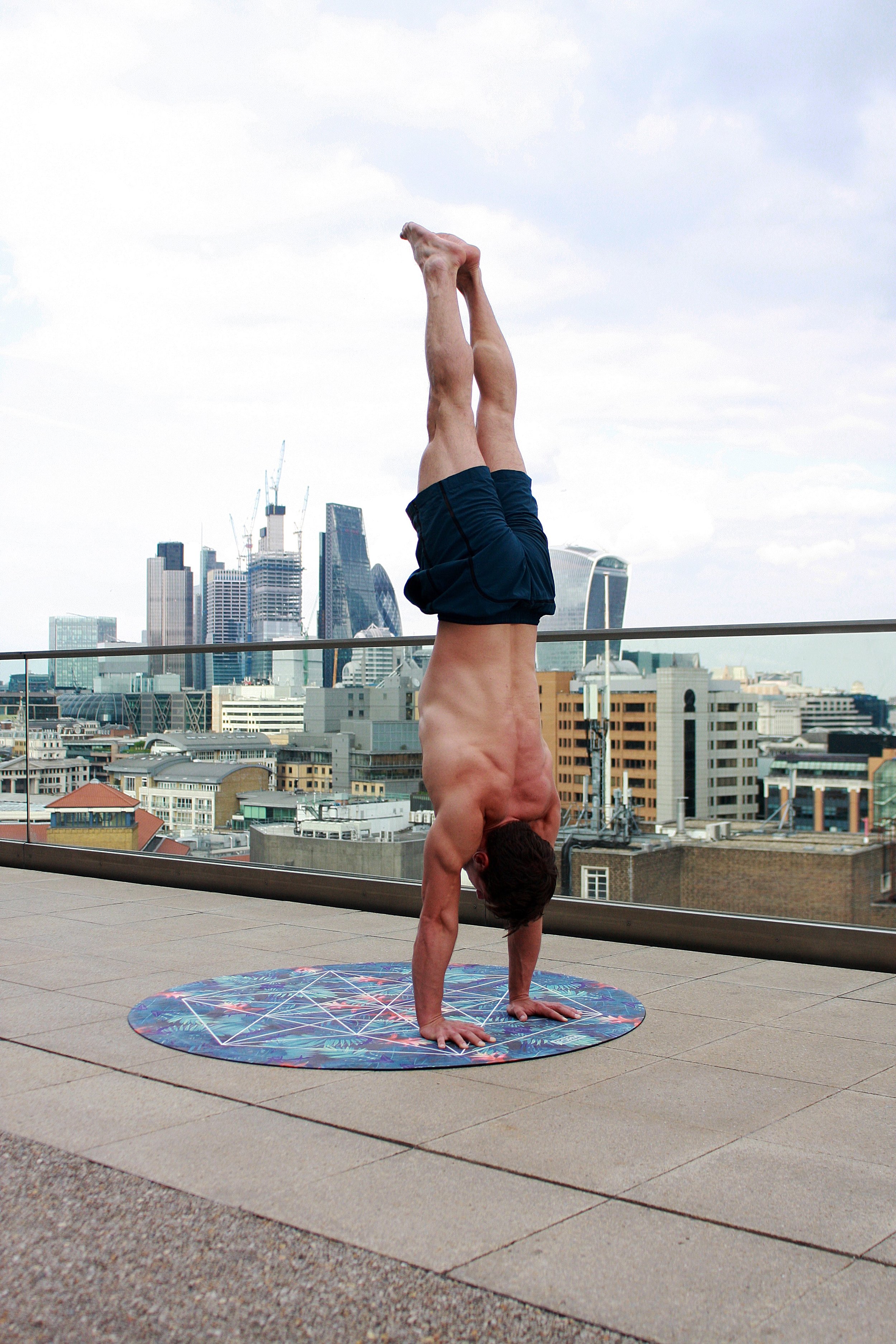
In case there was any confusion- this is NOT I nor any resemblance of me when I try a yoga pose.
This practice can be done in the financial, mathematical, emotional or psychological world- that looking by a different aka inverted view may help find the solution. There are some reports that there are benefits in the physical world as well. In doing the various yoga poses, there seems to be many that are done with one’s head hanging down (or at least it seems to me.) Supposedly it is good for one’s immune system and the like to do so. I cannot say that I am there yet- I feel everything rushing to my head and sinuses and cannot say that I feel rejuvenated when I come back upright.
There are proponents for actually hanging upside down: benefits to one’s disc and spine, relieve of back pain and sciatica issues. It also seems to help with depression,mood, leg edema and with circulation. There are caveats- a person with uncontrolled blood pressure or glaucoma can experience problems with the inverted pressure since it raises blood and eye pressure.
We also see inversion thinking in the moral world through the lessons that are told through fables and stories. The bad behavior of the character is something to which we should not ascribe. Think of the boy who cried wolf or the story of Jonah and the whale. Those stories of what not to do have consequences that we would be wise to avoid and therefore we should heed the advice of the opposite, or inverted thinking.
On a practical note, the inversion- or looking at something from a different and opposite viewpoint can be very eye-opening. This summer I repainted the roof on our screened porch. In order to do so and not use a ladder (of which I am loathe to do) I accessed the roof through our bedroom window. Being on top of the roof allowed me to see our back yard and the other surrounding yards. It gave me a whole new perspective and an idea of what to do in the design of some of our gardens.
What about you? Are you struggling with a problem or situation or decision? Can you image the opposite of what you want to achieve? What does that look like? How can you reverse those goals to obtain what you really want?
Want of a Nail...

Shoeing, 1844 by Sir Edwin Henry Landseer 1802–1873, Photo © Tate
Image released under Creative Commons CC-BY-NC-ND (3.0 Unported)
https://www.tate.org.uk/art/artworks/landseer-shoeing-n00606
Have you ever had one of those “bedroom moments”? You are getting ready for the day, the radio is on and a story is so intriguing that, although you are ready to go downstairs to leave for the day, you just have to finish the story?
Last Saturday, I had one as I was listening to NPR’s Only a Game . The story was about Scott Hamilton, the skater. He has an unbelievable life story. One of loss, health scares, survival and success. He was a sickly kid, failing to grow which confounded the doctors as to the cause. He lived his early life in and out of various hospitals. No diagnosis and no effective cure. Eventually the doctors told him to go home and be a normal kid.
It was skating that seemed to help- he found his niche and his self-confidence and finally started to gain weight and grow. His mom sacrificed to provide the resources so that he could continue to skate. Skate he did- winning four consecutive world championships and an Olympic gold medal in 1984.
But at the age of eighteen he lost his mother to cancer. Twenty years after that, he himself was diagnosed with testicular cancer. Then later in his fifties, he was diagnosed with craniopharyngyioma- “brain tumors a child is born with that usually show themselves due to a lack of growth and development." As he says, that finally explained his whole childhood.
While there are many different life lessons in his story, what I find so encouraging are his thoughts about his diagnosis. He is grateful that the doctors didn’t discover the tumor when he was little. If they had, he knows that his life would not have turned out as it did.
"Now I look in the mirror and see all the scars from all the different injuries and surgeries and all the other things, and I look at them differently than I thought I would," Scott says. "Normally, you look at scars as, like, disfigurements. And I look like at them as, you know, sort of badges of honor. It's, like, that skin is tougher than it’s ever been. And it will never be hurt the same way it was before."
What an encouragement to hear how someone overcame adverse conditions to survive. He not only has he survived but thrived. He and his wife continually give back to the community in so many ways and he appears to be a man who has found peace, love and joy.
Of course, he has connections that you or I do not. But it is not so much his connections as it is his attitude and we all have access to controlling our attitudes. He could’ve decided that “Life has given me a lot of hard knocks. I have overcome them and I have worked very hard to achieve all that I have. I do not owe a thing to anybody. I am entitled to live however I see fit.” If he thought those thoughts, he pushed through them. He chose to see the bigger picture of his life and in turn was/is able to see that life is more than just about him.
I think of my friend Becky, who has also had an incredible life journey. A journey of “death, divorce and disease.” She could easily say that she has had more than her fair share of disappointment with the way that life has played out for her. Yet, through it all or despite it all, she has given back to so many through her words of encouragement.
“In everything give thanks,” the apostle Paul writes. (1 Thessalonians 5: 18) It does seem to be a strange suggestion. How in the world can one give thanks in the midst of tragedy? Why in the world should one give thanks? Aren’t we entitled to be just a little miffed if things do not go according to plan? When I start feeling that way I need to stop asking, “why?” and rather ask myself “why not?” Why should I be excluded from difficulties? Why do I think I should? Why not me? Why not test my mettle and see if I can handle it?
And it doesn’t have to be the big, life changing issues for which we need to give thanks. I also see ingratitude with the day-to-day challenges of life. There is an old nursery rhyme that warns about paying attention to details. I also think it applies to how we live our lives: we can let our attitudes with the seemingly small annoyances of life overshadow our entire persona. It is the attitude of the interruption to our planned day that can lead to a loss of joy which in turn can lead to a loss of all that God has for us.
For want of a nail the shoe was lost,
For want of a shoe the horse was lost,
For want of a horse the rider was lost,
For want of a rider the battle was lost,
For want of a battle the Kingdom was lost,
And all for the want of a horseshoe nail.
When we pay attention to the “want of a nail” and practice gratitude even in small situations, we begin to develop a “muscle memory” of how to handle gratitude in larger situations. That remembrance can lift us out of self-pity and move us along on our journey.
When, and it generally takes me a little time to do so, I finally move out of self-pity and begin to give thanks, I find that I am more than just a Pollyanna. I am looking at the situation with a longer viewpoint. I can begin to see glimpses of why such and such happened. I even can see the longer viewpoint in the people around me. And I can give thanks to God for His sovereignty.
What about you? What things have you faced recently? Is there any way to see the blessing beyond the pain? Too soon in the process to do so? What about past situations? Can you apply the “want of a nail” to the situation and its outcome?
At the end of the day, I would hope that I am recognized for being faithful in gratitude for both small and large matters.
Click here to listen to Scott Hamilton’s interview. Click here to read Becky’s incredible memoir.
Plan to Dive

A friend of mine shared the expression, “Plan to dive and dive to plan.” This was the motto when in his younger years he was a salvage diver. The idea is that you plan carefully how, where and when you are diving as well as what you are to retrieve, etc. Get all things ready according to that plan. Then, when you are ready to dive, do not deviate from that plan. Stick to it. If so, all who are diving with you know the score, what is the expectation and most likely the outcomes will be favorable. If there is a problem, it can be dealt with in a systematic way since all the other bases are covered.
Sounds easy? Right?
I find that I can be all about the plan but then things happen and I have to accommodate, rearrange and adapt. For the longest time I found that extremely frustrating. However, I have come to realize that by planning/scheduling things, I am in a better position to handle the new accommodations and rearrangements. It allows me to have a little bit of control when things are seemingly out of control. Planning allows me the space to make choices and the capacity to think for myself.
On vacation our son played for us a podcast about personal agency. In essence, the speaker offers some suggestions on how to handle stressors in our lives and become the personal agent for ourselves. (Using the idea of someone who comes alongside and gives advice and direction for someone’s professional life, e.g. sports agent or literary agent) None of the suggestions are groundbreaking but are still noteworthy: surround yourself with positive people; stop multi-tasking; practice healthy behaviors of proper exercise, diet, sleep; manage your emotions; become a life-long learner. The goal is to keep yourself open to making good decisions and being clear minded. (Click here to hear the podcast.) I find that with good planning I can be open and clear-minded for whatever comes my way.
I think too of this past week and the remembrance and revisit of the Apollo moon landing. One of the reasons it was successful was that it was carefully planned and executed. There were some tense minutes when it appeared that there was a computer glitch. Fortunately there were some computer engineers who had prepped for something like that. A couple of weeks before the mission the flight director, Gene Kranz asked that they be prepared for every conceivable computer alarm that might register. They had run every combination of problems and its solutions. So, when there was an issue, they were prepared and (relatively) calm.
What I liked about the the podcast and about my friend’s motto is that, while none of us really has any control over our lives or the lives of others, we still can do what we can to make the best of any given situation.
We may never have to plan a moon landing, but we can plan for what we know or think might be possible. I think that is being wise. Of course, we can be so tied to a plan that we miss the opportunities that mishaps can bring. Yet, I think when we feel comfortable and confident in a plan we can be open to those opportunities.
We all know that glitches will happen. We know that life is not a controlled experiment. Yet, we can be as best prepared so that when things do go awry, we can handle in the best possible way. Maybe even having enough emotional, physical and mental margin to help someone else with their glitches. Isn’t that the true reason for planning- having space to help others because I have given myself that space?
What about you? Are you a planner? Down to the latest details? And all possible combinations of situations? Or are you a fly by the seat of your pants person? Whatever happens, happens? How does either of those situations work for you?
Blinders

How I see the world some days. Clear close up, but blurry in the distance.
Confession time: I do my best work in my pajamas.
Before you wonder what I do, let me explain. As soon as I rise, I am one of those annoying people who are ready to go for the day. I dive in and do whatever tasks are needed. For me, it is if I am getting a jump start on the day. I can quickly get those tasks over with and then be ready to move on to something less arduous for the remainder of my day. I am still in my pajamas, without breakfast, brushing teeth, no contacts in, no morning ablutions. Just out of bed and ready to go. .
So, the other day, per my usual morning ritual, I was outside in my pajamas painting some molding that was needed for completing our screened porch project. Without my contacts in I cannot see too much in the distance. I saw the form of our neighbor on his deck but didn’t worry that he might see me in my night clothes. I realized that without my contacts in, I figured if I cannot see him, he could not see me. Like children when playing hide and seek. Little kids have the tendency that if they shield their eyes, no one else will see them.
Got me thinking…
Do I respond to things only when I see it? Do I have to see to know that someone or something is there? Do I act as if things aren’t there just because I cannot see or witness it?
I think about injustice and treatment of others. I am especially bothered by the racial profiling of non-whites, especially African Americans in our town. I have a friend who has had to have “the talk” with his son. Not THE talk about sex and responsibility but the talk about staying alive and safe when the son will get stopped from law enforcement. Not because the son is doing anything wrong But because he might be walking down the street minding his own business.
It made me so sad that a parent would have to have that conversation and that it is not an if it happens but a when it happens scenario. That was one discussion that we did not have to have with our sons. Sure, I worried when they were teenagers and would go out at night with their friends. I worried that they would be safe while driving or that they would make wise choices about the activities they did with their friends. But I never worried that they would be stopped and frisked by police for no apparent reason. They were always taught that the police were the ones that would help you in times of trouble, not be the ones who would cause trouble for you.
I think of other injustices that I do not see but still occur: slave trafficking, child abuse and neglect, elder abuse and neglect., addictions, prostitution, the list can go on and on… Just the general meanness of one to another.
Am I like the emperor of the Emperor’s New Clothes? Like the emperor I think everything is honky dory but others would point out, “Not so.. There is a problem. Things are not what you think they are..” Am I more than physically blinded, but culturally and spiritually blinded to reality?
What does it take to see well? To see not only those things close to us but those surrounding us?
For me, I need to use corrective lenses. Just because I can only see the first two lines in the eye chart doesn’t mean that the other smaller lines aren’t there. For me to be fully functional, I need physical help in the form of contact lenses or glasses. In situations that occur around me that I am unaware, I need help by gathering more information. By listening, reading, or keeping my eyes, ears and mind open.
I think of the hymn: Open my eyes Lord. Help me to see. Help me to hear. Help me to love.
What about you? Do you go through life with blinders on? Are some things blurry in your life? What do you see or don’t see? Do you see close up? Distance? Or not well at all? How can you get correction?
The thing is, when I work in my pajamas whether I see them or not, others will see me. Just because I can see clearly things closest too me, doesn’t make the distance go away. I am the ignorant one who thinks that isn’t so.
Is It Better Not to Know?

Do you worry about your future?
This past Monday there was a news story about genetic testing for babies. There is an underlying question in the report pondering whether the testing is worthwhile: what are the positives and negatives for this scientific advance. Certainly there is the benefit of predicting certain genetic diseases- a person would have counsel to know what he should do or not do in certain situations. It also helps the parents in their prediction of genetic problems. If the baby is susceptible not only would there be guidance for that situation there is a likelihood that the parents or other family members are susceptible too.
The news story made me think about the future for in essence, the testing is not saying that one would actually contract the disease or exhibit the problem but that there is a possibility of it.
So, if you would be told your future, right now, would you want to know?
I don’t know if I would. (This is a big revelation coming from me, the person who is notorious for reading the back of the novel first.) I think that if we knew our future before it organically unfolded, it might be too much for us to handle. Too overwhelming. Possibly too depressing.
I think there is a reason that we cannot predict the future and that there are no guarantees with human existence- just the guarantee of death and taxes as Mark Twain once quipped. I think that God wants us to trust Him with our future- whatever that may be.
If we knew about all the blessings and honor and wonderful things that would be bestowed upon us, would we become insistent and expectant ? Would we feel entitled? Would we be prideful? Would we start believing our own press and that our success (es) are due to us and us alone? Would we enjoy the moments of our lives? The struggles, the relief from the struggles, the accomplishment of having struggled?
Or if we knew that disaster would befall us, would we resist taking risks? Would we be fearful to commit to relationships or to community participation knowing that they may break down some time in the future? Would we be forever a pessimistic people? Lacking hope?
Amy Grant has a song called “Better Not to Know”. It tells the story of a time when she had planted fruit trees on her property with the thought that this would be a good legacy of her inherited money from a grandmother. Unfortunately she sold the property as part of her break up with her first marriage and lost those trees. Years later the new owners called her up to ask if she would like to pick some of the harvest. As she describes it, that fruit was the sweetest she had ever tasted. More than a song about trees taking time to develop, it is a song about appreciating the now and all the ups and downs of life, not worrying about the future and trusting that what will be, will be.
When I think of the conundrum about genetic testing, I don’t know what I would do if that were an option for me and my family. I certainly see the wisdom in knowing a situation and preparing the best for it. Yet I cannot help wonder if too much information can confuse the issue and cause undo anxiety.
The only thing that we ever had to decide on a potential future problem was during the time I was pregnant with our boys- amniocentesis was the current medical advance and an option in some cases. There was a thought that we might have to have it done, if a sonogram showed any concern. (thank goodness, everything presented fine) If we were asked about whether we wanted the testing done, we would’ve said, we will take our chances. We were not going to do anything about the birth- terminate or not- and so we would work with whatever God gave us.
Fortunately, we were blessed with two healthy boys. With today’s medical options, I think if having testing done in order to have, say, in-vitro surgery for a condition, we would have to weigh the options. And I am certainly not equating a scientific method to crystal ball gazing. But to make a decision based on a future possibility- I think I would still take my chances.
Two Bible verses come to mind: Jeremiah 29: 11- “For I know the plans I have for you, says the Lord.” and Matthew 7: 34- “Therefore do not be anxious about tomorrow, for tomorrow will be anxious for itself.”
When I start worrying and thinking about the future, I find those two verses comforting. God knows our plans. He knows our future as He knows everything about us. If we trust Him with those plans, we cannot possibly go wrong. He doesn’t say that the future will be easy and at other times He reminds us that the way is difficult. But, we can rest assured that in trusting the One who spoke creation into being, who conquered death and all our fears and sins and who knows our past, present and future is the approach that gives us peace.
What about you? Do you think it is good to know the future? Are you a big planner? How has that helped or hindered your future? Do you read the end of the novel first?
Is it better to know or not to know?
Click here to hear the song: Better Not to Know
We sowed our seeds
Watered with tears
Waiting for signs of growth
Took months of days
And then took years.
We took our steps
We took our falls
Somewhere along the way
We just got lost
And we lost it all.
But nothing ventured, nothing gained
The risk of living is the pain
And what will be will be anyway
Oh, it's better not to know
The way it's gonna go
What will die and what will grow.
Goodbye more than hello
It's better not to know
Those tiny stems became these trees
With dirt and storm
And sun and air to breathe
Like you and me.
And some fell down
And some grew tall
And those surviving twenty winter thaws
Have the sweetest fruit of all.
But innocence and planting day
Are both long gone
So much has changed
And if we had to do it all again
Oh, it's better not to know
The way it's gonna go
What will die and what will grow.
Oh, nothing stays the same
Life flickers like a flame,
As the seasons come and go
Goodbye more than hello
It's better not to know
Is it better, better not to know?
Is it better, (is it better), is it better?
We sowed our seeds
Watered with tears
Oh, it's better not to know
The way it's gonna go
What will die and what will grow.
Oh, nothing stays the same
Life flickers like a flame,
As the seasons come and go
Goodbye more than hello
What comes of what we sow
It's better not to know
It's better not to know
We sowed our seeds
Watered with tears
Lessons From Dale
On a recent visit home, our son was telling us about life lessons he had recently heard on a podcast. On it, the producer reminded the listeners that to be a good conversationalist one has to be willing to learn. One needs to take the posture of listening and thinking to oneself- “What can I learn from this person who is talking?”

First edition, 11th printing (February 1937), Courtesy of Wikipedia
I love this idea. Which of course is nothing new. We should always treat others as if their presence is a gift to us: a gift of time, experience, advice, of being. It is one of the tenants from the still published and still offered courses by Dale Carnegie. HIs signature book was “How to Win Friends and Influence People.” It was first published in 1937 and is still in print. I never read the book nor took any of the courses yet have always been intrigued by that title. In some ways it seems so contrived and calculating: to win friends and intentionally influence others. Yet that is what we do or try to do with one another whether we want to think it happens or not.
According to Wikipedia the book was broken down into different sections: things that the book will do for you (presumably if you pay the money for the course and/or books); fundamental techniques for handling people; ways to make people like you; ways to influence people to the way you think; how to be a leader without giving people offense or feeling of resentment; letters that produce miraculous results (removed in later editions of the book) and ways to make your home life happier (again, removed in subsequent re-printings of the book).
Part of his explanation of making people like you is to take a genuine interest in others and listen to what they say. That does seem cold and calculating and not at all organic. However, the rationale that by listening, we may learn something new is a great posture of humble listening: To recognize value in each interaction with one another and that in that interaction, someone may teach us something new.
The thing that I have noticed lately is the lack of one another really listening. (I include myself with this.) There is no longer the art of conversation but rather joint monologues. I think of the “play dates” for two-year-olds. At that age, there is not interactive play- just side by side individual play. Our conversations are like that. One person will speak and another will speak either over top of that person or interrupt or continue on a totally different wavelength and/or topic. Very rarely is there a conversation where the conversational ball gets tossed back and forth with the addition of new and interesting information being shared. It is almost as if everyone has a limited time to get his/her point across about any topic and so conversations become this quick exchange of “my” information.
I do think that the time factor is part of the problem. Our days are jam packed with transactions: running here and there, trying to accomplish whatever we deem important. We don’t get a chance to really speak to the people we know and love in our lives nor much less listen to the peripheral people that we bump shoulders with- the customers in the grocery store, at the gas pump, folks who are walking down the street, and in some cases the people living next door to us.
Just yesterday I was able to truly listen to a stranger and it was only due to the fact that I had some extra time. My friend and I had gone grocery shopping together and as my order was smaller, I was finished sooner than she. In one aisle I encountered a gentleman who was having a little trouble seeing the items on the shelves and so I made a brief comment to help him out. This led to a ten minute discussion where the man told me some of his life story.
The whole time I was with him because I was thinking of my son’s comment about his podcast, I consciously thought, “Be present with him. Really listen and recognize the gift that he has brought to your day.” It was a wonderful discussion. Now in all honesty, I didn’t learn any encyclopedic knowledge but I did get a taste of what I have been thinking and writing about. Plus the chore of going to the store didn’t seem so burdensome. After this encounter I began wondering, What next? Whom will I meet at the next place? I was prepared to keep my eyes and ears opened.
What about you? What are your interactions with people like? Are they strictly transactional? Do you listen? Could you repeat back what you have been told? Do you know the eye color of the person who just spoke to you? I realized that many times I see people with out truly seeing them.
In my encounter at the grocery store, I intentionally wanted to connect and so I saw him and his interesting pale almost amber/brown eyes. Of course, in this day and age we need to be smart. You don’t want to have the reputation of the creepy starer in the neighborhood or being accused of longingly looking at a person when all you are doing is trying to look them in the eye. But I know for myself I need to be more intentional in my listening skills and part of that requires me to zero in on the face of the speaker.
I do not know how much I win friends or influence people and that is really not my intent. I think the beauty of the lessons is to connect with others and build community. When we have an understanding community, we will win friends and influence others for the betterment of society.
Creative Pursuits

Our screened porch (sans screening-a summer project in the wings) with my hand painted scallop pillows.
What are you doing this summer?
Seems like a question that I have been asked of late. It seemed that when we were young and on the school calendar mode, it was easy to break down our year into seasons: summer break, fall school start, Christmas break, winter semester, spring/Easter break, spring semester… It was easy to set goals and schedules: piano lessons, choir practice, soccer, field hockey, swimming, school play/musical, etc… Even the course work was scheduled for specific times: driver’s ed happened in the spring, “family planning” or any of the health classes occurred in the spring, local history was taught in the fall, etc.
So, when we ask each other what we are doing in the summer, I think there is a little of our preprogrammed schedules in our heads. “Visit family, hang out at the pool, go to camp, visit the beach, travel to Europe”….
I always think that the summer is a good time to pursue some type of creative or craft project. Guess I am reminded of my annual packing of my “craft box” to our summer house. I had a box that contained my bits and bobs: brick-a-brack, styrofoam forms, needlepoint, glitter, acrylic and water color paints, pastels, etc. You name the project, and I probably had the appropriate material stuffed into that box. One time my brother in exasperation for it taking up room in the car said, “Are you going to bring that **** box again?!” I always fancied myself as an “artiste”- hiking along the marsh edges, portable easel, paints and wearing an old smock and straw hat. In reality, I probably, only once, brought a small sketch book and pencils bought from the local 5 & 10 to sit at the edge of the jetty and left within minutes of getting thoroughly soaked by a wave.
This summer, I still have a hankering for something creative. I have scratched that itch (slightly) by making new pillows for our deck and screened porch. What I like is when I can “use up” some other material that I already have in the house. Such was the case with the pillows: I covered existing pillows with left over material from having re-covered our dining room chairs (that material was a painter’s drop cloth!) and used up some of my acrylic fabric paints by painting scallops shells on them (or my attempt at a scallop rendition). I also covered existing pillows with coordinating ribbon and used some starfish from a former wreath.


It may not be decorator’s choice but I like it.
What about you? Did you like arts and crafts as a kid? Did you do it at camp? What have you always wanted to learn? To knit? Crochet? Paint? Sculpt? Design a garden? Take design classes? Baking classes? Cooking classes? Woodworking?
Just because we are not formally in school or camp doesn’t mean that we cannot learn and try new creative pursuits. Maybe get some friends together and share the expense for a lesson or two. Or, have a sharing session where someone shares his/her skills with the group. Check out pintrist and youtube videos for ideas.
While the craft box has been dismantled and redistributed, I might still pull out my sketch book. I have also been thinking about making some new needlepoint eyeglass cases. Perhaps resurrect my old Kenya bag and add new rope handles? The list can go on….

I wanted to use up an existing pillow (tan) but wanted to tie it into my “beachy” theme so I found navy ribbon and used up an old starfish from a dismantled wreath.