
Come Together * (or at least 6 feet apart)
March has been an incredible, life-altering month for us as Americans and as a world. Our generation is experiencing depravation, isolation, and fear that we haven’t experienced or collectively experienced in a long time. We see people squandering and hoarding resources yet we also see people carrying on in the bravest of ways.
It was the best of times. It was the worst of times.
It makes my heart sing when I see people behaving in the best of times mode. These are the “helpers” as Mr. Rogers would say. When I was a boy and I would see scary things in the news, my mother would say to me, Look for the helpers. You will always find people who are willing to help.
Look for the helpers.
I keep hearing about small acts of kindnesses and help. In our beach town, there is a group of children who will ride their bikes to the store to pick up much needed items for their self-quarantined shut-in neighbors. One of the moms rides with them.
I heard of a similar type of helping of apartment building neighbors near New Rochelle, NY. Many of the elderly neighbors do not have access to the internet and so cannot order groceries online. They leave a list out for their neighbors and others in the building will pick up what is needed.
On the social media neighborhood accounts, there are numerous offers to help others, reminders of people to look out for others, sharing resources and information and even specific inquiries about the whereabouts of “resident” homeless persons.
While this pandemic is currently devastating and will continue to be ( for we do not even know what life will look like in the weeks, months and even years ahead), there has been some surprising societal side-effects:
I have heard from many friends and neighbors that they are surprised that the stay-at-home edict is seen as a welcome. They are welcoming this slower paced lifestyle. Many have said that they have gone from an almost difficult to read, packed with writing, full calendar to one with scratched out and blank, empty spaces in the blink of a news conference. I know that my husband and I are wondering about our time management or lack thereof. Our Jan, Feb, March monthly calendar blocks were almost solidly black with written- in appointments, meetings, and deadlines. Our April calendar looks like it came out of the wrapper- the only entries are the factory printed ones: Palm Sunday, Good Friday, Passover, Easter, National Arbor Day.
There has been time to do the “rainy day projects”- renamed “pandemic projects.” Many folks are finally getting to the clean out and clean up of clutter. They are sprucing up gardens and yards. They are prioritizing the material things in their homes.
I have heard of others who have decided to daily contact someone from their community (apartment building, condo, neighborhood, extended circle of friends) to see how they are doing and to offer a little chat. For me, it is reminiscent of my great-Aunt who, in her nineties and being primarily home-bound, took it upon herself to call the “shut-ins” from her church to check in with them, offer a kind word and listening ear and to pray for them. How fortunate we are to have many forms of technology that we can do so.
There is a greater appreciation of being in one another’s physical presence and the longing for touch. Even the introverts seem to agree that there is a missed sense of belonging when one cannot physically gather.
This might be the time to resurrect the snail mail. When one cannot touch a person, there is something to be said for a hand-written letter- knowing that the person who wrote the note physically touched the paper, etc. While video chats are great, letters can be reread and held- a paper chain of touch.
It is wonderful to see families walking, jogging or bicycling together. I realize the novelty of all being home 24/7 may wear out in another week or so, but I wonder if families will settle into a different and new pattern of appreciation of being together? I have a neighbor who thinks divorce rates will increase after this settles down, but I wonder if some marriages will be strengthened instead- maybe without all the extraneous distractions, people will remember why they fell in love with their spouse in the first place.
I have noticed that when I have gone to the grocery store there is not the frenetic atmosphere that usually persists. People are still scrambling to get provisions, but it is almost as if everyone has finally recognized that this is for the long haul and no store is going to have the same stock as pre-pandemic stock. While there is a prevailing hush and people are mindful on one another- social distancing, there are conversations occurring down the aisles. I have heard people catching up with each other about the status of family and friends. I have also seen and heard shoppers be very appreciative to the grocery workers, saying a thank you, morning pleasantry or just looking them in the eye and recognizing them- perhaps for the first time. Of course, in moving through the store, some shoppers will smile at each other while others are head down as if the contagion is spread through the glimpse of an iris.
It sure is sad that it takes something of this magnitude for us to realize that we do need one another and that our survival depends on one another.
What about you? What have you noticed about the people around you? Have you seen any helpers? What creative ways have you seen others coming together - with the appropriate social distance?
One thing I thought we could do as an encouraging community is to offer an encouraging word or picture each day- something on which we can meditate, think, ponder, focus. Something that might take our minds off of the current situation at least for the moment, I will (try) post everyday for the month of April. Just a short snippet of inspiration (hopefully) which we will title: Words and Pictures. [If you haven’t seen the film by the same name- free with ads on Youtube. An okay film (after more weeks sequestered it might seem like a masterpiece) depicting 2 teachers- one Art and one English and a competition between the two with students deciding if painting or literature is the best.]
* Come Together. “Bum bum, dodadoo. do. Bum bum. dodadoo. do” (Best attempt to write out the sound of the base line to the beginning of the song.) During my stay-at-home, I have been spring cleaning to Paul McCartney radio on Pandora. The Beatles song, Come Together has been circulating in my head.
Today’s To-Do List

The beauty and fullness of the spring trees belie the world’s predicament.
If you are like me, the thought of this pandemic is unbelievable. I can grasp the temporary self-quarantine, the limited groceries, and the reduced traffic on the roads. Except for the beautiful spring weather, it is almost as if we are having a prolonged snow day. But. If I think about the predictions, the length of time that businesses will be closed, that there is no place in the world to escape the pandemic, and that all places are experiencing the same, then I cannot grasp the situation. When I really try and grasp the breadth, depth and complete change to society I become overwhelmed. It is like trying to understand eternity. Incomprehensible.
The thing is, so far, it is not as bad as it could be. A friend reminded me of Anne Frank and the people who had to hide during the Nazi regime. Talk about unbelievable. I wonder as they sat in silence in small, dark spaces, did they remember the previous days, weeks, years when life was full, free and without restraint? Did they look forward to a future of things they would do, places they would visit, people they would encounter?
Part of this COVID-19 experience is being in the present: we cannot bemoan the past nor can we predict and plan too much for the future. We need to be where we are, right here, right now. We need to be present and aware of what is currently going on in our lives, our community, our state, our country and our world.
It occurs to me we have two things to do: care for ourselves (the old adage of first putting on the oxygen mask before we can help others) and care for one another. I’ve been thinking about different ways to be present each day and go through this experience with (hopefully) prudence, grace, love and maybe even with some joy thrown in.
Ways to care for ourselves:
Learn something new online. Many art museums offer educational online components. Sometimes the presentation is geared more for school-aged children but it still might be something new to you. The National Gallery of Art has virtual tour of its collection.
Listen to podcasts from Spotify, Pandora. Check out your local library online to see what ebooks, audio and video items are available.
Look at youtube for classes offered from different universities. You can also find exercise videos. One of my favorite online yoga videos is on Youtube- Yoga with Adriene.
Try to accomplish one project around the house. It can give you a mental boost to feel that something was accomplished during this unusual time. Unfortunately if it is de-cluttering, you might have trouble getting rid of the clutter (many non-profits are closed and dumps may have limited hours) but you might be able to move all the things that are to go out of the house to either a garage, shed, backyard or at least boxed, labeled and ready for removal once “stay at home” recommendations are lifted.
Read the Bible. If you have never picked up a Bible, now is as good a time as any to do so. Or, if that seems too daunting, read a daily devotional. Many can be delivered daily to your email or phone. Click here to read Rick Warren’s daily devotional.
Sleep. Eat. Move. Practice good health habits. It is never too early to start. Even if you have underlying chronic conditions, you can strive to be as healthy as you can. You may not avoid getting sick but being as healthy as you can, might lessen symptoms and improve outcomes.
As always, practice good hand washing hygiene and social distancing. CDC guidelines. If you do not feel well, stay at home and self-isolate. One thing I have noticed some people are using gloves and masks and they really do not need them. Common sense (stay at home) and frequent hand washing with soap and water. Let the health care professionals who need gloves, masks and equipment (sanitizers) have them.
Ways to care for others:
Phone call, text or email to check in on your family, friends, neighbors. It is especially important for those who live alone to know that they are not forgotten.
If you are in the not-at-risk category- offer to get groceries for an at-risk neighbor (elderly, chronic condition). Offer to get groceries for a health care professional so that they do not have to stand on line after a long shift.
If your local restaurant is still offering take out, order a meal once a week or whatever your budget will allow.
Pray. When I start feeling anxious about loved ones and the future, I pause. Take a deep breath. Pray. I remember all the ways God has cared for me, my family and others in the past. I turn over all my fears and anxieties to God, trusting that He will continue to care for me, my family and others. Sometimes it is a minute by minute practice.
I have also been thinking about gratitude. The same friend who reminded me of Anne Frank also said that each evening she and her husband think of three things for which to be grateful. What an uplifting way to end the day, especially when each day brings difficult news. I heard an interview recently with the author Diana Butler Bass. Click here for the interview. Starting at 23:33 are 4 great reasons for gratitude. On her website she has some other resources for ways to practice gratitude: Click here.
What about you? What are some things you are doing during this surreal and unusual times? Are you able to care for yourself? For others? What does that look like?
Sometimes it is difficult to even take comfort from words from the Bible. But, it is important to do so. Let the words flow over and around us, letting them soak in. In the video with Ms. Butler Bass she talks about the Bible verse: “give thanks in all circumstances” (I Thessalonians 5: 18 NIV). What she notes is that it doesn’t say give thanks for all things. The word “in” in NT Greek means “through”. Through all things give thanks. What she reminds the listener is that there are many situations which we are not thankful for (nor should we): oppression, evil, injustice, sin. But we can be grateful and thankful as we go through the experience and that is what can get us to the other side.
Today’s to-do is to be grateful. Gratitude is a discipline (tool) that can help us uncover and accept our past and shape and set the tone for our future.
Peace and Calm

I know. It has become a cliche but I must say, it is a good reminder…
I think most people would say that they do not feel at peace or any sense of calm especially in today’s environment. The world seems to be going crazy. In just one week we have gone from a relatively normal existence to scrambling for toilet paper and goods, focusing on every sniffle, ache and pain, and washing and gelling our hands until they are raw. There is no escape- every where in the world it is relatively the same.
In the Sunday NYTimes there was an article about the 1964 Alaskan earthquake. A newly formed team of sociologists charged to study disaster planning in the wake of the cold war, arrived in Alaska expecting to find chaos. Instead, they saw a community coming together, using its resources and experience to help one another. The president of the mountaineer club volunteered to organize a search and rescue. Neighbors were helping neighbors recover household items and sharing meals. They did not find the neighbors looting or hoarding. Just assisting one another.
The other night I saw part of a David Attenborough documentary about Africa. He was highlighting the beautiful yet stark, harsh conditions of the Sahara Desert. As you can imagine no water is to be found anywhere except at few and far between oasis. There is one such spot that contains a large lake which turns out to have hyper-salinity. More so than any ocean and in ingesting it, many animals die. Because of the deaths, it also is home to plague-like proportions of flies.
In a remarkable turn of events, the thirsty migratory birds stop, not necessarily for the water but for the flies: in eating the flies they get hydrated. Talk about making lemonade from lemons. Or water from flies. (I have heard of “like water for chocolate” but never like water for flies.)
All this makes me think of our current situation. Not that I welcome COVID-19. Certainly not as a thirsty traveler welcomes an oasis or as a community building activity. But who knows the whys and what for’s in this pandemic crisis? Is there an opportunity in what we are experiencing? Some hidden blessing or unimaginable alternative? From all the disaster movies of the 1970’s, we know that panic doesn’t help any situation. (although it makes quite a drama). Can we be calm? If sociologists came to our community, would they find us carrying on and helping each other?
What are we to do when we feel that our lives have crumbled around us and that the reality that we knew, no longer exists or supports us? How do we (try to) maintain a peaceful and calm demeanor?
While I have no answers, I do know the One who does. I do know that God is sovereign and that I need to trust Him even when, and especially when, life seems chaotic and out of control.
Ideas that I try to instill in myself so that I may (or attempt to) have the peace that passeth all understanding:
1) God is in control and world leaders, health professionals and I are not. That doesn’t mean that God has caused COVID-19, or that He is sitting watching all of this unfold like a grand chess master. Nor does it mean that I turn off my God-given mind and become complacent to all that is going on around me. Rather, I choose to trust Him with my life as I trust the ultimate loving parent. While situations can be difficult- suffering, pain, anxiety, stress, loss- when I turn over my feelings to Him, I find that I can manage what comes down the pike. I realize that there is a bigger story going on- bigger than my individual one. When I look at life as part of the eternal timeline, I do not get so anxious about my current event.
2) Be prudent and wise: Take the necessary precautions (self-isolation if you are at-risk, hand washing, practice social distancing, staying as healthy as you can be- sleep, eat, exercise). If constant news and updates on COVID-19 is stressing you out, turn off the TV or radio. Listen to the news once a day. Or, if you feel that you want more information to allay fears- research information, using credible sources as well as multiple ones (for balance). God has created wonderful researchers, scientists, doctors and health care workers. Science is a beautiful, God-created order and we are wise to explore and learn.
3) Look out for others and be a blessing to those around you. It warms my heart to see through social media- I have noticed through the Next Door neighbor groups- individuals asking if anyone needs assistance and reminding their neighbors to look out for the elderly. One thing we can do-simply, why not smile more? It is easy to scowl and frown when we are worried, but what if we tried the opposite? Others can still your smile at six feet.
What are you doing about COVID-19? Do you feel anxious? Are you worried? Are there any good things that you see coming from this event? How can you promote peace and calm in your household?
Pressure

What do you do when you are under pressure? Eat? Drink? Exercise? Clean? Polish silver? Straighten the spices? Make lists upon lists? Yell? Completely shut down? Bake?
I have realized that the more I am feeling overwhelmed, the more I complete household projects. I guess it becomes a way that I can control something in my life: I may not be able to control the health of loved ones or the financial markets but I can surely put a new coat of paint on the walls of my office. It gives me a sense of accomplishment and control.
Of course there are times when this efficiency creates more stress. Usually it is in the middle of the project when things are at sixes and sevens and then another phone call comes in for a request of time, resources or skills. It is at that point I wonder, “Why in the world did I ever start this project?”
It has been shown that mindless repetitive tasks are a good way to relieve stress- kind of like the release valve on a pressure cooker. Mindless tasks also allows our brains to think about other things- to muse, to daydream and to create.
Many times the “dialogue” that occurs when the daydreaming mind cycles through different parts of the brain accesses information that was dormant or out of reach, notes Eugenio M. Rothe, a psychiatrist at Florida International University.
I find that when I do those mindless rote tasks, I can think of the situation or problem at hand and come up with ways to tackle it. It is been the times when ironing that I have been able to think through and plan the moving and organizing of elderly parents. All these simple tasks allows me to keep the home front “in control” while I attempt to handle everything else. When I am gardening or walking the dogs I generally come up with writing ideas.
In addition to mindless tasks I read some interesting ideas about things to try when feeling overwhelmed:
1) Finish one task that you may have started. Sometimes it only takes 15- 30 minutes to complete a seemingly on-going task because when we are in the middle of it, we decide to quit early. Nothing makes me feel accomplished than to strike off an item on my to-do list that has been there for months or even years!
2) Make a brief list of what you are NOT going to work on. I like this suggestion. It gives me permission to not worry about accomplishing too much at one time. I can stay focused on what I am going to do and know that these other things will get done. Later.
3) Do some part of your task and then take a break. Sometimes when things are overwhelming, it is just hard to have the impetus to start. Just do something. Sometimes I just gather: gather information that will be needed for a decision or gather materials needed to start a project. If I am doing a household project, I may just get all the prep work done or laid out ahead of time and then continue working on it the next day. Many times, just getting the ball rolling gets me started and ready to complete the project.
What about you? How do you handle being under pressure?
When I feel that the pressure of finances, future, job and family responsibility, is sitting in the back of my throat causing me to feel like I am suffocating I do the following (in addition to painting rooms): take deep breaths, talk to myself- giving me little pep talks and mantras (ex. “Thy will be done”; “Consider the lilies of the field…”; “Cast your cares on Him for He cares for you”), try and get a decent night sleep, exercise. These things may not eliminate the pressure but certainly helps reduce it.
For those of you who may remember, here is the quintessential musician from the quintessential city singing about PRESSURE;
Comfort Food

What is your meal time like?
Recently in The New York Times Magazine there was an article about serving weekly meals to friends and families. The author was highlighting her new book, “See You on Sunday”. She shared a recipe from her book and described what “see you on Sunday” meant. For her it is not so much about the meal but rather the weekly date of sharing a meal with others.
I also listened to a recent British podcast, Happy Mums, Happy Babies in which Catherine, Duchess of Cambridge (Kate of the British Royal Will/Kate/Harry Meghan saga) is interviewed and shares her experience with motherhood, childhood and her childrearing/life philosophy. Catherine speaks about the importance of simple things in one’s life: spending time with others, really listening, getting back to nature, etc. She says one of her favorite photos is of her daughter Charlotte, leaning over and sniffing a bluebell.
Smelling the flowers. Looking someone in the eye and really listening. Avoiding the fast talking repartee of sound bites.
Sharing a simple meal together.
In this month’s The Atlantic magazine the cover article “Is the Nuclear Family Dead?” is written by political and social commentator David Brooks. He provides “evidence” of not only the decline in the nuclear family but that the nuclear family was an anomaly to begin with. His premise is that extended family or tribe or people grouping is what provided the nurturing and growth of humans. It is in the collective sharing of life that allows one to thrive.
He explores various factors of economics and behavior. He notes that the nuclear arrangement seems to work for people who can pay others to provide the support work of the family, yet for those economically challenged nuclear families when extra help is needed, there is not a social structure in place. The ideal of the nuclear family was just a post WWII fairy tale. In all other times in history a larger circle of care was always available.
( Obviously the Duchess of Cambridge really doesn’t have to worry about child care when she goes out on a meet and greet and if she has folks over for dinner, does she really do the entire meal and prep for entertaining? Plan the menu, purchase the food, cook the meal, lay the table, tidy the house, tuck away Will’s or the children’s work and toys? )
As David Brooks notes by using the movie Avalon as an example, we have gone from regular gatherings of extended family- gatherings in which life is exchanged, the family knows what is going on in each other’s lives- to the “gathering” of one or two, hurried meals in front of screens- not even one television screen for all but each individually watching a screen. As he reports, all this individualism is not good. It is bad for one’s health and for the health of the community. I know I am guilty of not knowing what is going on in the lives of my extended family. No one lives near each other and we get busy with our own lives. While I might listen to their situations, I am not one to share a lot of info about my life with them- in a weird way I feel that I am “bragging” if I mention any blessings in our immediate family or that they have enough going on in their own lives and do not need to hear from me.
His remedy is to return to the extended tribe- whatever that might look like for you. With the way work is and our globalization, it might be hard to stay where the extended family is located. We might be in a place where we have to look for others around us. To look for community wherever that may be found- quite possibly at a simple Sunday meal.
Darkest Before Dawn

Traveling down a dark road? Keep walking towards the light…
I am sure you have heard the adage that it is always darkest before dawn. While I know the expression is true, it wasn’t until driving in the wee hours of the morning recently that it really struck home.
When I travel to our beloved beach house, I like to leave early in the morning in order to avoid heavy traffic as well as get to the house in the early afternoon. Then I feel as if I haven’t driven the entire day and can get a few things done on the “travel” day.
The thing is, when I leave the house in the predawn hours, the sky looks fairly light. It is only as I have driven about an hour and half that the sky seems to turn darker and seemingly ominous. It is then that I have the mental conversation, “Why did you have to leave so early?” I can feel my limbs and muscles wanting to stretch out in a comfy bed and go back to sleep. I have to remind myself of the destination and visualize the house, the beach and the peaceful feelings I get when I go there.
The darkened sky, landscape and highway seem like it will never end. But, before long, I will start to see a glimmer of light on the horizon and once that begins, the sky quickly becomes lighter and lighter until a full sunrise.
It is a new day.
What a wonderful metaphor for life: situations can turn difficult and dark but they do not stay that way- new beginnings can come out of those situations. The light of a new day will come.
Recently our family is experiencing an emotional journey like this: our last remaining parent (my husband’s mom) has been steadily declining with her health, recently hospitalized and now is in the process of rehab with an eminent change in her living situation. While we know the ultimate end of her destination (that which will bring her peace and the ultimate new home) it seems as if we are in the dark hours of the soul for her. A hard time for all involved. While we are in it, it seems as if the sky has become darker and darker. Yet, we tentatively hold on: light that will be dawning.
What about you? Are you going through a dark time? Does the absence of light envelop you? Does it appear that there isn’t any light at the end of the road? Yet can you visualize that light? Where you are headed? Can that glimmer of hope keep you going?
I have found that in these dark times of my soul, I repeat over and over again, “Thy will be done.” I do not know for what to pray at this time (Mom’s complete healing? Spared from any more pain and distress through a quick death? Strength and patience for us?) but I do know that God is sovereign. He is in control. His ways are not our ways. And that when I do not know how to pray, the Holy Spirit intercedes for me. I have to just let go of all my feelings, emotions, and thoughts to God through prayer and let Him work.
So, hang in there. There is light that is just around the corner. It may be a glimmering ray, but a new day is coming none the less.
P.S. Thank you regular readers for being patient for this late posting. As I am sure many of you have experienced, when you have a loved one in the hospital or any health setting it is very hard to get any work done. Even if you have your laptop with you (as I did), there are constant interruptions to seemingly long days of waiting (the “hurry up and wait” phenomena).
WFU Grounds Crew

My husband’s and son’s alma mater had an interesting art project. An alum choreographed and designed a show using the most unlikely cast members: the facility crew at the University. The event took place outside last fall with three performances and original live music. The purpose was to showcase the unsung heroes of the school: those individuals who keep it running and looking beautiful. Those who work on the grounds crew “danced” with their lawn mowers, blowers, and backhoes. The cleaning crew mimed hall cleaning as they grooved to the beat. The plumbers, electricians and techs acted out a skit demonstrating their on-call capabilities.
The design of the project (and other ones that the alum has developed) is to let those “under the radar” workers know that they are noticed and appreciated. Their jobs are important. Hopefully someone who saw the live performance or who sees the video will look with different eyes at these specific workers and at any worker of “menial” jobs.
What I love about the project is that this director, Allison Orr is using her talents and gifts to elevate and make aware other individuals: to give voice to those whose voices gets lost, to educate others about the unnoticed yet vital jobs, to communicate these ideas through a different medium of dance and music and to ultimately build community. As she says, “The purpose of the show was to educate the campus and the wider community about the critical work the facilities staff do to keep the campus running.”
What about you? Have you any thought about the people around you? What can you do to honor, educate or elevate people’s jobs? In some ways, it is more than money. Although appreciating people with monetary gifts is a help to those who do not make a living wage. I am thinking of the bathroom cleaners on the highway rest stops. Talk about a thankless job. But if you have ever entered a stall that was not clean, you certainly appreciate one that was. The last time I was traveling I was wishing that I had extra cash to hand out to those workers, as a visible thank-you. Somehow I felt that my voiced thank-you seemed too weak but my hope is that the woman still felt surprised, recognized and that maybe another traveller who overheard would think about those who serve in a new way.
“It may not feel like it, but something you do will strike people, and they will change how they see things.” ~Allison Orr
Composting

From trash to earth treasure…
The other week my husband resurrected the compost heap. We had had a compost pile many years ago. In fact a friend gave us her black plastic compost bin. For a time we dutifully added grass clippings and leaves. Though it was never a well tended compost heap. Whenever I thought about it, I would stab a pitch fork into the middle and wiggle the pitch fork around but never really worked on it enough to make the yard debris into gardening black gold.
So, I was curious as to what prompted my husband to do so.
“Greta said I should do it.”
At first I thought, “Who the heck is Greta?” And then I remembered that he had read an article about Greta Thunberg.
Which is why we now have a stainless steel container on our kitchen counter containing coffee grounds, vegetable peels, old cut flowers. Each day, he will dump the contents into the black bin and stir.
I have been thinking about composting. One. I love the idea of recycling and “using it up”. What better way to use up our food waste than by turning it into something useful. According to the EPA, food scraps and yard waste together comprise of 28% of what we throw away. What a waste (pun intended). Especially when that waste can be used for something good.
Environmentally it makes sense to compost. There is a removal of items in the landfills. Not only is space freed up, but I also think of the gas needed for transporting that waste to a dump or landfill whether by a paid trash collector or yourself.
Composting has made me aware of other waste products our house hold produces. Compared to my unscientific study of our neighborhood (looking at the trash bins lining the sidewalk on trash day), we do not throw out that much. Not even half a can for the two of us each week . But I am no way near the people who are trying to produce zero trash. You may have heard of the minimalist folks who, if not completely without trash- meaning not recyclable in any way, can contain their year’s worth in a mason jar.
Our reduction in waste results from trying to avoid purchasing anything with too much packaging in the first place. Nothing new to our lifestyle. We were practicing that when our children were small. We started out that way because it was more budget friendly to do so. At that time, I never gave it much thought to our purchasing preferences until one day in the grocery store our one son was heard saying in a loud voice that only five-year-olds can produce, “Look at all the packaging that lady has in her cart” as he pointed to the evidence. I did a quick 180 with the cart and darted down the next aisle.
Composting is also a tangible and wonderful life metaphor about how God is at work in our lives. What I especially love about this metaphor is how, that which is inedible can be turned into something which supports growth of edible products. Even at the end stages of an organic item, it can be broken down and reused as soil to enrich the next crop of items. With just warmth, moisture, oxygen and nutrients you can have an ideal environment for microorganisms which will break down any organic debris.
How many times do we think we have broken and unusable waste in our lives? Faults, situations, problems or relationships that seem to have no purpose other than toss into a trash heap. We wonder how can anything good come out of this mess? Yet with God, it always does. He is the ultimate recycler, re-user, restorer. He is in the business to change things from worthless to worthy.
I have seen time and time again, either in my own life or in the lives of those around me, that there is potential for growth and goodness even with the most challenging and seemingly hopeless situation. There might not be direct goodness (or seemingly so) to the individual but there is always a definite goodness in the longview of relationship building and/or societal growth. For God is sovereign and His purposes are not ours.
When you think about it, even if there is no good for you, your situation might be a reminder, warning or good for someone else? “You meant evil against me but God meant it for good.” Joseph reminds his brothers (and us) in the review of Joseph’s long, troubling and ultimately triumphant life.
What about you? What trash do you have in your life? Are you holding onto it? Or getting rid of it? Can you trust God to take that which is ugly and allow Him to turn it into something useful and good? Can your trash be a treasure for something else?
I can think of nothing better than to learn that a difficulty of mine has been turned into something good for someone else or that it has built a relationship. The by-product that gives meaning to the hardship. I think of my recent wrist injury. While it has been a difficult three months (and I still have some surgeries and healing ahead of me) I do see this trash of an experience turning into the groundwork for a lovely friendship. An acquaintance of mine helped me navigate the orthopedic process for my broken wrist. It was unexpected and a God-send and I have been able to help her with some of her personal issues. More than a tit-for-tat but rather the groundwork of friendship and caring. She would have remained an acquaintance had I not had my injury. For that I am grateful. Who knows what this good thing will turn into?
What does your composting pile look like? What trash in your life is turning into an earthly or heavenly treasure?
100 Seconds to Midnight

What if this was all the time you had left?
Have you heard about the Doomsday Clock? Just the words alone seems like something from a 1950’s sci-fi film- shadowy black and white images featuring a wild-eyed, white coat, hair standing-on-end mad scientist out to destroy the world.
The Doomsday Clock is a real concept. It is representation of the perils we must address if we are to survive on this planet. The clock was created in 1947 by the Bulletin of the Atomic Scientists as a globally recognized indicator of the vulnerability of our existence. It is a design that “warns the public about how close we are to destroying our world with dangerous technologies of our own making.”
A group of scientists, consisting of 12 Nobel laureates look at the problems of the world and apply the end of the world (midnight) time frame. In the past the greatest danger to humanity came from nuclear weapons. Originally the clock was “set” at seven minutes to midnight. (Interestingly, according the Bulletin website, that time frame was picked because the designer of the clock thought that hand design looked good.) Since 2007 the Bulletin has considered catastrophic disruptions from climate change in its hand-setting deliberations and have moved the hands accordingly. It has been moved to two minutes to midnight in the past but this is the first time that clock has been described in seconds.
Upsetting to say the least.
Are we running out of time? What do we do? Panic? Hide under our beds? Party?
But then on the same day as hearing about the Doomsday Clock, I heard a Storycorp interview between a NASA engineer (Jefferson) and his kindergarten-aged nephew (Jerry). Both share a love and passion for space. What struck me was the optimism in the future, especially for this up and coming astrophysicist/rocket scientist. Below is part of their conversation in which Jerry hopes to travel and possibly live on another planet/star:
"You're learning so much by yourself, too, that you're teaching me as well," Jefferson said. "And that's really cool. The more you learn, the more we realize the little things in life we take for granted are the very things that make life possible. So when I look up in the stars, I think about that."
His hope for Jerry is that he will do and continue to learn about the things that he loves most. "You can do whatever you want, but in the future, I think you're going to go to Kepler-452b."
A couple of days later I heard the obituary of Jim Lehrer, the anchorman for PBS for over thirty years. In addition to being the quintessential newsman, he was also a prolific writer. According to the obituary on the NPR website:
Mr. Lehrer’s memoirs were “We Were Dreamers” (1975), “A Bus of My Own” (1992) and “Tension City: Inside the Presidential Debates” (2011). His plays were “Chili Queen” (1986), a farce about a media circus at a hostage situation; “Church Key Charlie Blue” (1988), a dark comedy on a bar flare-up over a televised football game; “The Will and Bart Show” (1992), about two cabinet officials who loathe each other; and “Bell” (2013), a one-man show about Alexander Graham Bell.
Writing nights and weekends, on trains, planes and sometimes in the office, Mr. Lehrer churned out a novel almost every year for more than two decades: spy thrillers, political satires, murder mysteries and series featuring One-Eyed Mack, a lieutenant governor of Oklahoma, and Charlie Henderson, a C.I.A. agent. “Top Down” (2013) revolved around the 1963 assassination of President John F. Kennedy, which Mr. Lehrer had covered as a young reporter in Dallas. Critics called his fiction workmanlike, relying more on twisty plots than characters and dialogue.
In 1992, Terry Gross asked him how he found the time to do all of this. It was concentration, he said. In another interview he said the following, “But you can't waste a lot of time worrying if the wind is right, how do you feel? You know, I have said I could write underwater at 5 in the morning hungover, hanging by my thumbs.
He became more focused following a heart attack in the 1980s. As he told Terry Gross, “It isn't this thing of oh, my - looking back on my life. I looked ahead. And well, how much time I had left, whether it's five days, five months, five years, 25 years, I wanted to do these things.”
It has gotten me thinking- what if the Doomsday Clock is accurate? That life is short. After all we really do not need a special clock to realize that. Spend anytime with anyone and you will see how fragile life is: illness, premature death, disability, heartache, broken relationships. The Doomsday Clock calls each of us to action, both societally and also personally. There are things that we should and need to do societally so that we do not prematurely end our human existence or at least to maintain it so that our children and grandchildren can enjoy the planet. So that the Jerry’s of this world can continue their quests of discovery.
But, there is an individual responsibility to not waste time about our purpose in life. What God has called one to do, one needs to do it. Sometimes that is hard to find what the purpose may be. I do think that sometimes we are called to temporary purposes- Like Esther and her saving of the the Jews, “for such a time is this” that we are called to do such and such. Other times we have a life-long focus and passion that we do what we do because of a deep God-calling.
The Hebrew wiseman recognized the hopelessness in our work apart from God:
Ecclesiastes 2: 18. “I hated all my toil in which I toil under the sun, seeing that I must leave it to the man who will come after me, and who knows whether he will be wise or a fool? There is nothing better for a person than that he should eat and drink and find enjoyment in his toil. This also, I saw, is from the hand of God, for apart from him who can eat or who can have enjoyment? “
When I feel despair and discouragement over the remaining time on earth and my lack of focus and concentration, I remember another wiseman:
Colossians 3: 23. “Whatever you do work heartily as for the Lord and not for men.”
I am reminded that in the end, if I work heartily for God, honor Him through my work, behavior and life choices I will be okay. I don’t have to be anxious or worried about the outcomes- I am just called to serve God and the rest will fall into place.
I am also reminded that at the end of the day, God is sovereign and that I do not need to panic. He knows the future. He knows the exact time on the “Doomsday Clock”.
Psalm 24: 1. “The earth is the LORD’s and the fullness thereof, the world and those who dwell therein.”
What about you? How would you spend your “100 seconds”? Are you concentrating on your purpose in life? Are you taking for granted the little things in life, the things that make life worth living? Or are you noticing them? Are you doing your part to help our planet and others?
As I am moving forward in my existence I hope that I would have peace not panic knowing that I am completing what I am supposed to do, that the time I have on this earth is just the right amount of God-given time and that I left the planet and my relationships “better” than when I entered.
"Jesus Loves the little children"

Jesus loves the little children. All the children of the world. Whether yellow, black or white, they are precious in His sight. Jesus loves the little children.
Jesus Loves the Little Children" may have been a song you sang or heard being sung when you were a child. While the racial descriptions might not be the best choice of words, the sentiment that Jesus loves ALL is there.
As a church we have been studying the Gospel of Luke, and a couple of Sundays past we read the passage of Luke 18: 15-17 “and He said to them, “whoever welcomes this child in my name welcomes me; and whoever welcomes me does not welcome me but welcomes Him who sent me.”
We talked about this passage- what does it mean to welcome children? Children in those days were outcasts; completely vulnerable and powerless. Certainly not the way we revere children today. Though even in some countries and cultures today, children do not have the recognition that we have come to expect in this country. I remember being with my sister in West Africa. When families had limited food and money, cooked rice was given to the men, any remaining sludge was given to the women and then the children. No wonder that the children were starving.
So for Jesus to single out a vulnerable powerless child was societal norm breaking. (He does the same thing with any underdog - women, lower cast peoples, etc.) He reminds us time and time again that He came to save the lost, to protect the vulnerable and give voice to the powerless. He wants us to do the same.
It does beg the questions both figuratively and literally- how do we welcome the child? First of all- who is “this child”? Who are the vulnerable and powerless in our society? In our surrounding areas? How do we welcome the children in our lives? Whether we have biological ones nearby or not? How do we listen and embrace those who are not on our “social” level?
I have been thinking about the children/youth that I know. At this point in my life, I am not surrounded by too many youngsters. While I enjoy children and youth, I am not seeking them out. For one, if there is not a natural, organic relationship, it might be “creepy” to the neighbors if I wanted to hang out with their kids.
Yet, I cannot help but think about our society’s imbalance with youth. In some ways we over glorify youth and the physical aspects of maintaining youthful looks and not appearing to age. We glorify and idolize youth too much. But I do not think we take children as seriously as we should. We do not truly listen to the youth. We easily dismiss them as lazy, unreliable, and entitled. Still, there are things to be learned from younger generations.
I especially think of Greta Thunberg the seventeen-year-old Swedish climate activist. The little I have read, heard and seen about Greta, I am impressed and hopeful for our future. What started as just a simple act of protesting “School Strike for Climate” in her native Sweden has led an increased global awareness of climate change. Here is a girl who is willing to stand up for what she believes. She is not shaken even when certain powerful global leaders bully and question her.
I have been impressed by Millennials and Generation Z’s who are thinking about questions of lifestyle: do I need to have all the “stuff” my parents and/or grandparents did, what does success mean, what is the purpose of my life and my career/life choices? Their self-assuredness and deep thinking is encouraging.
I have also learned from the figuratively vulnerable of society: resilience, humor, grace, guts, humility. Once again in God’s economy of the world- when we welcome others in obedience and response to welcoming Him, we learn and become the welcomed ones.
What about you? How are you at welcoming “children”? At the vulnerable, powerless? If you have, what lessons have you learned or seen?
Complaints
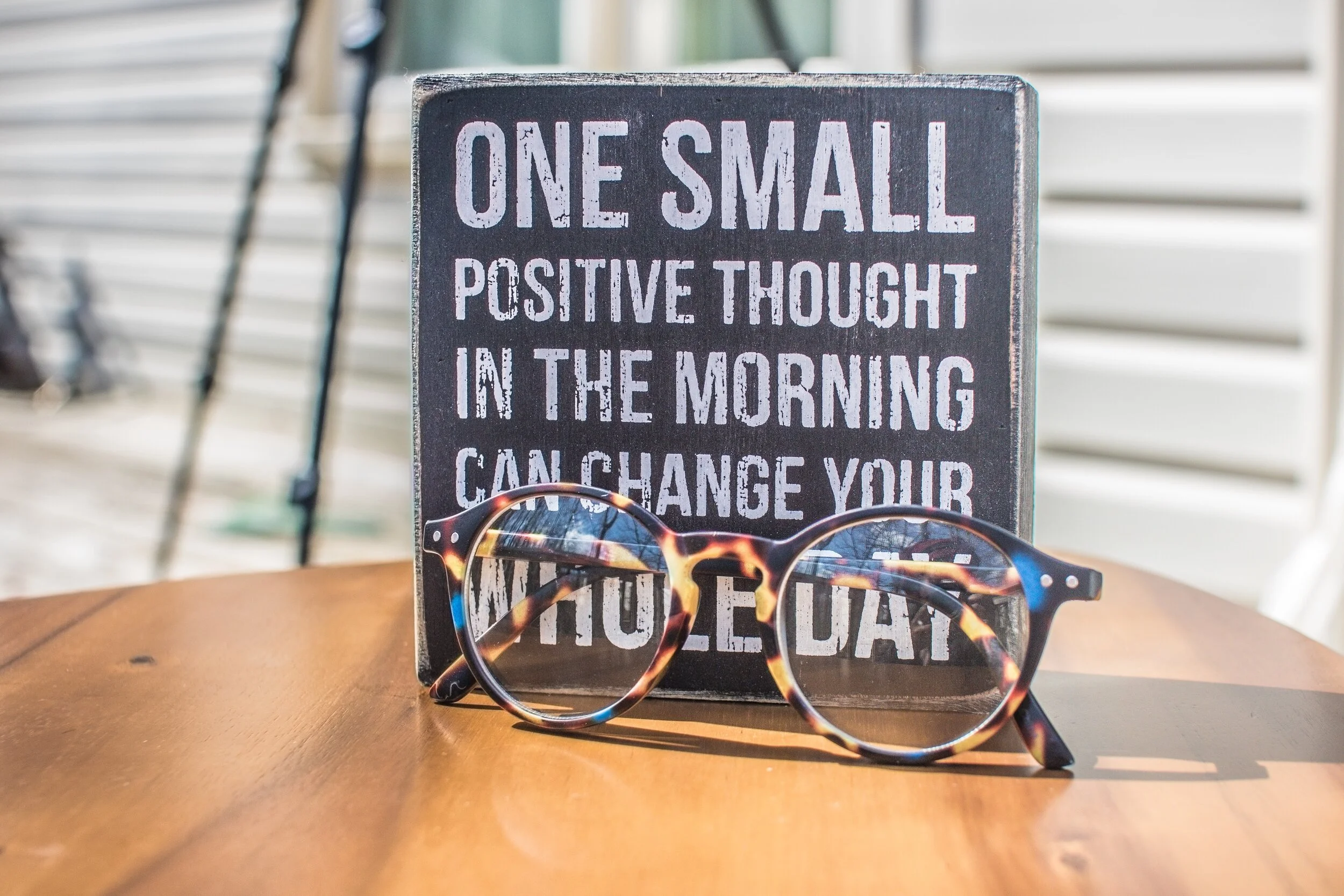
Touche. This needs to be my attitude each day. How about you?
“I am not complaining. I am just stating facts”, I have said to my family when in reality those “facts” are disguised complaints.
How long can you go without complaining? By definition, to complain is to express dissatisfaction or annoyance about something: any type of whining, venting, groaning, moaning, kvetching, bellyache-ing, grumbling, kicking up a fuss, b**ching, sounding off, running down, protesting, criticizing or nattering. You get the picture. If I really think about it, I am embarrassed to say that I don’t think I can go even an hour without some type of grumble, deep sigh, or out and out complaint.
I complain a lot more often than I think I do and definitely more than I want. And, if I do not voice aloud my complaint, the complaints are running around in my head in the form of criticism, snarkiness, or judgement.
The other week as I was driving, I heard a brief reminder on the radio about the negative impact complaining has on our brains. No surprise that it is not a good thing. There is evidence to suggest that complaining changes the way our mind thinks and works. It changes the way our synapses (junction between two nerve cells) are wired. Complaining also releases cortisol in the blood. We know that cortisol increases blood pressure, contributes to diabetes, cardiac disease, and strokes. In addition increased cortisol shrinks the hippocampus- the area in the brain that helps with memory and problem solving.
The ancient Hebrew writer said, “As a man thinketh in his heart, so is he” (Proverbs 23:7).
One could say as a man thinketh in his brain, so his brain becomes. In the brain a synapse is a small gap at the end of a neuron that allows a signal to pass from one neuron to another. It isn’t a very large space, but a space nonetheless. When we have a thought, a chemical is released across that space to another neuron. That chemical becomes a bridge for an electrical signal to cross and carry information from one area to another. Every time there is an electrical charge, the synapses grow closer together. The brain rewires itself to make it easier for a similar thought to cross. When we have one negative thought, it can be easier for continual negative thoughts. If we continue to have negativity, the brain will connect on the easiest, closest path. And so, any positive thoughts will have difficulty competing with the easier negative ones.
Researcher Steven Parton explains how these closer synapses result in a generally more pessimistic outlook:
"Through repetition of thought, you've brought the pair of synapses that represent your [negative] proclivities closer and closer together, and when the moment arises for you to form a thought...the thought that wins is the one that has less distance to travel, the one that will create a bridge between synapses fastest." Gloom soon outraces positivity. It easier and more likely that the proper synapses will share the chemical link and thus spark together--in essence, making it easier for the thought to trigger."
Not only does having your own negative thoughts rewire your brain for negativity, hanging out with negative people does much the same.
Researcher Parton explains, “When we see someone experiencing an emotion (be it anger, sadness, happiness, etc), our brain 'tries out' that same emotion to imagine what the other person is going through. And it does this by attempting to fire the same synapses in your own brain so that you can attempt to relate to the emotion you're observing. This is basically empathy. It is how we get the mob mentality.... It is our shared bliss at music festivals," Parton writes. "But it is also your night at the bar with your friends who love love love to constantly bitch."
But isn’t the definition of complaint to express dissatisfaction with something? Can we productively complain? After all, sometimes we need to speak up about a situation. Is is really complaining to speak up about injustice, misuse, neglect, etc.? I do not think so. Yet as humans (or maybe just Americans?) we do seem to have the tendency to like to complain. There is a part of complaining that appears to put us, the complainer in a superior position over the complaint(ee). It makes us removed from the situation and from ultimately helping to fix or solve a situation. When we feel like complaining, I guess we need to evaluate if we can do something about the dissatisfaction- a change in the situation- or not; the old adage of being part of the solution, not problem. While venting may help us process a situation or releasing stress it appears that chronic complaining is more detrimental than beneficial for all parties involved. Perhaps we need to think first before we vent. (Lest you think I am speaking only to someone else- know that any pointed finger has three pointing back at me.)
Once again I am reminded of the Hebrew writers in learning to change this negativity. “Transforming ourselves through the renewal of our minds. (Hebrews 12:2) If we want to get out of the complaint trap there are a few things we can do:
For every negative thought, try to counter with 1 positive. In some work, I have seen the suggestion to counter 1 negative with 3-5 positives, but since some of us (myself included) have been in a complaint mode for far too long, 1 positive is probably the best I can do at this point. The science suggests that positive thoughts can reduce cortisol levels by about 23%. Not bad when you think that modern day Americans have more cortisol in their systems than needs to be.
Write out that gratitude list. Strive for 3-5 items for which you are grateful each day. Writing about things for which we are grateful is a way of remembering and bringing to the fore front positive things in our lives.
Try to surround yourself with positive people. If you feel that everyone in your circle is Debbie Downer perhaps you can try some outside sources- receive daily positive affirmations through devotional apps, motivational apps, etc. Or, if there is a positive person in your life, commit to sharing positive texts each day. Perhaps you can be the positive one for your friends and family.
It all comes down rewiring our brains towards love.
What about you? How is your complaint department? Working overtime? How can you transform your mind? As you read this, is there one thing for which you are grateful? I would challenge you (and myself) that for today, let Philippians 4: 8 resonate in your heart and mind: “whatever is true, whatever is noble, whatever is right, whatever is pure, whatever is lovely, whatever is admirable--if anything is excellent or praiseworthy--think about such things.”
Hope Floats

Today as I was driving to the beach for a dog walk, I came across this boat. (Somehow it just doesn’t seem right to drive to a walk but that is for another tale.) I think it was meant to be a landmark for the house down the lane from the main road. It just struck me as funny and poignant.
“Hope”. It would be a miracle if this boat floats. Did it ever float? Was it once in bristol condition? What happened? Could it be rebuilt and once again take on the seas?
Yet, I was thinking how often this worn down, unseaworthy boat can be symbolic for my hope and ultimately my faith. Truth is, while I have hope for everyone else in the world, sometimes I do not have hope for myself. I truly believe that God has something special for everyone but I don’t always think that for myself. I may say that I have hope but many times I am quite cynical because experiences and relationships have sometimes not worked out as I have hoped. Each time I hope for something and it doesn’t appear to come to fruition, my hope boat springs a leak. I can easily be beaten down by the winds of disappointment. Each time they blow, my little vessel becomes battered and knocked about.
I recognize that way of thinking is immature and shortsighted. The little hope boat on the side of the road has come at time when I need to reflect on my faith. I have felt hopeless these last couple of months. Am I so shallow in my faith that a battering of broken bones and subsequent nerve damage (hopefully temporarily) has got me flummoxed?
Of course, I recognize that hope, faith and trust go hand in hand. When I feel my hope slipping and my little vessel of faith becoming unseaworthy, I remember all that God has done and all His promises. I remember that God is a good, loving and faithful Father. I remember that God’s will and timing are not at all mine. I remember that I am in need of so much grace and I need to extend that to others.
I remember Romans 8: 24: “Now hope that is seen is not hope. For who hopes for what he sees? But if we hope for what we do not see, we wait for it with patience.” Right on the heels of that verse is a promise that even when we do not know how to pray- there are so many examples of how we can be stymied in prayer: loss of hope/faith, disappointments, overwhelmed, grieved, etc- the Spirit is there to help us. The Spirit intercedes for us when all hope is lost. How comforting is that?!
When my little vessel of hope is floundering, I need to remember that God is there to help right it. I need to trust and keep the faith.
What about you? What would be the name of your faith vessel? What would its condition be? Does your hope float?
Small Changes
Last week on Hidden Brain the host and a guest were discussing strategies to change behavior in line with New Year’s resolutions. The agreement for sustainable change was to implement small changes. Not a new concept, yet still difficult to implement. As humans we get comfortable and complacent with how things are.
I don’t know about you but lately I am ready for change. In some ways I feel stuck in a rut. Every week I think that this week might be different that I will be able to change up my schedule to accomplish some things that have been on my to-do list of self-improvement/work. And every week, I find that the week unfolds as the last one and nothing has been accomplished that I would like to do and nothing has changed.
I want to redo all of that. And I want to change my attitude (which is mostly frustration and some despair) when things do not change as desired.
I have been thinking of the Bible verse: “Do not be conformed to this world, but be transformed by the renewing of your minds, so that you may discern what is the will of God-what is good and acceptable and perfect.” (Romans 12:2).
I am wondering if my lack luster attitude has anything to do with feeling that I have deviated (even ever so slightly) from God’s will. I am wondering if I have gotten distracted by events and situations around me and not staying focused both for what God has called me to accomplish individually and societally.
I feel that in order for me to begin any changes in my life, I need a renewal of my mind. I want to choose what is good and acceptable to God. I need God’s help in this process so I am asking the following questions:
Is my schedule acceptable to Him? Are my chosen activities edifying to Him and to others? Am I promoting activities that aid in my development and improvement of society? Am I leaving room in my schedule for relationships? For obligations and responsibilities? Am I choosing a rhythm of life that He would choose for me?
One basic thing I need to figure out is how to increase exercise into my day. During this healing time of my broken wing I have had to stop exercising as I was accustomed and boy, do I feel it. I figure that it is a good time for me to add some new type of exercise into my routine. I found it interesting that the guest on Hidden Brain said that for her to get exercise in her life, she needed to run in the early am and in order to accomplish that, she would sleep in her running clothes. Not that I am advocating doing that per se, but it is interesting that a simple, small change could set her on the path for a larger one.
What about you? Have you ever felt stuck in a scheduling rut? How did you get out of it? Did you make small changes? Did they lead to larger ones? Do you feel that you are in a societal rut? What things can you do to help make changes in your community?
What changes would you like to make? How will you go about changing? How is your attitude? Do you need to make an adjustment? Do you need to renew your mind this year? If so, what are you planning?
For me, all change starts with getting back in God’s Word. For I find that when I have that foundational element in my life, I can keep things in perspective and have an improved attitude. I feel motivated to change in the places where God convicts me and feel at peace with where I am. I also feel encouraged and empowered to do His work, not because of my own abilities, but because He provides strength in my weakness.
I have found that sometimes many of the changes that God works in our lives are not that huge or that difficult. Yes, there are times of life-changing careers and lifestyle- one of the biggest in the Bible is the conversion of Saul/Paul. I also think of those individual’s who have given up one lifestyle for another- Albert Schweitzer, St. Augustine. But generally the changes that move us more in line with His purpose and plan are small. A divine tweaking of what is already in our lives. I think of God’s call to Abraham- He continued to be the nomadic livestock owner. Moses was already a leader from his upbringing as Pharaoh’s daughter’s son. And though Paul shifted his focus from a religious zealot to unwavering evangelist, he was still a leader/instructor/speaker.
The thing about ruts- it is hard to move forward. Have you ever tried to walk on a sidewalk that hasn’t been shoveled of snow? Once footprints are imprinted and thawing then refreezing occurs, it becomes very difficult and treacherous to traverse on that walk. While my rut doesn’t appear to be treacherous, I feel that I am not moving forward. In order to get my feet out of this standstill, I need to listen to God and hear His plan on moving to solid ground. For all I know, it might require a small change in my behavior.
I am praying for guidance on that divine tweaking.
One Word.
One. Word. Perhaps you have friends or acquaintances who speak about the one word they have committed to for a course of a year. Every year, I seem to hear from others about their word for the year. For them, they commit to one word that reflects what they want to achieve. It is the word that reminds them of what they want to embrace as a lifestyle improvement or purpose. I have written about the one word phenomenon in the past. It all stems from a book and philosophy which helps you figure out what your one word would be. (One Word That Will Change Your Life by Dan Britton, Jimmy Page, Jon Gordon)
I have been thinking about that philosophy lately as well as the idea of new year’s resolutions (which never seem to come to fruition, hence the one word, supposedly a more doable and achievable goal.)
I am reminiscence of a friend, who after a divorce was given the advice that for the first, post divorce year, say “yes” to everything he was offered. The idea is to get out of one’s comfort zone and “live a little”. I have heard of people who have a “yes” day (rather than committing to a whole year). For twenty-four hours they have to say “yes” to anything asked of them. This philosophy may do well for those who find themselves stuck in a rut. If the idea of a whole year or day is terrifying and too uncontrolled, maybe a “yes” afternoon is the way to shake things up.
Conversely, if you are the type of person who has trouble with saying “no” to any request, perhaps you can try a “say no” day or year or afternoon. Plan to say no to opportunities with the thought and idea of freeing up your schedule so that you may “say yes” to something that you want to do or try.
If you are the impulsive type- saying and doing whatever comes across your plate- without thinking through the consequences, you might want to have a “say maybe” day or year or afternoon. Some folks never cogitate over requests or plans. Give yourself some time before you jump into something. You could try a “sleep on it” or “wait twenty-four hours” as part of your “say maybe”.
Yes. No. Maybe. All one word answers that could change the trajectory of your year. As answers, they may not help you achieve lifelong goals, but they might. Isn’t the idea of new year’s resolutions or one word for the year, an exercise to help one make use of one’s time and try something new in the coming year?
Whatever you decide to do for 2020 (resolutions, one word, say “yes”, “no”, “maybe”) -
Happy New Year. It is a new year. Full of opportunities and blessings.
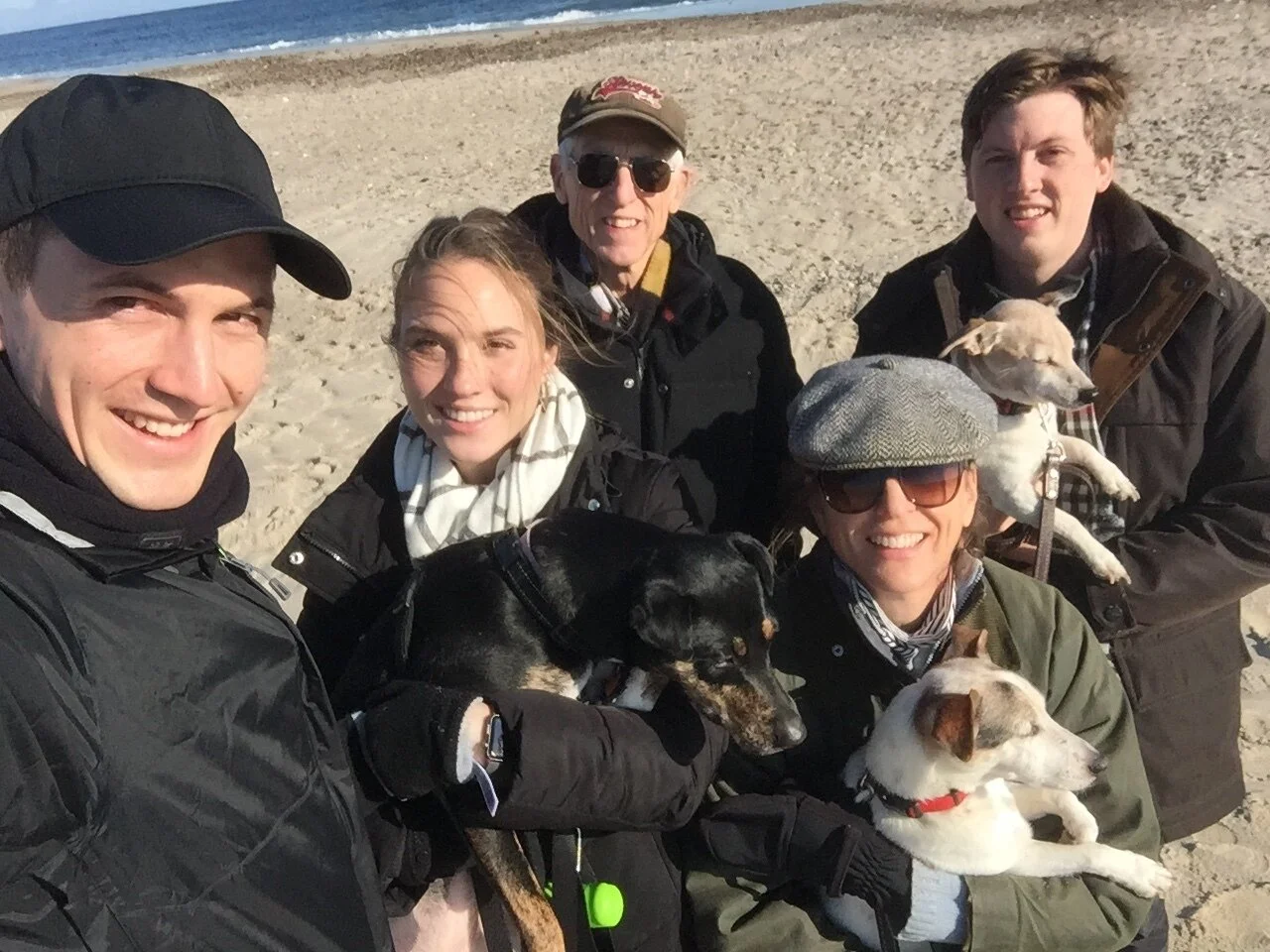
Happy New Year from my family to yours. The gang is all here on our beloved beach. Well, all except the cat who was home. Sleeping.
Merry Christmas

Buffet Christmas arrangement- comprised of all found objects around the house.
Dear Readers,
May today be the day when you welcome Love into your heart, mind and soul. May today be filled with wonder, mystery and awe that the Creator of the world wants to be with you, to love you and to guide you into the best you can be- into what He made you. May today be the first day of the rest of your lives.
Thank you to those who took the time this year to write me and to respond to a posting. Your words always encourage me so much more than you will ever know.
Merry Christmas and Happy New Year.
Blessings,
Virginia Ruth
Empathy and Sympathy

This broken wing of mine has me thinking a lot about one’s health, other people’s health and how I have/have not related to other people’s pain.
I have been revisiting the idea of empathy and sympathy.
According to Marriam-Webster.com:
“Sympathy and empathy are closely related words, bound by shared origins and the similar circumstances in which each is applicable, yet they are not synonymous. For one thing, sympathy is considerably older than empathy, having existed in our language for several hundred years before its cousin was introduced, and its greater age is reflected in a wider breadth of meaning. Sympathy may refer to "feelings of loyalty" or "unity or harmony in action or effect," meanings not shared by empathy. In the contexts where the two words do overlap, sympathy implies sharing (or having the capacity to share) the feelings of another, while empathy tends to be used to mean imagining, or having the capacity to imagine, feelings that one does not actually have.”
I like the idea of empathy- having the capacity to imagine. It is the vision of walking in another’s shoes. While I now feel that I have a slight inkling (sympathy) of what friends or family members have experienced through the common shared experience of broken bones: the pain, inconvenience and limitations, I also am slightly able to imagine what it might feel like to experience a permanent change in activities of daily living. It makes me grateful for my experience (it could be worse) as well as encouraged for the example others have shown me (could/should handle it better).
There is a also a subtle difference between empathy and sympathy: the difference of those walking with you and those sorry for your walk, aka problem. And while there is a sorry/sympathy for what one is experiencing because I have had some similar experience, one has to be careful of staying in that “place”.
Feeing sorry for someone and their plight is understandable and the beginning of compassion. But to stay there keeps us in a place of superiority. We are so sorry (but glad it is not me.)
When we enter in and come along side someone we show a humility and an acknowledgement that it is by the grace of God that we go forward. We also are in a place of imagining the experience. Because we are not actually in it, we can be more objective and helpful in meeting any needs of the one going through the experience. After all, if two people were both starving, it would be hard to help one another find food.
Listen- Don’t have to say anything- just practice the presence of being. Tough to do but important. I think of the Jewish tradition of sitting shiva- the initial time after a loved one does, allowing the mourner space for disorientation and grief. Friends and family call upon the immediate family and just sit with them. In the tradition it is the mourner who initiates the conversation about the deceased or any other type of conversation. The purpose of the visitor is to be with the grieving one. I think that practice can be applied to anyone who is going through any difficulties.
Connect with their feelings- Imagine what it must be like to go through their experience- walking a “mile in one’s shoes”.
Acknowledge their pain- Don’t have to explain anything or offer assistance, etc- just let someone know that you recognize this (whatever the this is) stinks.
Show them love - What many people who have been in the midst of something say- don’t ask what you can do- just do something- a meal, help with laundry, childcare, etc. I must admit I am guilty of this- I want to jump right in but there is a part of me that is hesitant- don’t want to overstep a boundary or feel that I am being “pushy”.
What about you? How are you with empathy and sympathy? I know that I need practice. I feel that I should offer an apology to anyone with whom I have ever interacted- I probably did not handle a grieving, loss situation well. But, I can learn and move on.
The Season of Waiting

Advent. Preparation. Anticipation. How are you with waiting?
I have to admit that I am not that great with the waiting game. I have especially realized this while waiting for my wrist to heal. I am not used to being still. Not. At. All.
Yet when I think about it, most of life requires waiting: wait until a baby is born, wait at least eighteen ( in some cases almost thirty) years for that child to grow and develop, wait for a life partner, adequate education, for a reasonable and/or meaningful job, to retire, for a celebration, for Christmas, for the raise, for deployment, for discharge, for vacation, for a schedule, for the diagnosis, for healing, for acceptance to college, for a train, bus, plane, and ultimately waiting to die.
It is fitting that I should have to slow down and wait during this season of Advent. Traditionally the Advent season is one of waiting for arrivals- the arrival of Christmas and the birth of Christ. But it is more than that, it is a reflective, introspective time of waiting and pondering: reminder of the waiting and anticipation of the arrival of Christ as the Messiah and the waiting for the return of Christ as the Lord of All in a new creation. In essence it is learning to live in the “in-between” time of the fulfilled prophecy and the awaiting promise: the past and the future.
It is learning to live in the present.
I am learning to be grateful for the past and to live in hope for the future. In the case of this broken wing- I am grateful that each day it is healing albeit slowly and I am hopeful that I will have at least 90% or even 100% of my hand/wrist functioning restored.
There are many stories in the Bible where the main character couldn’t wait. They were impetuous and had to take measures into their own hands: Sarah, Abraham, Isaac, Rebekah, David, the Israelites, Peter among others. They may have heard about promises and futures yet they just couldn’t trust God with all the details of their lives. There were times of long waiting. But instead of living in the present- remembering the past and hopeful for the future, they chose to hurry along the in-between time.
I certainly am guilty of living like that. I forget my received blessings and greedily want more. I am so busy planning- what might happen in the next season, month, week, even afternoon- that I miss out on what is happening in the immediate. I need to learn to enjoy and be content with the in-between.
What about you? How are you with waiting? Impatient? Impulsive? Resolved? Do you spend more time in revisiting the past or planning your future?
This Advent I am realizing that the season of waiting applies to so many levels: the calendar time. the physical healing time and the present choice of my daily time.
Happy Thanksgiving

Happy Thanksgiving. For this blog post I am going to do two shameless things:
1) Brag on one of my talented, intelligent nephews. I am always hesitant to single one of them out (or any of my equally talented, intelligent nieces) for fear that I will appear showing favoritism. Perhaps I am because I am biased with all the offspring.
2) Postponing today’s blog until another week in order to share the aforementioned nephew’s blog post. If you read some of his past posts, he has some interesting and thought-provoking reflections. (You can also check out his sermons online. Click here to view.)
In essence Andrew provides 3 questions to ask those gathered around your Thanksgiving table tomorrow:
Where have you seen God at work this past year?
What unexpected blessing have you received this year?
What are you praying for this year?
Question #1 reminds me that God is alive and involved in our lives. He isn’t the distant God, just waiting to ding us for the slightest infraction. He is at work, drawing His children (all of us) back to Himself for relationship. If we are open to Him, we can see His presence in all things around us.
Question #2 reminds me that even when life doesn’t go as planned, perhaps especially when life doesn’t go as planned, we still receive blessings. I have reflected over the last couple of years and think of the unexpected changes: deaths, illnesses, disappointments, joys, deepening friendships, undeserved assistance, personal and family successes. All unexpected and all blessings in their own right. Even this broken wing of mine has had its blessing. I have had to slow down, prioritize and rethink.
I love question #3 because it sets the tone for the future. Sure we pray for God’s will to be done, but that doesn’t mean God doesn’t want to hear our thoughts, our longings and our heart’s desires. It reminds me that I need to include God in my thoughts and plans for the future. “For I know the plans I have for you,” declares the Lord, “plans to prosper you and not to harm you, plans to give you hope and a future.“ (Jeremiah 29:11).
May you and whomever gathers around your table have a blessed Thanksgiving.
Complete Healing

Ahh. if only….
In our current small group we are studying the Gospel of Luke. We just looked at the story of the Centurion and his encounter with Jesus. As the story unfolds, a Centurion (we never get his name) sends word to Jesus that one of his servants is ill. He doesn’t need a visit from the Healer, just notes that all Jesus has to do is speak the word and healing will happen.
I have been thinking about that request ever since this wrist incident. I too request and pray, “Just say the word Lord and I can be completely healed.” This type of prayer is one I pray not only for myself but also for any and all who I know are going through difficulties or health issues. And I do believe that complete healing can happen. I do believe that what is impossible for humankind is possible for God. If He wills it, it will happen. Miracles can and do occur even in these modern days.
Though I temper my requests knowing that asking is not rubbing a genie’s bottle of wishes. It is making our requests known to God. It is opening ourselves up to possibility. It is allowing “Thy will be done.”
Yet, I cannot help but think that complete healing is taking place. Albeit slowly. Strengthening not just my physical bones but relationship as well. Healing on so many different levels.
For I have been experiencing wonderful community. If I ever start down the pity-party path of frustrating healing, I can just turn around in my tracks by remembering the cards, well-wishes, emails, phone calls and meals- all to physically and emotionally strengthen my weary and aching being.
I have had to slow down, rest and just be. In doing so, I have had time for the un-rushed conversation with people whom I love but because of our past schedules, kept missing each other. I have had emails and notes from folks I didn’t know or know well but now have a shared situation. My sore and broken wrist exposes a vulnerability with which allows me to make connections with others. I have had to let others physically care for me, my family, my household. That humility is like the newly formed bone fibers- connectors of relationship building and stability.
It seems ridiculous that it takes an accident or tragedy or illness or death to realize our need to connect. It is those incidences that make us realize the importance of sharing our struggles and our joys- of letting our guard down, exposing our problems and allowing others to enter into our hurt and mess.
My physical healing is evident by the wrist building new, stronger bone in re-connection. I would suggest that societal healing takes place as we allow connections to mend, heal and strengthen our community ties. I know that I have a special place in my heart for those who have come alongside me these last couple of weeks.
What about you? Have you ever prayed for a specific healing? What happened? Was there any other type of healing?
So, while the wrist pain continues, I still pray for complete healing. When the doc takes his next post-op X-ray, I might find completely healed. But if not, I know that there has been more than bone strengthening in my life.
Connection and Community Part 3

While we may know that we need connection and community, how do we do it? Like so much of life it is a question of balance. We can (and should) embrace the new and incorporate those gadgets, ideas and technology that improve our lives but also maintain the old that work for our particular lifestyle.
Yet somehow we become too enamored with the new and shiny and forget the basics that define us as humans: connection with ourselves (and God) and connection through community. For all the fancy technologies, we still need some time-tested practices. Practices that can be done without any gadgetry. We need time alone and we need time with others.
In a recent Innovation Hub broadcast, I was interested in hearing about a new book/study, “Bored, Lonely, Angry and Stupid: Changing Feelings about Technology, From the Telegraph to Twitter.” The premise of the authors Susan Matt and Luke Fernandez is that
Solitude used to be regarded as a way to connect to the divine, not a sign of being a social outcast, according to Matt and Fernandez. So what caused the change? They argue that as our ability to communicate improved - with inventions like the telegraph, television and social media - we’ve felt increasingly compelled to be surrounded by stimulation, which often causes us to feel even lonelier.
As the role of religion has waned in the lives of many Americans, and the influence of tech has grown, we’ve come to believe that our own power is vast (rather than small and meek, as preachers once argued). Fernandez and Matt say that this has led us to overestimate our abilities; for example, we think we can do everything at once (which, according to the research, is a myth), be connected all the time, and have hundreds of friends. Matt and Fernandez believe that these unrealistic expectations feed into our feelings of loneliness and boredom.
The industrial revolution led to the development of repetitive jobs, particularly with the advent of the assembly line. Matt and Fernandez argue that, around this time, people’s tolerance for boredom plummeted, leading to a greater demand for entertainment. In today’s world, with nearly limitless content to consume, they say that this demand has created an oversupply of instant gratification, potentially impacting our ability to focus and make long-term decisions.
I liked the reference of solitude and divine connection. In the classic definition of spiritual disciplines, solitude is a discipline. It is a practice that doesn’t come naturally to us. It is learning to be still and “know that I am God”. The mathematician and philosopher Blaise Pascal wrote, “I have discovered that all the unhappiness of men arises from one single fact, in that they cannot stay quietly in their own chamber.” While solitude can be silent it doesn’t need to be. The biggest prevention is to intentionally do it: plan a couple of hours to be by yourself (sans electronic gizmos), take a walk, read, pray, sing,
While I love sharing my favorite outdoor places with others, being alone on a beach is a refreshing head-clearing experience. So too is sitting next to a stream or on a park bench. In those solitude moments I usually have my journal beside me, sometimes a Bible and write out whatever comes to mind.
Connecting with others in true community might take as much practice as learning to be comfortable with solitude. I heard about a thought provoking program called The People’s Supper. The People’s Supper “works to transform some of our hardest conversations and most isolating experiences into sources of community support, candid conversation, and forward movement using the age-old practice of breaking bread.” The premise is to build relationships through a shared meal. From the beginning of time, humans have connected over the shared campfire. This program provides resources so that through the atmosphere of a shared meal, meaningful conversations, attitudes and behaviors can be examined. The goal is that through this shared meal and conversation, understanding, connection and relationships develop. As the website notes:
“Very rarely does a response make something better, connection does.”
“Social change moves at the speed of relationships. Relationships move at the speed of trust.”
It takes courage to build community and courage to discover oneself. In both instances there is a risk of unearthing something unpleasant. But the benefits of an authentic “real” life are worth it. It is the equivalent to a child’s development: children thrive in conditions of security and trust. When those needs are met, a child can blossom. As a community, when we become comfortable with ourselves and our purpose in life, we can be open to building substantial connections. If those connections are solid, the society can move forward and then, who knows what can develop?
What about you? How are you with the technology balance? Do you give yourself space to just “be”? Have you ever had a moment of solitude? How are your conversations with others? Is the extent of your discussions with others transactional? How’s the weather? What did you do last night? Have you ever had a deep conversation with a stranger? Acquaintance? Neighbor? Family member? How did that go?
While we look forward to the future and all the improvements that can be made, we should also remember those behaviors that lay the foundation for that future: connection with ourselves and one another.
Thank you for the emails, cards and well-wishes for a speedy recovery. This past Monday I had my surgery to repair my wrist- I had a titanium plate “installed” on my radius. I am currently in a splint and ace wrap- not to be removed for 11 days at which time I return to the surgeon. The plan then will be a removable splint. I am trying to keep the arm elevated (as I type this with my right hand, my left is raised in the air like the obnoxious kid in class with their hand always raised) and the fingers moving. Not an easy nor painless feat. But, each day is better. I am grateful for the technology to repair this!