
Time Suck*- an inefficient or unproductive activity, process, etc.; a waste of time.
On a recent Sunday the sermon challenged us to look at the things to which we are devoted. If one has trouble thinking about it, consider: What does our calendar look like? What does our budget (or checking account) look like? What does our internet history look like? Those questions can help us determine where we spend our time, money and attention.
I have been thinking about that lately. I realize that while I do need to tweak some of my time management as well as managing our budget a little better, the biggest area I need to address is my internet history. Nothing shocking but just time wasters. Do I really need to know that Sidney Poitier was tone deaf and his singing was dubbed in Lilies of the Field? How will it help my life’s purpose to have watched on youtube an old Password game featuring Gary Morton, Lucille Ball and children, Lucie and Desi Jr (Though it was funny to watch the reactions of the children. Lucie Arnaz is a typical preteen! And it was rather nice to see Gary Morton stand when any of the ladies stood up.)
So, if I am spending too much time with time wasters, where would I like to direct my time? More importantly, am I listening to where God wants me to direct my time?
I must admit I do not read nearly as much as I want to, nor do I enjoy my home as much as I could. Sitting in our living room and reading an engaging novel is too infrequent. A couple years ago I had a volunteer church meeting on our screened porch. One of the attendees was very complimentary about our home decor noting it was very inviting for gathering. I realized that we did have options for seating yet I couldn’t remember the last time I actually sat down to enjoy any of the spaces.
I am wondering if I got rid of the time suckers would I then have more wiggle room in my schedule? Would I be in a better position to be available for whatever God would have me do? I have finally come to the conclusion and the acceptance that, no matter what schedule I may have planned for the day, week, month or even year- it is always changing.
Since interruptions are a given, I should allow the rest of the time to be more focused on what I want and need to do. Or in other words, if I removed the wasted time in my schedule, the unplanned activities would fit in nicely.
What about you? In what areas do you struggle- time, money, attention? How would you like to manage them?
Lord, today is a new day- full of possibilities. As our day unfolds, help us to be disciplined in the areas that we need to do yet foremost, help us to be open and flexible to the areas that You need us to do. Amen.
* Just writing the word, “suck” makes me think of a scene from the BBC period drama, Cranford staring all those you know and love from the UK: (One could argue that the drama alone is a time suck- oh the irony.)
“THE ENIGMA OF THE ORANGE
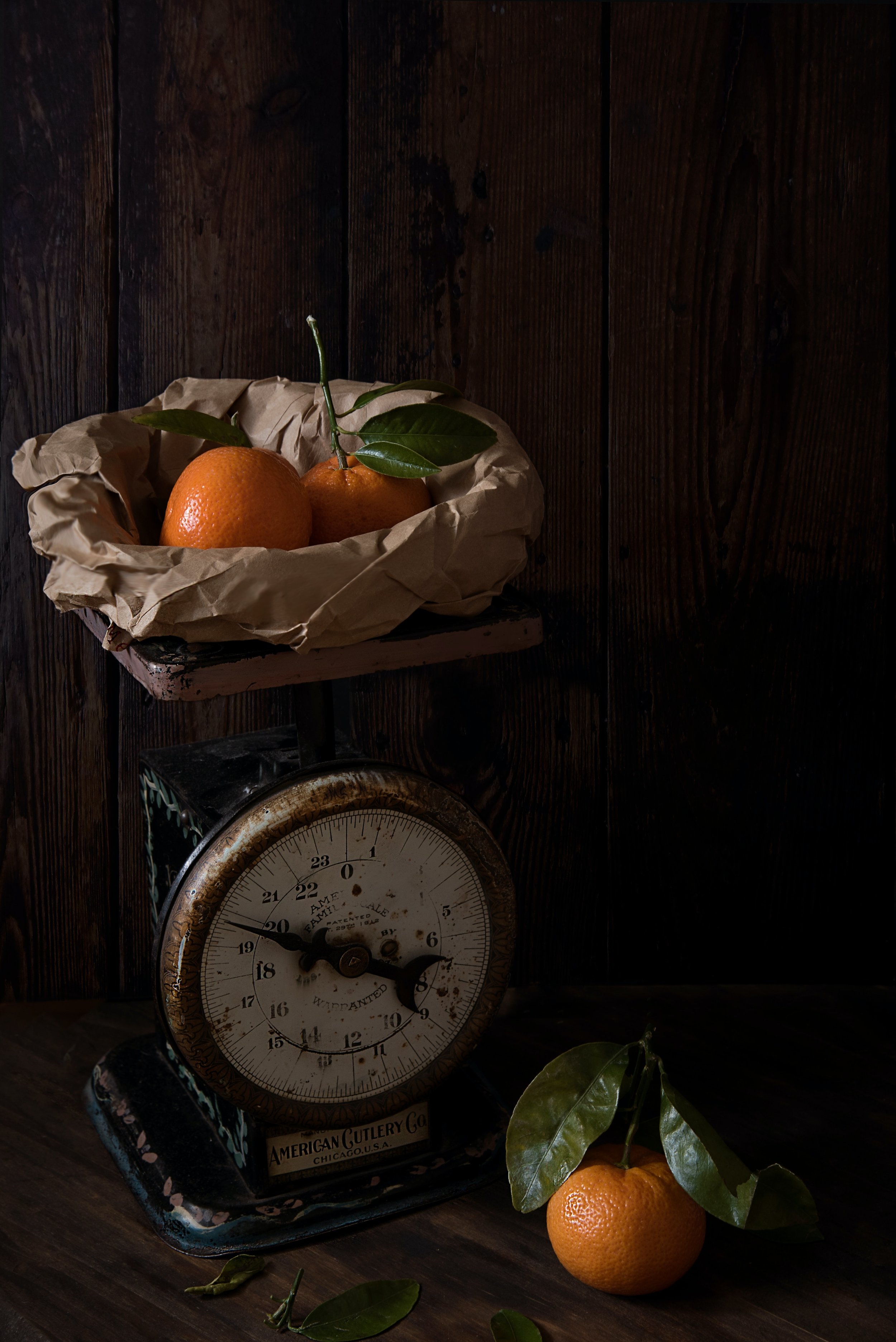
Miss Deborah Jenkyns has very definite views on many aspects of everyday life. One should not, for example, mention the word "poverty" out loud. But what about the delicate operation known as "eating an orange"? She and her sister Matty had to maintain their decorum when consuming the fruit with Mary, a fresh-faced newcomer to Cranford. The hapless Mary made the mistake of admitting she liked to suck out the juice through a hole in the rind, and Deborah was quite simply horrified by the revelation.
"My sister does not care for the expression 'suck'," Matty explained. "It is altogether too redolent of a ritual undertaken by little babies." After this appalling transgression in vocabulary, Deborah announced that they had no other option but to "repair to our rooms and consume our fruit in solitude". Quite right too.” (https://drama.uktv.co.uk/cranford/article/cranfords-battiest-moments/)
Favorite Things
I recently finished a book that my friend had given me. The Bookshop on the Corner is about a “literary matchmaker”- a character who can match up just the right book with the right person. I think my friend is one too. Every book that she has suggested has been a page-turner, sneak-in-a-page-while-doing-something-else, up-to-1-am-finishing kind of book. They have been books that spoke to me and whatever situation I was going through at the time. In this latest book, it is just a fun, pleasant ride. In the back of the book, the author has acknowledgement pages as well as a “P.S.”- containing some info about her favorite things. While the list is not in any particular order, it is fun and interesting to read through. Just by reading it I feel as if I have gotten to know her a little.
I thought in honor of The Sound of Music (usually played during the winter months) I would list my favorite things. It actually is an interesting practice because some things that we might have enjoyed while we were younger, we may not now. (Or things we didn’t like when we were younger but have acquired a taste for it as we have aged.) The other night, my husband put on a CD that we had received in the 1980’s. It was definitely 80’s-type electronic music. We both looked at each other and shook our heads. Did we ever like that music?
So, in honor of Jenny Colgan and her P.S insights -“Stuff I like”, here are some things I like or like to do (in no particular order):
The smell of coffee wafting up the stairs first thing in the morning; a bouquet of wild flowers; to have all the family members under one roof (with an exit strategy); to learn something new; a day that incorporates writing, exercise and learning; travel; mornings; the smell when sunlight hits white pine and mixes with salt air; Frasier Fir candles; a good thrift store; an old-fashioned hardware store; the smell of freshly cut lumber; stirring a new bucket of paint; spreading mulch; reading a light mystery- preferably set in an English village; new recipes to try; fresh, farm-table ingredients for said recipes; biking through a new neighborhood; daisies and buttercups; walks along the dunes and beaches; words, a good turn of phrase and the etymology of words; reading dictionaries and thesauruses (not that you would recognize by my limited word choices); BBC documentaries and dramas; otters; hawks; spotting the occasional bald eagle; typewriters; reading the liners of LPs; playing tennis; body surfing in Nantucket Sound; any book by Elizabeth Berg; watching anything about another country’s lifestyle; trains; heated seats in the car; outdoor wood fires; indoor gas fires; sustainable practices; repurposing an item- extra likes if I can use it multiple ways; hanging out freshly washed laundry, bright copper cookware, polished (me being the polisher) silverware and brassware. Whew! And I am just getting started.
What about you? What are your favorite things? Or stuff you like or like to do? I haven’t even covered the types of music or genres of books or specific ways of traveling or games….. The list is endless. Think movies, places, experiences, people, activities, actions, hobbies, music, or books. You can think globally or down to the smallest detail (the iridescent feathers around a pigeon’s neck, for instance).
What is fascinating is that everyone’s list is different and changes. I like hearing what other people enjoy because that expands my horizon and gives me something new to try. In addition, it is always a pleasant surprise when I find someone, who at first glance doesn’t appear to have similar tastes to mine, does. Or someone who I might have known a long time, to discover that we also share something else in common.
So go ahead- sing a few of your favorite things…
Epiphany
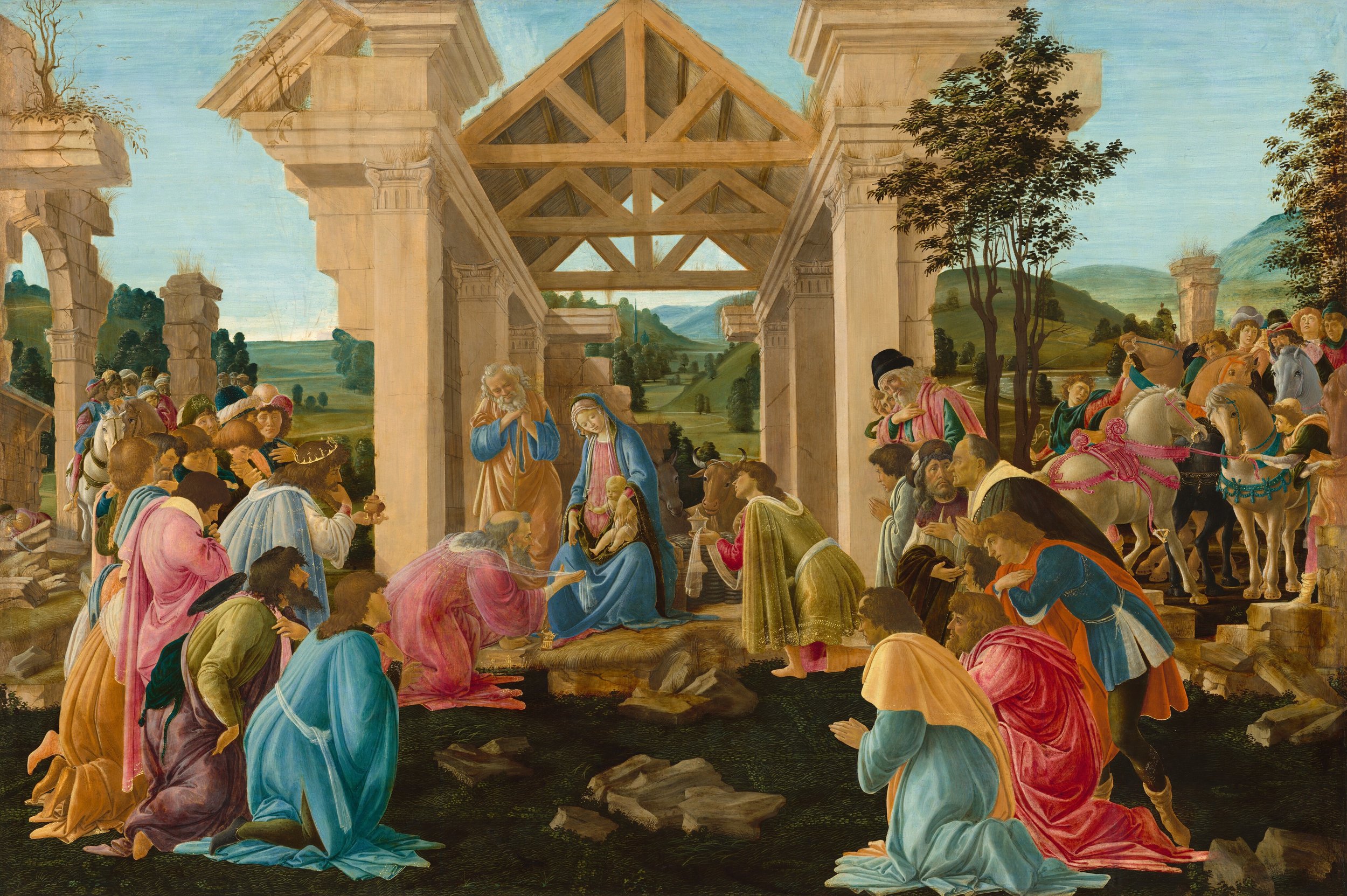
Sandro Botticelli, The Adoration of the Magi, c. 1478/1482. The National Gallery of Art, Washington DC.
Epiphany. January 6th- twelve days after Christmas. Traditionally it is the commemoration of the wisemen visiting the Christ child and presenting gifts to Him.
For me it is hard to believe another year has transpired. On January 6th it will be four years since my dad died. While this year was relatively uneventful for us (compared to other people in the world), we did experience some loss and changes. While I usually see the glass full of opportunities, sometimes I struggle with the human default that sees the glass empty of any possibilities. Some situations or moments seem full of despair. There are days when I find it hard to get dressed and get going. At least (I tell myself) I get out of bed- I am too much of a coffee and breakfast hound NOT to stagger into the kitchen. I wonder, what is wrong with me? Get up and get going. Think of all the wonderful things in your life and in the world.
Lately I find that I am questioning everything. The world is so topsy-turvy. Yet, I find that I am not alone in those mind explorations. It is comforting to know that every generation and every culture has wondered: what is one’s place in the world, what is the meaning of life, and to some extent- what’s the point of life?
We see it across the scientific ages: Copernicus, Galileo, Descartes, Newton, Einstein, Heisenberg, Schrodinger, Hawking. We see it through philosophers: Socrates, Plato, Aristotle, Spinoza, the Stoics, Nietzsche. And we see it especially through world religions: Christianity, Judaism, Islam, Hindu, Buddhism, Taoist.
In the Christian tradition, life’s meaning is grounded in the monotheism of God and His omnipotent, omnipresent, omnibenevolent, and omniscient being: He has a plan and purpose for each of His creation and in returning all creation back into communion with Him.
The “wisemen” in the Epiphany story are called the Magi- Far Eastern philosophers/astronomers/thinkers/scientists. They looked to the stars for their inspiration and in figuring out this world. Over two thousand years ago, they saw something different and intriguing in the sky and needed to check it out.
When I start down the path of wondering about life’s meaning, I need to stop. Pause. And look up. I need to return and remember what I believe to be true and good. I need to look for something new and different that may be on the horizon. I need to (re)turn to what God has done, is doing and will do in my life.
While my introspection is helpful at times, I cannot be so internal that I miss the external. If the wisemen had stayed in the east and just discussed what they saw, they would’ve have missed a life changing journey. They had to get out of their ivory tents and travel to an unexpected place. They didn’t limit themselves to certain ways or ideas. They were willing to explore and discover. While they may have had some questions about the birthplace of this royal visitor, they certainly didn’t let a stable or any preset ideas about nobility/peasants prevent them from worshipping the newborn. They were wise in recognizing the tension of life: between a humble birth and royal priesthood, between the known and the unknown and between challenges and discoveries.
So too, I would be wise to see the tension in life: between despair and hope, grace and truth, forgiveness and accountability, opportunities and challenges, loss and gain, questions and answers leading to more questions. When I feel despair I become paralyzed. I do not want to move but by not moving, or by being set in certain ways or ideas is to limit myself. To be wise is to seek and recognize the tension of life and to not be afraid of it. To be wise is to realize that one needs to move, sometimes physically, emotionally or spiritually in order for God to work through us and for us.
What about you? Do you become circumspect in the beginning of a new year? What is it that you are seeking? Do you have preconceived ideas about the future? Have you ever had to seek out a new beginning or new way of thinking? What did that look like?
Epiphany. According to the etymology, the word itself comes from the wisemen visiting the Christ child. Fitting. When one encounters the Christ child, one is never the same. When we become like the wisemen and seek Christ for the answers to life’s perplexing questions and problems we most often have an epiphany.
Full Definition of epiphany. 1 capitalized: January 6 observed as a church festival in commemoration of the coming of the Magi as the first manifestation of Christ to the Gentiles or in the Eastern Church in commemoration of the baptism of Christ. 2: an appearance or manifestation especially of a divine being 3a(1): a usually sudden manifestation or perception of the essential nature or meaning of something. (2): an intuitive grasp of reality through something (such as an event) usually simple and striking (3): an illuminating discovery, realization, or disclosure. b: a revealing scene or moment (merriam-webster.com)
Epiphany. January 6th. It occurs every year as long as wise men and women still seek Him.
A New Year
Out with the old, in with the new….
You may have heard this common expression for the new year. In our consumer economy, I think we are all pretty good with the “in with the new”. But how are you with the “out with the old”? Do you hold on to things, ideas, habits, philosophies, relationships?

Over the holidays my son and I were working on a jigsaw puzzle. As a friend once commented about puzzles- they are a good way to just talk about anything while you are lightly engaged in a project. As we were trying to figure out some tough distinguishable areas of sky pieces my son remarked, sometimes it takes a different perspective to figure out what goes together. He had just gotten up to get something to drink and when he sat down, he had started working on a different section. When he returned to the sky section he was able to fit in many pieces.
For this New Year’s Day, why not look upon this year with a different perspective? Instead of all new: new ideas, things, philosophies, relationships, we review the “old”? We evaluate what we have- is it necessary, helpful, supportive, useful, beautiful- and decide if it is it serving our current needs?
Are there things that you might want to evaluate before you blindly turn the page for the new year? Why not plan on evaluating those things during the month of January before embarking on a new idea, or purchasing a new item, or starting a whole new exercise regime.
The current psychology regarding changing and creating new habits is to create a new one before eliminating an old one. The thought is that once a new habit is established it is easier to drop the old. But for many, it is hard to even begin a new one because the old one gets in the way.
I wonder if even before any new steps, we take a good hard look at the old habit or things, or ideas/relationships/philosophies. We take the time to go through the old. We look at the old with fresh eyes and ask ourselves some questions: Why do we still have it? Is it too costly to continue- physically, socially, emotionally, spiritually? Is there anything about the old habit- physically, socially, emotionally, spiritually that is still good, useful and helpful? What would happen if I gave it away, sold it, discontinued using it? Would I miss the old if it were gone? Am I ready for the “new”?
Sure, it is nice to have everything new and to feel everything is fresh. There is nothing freer than to feel that January 1st has given us a new chapter in life -full of new opportunities and possibilities. But as anyone who has ever moved, most likely you end up bringing your old junk to the new home. New location, same stuff. Nothing really has changed except you might not know where the coffee mugs are located. Yet in the case of moving, when we really go through each box and not just hastily pack, we sometimes discover long lost meaningful items. Items that can be resurrected and used in our new location if only in a new and different way.
What about you? Do you have a New Year’s routine? Start something new? What about the old? Still around? Want it to be? What can you do this January to evaluate the old? How can you view your life differently this January? Need to see your relationships through the eyes of your friends? Need to “shop” your closet/house- finding long forgotten items and clothes that might be new again for you? Need to see what you are already doing in your exercise routine that can be augmented? Need to have a reflective time with God to determine your next steps with Him?
Maybe a new expression should be: evaluate the old before you embrace the new…
The Christmas Letter

Saturday will be Christmas day. In the Christian tradition it is the day to commemorate Christ’s birth. While the actual birthdate was not December 25th it is still a day of celebration.
Christmas is one holiday that celebrates all sorts of traditions:
Christmas tree- what type (fresh or artificial), when to decorate, what types of decorations, where it is placed in the home, specific decorations that have to be hung, in specific order?
Christmas presents- when to be opened (Christmas Eve, or morning), hand made or store bought, extravagant or budgeted amount, what to use as wrapping paper (same kind for each person, re-use from past years), Santa-given, stockings (or shoes), on mantle, foot of bed, open gifts with everyone or as one wakes up, open in a specific order- by age, every person opens one and then around the room, gag gifts, Yankee swapping?
Christmas dinner- what time, family recipes, dress up or down, at certain family member’s home, rotate dinner locations?
Christmas service-Christmas Eve or Day, traditional lessons and carols, family/children act out the Christmas story, pageant?
Christmas decorations—inside and outside the house, white or colored lights, inflatables, candles in the windows?
Christmas food- cookies; family recipes, fruit cake?
Christmas cards- send via mail or email, religious or fun?
and will it contain the good ole Christmas letter- like it or loath it?
According to Wikipedia, the earliest known Christmas card was sent to James I in 1611. While it mentions the holiday season, the sender wishes the king “in most joy and fortune, we enter into the new auspicious year 1612". Fast forward to the Victorian period and due to technology and the new “penny post”, John Callcott Horsley designed a card for Sir Henry Cole that could be mass produced and sent relatively inexpensively. Originally the cards didn’t contain too much about Christmas and Christmas decor but had flowers, fairies and other designs to point to spring. Some were even quite macabre. Over the years, the cards were reflective of the changes and happenings in society- war related (to send to soldiers), product placement (new fangled car), risque humor- even, (gasp) pressuring the public through advertisement that they needed to send them. When the actual Christmas letter with its recounting the year’s activities started is not known.
The Christmas letter was the pre-Facebook highlight reel of the family. Now, people can post the highlight reel every time they post something to Facebook. I think that the advent of Facebook has warranted the annual letter almost obsolete. Maybe that is why there are more picture/collage type cards? Most people who follow others on Facebook already know what is going on in their lives. (or once again, that is probably just me- I do not understand Facebook and therefore do not follow it.)
I used to hate the Christmas letter and the process of writing one. I still do to some extent. Partly, the letter causes me to reflect back over the year and to think, “What the heck have I done this year?” Usually my internal reply is “You’ve done nothing significant. Once again.” At least compared to the overachievers who would send us their letters before Thanksgiving with details of their saving-the-world actions. To me, the letter was just a blatant, in my face, you are one of the millions living a life of quiet desperation.
My husband on the other hand likes sending and receiving Christmas cards and letters. He pulls out his favorite pen, puts on some Christmas music, pours himself a nice beverage, reads through the cards we have already received and faithfully begins writing his notes and checking off the Christmas card list.
I’ve been thinking- instead of dreading the letter, why not use the opportunity to write (in private) what I might achieve for next year? To make my Christmas 2021 an accounting not of what has passed but an accounting for what the future might hold for 2022? Or at least, what things do I want to accomplish in the next year? Not so much acquisitions or material things, but what about my character, my relationships, and my spiritual state?
What would I tell my future self that I would like come to fruition? Could my year via my Christmas letter look something like this?
Greetings friends and family,
I pray all is well with you and yours. Over this past year-
I listened well to my family and friends.
I responded to the physical needs of others.
I appreciated the service personnel and anyone I had to contact in customer service.
I “used my words” and told the people I care about just what makes each one of them special to me.
I treated everyone who came across my path with dignity and respect.
I said hello or nodded or took up a conversation with the stranger I passed along the street.
I intentionally made myself uncomfortable so that someone else might be comforted.
I chose quality over quantity in my physical possessions as well as in my relationships and my choice of activities.
Every day, I tried to be more and more like Christ.
What about you? What are your Christmas traditions? What about the Christmas letter? Today, if you were to write your future self a Christmas letter 2022 what would it contain? What would you like to be known for or to have accomplished by next Christmas?
What if our Christmas letters reflected our character? Now wouldn’t that be an interesting letter to give and receive?
Merry Christmas.
Winterizing

In my neck of the woods we have to do some winterizing: drain out the garden hoses, turn off the outdoor spigots, bring inside or cover up any cement pots, pull down the storm windows, cover up the outdoor furniture, etc. Preparations and routine maintenance that help get us through the winter.
Much as we winterize our homes and gardens, I have been wondering if we should be winterizing our spirits? How do we prepare for the upcoming season and the changes that it will bring?
Sometimes I wonder if we even think about the season. On Sunday I heard the writer Katherine May speak to Krista Tippet on the program On Being. Ms. May was talking about winter, the need we have for it and about her book called, Winterizing. She explains that we humans seem to shy away from winter, unlike our animal friends who seem to embrace it.
It made me think about our animal friends. I guess they do “embrace” the winter months by their actions. Our animal friends make provisions for the time when resources are slack: either by storing up a supply or by hibernating and therefore “sleeping” through and not needing much, if any resources.
Humans seem to shy away from the season or if they do embrace it, it is mostly through grumbling and complaining. (Or maybe that is just me?) Yes, there are those who love winter but as a whole, we put a larger score on summer: vacationing, traveling, the closing of school, a more relaxed atmosphere in the office or in businesses ( unless you are a business in a resort town, but that is for another blog posting…)
Winter is usually a metaphor for the end of a cycle. In general no growth is seen during the winter. Yet, winter is an important and needed time for the earth to regenerate. Plants need the down time. It is a chance for the plants to store up energy in order to grow and bloom in the spring. Strong winters helps keep the pesky summer bugs at bay- a cold winter can keep the population of mosquitos in check.
It is a time to people to hunker down and renew. There are some theories that winter helps our health- cooler temperature helps our bodies through better sleep, reduction in allergies, lowering body inflammation, lowering risk of some diseases (those attributed to mosquitos), rejuvenating our skin (constricted blood vessels), and providing clearer thinking among other things.
As Ms. May went on with her explanation of winter, she shared her discussion with the former Chief Druid (I must admit, that I was very surprised that druidism is still an ongoing practice). As she points out, the idea of the seasons and embracing them seems to be better understood from our ancestors. While I was aware of the winter solstice and that some people still celebrate it, in the druid calendar, they celebrate more often than that:
“…what Philip Carr-Gomm [former Chief Druid] told me was that, in the pagan year, there is a ceremony or a ritual or something being marked, every six weeks across the year, and that that gives hope for anybody who is currently suffering because you are never far away from the next moment when you can get together and when you can celebrate.
But also, it gives you a sense of time passing, which is really helpful when you’re struggling because time can begin to drag, and you can get mired in hopelessness. But actually you get a kind of marker of your progress, so the next time that something comes up in the calendar, you can feel how far away you actually are from the last time you celebrated, and that that helps you to move through. And you can start to look towards the next one, and a pleasure in the next one, perhaps, as a way of dividing up those long months. And I thought that was very beautiful and very wise and very insightful.”
I think that we can glean something from this ancient idea of stopping every six weeks to reflect both on the past and to think about the future. I am thinking that this is a way to “winterize” and also to prepare for spring, summer and fall. In some ways, paradoxically stopping at set intervals to look backwards and forwards helps us realize that today is important. It is a place to pause and reevaluate what is important in our lives and to commit to making any changes in our lifestyle if necessary.
I like the idea of stopping at regular intervals to intentionally check in. To review how things are going and to commit to how things can be. Especially during the winter months when it can be a very long slog. What kind of winterizing could I do for myself? How can I prepare to embrace this time? Physically? Emotionally? Intellectually? Spiritually?
In the spirit of winterizing, I thought of some practices that we might want to incorporate as we go through this season:
Get enough sleep. The darkened days can make it easier to go to sleep but it takes discipline not to mindlessly watch television or stream a series too late into the night.
Eat healthy food. As easy (and comforting) as it is to fill up with carbohydrates in the winter months, maybe challenge yourself to try a different fruit or veg this winter. Or to make some winter soups.
Keep exercising. Weather permitting (follow the Norwegian advice: “Det finnes ikke dårlig vær, bare dårlig klær!”-There is no bad weather, only bad clothes). Go for a walk. Preferably outside.
“Hibernate”. Like our animal friends, while we are inside, is there anything that we can do? Plan our spring/summer garden? Redecorate a room? Finish those “forgotten” projects? Day dream? Catch up with friends and family?
Review. Think about what has happened over the past six weeks. Look at the passing as facts- no judgment over lost productivity or opportunity, rather just what has occurred. Pat yourself on the back for having gotten through the time: there is at least one thing for which you can be grateful.
Plan for something in the upcoming six weeks:
plan a “spa day”- sleep in, lounge around or if you are energetic- take an early morning walk
give yourself a “retreat”- read inspirational books, Bible, practice writing a poem, psalm, etc.
learn something new- explore a youtube channel, visit an art museum (most now have their collections online)
What about you? Do you “winterize” your home? Have you ever “winterized” yourself? If so, what do (what will) you do? What can you do to get through the winter months? Not to just endure the cooler months but to enjoy each and every day.
This year instead of dreading winter, I am going to try and embrace the winter months. I am going to winterize.
Gift Giving

What type of gifts have you received from your friends? Not tangible or monetary gifts, but rather any skills? Or philosophies? Or guidance on how to live life?
Our dear friend died over the weekend. (see blog posting for November 17, 2021) He is now in his eternal home. In thinking about him, I cannot help but think of the “life philosophy” gift that defined him and that he has given to others: building community. I know that I have learned about the importance of drawing people together from having observed him and how he responded to people.
He knew how to connect people because he discovered their commonalities- whether it was through their beach neighborhood, a shared interest such as baseball or those who liked to sing. As I previously wrote, he was a great listener. He would ask questions and be open to whatever anyone told him. He knew much about many people and would use that information to connect individuals through their common interests. One of his frequent comments as he was listening and engaging in conversation was “interesting”. He was curious and said it not in any facetious way. No judgement. No opinion or advice given. Just the fact that he thought what the speaker said was interesting as he was learning more about a new friend or acquaintance. He provided a safe space where individuals could connect, share, feel loved and in turn, they could connect, share and love others.
I think of another friend who is the most thoughtful individual I have ever encountered. She anticipates your needs before you even think you have needs. She is so creative in her thoughtfulness because she immerses herself into what you are experiencing. Her empathy is truly God-given. I look at others and their needs totally differently because of my observations of her. When I find myself in a situation where I want to help another person, I think of my friend and how she would approach the issue: what would be the best way to love that individual in their current situation?
Many years ago, an extroverted co-worker showed me how to break out of my introverted ways: observing her with her “get more flies with honey” attitude even the most irascible clients were tamed. I saw that I needed to learn how to not take things so seriously, to smile more and to take the time with “niceties” with people. Sometimes we have to suffer fools gladly in order to get beyond the superficial and discover a person’s true potential and worth.
When God created man, He said that it was not good for man to be alone and so He created a helper- woman. I think one of the reasons God did so was to create community: to create a society where we need one another because not one individual is totally whole and complete. It is in the observation and living with others that we bump up against how each one thinks, responds and acts. Hopefully in that “bumping”, our life experiences and observations rub off on one another. The God-created talents and gifts in you, help me as I go along in my journey and hopefully the God-created talents and gifts in me, will aid you. Needing one another keeps us humble and open- since I do not know or have it all, I can humbly ask of you what you know or have. I can be open to your experiences and knowledge.
What about you? What have you observed in your friends and acquaintances? Have their life experiences changed you in any way? How so?
For all three of my friends, I have been changed by coming in contact with them and the way they live their lives. I think one of the gifts they have given me is demonstrating how to be open to others through listening, learning and loving well.
A Weary World Rejoices...
This year our church’s Advent theme is “a weary world rejoices”. The words come from the carol “O Holy Night”. In some ways it is quite a fitting theme for today’s world and all that we have experienced these last two years.
But I have been thinking- how does one rejoice when one is weary? Too many people that I know and care about are carrying very heavy burdens: never ending caregiving, monumental grief and loss, major disappointments with themselves and others, very real physical, emotional, and spiritual pain. In essence, all around me is a weary world filled with weary souls.
Yet we are not alone in our weariness. Seems like every generation has something. Every generation feels that their society is headed in the wrong direction. The expression “go to hell in a hand basket” was first noted in print during the US Civil War. The expression means that one is on a course to doom. I am sure that those who were living during the Civil War felt that the country and its individuals were headed down that road.
Many centuries earlier, the Hebrew tribes must have also felt weary and on a path to doom. For generations they experienced multiple wars, famine, persecution, slavery, exile and foreign occupation. In essence, they experienced and represented much of the world weariness that all humanity experiences.
In processing how we are to react to our weary souls in today’s pandemic, I wondered about the “Spanish Flu” of 1918. Namely, what was the impact on society during and afterwards? No surprise, there was an uptick of neurological and psychological issues in the following years. Those who lost loved ones were plunged into helplessness and despair. Flu survivors reported sleep disturbances, depression, mental distraction, dizziness, and difficulties coping at work. Health professionals felt haunted by sense of frustration and guilt. Sound familiar?

Placide Cappeau (1808-1877)
The gentleman who wrote the lyrics to “O Holy Night” was a Frenchman Placide Cappeau. When he was eight years old he lost his hand due to a gun accident. Not being able to follow into his father’s business of being a cooper, Placide went into academics- studying law and literature. He earned a living as a merchant of wine and spirits. In 1847, the local parish priest asked him to write a poem for the celebration of the organ’s renovation. Although Placide was an atheist he agreed and researched the book of Luke for inspiration. An opera singer, Emily Laurey saw the text and asked a friend of hers, Adolphe Adam to compose the music. Emily sang the hymn at midnight mass and while those who heard the carol loved it, the Catholic church banned it because it was written by an atheist. Even so, it became one of the most popular carols. In 1855 an American Unitarian minister, John Sullivan Dwight translated the lyrics to English.
I know nothing more about Mr. Cappeau. Did reading the book of Luke and writing the carol change him in any way? The carol has certainly meant so much to so many people. Legend has it that “O Holy Night” was one of the carols sung among the trenches during the Christmas Eve “truce” of WWI. What I love about the history of the carol, is how God uses everyone for His purposes. Even individuals who might not believe in Him are singing about the hope that comes from God.
But what about the holy night that helps the weary world or soul rejoice? As was mentioned in Sunday’s sermon, Advent is a time for waiting for the long expected Messiah. The waiting implies longing: longing for what is to come. In the spiritual tradition it is the longing for the time when all is made right with God and one another. But in our day-to-day, weary world, longing can be the tension between grief and hope. And how do we square it?
I think we do so by recognizing the overarching and longevity of humanity. The perspective that every society and every people group have had situations that has challenged and changed their world as they knew it. Some with devastating consequences. Some with vast societal improvements.
I think we can “rejoice” when we recognize that there is a tension between the what was-the past, and the what is to be- the future. Sometimes we need to specifically name the past and the future: name our grief and hopes. There is something powerful in the recognition of our laments and longings. It can set us free from the spinning wheel of guilt and regret. While it may not cause a “wahoo, hands in the air” kind of celebration, it can provide an inner peace and a deep down joy. When we name what was and what is to be, we can be grateful and thankful for the past and be expectant for the future.
What about you? Are you world weary? Have the last couple of years turned your world upside-down? Are you longing for something? Someone? Are you missing what was? Do you wish for what is to be?
When we are weary, I think it becomes important to remember to live in the what is now- the present. To remember to live for today and to do the best we can with whatever situation we find ourselves. To be kind to ourselves in this moment. When we are weary, we need to remember to live with our eyes open. There might be something happening in our lives, the people around us or in society that is surprising. Living in the now can help shed some of the weariness and burden that we feel through our “responsibility” of the past and the “control” of the future. When we are fully present, we are open to God’s possibilities and can wait expectantly for the hope of the holy night.
O Holy Night- English translation by John Sullivan Dwight. Originally in French by Placide Cappeau
O Holy Night!
The stars are brightly shining
It is the night of the dear Savior's birth!
Long lay the world in sin and error pining
Till he appear'd and the soul felt its worth.
A thrill of hope the weary soul [world] rejoices
For yonder breaks a new and glorious morn!
Fall on your knees
Oh hear the angel voices
Oh night divine
Oh night when Christ was born
Oh night divine
Oh night divine
Led by the light of Faith serenely beaming
With glowing hearts by His cradle we stand
So led by light of a star sweetly gleaming
Here come the wise men from Orient land
The King of Kings lay thus in lowly manger
In all our trials born to be our friend
Truly He taught us to love one another
His law is love and His gospel is peace
Chains shall He break for the slave is our brother
And in His name all oppression shall cease
Sweet hymns of joy in grateful chorus raise we,
Let all within us praise His holy name
Thanksgiving 2021
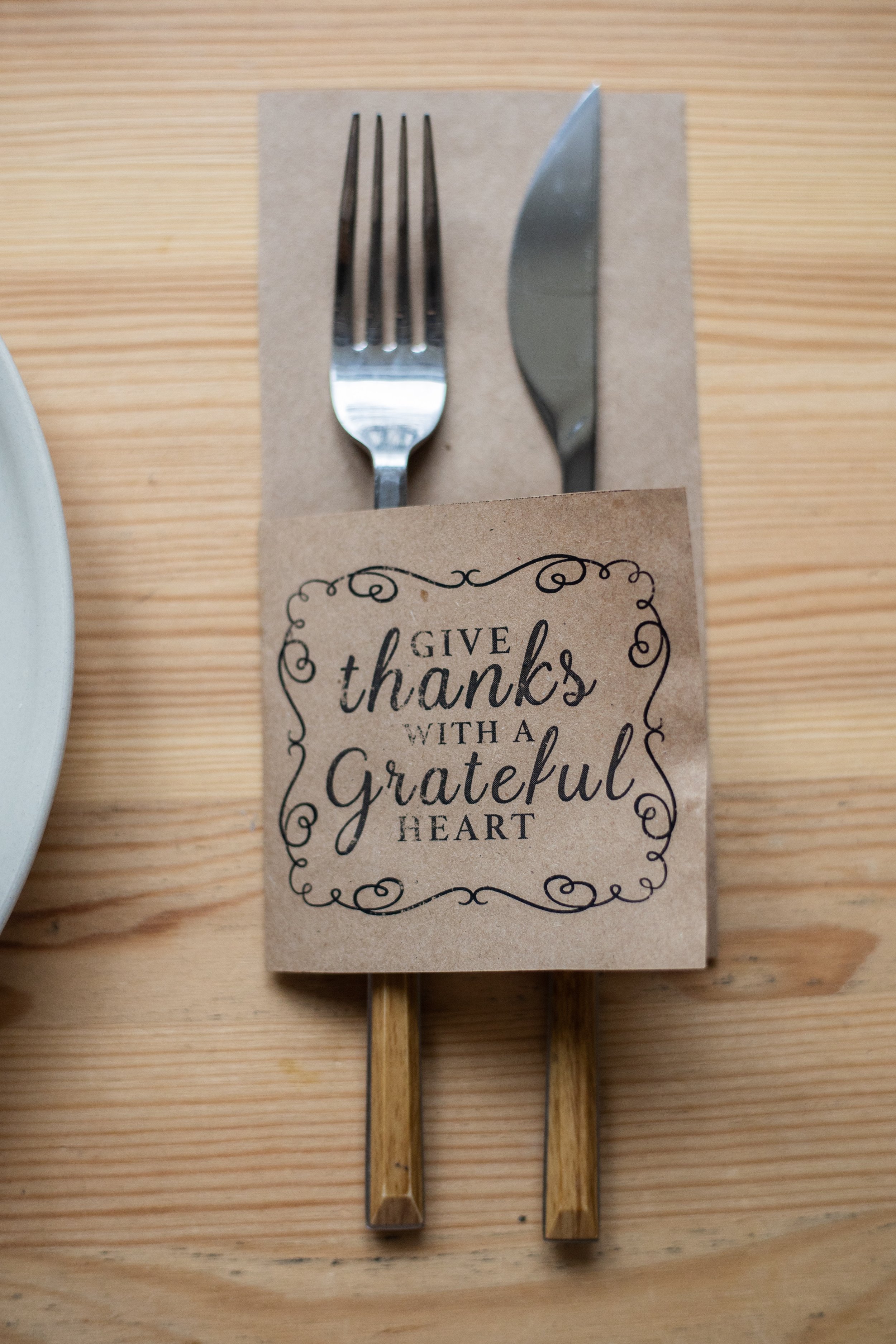
Tomorrow will be Thanksgiving. We hope to spend time with some of our family. We will have a small gathering with most of the traditional fixings, although my tradition is to mix it up a little and to try a new recipe for the sides. (Much to the chagrin of certain family members.)
Have you noticed that there are more decorative signs saying, “Be Grateful”. It seems that there is an influx of reminders to be grateful for everything. In every store there are tons of decorative items that remind you to be grateful. Googling gratitude home goods shows a plethora of items- napkins to wall hangings, offered from all sorts of vendors-Etsy to Neiman Marcus. All reminding us that gratitude is the best attitude. I hope that this is a by-product of Covid in the realization that life and all that we enjoy in life is precious. Hopefully gratitude will be an attitude that will prevail.
While I applaud the various manufacturers’ desire for all of us to be living grateful lives (I am sure that the CEOs of those companies are grateful for their third quarter earnings), there is a point of overkill and diluting the message.
By definition “grateful” means appreciation of benefits received; expressing gratitude. The definition of “gratitude” is the quality or feeling of being grateful and thankful. The etymology of the word comes from latin- gratus- meaning grace and the definition of “grace” means virtue coming from God. Unmerited divine favor.
While there are other definitions for grace, I think this first one of “virtue coming from God” is what makes gratitude such a powerful attitude. Because, left to our own devices, we humans are whiners, complainers, selfish, and just plain ingrates. Gratitude pulls us out of that behavior but only with help from above.
I find it interesting that almost every culture and religion has some ideology and theology about gratitude. I think because deep down, we know that gratitude aides humanity and we cannot do it alone. When an individual is grateful, she sees the world in a different way: she recognizes that none of the achievements or material things are truly hers alone, that what she has is enough and that she can and should share all things with others. When a society is grateful, there is a mutual benefit not only to the individuals but to the society as a whole. Gratitude evokes humility and hope.
In Egyptian culture they believed gratitude kept one in balance, while ingratitude would open the soul to negativity and sin. Once a year they were to offer five gifts to one of their goddesses Hathor. The priest would hold the person’s left hand and ask, “ Name the five things you would miss the most if you would die right now.” As the person quickly recited his list, the priest would remind him that his five fingers represented each of those five items and when he would look at his hand, he was to be reminded to be grateful.
Modern psychology talks about being grateful. There are all sorts of journals, apps and books regarding the practice of naming/writing/thinking about the three or five things for which one is grateful. And while I try to practice gratitude each day, some days I find are harder than others. It is a discipline and an intentional behavior.
Our dearest friend who is witnessing the active dying of her husband is remarkable. She, through God’s strength, is managing each day with grace and gratitude. Recently when I spoke with her, she recognized that she needed to do something to keep that balance Ancient and Modern societies strive to achieve. She is using a journal to write a simple list of things she has done in the day- for herself and for others. In some ways it is a slight variation on the gratitude list. I like it. For now it keeps her sane and keeps her life in perspective.
What about you? What are your thoughts about gratitude and grace? Have you ever stopped to think about the things you would most miss if you would die right now? Are they things? Or people? Have you ever told those individuals that? As you gather around the table this Thanksgiving, perhaps it is the year to tell the ones who mean the most to you, exactly that?
As you gather, perhaps you can have those around recite the five things each would miss if he/she would die right now? Or, have each person write or name: 1) one thing she did today for herself 2) one thing she did for someone else 3) one thing she is looking forward to 4) one thing for which she is grateful today.
Happy Thanksgiving.
Dying Well

One of our dearest friends is dying and there is nothing anybody can do about it. For the last couple years of his life, he has been dealt a double blow: an aggressive inoperative cancer on top of an already progressive debilitating disease which has left him in sound mind but weakened body. Once an athlete with quickness and agility, his body has failed him in even the simplest tasks.
The conversation has long ago moved away from the questions of why, why me and what medical interventions can be taken, to the acknowledgment that death is inevitable. The question now becomes- How does one die well? A question that most of us do not like to think about, but the reality is that from the moment we are conceived, we are on the trajectory towards death. We live in mortal and frail bodies.
Throughout this whole journey, my husband and I have admired our friend and the way he has faced his fate: with grace, kindness, humility, humor and love. He has every right to be focused only on himself, yet whether he has friends, family or caregivers in his room, he, the consummate host and gentleman, will inquire how the other is doing and want to talk about the other person rather than himself. Sure, he has his moments of grouchiness, sarcasm and unpleasantness (who doesn’t even in the best of circumstances), yet he still is caring for others in the limited capacity that he can.
All his life, our friend has demonstrated living with a servant leader heart. He is ready to help anyone in need. Many years ago, we served together on the Deacons, a helping ministry committee at our church. I was always in awe of how he would lean into difficult situations and get right in the middle of helping. He wasn’t concerned about procedure or forms or any administrative items. It didn’t phase him if the person had mental or physical health issues. He just wanted to get to the heart of the matter and help.
He has always taken people at face value. No judgement. I remember one time he and his wife and my husband and I went away for the weekend. As our habit when getting together, we always settle into deep conversations (lubricated by some fine single malt). I cannot remember the exact topic we were discussing but I remember him saying, “I don’t see things the way you folks do.” Perhaps it was his baseball background. It didn’t matter from where one came, what one looked like or what were one’s connections, if you could play ball then you were in. Same with life. If you were living and you had problems (and who doesn’t), then you were “in”, according to his philosophy. For him, every person is in God’s image and therefore deserves respect and love.
He is a good listener. Even if he didn’t agree with you or appreciate the same thing that you liked or enjoyed, he would still engage you in conversation and ask questions about the topic. If you are interested in something, he would want to know about it, because he appreciates the development of relationships through communication over anything else.
Our friend has shown me the answer to dying well. One does so by living well. And our dear friend is doing that. He is dying as he lived his life: thinking of others, building relationships and community, being generous of time, talent and treasure, glorifying God by his attitude and thoughts, enjoying the present and all that encompasses and by focusing on what he can do rather than what he cannot.
So today, happy birthday buddy. For what is birth but our beginning of consciousness to know God and make Him known to others. You dear friend, have shown that to us in so many ways. While your birthday years on earth may be dwindling, the best is yet to come. See you on the other side.
Remembering...

Tomorrow is Veteran’s Day. It is a day to honor those who have served our country. Originally it was called Armistice Day, to commemorate the end of WWI on November 11, 1918. It was called “armistice”- meaning an agreement to stop fighting rather than declaring a “winner” which occurs when one side surrenders. In 1926, Congress declared that November 11 would be a recurring anniversary of the date. After WWII and the Korean War the name was changed from Armistice to Veteran’s Day, to honor all those who served in war.
The wearing of poppies became popular as a remembrance of those lost. While the US honors those who died in service or as a result of injuries incurred in battle on Memorial Day (in May), the UK and other countries honor them through remembrances in November and in the wearing of red poppies.
The idea came from the poem written by Canadian Lieutenant Colonel John McCrae having noticed the hardy poppies emerging from the ground of the fallen soldiers in France. The poem, published during the war and read at many funerals, became one of the most popular works for art from WWI.
“In Flanders Fields” by John McCrae
In Flanders fields the poppies blow
Between the crosses, row on row,
That mark our place; and in the sky
The larks, still bravely singing, fly
Scarce heard amid the guns below.
We are the Dead. Short days ago
We lived, felt dawn, saw sunset glow,
Loved and were loved, and now we lie
In Flanders fields.
Take up our quarrel with the foe:
To you from failing hands we throw
The torch; be yours to hold it high.
If ye break faith with us who die
We shall not sleep, though poppies grow
In Flanders fields.
Lieutenant Colonel McCrae gave much comfort to others through his poem. One would hope that it brought him some comfort and understanding as well.
I have found it interesting that the use of art forms not only helps our veterans but also aids civilians to understand the world around us. I stumbled upon the Theater of War project. The “Theater of War Productions was co-founded in 2009 by Bryan Doerries and Phyllis Kaufman, who served as producing director from 2009 to 2016. Doerries currently serves as the company's artistic director. Since its founding in 2009, Theater of War Productions has facilitated events for more than 500,000 people, presenting over 20 tailored programs to serve diverse communities across the globe, reaching over 100 countries.”
While the above Youtube clip may be ten years old, it explains the project and how using storytelling, namely through the ancient plays helps in our understanding of humanity today.
I think back to the songwriting project I read (and wrote) about last year. All these different art forms help in making sense and processing our human experience. I guess one reason is that as we write, paint, sculpt, or sing about any experience, we can control the narrative. For a brief time, we can remove ourselves from being in the middle of the experience and perhaps view it with an arm’s length. War and its aftermath heightens all human experiences, yet what we learn from looking at it through the lens of the arts, can help us view other types of human experiences and how we treat one another.
What about you? Whether you are a veteran or not, have you ever had a song, poem, play, essay, novel, or any type of visual art speak to you? Did it help you make sense of a situation you were going through? How do you honor and/or remember those who served our country?
Tomorrow night (11/11/21) at 7:30pm EST, the University of Mississippi is having a virtual event of the Theater of War- reading of scenes from Sophocles’ Philoctetes— The event is free: Information click here.
Fall Lilacs

Strange Times.
In early October I was lamenting that my lilac bush was already dropping leaves. Most of the other deciduous trees and bushes in our yard hadn’t even begun to turn and droop much less drop all of their leaves. I was afraid that perhaps I would lose this bush that I had nurtured from a wandering transplant.

This past week I was in the yard cutting some sedum, hydrangeas and grasses to make an autumnal bouquet. As I was passing the lilac bush I smelled a faint waft of a familiar floral scent and looked up to notice that there was a bloom on the barren branch of my lilac. Here it was, the middle of fall when most of my garden is cycling down and preparing for winter’s rest and my beloved lilac was having a swan song. Of course, we have had some unseasonably warm days and most probably this poor little bud got confused.
I like to think that it was a brief moment to remind me that even in the midst of times that are seemingly slowing down and declining, there is always the possibility of growth.
I don’t know about you, but there have been episodes lately when things seem so bleak. There is much in the world that supports that way of thinking: all the social ills, extreme weather and its effects, wars, famines, diseases, pandemics and that is just on the global scale. While many of us may not live in such day-to-day extremes, the images and information that we receive about it can weigh heavily on our minds. Sometimes if we dwell on our own situations-health, family’s health, finances, relationships, responsibilities- we can feel the weight of a bleak future. I know that I have felt that way at times. Times when life seems overwhelming and the foreseeable future seems to offer no hope.
That plucky little lilac bloom reminded me that there is a cycle of new beginnings in the future. In our neck of the woods, we are fortunate to experience four seasons- approximately three months dedicated to each of the seasons. I am grateful for that cycle in weather. For just when I think that I am done with one type of meteorology, a change comes along in the air and we will be experiencing cold crisp days or long languishing hot ones. With that change in the air becomes a difference in my attitude and expectations. I see new possibilities and opportunities with the changing seasons.
I like to think that my lilac was a blooming rebel and that “she” knew that lilacs bloom in the spring with all the others, but she decided to take advantage of the unseasonably warm spell and do her thing and make it her time: to blossom and spread her spring joy of scent and sight. She showed the world, or especially me, that there is hope even in the count down to a respite winter- when the trees and bushes and plants are resting.
For there is always hope. Hope in the future. Hope in God’s provision. Hope that, though we cannot see what is round the corner or what the next cycle of life will bring, we can be assured that life goes on and that God is in control. The pattern of the seasons and of our lives ebbs and flows. Sometimes we are storing up energy in preparation for our “time” (aka purpose), sometimes we are resting after an episode of our “time” and sometimes we may be in the middle of our “time”- blooming like crazy.
What about you? Do you feel that your leaves have dropped? Too soon? What encouragement do you need to bloom? Where can you get that encouragement?
So while I know that lilacs don’t usually bloom in fall, I like the idea that they can: A lilac blooming way ahead of schedule can carry me through the dead of winter and give me hope for the beginning of another spring.
Prayer Challenge
Are you up for a challenge? One that is really not too taxing, yet most likely will benefit you.
Could you pray for a month? Any kind of prayer. Whether or not you believe in God, prayer in the very basic form, is thinking: thinking more deeply about our own situation or others. It is working through thoughts and circumstances whereas mediation is more of a clearing of the mind. Click here for a CNN article about prayer. Prayer causes us to reflect upon our actions and others. Prayer causes us to pause in our day.
My personal belief is that prayer is a conversation with the Living God of the Universe and I believe that He listens and cares about what each one of us has to say. While God knows all that is happening, He is a loving and interested parent. I know as a parent, I love to hear and talk with our boys. I want to hear about their days and what they are thinking. I want to hear about the joys, sorrows, successes and failures.
The beauty of prayer is that is does not require any special equipment, posture, or incantations. Just an open and willing heart. Author Anne Lamott says there are really only three prayers that are needed: Help, Thanks, Wow. Anyone who has had to take any school test knows how to pray- Help! Anyone who has held a healthy newborn has said in her heart- Thanks! And anyone who has witnessed a gorgeous sunset has said- Wow! There are the day to day, minute by minute breath prayers: Breathe in- ask God for whatever (peace, patience, calm); Breathe out- release to God whatever stressful (your worries, anxieties, poor attitude). There are prayers of the saints and sinners written down in the Psalms, in hymns, or liturgical worship books to guide our thoughts. Sometimes we pray our own specific random prayers and other times, the words of others convey our hearts.
Many years ago I designed a month of prayer- a specific topic each day- to pray. It was geared for a church, where each member was asked to pray for two other members (the person alphabetically before and after their name). One didn’t even really need to know the specifics about the person for whom they were praying. It was an exercise to lift them up in prayer using specific topics.
Attached is a prayer calendar of various topics for November. The thought is to pray in concentric circles: yourself, your family, your spheres of influence, your neighborhood, your country, the world. Each day of the month has a suggested topic but it is just that, a suggestion. The hope is that the suggestion might cause you to think about some other topic, need or specific person. The suggested topics are just the tip of the iceberg of ideas for if you can think it, you can pray it.
The thing that I notice most about prayer, while prayer makes a difference in relationships and circumstances, mostly it changes me: my attitude, or my view of a situation or person will shift and I can see things I was blind to before or were hardened in my heart. Hopefully while I personally may benefit from prayer, I am also contributing to someone else’s well being.
What about you? Have you ever prayed in a specific daily way? What was that like? Any changes in you or the situation?

November 2021 Prayer Calendar

I finally received my author’s copy of the All God’s Creatures Daily Devotional. I have six devotionals included within! It is a thrill to have my “bio” included alongside with the other contributors. (Sadly, when I sent in the “bio” our two little rascals were still with us. Alas, they are no longer making our lives fun and miserable, but we are still learning from our animals. I have more devotionals coming featuring the lessons learned from Scuppers.)
Lessons Learned

This week my husband and I are on “vacation”. For some, vacation means a new environment, new experiences and new places. For us, most of our vacations happen in the same place. In purchasing a little get-away cottage a few years ago, our vacations center around this house.
Over the past three years we have done some improvements to the home- some cosmetic like painting various rooms and others necessary maintenance which involves furnace and fireplace professionals. We try hard to strike a balance between puttering around the home and playing in the area: kayaking, hiking, biking, etc.
On this trip we have a few things to do. While I was transplanting plants from home, my husband was repairing the rotted boards on a gate. Part of the repair requires that he notch out both ends of a 2 x 4 so that they join with the uprights of the gate. As he was chiseling the piece he commented, “Your dad showed me how to do this.” I smiled, remembering how my dad loved to putter around with projects. I can see his capable hands- the one pointer finger slightly shorter than others due to a wood shop incident.
After my husband said his comment, I started thinking about others who showed me different ways to do things: how to hammer in small nails by holding the nail with a needle nose plier until the nail gets started, how to pin two pieces of fabric together ensuring that the pins are perpendicular to the needle of the machine. And I have learned things not necessarily from my elders. One of my childhood friends showed me how to make grilled cheese in the skillet using a spatula to smoosh down the bread. We were about nine or ten at the time and I amazed at her cooking ability as my mother never let me near the kitchen let alone the stove until I was an adult. I still make grilled cheese the same way.
I heard an interview of a woman who was experiencing the final stages of her parents’ dementia. As she was struggling through the emotional rollercoaster of guilt, helplessness, loss, and grief she was explaining her feelings to another friend. That friend said, “What is the final lesson your parents are teaching you through this?” It struck the interviewee as it struck me that regardless of the difficulty, there is always a lesson to be learned and/or to impart.
Even though it is eight, five, three, and almost one year past, since our parents (father-in-law, mother, father, mother-in-law respectively) have died, I am still reflecting, ruminating and learning from the last stages of our parents’ lives. I have learned to forgive and to extend grace to myself and others, especially when the end did not unfold as I thought it would. I realize now that each of the players in this last act were doing the best they could under the circumstances. That lesson of grace has helped me as I deal with others. Life is too short not to extend grace to one another.
What about you? What have you learned directly from others? What are the memories surrounding that lesson? What can you impart to someone else? A child, grandchild, neighbor, niece, nephew? A friend? If you were to give your final life lesson, what would that be?
Cracked Pot

https://lincolnpres.org/daily-devotional/a-cracked-pot/
The other day I picked up a five gallon plastic container on our dog walk. It was in the back alley next to someone’s trash can. (The unwritten rule around here: If an item is in the back alley by the trash cans, it is free for the taking.)
“I wonder why they are throwing it out?” I said to my husband. He just shrugged his head. After thirty plus years of marriage he has come to accept that his wife is a “dumpster diver”. I can usually make one man’s trash into our treasure. I had designs on that container. I needed something large and non-breakable to use as a vase for our sidewalk give-away of cut hydrangeas.
I swished some water out of the bottom and then proceeded to fill it up. I had left the hose draped on the side to fill and turned away to do another task. When I turned back, I noticed water pooling along the driveway. I couldn’t understand from where it was coming so I started tracing the rivulets of water and low and behold it brought me back to the side of the free container. There was an ever so slight crack halfway up the side of the plastic so that only a quarter of the bottom could be safely filled.
Oh well. You get what you pay for. However, I was still able to use the container. I use it to carry my bag of potted soil.
My cracked water container came to mind when I heard the following story:
“Back in the days when pots and pans could talk, which indeed they still do, there lived a man. And in order to have water, every day he had to walk down the hill and fill two pots and walk them home. One day, it was discovered one of the pots had a crack, and as time went on, the crack widened. Finally, the pot turned to the man and said, ‘You know, every day you take me to the river, and by the time you get home, half of the water’s leaked out. Please replace me with a better pot.’ And the man said, ‘You don’t understand. As you spill, you water the wildflowers by the side of the path.’ And sure enough, on the side of the path where the cracked pot was carried, beautiful flowers grew, while other side was barren. ‘I think I’ll keep you,’ said the man.” ~Kevin Kling as told to OnBeing.org.
I heard Mr. Kling speak on the program On Being. He was sharing different stories from one of his books. A storyteller, playwright and poet, Mr. Kling was born with a congenital birth defect in his one arm and lost the use of his other one in a motorcycle accident. His storytelling is positive and up lifting.
I really liked the image of the cracked pot because I feel like a cracked pot most of the time: incomplete, ineffective and not useful. But I also believe that I and others don’t have to feel that limitations keep us from being useful. Even with our faults, there is a purpose and plan for everyone. God uses each one of us, even those a little cracked, for His work. Sometimes our limitations can encourage others- “if they could do it, so can I”. Sometimes our experiences can pave the way for others- “this is what I learned and it might be helpful for you to know this before you begin…”. Sometimes our situations and outcomes can only be explained through God’s grace- “I could never have done this without God’s strength.”
If I am planning on making some type of craft, I generally will purchase the materials. The materials are new and consequently, the project will look new and put together and generally I am pleased with the results. However, when I re-purpose one item for another, I am thrilled! I love nothing more than to take something that is broken and reuse it for something else. I remember all the details of the endeavor and will be pleased every time I see or use the item. Sometimes I wonder if that is how God is with us: He loves to use our brokenness for something unimaginable and unforeseen yet totally beautiful and useful. He loves to restore and renew and to make whole. In fact, I think He purposely uses those who are cracked for His work: making purpose and beauty out of that which is not. What better hands to be in, then to let the Master Creator, design and re-fashion us and our situations?
What about you? What kind of pottery are you? Fine china? Stoneware? Cracked glaze? Chipped around the edges? Used? Put on a shelf? Where have you seen God working in your life? Re-shaping, re-purposing, re-using a difficult experience. Has your brokenness been used to glorify God?
Actually I like that I am not complete and whole- yet. By God’s grace, each day I can discover what improvement He has in mind for re-using and re-purposing me. As the old gentleman said as he walked off the tennis court, “I left room for improvement.”
May all of us cracked pots feel the same way.
Good Questions = Good Dialogue

Image: https://sharpmagazine.com/2016/11/01/why-you-should-play-catch-with-your-son/
You have probably heard the conundrum: Did you stop beating your dog?
Tricky because either a “yes” or “no” will put you in a terrible light: either you once beat your dog and now have stopped or you are currently beating your dog. The question sets you up and does not allow you for any explanation, like, “I have never beaten a dog”or even, “I don’t own a dog.”
Or the game of questions which has just one rule: say no to every question.
Are you ready to start?
If you answer “yes”, you have already lost. The crime/mystery/thriller novelist Laura Lippman wrote about this game in her recent memoir of essays. Her dad loved games and loved to win. She writes a loving essay about her dad’s competitiveness. This was one time that completely surprised him in that she answered an emphatic NO to the beginning question.
I have been thinking about questions lately since in recent days I have done the social faux pas of not asking guests enough questions about themselves. The art of conversation is the tossing back and forth of questions and answers. It keeps the parties engaged and builds/strengthens the relationship. While there was a give and take in these prior conversations, upon reflection, I felt that I was hogging the ball and not asking questions of things about which the others knew (and I wanted to know).
I think of those specific interrogatives that we learned in school: who, what, where, when, why, how? Whether we realize it or not, we go through the mental process of those questions with every interaction. For example, those questions can be applied to our current health crises. Even if we are not that interested anymore in Covid, we still have these type of questions: Who is impacted by the virus? What does it mean to have a positive diagnosis? Where did I contract it or where should I seek treatment? When do I need to receive a vaccination or when are we going back to “normal”? Why did this get out of control? How can we prevent another pandemic?
I also have been thinking about the questions that we pose to God, whether we believe or not: Who is God? What does it mean to believe in God? What does God want me to do? Where does God abide? When do I have to listen? When will I know that God heard? Why do I even care or why does God care for me? How do I go about knowing God? All questions that have been pondered since the dawn of time. What I find fascinating about the Bible is that it never gets old. It is the closest thing that we have for knowing/seeing/experiencing God. It is a tangible explanation and expression of our human understanding of God and His response and reaction to us. Many of the Psalms are the written “ball tossing” of King David and God.
I dialogue with God most of the time. Sometimes formally, in a posture of prayer or informally through some type of journaling, but most often in the breathing in/breathing out, going about my business discussions. More than peppering God with a lot of questions, I am trying to listen more to the answers and to the questions God might pose to me.
I think one of my biggest questions for God over the years is Why? Why is this happening? Why won’t God do some type of intervention? Why me (or her, or them)?
Of course the questions underscore my thoughts that I shouldn’t have anything bad happen to me or people I know especially if we have “played by the rules” or are “decent people”. The posed question of “why” still revolves around us and our thoughts and responses. It negates the fact that there is no guarantee in life and life is made up of many more components and people than just ourselves.
But is asking questions, especially of God, good? Asking questions is necessary for all careers: medical personnel, lawyers, teachers, service personnel - any kind of profession. It is necessary for life: from what berries will kill me (hunter/gathering days) to how do I turn on my computer (living in the digital age).
According to Harvard Business Review, questions are good for developing rapport among people, adding to our understanding, sparking innovation and re-thinking what we may already know. The following chart describes the two different types of conversations that we may find ourselves in: competitive or cooperative. Both types of conversations are ways we deal with others.

I think of the various questions that Jesus asked of his disciples and pharisees. He, the Great Physician and Master Psychologist asked questions in this way: Who do you say that I am? Why are you so afraid? Why did you doubt? What does scripture say?
I also think we can draw out questions in this mode as we dialogue with God. I like the tactics for the cooperative conversations as we question and answer God. I believe that God wants us to ask and answer questions and to have the ball tossing dialogue with Him. There is no “curve ball” that we can toss Him. As we read the Bible and as we pray, we can ask and have our questions answered. It is in that process that we learn, grow and build trust.
What about you? How are you with questions? Do you ask them? Or do you answer them? Have you ever questioned God? About what? Receive any answers? How are you and God with the ball tossing?
I heard once that the question for God is not Why? Rather one should ask, What (do you want me to do?) and How (do you want me to do it?). Those questions emit a ball tossing dialogue. I’m in.
Adjustments

Adjustment: noun; plural noun: adjustments
a) a small alteration or movement made to achieve a desired fit, appearance, or result.
b) the process of adapting or becoming used to a new situation.
I have been doing yoga on and off for the last couple of years. I say “doing” rather than “practicing” because I do not go through the motions in any consistent way. (Just like I am not "practicing” the piano, I just dabble.) Also, I do not use yoga for any religious or spiritual reasons. I just like the stretching and toning it provides.
The other day I was doing my yoga stretches and was moving through a pose called “cat/cow.” One is on all fours (palms on ground under shoulders and knees under hips). One “drops the belly” producing a sway back - looking like a cow hanging down with belly and udders full- and then “curls back”- lifting one’s back in an arch like a cat would do.
I have done that pose numerous times but, as is said in every yoga practice, one needs to think about the movements each time and not just quickly go through them. The instructor reminded me that in the cow position I needed to reach my heart (upper chest) forward as the belly dropped. It was a slight shift and change than what I had been doing and it really made a difference with the stretch.
I thought about that small change as I was playing tennis the other night. Just a simple extra movement in my feet or shoulder position can make a huge change in how I handle the ball. If I step forward into the ball instead of waiting for it to come to me, I can sometimes produce a winning shot.
A small alteration that can make a big impact.
The other part of the definition for adjustment is the process for adapting to a new situation. I would say that most of us are in that category just by default of the pandemic. I think of teachers and students in the classrooms: they have had to adjust to masks, where they sit, what type of recess and play they can have, even how close the instructors can be in helping them.
Anyone of us who has been in a store or any position of waiting knows how we have unwittingly learned to adapt. For instance, it now seems normal to be six feet apart while queuing at the grocery store. I think of the old days that if I saw people standing beyond the conveyor belt, I would think that was such a long line and look for another checker. Now, seeing a person beyond the conveyor belt means that the line is only one person long because of the space we give one another.
I am finding the word adjustment in my spiritual thoughts as well. In the NT, Paul reminds us that we can transform our hearts through the renewing of our minds. One way we do that is in reading and rereading the Bible. Each time we look at a passage, God speaks to our hearts and we can choose to adjust to a new mindset, behavior or attitude.
In reading the book of Ecclesiastes, I am adjusting to the concept that I am nothing outside of God. As is the case with God, He (and life) is always a paradox: we are nothing apart from Him but everything with Him. The things that I worry about and spend my time doing or thinking about are not that important and won’t last. What is important and will last is my contribution to what God is doing. An idea that is humbling and strengthening all at the same time. Humbling, knowing that I am a mere cog in the wheel of life but also strengthening (to my confidence), knowing that I am a cog in the wheel of life and that what God has called me to do and what plans He has for me are things that only I can do. My contributions are important. Each day, I need to concentrate on that which I am called to do and to enjoy what comes down my path.
For if I would die today, tomorrow or in the next couple of minutes, I wouldn’t change a thing. It is like the lesson the main character, Emily learns in Thornton Wilders’ play Our Town: I appreciate and love the ordinariness of life and my daily activities. It is in the ordinariness of our calling that we find the extra-ordinary meaning of life.
What about you? What adjustments have been made in your life? Were they (are they) big or small? To your work schedule? To your finances? To your family? To your values? To your priorities? What adjustments can you make in your day today? What small changes to your physical, emotional, intellectual or spiritual activities can you make?
Some possible ideas:
Getting up fifteen minutes earlier to just collect your thoughts.
Choosing to forgo the dessert.
Trying a new recipe.
Smiling to someone who generally ticks you off.
Straightening your desk at the end of the day.
Refusing to answer or comment on a snarky social media or email.
Breathing deeply when feeling stressed.
Finding pleasure in small things of life: A flower on your desk, glancing at the star-filled sky, noticing the weather outside your window (whether it is rain, snow, fog, sun).
Reading a chapter in a book.
Memorizing a favorite quote or Bible verse.
Driving home via a new route.
Saving $10/week (or whatever might fit your budget).
Sending a note of gratitude to a co-worker.
Life Held Loosely
Our small group Bible study is exploring the book of Ecclesiastes. Even if you are not Bible literate you might have heard the song, Turn, Turn, Turn by the 1960’s band The Byrds. The lyrics come from Ecclesiastes 3: 1-9,: “For everything there is a season…”
At first glance, the theme of the book is a major downer. Basically the conclusion of the “preacher” is that we live and then we die. Nothing really matters. All that we think is important is fleeting. Trying to hold on to anything in our lives is like holding on to smoke. It de-materializes.
As a global community struggling through Covid, I think we have all experienced that fleeing, dematerialization of “important” things in our lives: jobs, homes, status, relationships, health, and sadly for some, lives. Living through Covid (whether being sick or just experiencing the “collateral damage” of a world shut-down), our priorities have changed. I have spoken to workers and small business owners who have had to re-evaluate their work/life balance. I have seen families relocate in order to accommodate the new lifestyle.
In these last two weeks, we have seen Covid come pretty close to home. We have had to change plans and reschedule activities as we waited for test results. We have had dear friends test positive and be pretty sick. While we are grateful that they seem to be improving, their lives have been disrupted.
Covid on a basic level is a major disrupter. We have seen that individually, nationally and globally. We have all learned to adapt and be flexible. Something I fear is hard for the human experience. We like to be in control and to expect that certain actions always follow certain behaviors.
One of the blessings of caregiving over the last couple of years was that I have had to learn to be flexible and adaptive with my schedule. Not that I was overly happy about it. Many times I was emotionally kicking and screaming as I had to switch plans, expectations and goals. Yet, I am trying to remember to live that way during this time. It is also a philosophy I hope to embrace going forward. It can be hard. Holding plans loosely makes me feel that I am very wishy-washy. I am one who likes and honors commitment. I am having to re-evaluate the balance of work, play, and life. How can I commit to anything while still leaving room in the schedule if I have quickly change or cancel plans.
What about you? Have you had to change plans or schedules recently? Has Covid disrupted your life?
The thing about Ecclesiastes is that while we learn that we do not have any control in life, God does. All we are guaranteed is the now. God wants us to enjoy the now: to enjoy the relationships we have, the food we eat, the activities we do and the work in which we engage.
“I know that there is nothing better for them than to be happy and enjoy themselves as long as they live; also that it is God’s gift to man that every one should eat and drink and take pleasure in all his toil.” Ecclesiastes 3: 12-13.
To Sleep, Perchance to Dream...

What do you think about technology? Is it helping you in life or is it hindering? Can you go a week, a day, a morning, an hour without checking your phone or any of your devices?
Dr. Larry Rosen is a scientist researching how technology and our brains function together. His study determined that technology, namely smart phones with its notifications and blue lights disrupts our sleep. It makes sense that the emissions from the blue light of devices can make it difficult to fall asleep, but it is also the notifications, blips, dings during the day that can cause sleeping problems. All those alerts can cause anxiety, perceived or not, and can cause increases in cortisol levels. He writes:
“My colleagues and I at California State University, Dominguez Hills, conducted sleep research that stems from my lab’s work on the “psychology of technology,” where we have discovered two important variables that encourage us to use (and misuse) technology, thereby losing sleep: (1) poor executive functioning, which includes our (in)ability to pay attention, problem solve, control our impulses, and make decisions, and (2) anxiety. In our work, anxiety is sometimes referred to as FOMO, or the fear of missing out. We see this anxiety in the majority of smartphone users who feel uncomfortable if they are not in direct contact with their phones — and their many electronic connections — 24/7/365. A dead battery and no charger can bring upon a panic attack.”
His suggestion is to use our phones as a tool: to control the tool, not to have the tool control us. He writes in Harvard Business Journal:
“During the day, practice not reacting to incoming alerts or notifications like one of Pavlov’s dogs. Don’t check your phone every time it beeps. In fact, turn off notifications and check on a schedule to retrain your brain’s neurotransmitters (particularly cortisol). Start by checking every 15 minutes, and gradually increase that to 30 minutes or more. Tell your family, friends, and colleagues that you may not respond immediately, but you will within a specified amount of time, such as 30 minutes to an hour later.
Stop using all devices one hour prior to sleep.
Put all devices away in another room rather than keep them in the bedroom to discourage you from checking them during the night. (If you must keep a phone nearby in case of emergency, set it so that it only rings when certain people are calling, but still place it across the room and away from your bedside.)
An hour before bedtime, start dimming the room lights slowly to release melatonin.
During the last hour before bedtime, choose an activity that your brain will find predictable and, thus, not anxiety-provoking. Consider any of the following:
Watch a television show that you love, maybe even a repeat.
Read a paper book (or use a Kindle which doesn’t emit blue light) by a familiar author.
Listen to music that is very familiar like a playlist of your favorite songs. If you need a device to do this, burn CDs and get a CD player. (The key is to use a device that doesn’t have internet access, email, or a phone.) Keep the volume low.
If you awaken in the middle of the night, try this trick: have a song lyric in mind (not the whole song) that you plan to sing in your mind over and over to block the anxiety and allow you to fall back to sleep. Another option is to learn one of many meditation techniques and practice and use those skills to calm your mind.” (https://hbr.org/2015/08/research-shows-how-anxiety-and-technology-are-affecting-our-sleep)
I can relate to Dr. Rosen’s anecdote about the panic attacks with uncharged phones. I had a similar experience one time when I traveled by myself to our little cottage get-away. At the time we did not have landline service and only relied upon our cell phones. I had a couple days of panic while I saw my usage bar shrinking as I was trying to figure out why my phone was not charging. (And yes, we had power and I did have the charging cord.). The thing is, my panic was totally unnecessary. I was not in any place that could be called the hinter land. I had neighbors closer than 50 feet. If I needed to contact family members I am sure that the neighbors would’ve helped. I could’ve certainly driven to the phone store to assist me. Worst case financial scenario would be that I would’ve had to buy a new phone. I was in a position of options which did not need to include panicking. Before cell phones, I certainly visited places that did not have phone service or service readily available. Back then, the likelihood of my having a problem was just a probable as now, but I never panicked back then.
I have been thinking Dr. Rosen’s research and my smart phone usage and my difficulty in sleeping at times- waking up @ 3 am. Is there a correlation? I am wondering if I have been too attentive to my phone- letting it dictate my day rather than the other way around. I am trying to implement some changes: namely responding to the phone at specific intervals in my work day and eliminating any notifications.
What about you? How are you with your smart phone? Are you always looking at it? Or do you not know where it is? Do have trouble falling asleep or in waking up in the wee hours of the morning? To what do you attribute the lack of sleep?
According to Dr. Rosen, when asking respondents how often they look at their phone, a person might say 30-40 times a day. In collecting the data, he determined it was more likely 70-150 times. (This was his review in 2017).
I found the following on reviews.org. They interviewed over 1,000 Americans about their cell phone habits as well as checking the phones’ screen time report. Below is the information from this last year. The statistics seem to be getting worse every year. (I do think the pandemic probably had something to do with it. Looking at our phones, trying to get more information about COVID was one way we could make sense of it all.)

In the history of humankind, the time frame of development and phone usage is just a blip. But in looking over the last century, any introduction of a new technology has increased our dependency on it, i.e. being controlled by it, rather than not: airplane, automobile, television, landline telephone, wireless/radio/stereo -not counting the 8 track tape :).
I wonder if we just have to settle-in to the phone idea. Think of it as a garden tool perhaps. I certainly do not think about or check my shovel all the time, only when I am prepared to use it.
If you look at the list of most important technological advances it varies depending upon the compiler: printing press, electricity, domestication of horses, penicillin, optic lens, paper currency, steel, internal combustible engine. I wonder did any of those inventions and technologies change brain chemistry as much as the phone?
Regardless, there has always been the tension between being so enamored by our inventions, our collective human cleverness if you will, and, in turn being “ruled” by our inventions and struggling not to do so.
For our physical and mental health, I think we need to humbly choose the latter.
80/20

Do you feel that time is slipping away from you? Too much to do in too little time? Or, too much time and not enough to fill it?
The 80/20 Rule. Perhaps you have heard the saying as it applies to how people work- In any organization, 20% of the people do 80% of the work or some such thing.
The 80/20 rule is known as the Pareto principle or the law of the vital few, which basically means that in many events, 80% of the effects come from 20% of the causes.
Seems like there is a lot of 80/20 applied to living yet I wonder if we actually do it?
There is a financial lifestyle rule of 80/20 which divides living as such: 80% for expenses with the remainder 20% for saving (10%) and giving away (10%). Living within 80% of one’s means is liberating. By doing so, it allows room for financial confidence (through saving) and financial generosity. It provides some space for the financial unexpected both for ourselves and others.
I have been thinking- what if we lived all aspects of our lives like that? 80/20. Our time for instance? Instead of living crammed up to the minute with activity, we kept 20 % of time “open”? It would allow us wiggle room for the unexpected: the chat with the neighbor, the errand for a friend, the reading of a book, even the possible traffic delay.
What would it be like to not feel rushed every second of every day? I know that I am guilty of this behavior more times than I care to admit. No wonder I am pooped at the end of the day. What if I left some time for contemplation, reading, or day-dreaming?
There are twenty-four hours in a day: we know we should be sleeping @ 8 hours, leaving 16 hours for work and whatever. If we applied 20% of our time “open” that would give us @ 4.8 hours a day. Just writing that, makes me feel anxious- isn’t that “wasting” our precious time commodity? But, I am wondering if we could (more like, could I?) leave wiggle room throughout the course of a day? Not necessarily have 4.8 hours all in one block of time, rather leaving time in our schedule- starting with five minutes here, ten minutes there- to be open to interruptions, new possibilities and the unexpected?
Many years ago I heard Dan Buettner talk about Blue Zones (book by the same name). These are places in the world that he discovered had populations that lived longer and healthier lives. One such place is in Okinawa, Japan. In Okinawa the average life expectancy for males is 84 and for females is 90. Consider that in America, the average life expectancy for males is 75 and for females is 80/81, it seems that these folks might be onto something.
One of the principles that the Okinawa population practices (especially the elders) is to say, “hara hachi bu” before each meal. The expression reminds them to eat until they are 80% full. The point is to not starve themselves but to re-frame the way they look at food. In America, we say we eat until we are full. In Okinawa they say they eat until they are no longer hungry. While both actions provide needed nutrients, the Okinawa philosophy is slightly different: food consumption is not to be maximized but rather “wiggle” room. They utilize three simple rules with eating: they eat slowly (allows the brain to register when they are no longer hungry), they focus on the food (an enjoyment and mindfulness of what they are eating alongside with whom they are dining), and they use smaller plates.
The idea of the 80/20 principle for anything in life has me wondering if that rule allows for accomplishment or completeness. For it seems by definition anything 80%, will never be 100% complete.
Yet, I also think of the Sabbath: 6/7 days work and 1/7 rest: 85.7% work and 14/3% rest within a week. A God-devised system of roughly 80/20. Part of the purpose of Sabbath is that we, as humans need it. We are physically designed to need to rest and regroup- to not push the limits all the time, every time. I am thinking of Sabbath not in any legalistic way (one is forbidden to turn on a light switch because it is “work”), but rather as a practical concept.
It is the practice of sabbath living that strengthens our physical, mental and spiritual beings. We know that we need physical rest. Much as we try to be efficient with our schedules and lifestyles, we cannot change the fact that our physical bodies recover, re-generate and renew through rest and sleep. Even when we are awake, we need periods of time when our minds are “off” to allow our brains to be de-stimulated.
Sabbath living is also good for our faith. In practicing a Sabbath lifestyle, we will never be able to finish a full 7/7 week, and so we must believe and trust God that all will and can be complete during the 6/7 time. It is as if the incompleteness is the point of Sabbath: it is a system that forces one to let go of self-sufficiency and to allow God’s generosity/wiggle room to orchestrate our time.
It appears that 20% of what we do whether financially, scheduling or in our eating habits- the “giving away” of our time or money, the resting, or the refrain from eating until we are stuffed- are the causes that effects the 80% of our lives in better physical, mental and spiritual practices.
What about you? Do you pack your days so that you do not have any time for thought or reflection? Do you eat until you are stuffed? Have you ever practiced a sabbath? If so, what does it look like?
I am very intrigued by the 80/20 rule as it applies to my schedule. I am trying to have time each day that is my “sabbath” for rest and for wiggle room. Time for the unexpected. Time to be healthy. Time for God to work in my life. Time to enjoy being alive.