
The Long and the Short of It
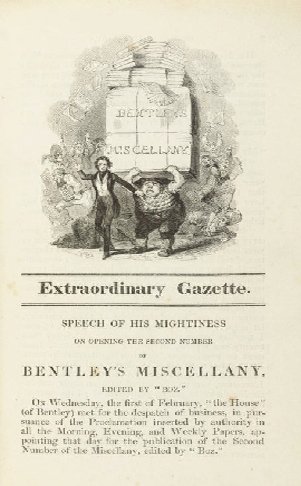
Bentley’s Miscellany. One of the magazines for whom Charles Dickens wrote and was editor. Oliver Twist was serialized in this magazine.
Are you loquacious? One of the first times I met with my husband’s then- 98 year-old grandfather (he lived to be almost 103), he said to me, “Virginia, you are loquacious.” I think he meant it as a compliment but I wasn’t too sure at the time.
Do you ramble with a story or are you like Joe Friday, “Just the facts, ma’am”?
I find it interesting that in reading the NYTimes online, they will print at the beginning of the article, an amount of time it will take to read it. For instance, “5 minute read or 3 minute read”. Apparently many sites will give you the heads up about reading time. As an archived NYTimes post from 2014 states, in the old days, it was the headlines, photos and bylines of the journalists that would cause people to read an article. Now there is the option of how long it might take them.
Whether a piece is wordy or not is not anything new in the world of words and reading. Charles Dickens was a serial magazine writer. He got paid by the word. Hence his books are long and wordy. In some of his work, it might take a page to find the period at the end of a very long run on sentence. That wordiness can be difficult to read and comprehend and can also put one to sleep. When I was a kid, I used to be able to read in the car. At the time, I was reading Great Expectations. In school, we had learned that his work was meant to be read aloud: think of the Victorian family, gathered around in the parlor with papa reading from the latest edition of the magazine. So while on a family car trip, I began reading out loud the novel. Finally my dad, who was driving, said, “Honey, please do not read anymore. You are making me fall asleep.” Whether that was due to the cadence of my reading skills or the wordiness of the story, we will never know.
I heard the novelist Sir Ian Rankin in an interview stating that he likes short stories. He has written a bunch and thinks that perhaps the short story might make a comeback. In his opinion, it is the perfect length to read on a commuter ride, etc. Longer than a tweet or instagram but shorter than a novel or novella.
In some ways, I am not a big fan of the short story, especially if it is a subject that has some weight. I want all the information/words that I can find, whether it is fact or fiction. Yet, there is something of too much of a good thing. Especially in this day and age of the shortened attention span.

The Spokane Press. May 16, 1910.
Of course, there is Hemingway. As a former journalist, he was all about brevity and clarity. Nothing extraneous. His stories are all about the nouns and verbs. Action. Not much in the extra details and descriptions. The story goes that he had a bet with other writers about writing the shortest story (6 words). His words: For sale: baby shoes. never worn, won the bet. While there is a question as to his writing these actual six words (They weren’t attributed to him until 30 years after his death.), he did usher in the notion of flash fiction (called such in the 1990’s). Perhaps he had read the newspaper article in 1910 (see sidebar) and it always stuck with him?
The six-word story is definitely a way of honing one’s skills in telling a tight story. Similar to how haiku tightens poetry. It is a fun exercise to try and do. It is used not only to tell any story but it is also used as a form of memoir.
Larry Smith has gone on to use the six-word story in a way for others to tell their stories. He uses the six-word story in schools and prisons. Places where individual stories are overlooked.
In Larry Smith’s TED talk, (Click here to watch his TED talk) he explains the rationale in using six words to hear someone else’s story. Six words can help some people as they would not know how to begin. As he says, using six words gives a person a “spark- to start the conversation and essence- a way to sum it up”. In engaging with others about their stories, it is then good to use these three words, “tell me more” as a follow-up. He is devoted to the ordinary person and their story because we all have a story. Once we know someone else’s story, we have a better understanding of each other and our community. (Click here to read his website which has lots of ideas regarding the six-word memoir.)
What about you? Have you ever tried the six-word story or memoir? What six words would you use to tell your story?
If you have a six-word story, you can share it on the following website: https://www.sixwordmemoirs.com/community/contests/. Even if you do not share it there, you might want to share with family and friends. Get the ball rolling and perhaps they will share their six-word story/memoir with you. Once started, perhaps they will tell you more. What better way to get to know each other than by sharing the only thing we truly own, our stories.
Dressed Up

Twiggy, 1967 https://www.britannica.com/biography/Twiggy-British-fashion-model#/media/1/1697250/181602
I’ve been listening to a podcast: Tea with Twiggy. For those of you who were too young to know or too old to remember- Twiggy was the “it” girl of the 1960/70’s. She represented the new look of the mod age- the face of 1966 and was on the cover of Vogue magazine over a dozen times. She went on to become a screen and stage actress and singer. During the pandemic she started a podcast, “Tea with Twiggy” where she talks to her friends- most are well known from stage, screen, modeling and song.
She interviewed Charles Gordon-Lennox, 11th Earl of Richmond who owns the estate Goodwood house and sponsors the Goodwood Festival of Speed. The festival is an annual motor car event with modern and vintage motor cars. In addition, they have a large vintage/second hand clothing market. Many who attend the festival dress up in vintage clothing. According to the earl- he has noticed that when the crowds that are dressed up in the vintage clothing congregate, they are better behaved and more kind with one another. There is a spirit of civility that prevails.
I find that fascinating. There is the view that what we wear, determines how we behave and think. There are some studies to suggest that formal attire encourages creativity and abstract thought, increases critical thinking and problem-solving skills. There is also some thought that depending on what we are wearing, we switch “roles” in our thinking and behavior. For instance, one will most likely take advice from a doctor wearing a medical coat more than if she were wearing a bathing suit. And the one wearing the uniform-firefighter for instance, probably acts differently around his buddies than when dressed for the public.
There has always been the adage- dress for success. Certainly we wear different clothes depending upon our moods or activities. We know that specific colors or styles make us feel more comfortable or more confident. Clothing is an individual expression.
But I like the idea that being dressed up, elevates the nature of a crowd. Perhaps we need more of that in this world. Not that we have to go back to the strict nature of “formal”clothing from bygone eras- which was very constricting to women, but that we think about being appropriately and dressed for any occasion.
I know that when I was in school, I always did better on examinations if I dressed up. Not anything super formal but not pajamas or sweat pants.
Years ago our son was in Europe for study-abroad. In flying home at semester’s end, he had more things in his luggage than when he flew over. Consequently he couldn’t pack the suit he had bought in Vienna (all the students were required to attend at least 1 ball during the Viennese winter season) so he wore it home. When we picked him up we almost didn’t recognize him- he was the best dressed passenger. Later he said that he almost got put into first-class when the flight attendants saw him.
What about you? Have you ever been treated differently because of what you were wearing? Does certain clothing evoke different behavior from you? Do you wear different attire depending on the activity?
Of course, clothes do not make the man or woman but if it changes the way we carry ourselves with civility, manners and politeness, it is not such a bad thing.
Oh would it only be so easy to be civil in this world- just dress the part.
Better Reading

Are you a reader?
I have always been a reader. I was reading before entering kindergarten. I remember enjoying those Dick and Jane books. (Funny story- I have a late birthday but in our town, the cut off for school was the calendar year-December 31. Being a December child, I was enrolled into class along with all the other children who were born the same year as I. Consequently, when I entered kindergarten in September, I had not had my birthday yet, so I was technically still four. I remember sitting in the Kindergarten classroom- cross-legged on the carpet for story time- and the substitute teacher voiced her surprise that I was reading. She asked me my age and after I told her, she said, “You can’t be four.” Here I was just a little tyke, trying to argue with this sub that “Yes, I was. I am so four.” A generation later, was it any surprise that our son at an early age could and would argue the legs off a table?)
I love words and the power of words and I enjoy reading although lately I wonder if I am truly comprehending what I read? I cannot figure out if it is a post-covid thing? An aging process of the brain? Declining eyesight? Maybe I have deceived myself all these years and I never comprehended things?
An article in The New York Times caught my eye, How to Be a Better Reader. Click HERE to read. I think the main crux is how we need to slow down in an age of quick sound bites. Our son has been working through a book, How to Read a Book, by Mortimer J. Adler and Charles Van Doren. He says is it quite interesting.

Words are powerful. I think it is only through words that people’s hearts and minds can be changed. There is a mystery about words. Word, with a capital “W” represents Jesus/God. The Creator of all things. Words are part of our co-creation- the way we express ourselves through language (written or oral) is a gift from God. When we use words, we are entering into creation, little “c”, with God. “In the beginning was the Word, and the Word was with God, and the Word was God. He was with God in the beginning. Through him all things were made; without him nothing was made that has been made.” (John 1:1)
Words are powerful because whether the author of the words realizes it or not, words are reflections of God. Words can be edifying and they can illuminate one’s world. Sadly, like many choices people make, words can be used for evil- they can be hurtful and they can diminish one’s spirit.
It is more than just the words on a page that can change hearts and minds. Storytelling, in any of its forms- drama, plays, poems, lyrics, etc. does too. I think because these formats are not so direct as perhaps facts or statistics on a page. Facts and statistics can change people’s minds but facts can hit you over the head while stories make the point in a sideways, gentler way: in reading a story one internalizes the predicament and hopefully that will evoke an empathetic response. Sometimes it is a repulsive response but either way, one has to mull it over in one’s brain.
What about you? Have you read any books lately that have made you rethink an ideology? Any characters whose lives changed the way you process the world? How you live?
In Rhode Island there is a program- Read Across Rhode Island in which a committee chooses one book a year that is offered to the population to read- libraries, schools, community groups, book clubs, religious groups- anyone who wants to read it. (Probably many states have this type of program.) This year’s book is Solito by Javier Zamora. It is a memoir of his journey to America when he was nine-year’s old. Solito is an incredibly detailed chronicle of Zamora's 3,000-mile journey from his small town in El Salvador — where he spent his childhood without his mom and dad, who had already made their way to the U.S. — through Guatemala and Mexico, and eventually across the U.S. border. He was an unaccompanied minor yet in the harrowing journey he develops a relationship with three strangers who become his “family”. It is their kindness that is one of the beautiful expressions in the book.
His book, told from the point of view of his nine-year-old self is an eye-opener. It emotes empathy and just a glimpse of what the immigration process entails. It humanizes the experience and so, has made me confront some of my pre-conceived ideas. It is just a beautiful (although at times harrowing) story-poetically written and conveys a hope in one’s fellow human that was unexpected. I was able to hear Javier speak when he came through Rhode Island on a book tour. What a thoughtful and loving person. With all that he has experienced in life, he does not appear bitter at all, either in any of the situations he found himself in or with the people who put him in those situations.
For me, this book has placed on my heart the peril and problem of immigration- whether in our country or in others. While I know that the issue is extremely complicated and I do not have enough information to come to any conclusion, I do know that only through reading and stories, like Javier, will I begin to have some understanding.
One of my all time favorite books is Walking on Water: Reflections on Faith and Art by Madeleine L’Engle. She writes about the creative process and faith. As she says about stories, “ “Stories are able to help us become more whole, to become Named. And Naming is one of the impulses behind all art; to give a name to the cosmos we see despite all the chaos.”
I think it is in the Naming and making sense of chaos that we begin to experience mercy and grace. It is why reading is so powerful and so important.
“Because stories are spells; they change things. When they hook us and reel us into their magic, they change us. It's stories that will save us, in the end. Not just the stories we read or tell, or the stories we want to be in, but the ones that live inside us and the ones we live inside.” – Sharon Blackie. Hagitude
Encore for Jesus

One of my favorite local artists- still painting at age 100+.
This past week I heard an interesting news story on the BBC called “An Encore for Jesus”. The Eudists Servants of the Eleventh Hour are Catholic nuns who minister to prisoners in the La Mesa prison, located across the border in Tijuana, Mexico. The order consists of older women, 50’s, 60’s, 70’s and even now 80’s, who have dedicated the remainder of their time on this earth-their eleventh hour- to serving the poor. Many of the women have had full lives: married, mothers, career women. The founder of the order was a Hollywood socialite, twice-divorced and mother of seven. A very interesting person. Click here to read her obituary.
What has struck me is the resolve and hope these women have. Even now, women of a certain age are almost invisible in our youth-oriented society. For many older people, they have decided to give up on life’s purpose. I can certainly understand that: when one is tired or with ailments or limited due to a failing body, how does one help one another?
These women made drastic decisions. It was definitely a call. But for the rest of us, who might not have such a strong feeling of call, can there be something else for us in our eleventh, or tenth or even seventh hour?
I know that I have shared this before- both my grandmother and her sister were people who focused on what they could do, not on what they couldn’t. When their aging bodies began to fail them and they couldn’t do what they were used to doing, they both, in their own ways chose to do what they could. For my grandmother, when she gave up driving in her mid-80’s, (“Just a little fender bender, dear. I am thankful no one was hurt.”) she still planned trips to the homeless shelter to deliver her infamous lentil soup. She just had to rearrange her time to be able to use the senior bus for transportation. When her sister could no longer get out of her apartment, she still connected with others in her church. Up to her dying days, she faithfully called “the shut-ins” and would pray for them over the phone.
Their hutzpah in the face of failing bodies have always encouraged me. When I start feeling down about any situation- those little things that just don’t go according to plan or the way they used to be- I remember Gram and Aunt Eunice and their focus on what could be done.
I am fascinated with visual art, artists and their creative processes. I especially am encouraged when I read about artists who continue to work well into their 70’s and 80’s.
Claude Monet worked to the end of his life, adapting his painting and experimenting with different techniques. When he was in his 60’s he started having difficulty with his eyesight and experimented with more “muddied” yellow and purple tones. Eventually he was diagnosed with nuclear cataracts in 1912 when he was 72. He knew that fellow artist Mary Cassatt had had cataract surgery so he decided to do so. He had the operation on his right eye in 1923 but still had some difficulty. While that surgery allowed him to see blues and violets better, he refused to have his left eye operated and so that remained a dense yellow cataract. He could never quite see the difference in color perception and acuity. To correct that, he maintained a set order of pigments on his palette. relying on the order rather than his eyes. His work in those late years, reflects his color perceptions. He didn’t give up painting but did so in a different way.
Henri Mattise also did not let ailments and age stop him from creating works of art. In 1941 he had abdominal surgery for intestinal cancer. Sadly, his post surgical recovery was filled with complications, namely the loss of the use of abdominal muscles which impacted his standing and thus his normal way of painting. Being wheel-chaired bound he started cutting out pieces of paper to create artistic collages.
Both these giants in the field of Impressionism could have stopped painting and relaxed in their later years but they continued to work, adapting and doing what they could.
What about you? Do you have a purpose in life? What is it? Do your feel that purpose is finished? Nothing left for you to do? What can you adapt in order to either continue your purpose or develop a new one?
Monet painted his famous Water Lilies during this last period in his life. If he had given up on his purpose in life, the world would be a sadder, less colorful place for it.
The nuns of Mexico are a great reminder that until we take our last breath, God isn’t finished with us yet. If we are open and willing to listen to His call, there is still purpose in our lives. It might be hard to see it at first, but if we keep our hearts open and humbly ask, God will show us opportunities to use our current gifts and talents in new and different ways.
A Different Way?

I don’t know about you but I am weary regarding the national political discussion. It feels like we will never be unified. I am not expecting a kumbaya moment nor am I expecting us to all be robots, lose our individuality and fall in step to one ideology. But I do expect that we as a nation allow freedom of speech, have civil discourse and agree to disagree.
Recently my husband and I have joined other friends to work through an online course: Redeeming Babel.The After Party- how to engage with others about political ideas in a humble and hopeful way. It explores the how rather than the what of politics. Is there a better way to engage with each other rather than one side “beating” another. In the political arena- is it really all about who wins? Who is the most powerful? Is that the best outcome for a nation?
I am always reminded of my niece-in-law and her comments to her young children. We were at the beach and as typical of siblings, the older child was complaining that his little sister had the shovel and he wanted it. Because he was bigger, he could (and did) physically take it from her. He won the battle. But his sister, as typical, cried and was very upset.
Elaine calmly explained to her son, “That shovel is not that important but you are making it important by taking it from her. What is she learning from this? You won’t even care about it by tonight. However, the relationship you have with your sister is forever. Is the shovel that important that you want your sister to remember that you took things from her?”
I sometimes think that as a nation, we are arguing over a shovel and forgetting that the relationships are important- whether it is our relationships with our family, community, state, nation and even our global relationships.
I was intrigued when I heard about Redeeming Babel.The After Party- https://redeemingbabel.org/course/the-after-party-toward-better-christian-politics/: As the free course claims: “We need to radically recenter on Jesus. It’s time to reframe our political identity as we take the lead in healing what’s broken. Jesus’ call is clear: We are to be salt and light in this world.”
One of the topics they mention is the civil rights movement. Sometimes it is forgotten that the civil rights movement came from church leaders. I really like the “commitment card” that volunteers in the Birmingham, AL campaign had to sign:
I HEREBY PLEDGE MYSELF--MY PERSON AND MY BODY--TO THE NONVIOLENT MOVEMENT. THEREFORE I WILL KEEP THE FOLLOWING TEN COMMANDMENTS:
1 MEDITATE daily on the teachings and life of Jesus.
2 REMEMBER always that the nonviolent movement in Birmingham seeks justice and reconciliation-not victory.
3 WALK and TALK in the manner of love, for God is love.
4 PRAY daily to be used by God in order that all men might be free.
5 SACRIFICE personal wishes in order that all men might be free.
6 OBSERVE with both friend and foe the ordinary rules of courtesy.
7 SEEK to perform regular service for others and for the world.
8 REFRAIN from the violence of fist, tongue, or heart.
9 STRIVE to be in good spiritual and bodily health.
10 FOLLOW the directions of the movement and of the captain on a demonstration.
What about you? Are you fed up with the political discussions? Do you hope for a different way?
As with all things, the political issue that we are experiencing will pass away. What will be left in the aftermath- only God knows. But this is a time when Christians can stand up for what we know: God loves the whole world, even those individuals with whom we might violently disagree. We can show to the world how much God loves them, by the love and respect we show our fellow human beings.
Letters of Appreciation

A recent thank-you note that I received. Not only were the words inside heart-warming, but I also loved the thought-y card of many of my favorite childhood books.
There is something about our human condition that we like to have remembrances and special days. In ancient times, special days were connected to corporate religious events. Although in ancient Egypt and Greece, there is record of celebrating individual birthdays.
In modern times, we have taken the special days to new levels. Every day, every week and every month has some sort of intentional recognition. For instance, February is Black History Month, March is Women’s History Month, April 22nd is Earth Day, etc. Some days are necessary and interesting- highlighting areas of life that need to be recognized. Some days are silly and fun. (National Welsh Corgi Day- March 1st). Special days are part of business practices- think Google’s daily doodles honor people and events or holiday sales and specials.
There is World Book Day coming up in April. Although in the UK, today, March 7th is World Book day, highlighting books for children and young people. (https://www.worldbookday.com/celebrate-world-book-day/).
On a website dedicated to keeping track of all the special days of the year (https://www.daysoftheyear.com), this week has been slated “write a letter of appreciation” week. The point is to reach out to someone you know and write- physically, with pen and paper, in (if you have can) nice handwriting- a letter to someone who means something to you- whether they have inspired you, for whom you are grateful, or just want to say thank you.
From the website:
History of Write a Letter Appreciation Week
Since 2011, Write a Letter of Appreciation Week has been a holiday that encourages people to write letters instead of texts and emails, saying thank you and whatever emotional sentiment comes to mind. Writing letters makes the writer more considerate of the words chosen, helps the writer pay attention to their grammar, and even encourages better hand-writing.
While cursive writing is still taught in schools, many forget about cursive due to today’s technology, and the goal of this holiday is to give people a better option to write personal letters that show appreciation for the ones you love.
Write a Letter Appreciation Week gives people the time to write a letter to anyone, whether it be for parents, relatives, teachers, coworkers, or anyone who has inspired greatness in others.
The holiday is about giving to others the words that cannot be communicated through speech or bought gifts. It’s about giving from the heart – a letter meant to pour all words of appreciation onto a piece of paper.
Ever since our boys left home and went to college, their father has sent them handwritten letters. John alternates a letter to each boy every week to ten days. While there is nothing profoundly written, the letters do contain a history of what has happened in our family. Many letters, John is encouraging them in one way or another. Sometimes John receives a letter in return, sometimes it seems as if the notes have gone into the ether. Whether or not the guys appreciate the notes (I suspect they do), we don’t know, although they have kept the notes. Some of their response letters to John to have contained words of appreciation for us and our parenting (which is always a pleasant surprise to receive).
I think it is important in this day and age of online vitriol content, that we take time to think of those people who have made a difference in our lives- whether large or small. When we start appreciating the people around us, we start noticing other areas of good work- small kindnesses of strangers. When we are humble and thankful of the good gifts that we have, we begin to grow a mindset of gratitude.
There are many stories in the Bible of Jesus healing. Once, when Jesus was traveling between Samaria and Galilee, ten lepers see Him and call, “Jesus! Master! Have pity on us.” Jesus tells them to go and show themselves to a priest. (A priest was the one who would approve if a leper’s skin had improved and thus be able to join the community). Immediately the lepers are healed, yet only one returns back to Jesus to thank Him. (Luke 17: 11-19)
I was always struck by that story as a child. I guess because my mother instilled the value of thanking others- whether that was verbally or in the form of a note- and to appreciate what others may have done for me or my loved ones.
What about you? Have you ever written a note of appreciation to someone? How was it received? Have you ever received a note of appreciation? How did that make you feel?
So this week- why not dust of your old writing implement and find a piece of paper. Write a note of appreciation to someone you know. Maybe even write a note of appreciation to someone you don’t know. (I am thinking of your letter carrier, grocery store clerk, school bus driver?)
Wouldn’t it be cool to start an appreciation campaign in your neighborhood? That one word of kindness could turn into another, and so on and so on…?
Just One More than Before

How are you with exercise? Addicted to it? Consider it a necessary evil? Detest it?
I have always thought that exercise should just become part of our day and movement. Nothing fancy. God made us to move and so we should.
Probably I have felt that way because, I hate to run and most exercise requires some type of fast, running movement. The only time that I like to run is if I am running after a tennis ball.
There was a delightful gal with whom I played tennis. She just had the best sayings while we played. Her best comment if we were down by a couple of points: just get one more point than before. Her thinking- don’t overthink this, don’t worry about the end game, just concentrate on what we are doing now. I can’t say that we won every time but thinking in that way certainly reduced any anxiety.
Sadly, I am in the stage of life that I need just a little more oomph in my daily exercise. I have joined the local women’s fitness group. It is so convenient- right around the corner from our home. I like the slogan- “Strong is the new skinny”. I attend the strength and tone class so that I can strengthen my osteo-poor bones.
The woman who runs the place is very encouraging and over the new year, she sent out an exercise program one can do at home: HIIT- High Intensity Interval Training. Apparently it is the “latest” thing. Or at least, the latest for me. The idea is that you push yourself hard for a short duration (20 seconds to a couple minutes) before slowing down to an equal or slightly longer recovery period.
Within the HIIT mode, is a regime called Tabata. Named for Japanese research scientist Dr. Izumi Tabata and his team from the National Institute of Fitness and Sports at Kagoshima Prefecture, Japan, it is a higher intensity version of HIIT- 20 seconds of intense movement followed by 10 seconds of rest, repeated eight times. The entire routine can be built around bodyweight exercises so no special equipment is needed.
In the plan, there are 4 sections of these eight types of tabatas. I have started doing these at home. At first I was lucky to complete one section. Each time I have worked on it, I try and do one more than before.
And it has worked. I have been able to complete the entire workout sheet. There were times when I wanted to quit mid-way but I said to myself, just do one more. That one more, turned into another one more and before I knew it, the eight times were completed. In addition to telling myself to do one more, I also tried to just be present in the experience. I just concentrated on that one more and tried not think about getting to the end or what I was going to do afterwards- shower, have lunch, etc.
It was all about being present, just one more that helped me.
I have really had to be intentional about being present. As I have shared in the past- I am a planner. I like to see the big picture, the final result and work on all the details in between. I am the type of person, who thinks more in large swaths of connection and details. It becomes a question of controlling all the aspects of a situation.
In thinking- one more than before, I have realized that I am not anxious about the outcome because I am not concerning myself with the outcome at that point in time. Consequently, what is experienced doesn’t have to be perfect. Just one more, one more word, one more repetition, one more step- whatever the one more is and before I know it, it is completed.
What about you? Do you get anxious with the big picture? Wonder about the ending and therefore never begin? What if you just started- one thing. And then do one more than before?
I think that we were created in this design- to be present with what we are doing and to take one thing at a time. In order to do that, we must remember. Remember what we have done (good or bad) and apply that knowledge to what we are currently doing.
I think that is why Jesus reminded us to not be anxious. Don’t worry about all the big and little things. He reminds us that God has been faithful in the past and will continue to be. We just need to remember our past and to concentrate on one thing at a time in our present. Not only is it healthier for our well-being, it also moves us closer to our outcome.
Flip Phone February

Remember these?
Flip phone February. Perhaps you heard this “new” description of the month. No, it is not a new Hallmark card series- although they seem to have a card for every occasion. Rather it is a month-long attempt to practice a different and, according to researchers, healthier behavior. It is in line with dry January, sober October, dry July: a small commitment in behavior, just thirty days or so, in order to receive some health benefits.
This past month my “smart” phone was not acting too smartly. It turned out the cellular data connection of the phone was not working at all and so I could not make and receive calls nor communicate texting with SMS. After many phone calls and much conversation with our phone carrier, it was determined that I needed to receive a replacement phone but it would take about two weeks to resolve.
So I pulled out the old portable telephone (thank goodness we didn’t get rid of it during the move) and plugged it into the jack attached to the incoming internet box which is attached to the breaker box in the basement. All of which is behind an access panel. Due to its location, it was a little awkward using the phone. If we removed the portable from its base, we had to return it to its recharger every night. Having not used the phone in this house, it was strange to hear a muffled phone ring. We would wonder outloud, “what’s that sound"? Then it would dawn on us, “the phone!” and we would dash downstairs, hoping to get to the phone before the caller hung up.
When my cell phone first stopped working, I panicked. How was I going to communicate? I was waiting to hear back from some workmen and their means of communicating was texting. There was a new group in which I was involved and I was afraid I would miss messages of upcoming events (again using texting). Being new to the area, I didn’t know many of the people’s email addresses, regular addresses, much less their last names. If they tried contacting me and I didn’t respond, I didn’t want them to think that I was ignoring them.
Once I let go of the idea that I didn’t have to respond immediately to any texts and that if folks needed to get me, they could, I relaxed. I kind of enjoyed the two week reprieve.
Having just dealt with the smartphone problems a recent NY Times article* caught my attention. The author talked about trying a flip phone for a month.
I thought is that even possible? The repeated comment from the carrier was that I needed to update to a new phone (not go “backwards”) because my old phone would soon not be “supported”. While waiting in the carrier store, I was amazed at the bombardment of all the new phones. It seems as if what really is updated is the speed in which the advertisements can be sent to us -faster, in better color and “more realistic”. The upgrades are for things that I am pretty sure I don’t want.
As the author of the article points out, she was tied, maybe addicted, to her phone. By scaling back to just a flip phone, she felt she had more time, felt physically better and eventually (took her family and friends a little bit of time to adjust) led to better relationships because she was actually calling and talking to them. There was a down side- her work, some of the items in her house, even her car required having apps. She had to find other work arounds and that took time.
Around the same time I heard a radio interview with a physician, Dr. Romie Mushtaq, the author of The Busy Brain Cure. Her premise is that we need to reset our brains. A lot of our ills comes from our technology: blue screens, overstimulation, having to always be “on” 24/7. She goes in depth about many physical ailments and how, by buying her book and program, one can feel better in 6-8 weeks. While I am a little suspect about an individual having the miracle cure - which is usually self-promotion, she does offer some universal suggestions that the writer of the NYTimes article also suggested:
Important to not look at the blue screen (or any type of blue screen- monitor, TV) at least 45 minutes before bedtime.
Limit the number of interactions of looking at the phone. Ironically, there is an app that records the amount. But, that might not be a bad app to have in order to assess how much we are tied to our phones.
In the beginning of those two weeks, I was fussed and bothered about the whole phone debacle. When I finally let go of the fact that I wasn’t missing anything (the people who needed to get in touch with me were still able to do so) it was kind of nice. I didn’t feel the pressure of having to check my phone regularly and felt somewhat free. Almost as if I were on holiday. I realized that while I wouldn’t say I was “addicted”, I certainly was no longer using the smart phone as a tool. The tool had become my master- dictating my schedule, even my moods.
What about you? Has your phone become a tech appendage? Does it dictate how your day is arranged? Have you ever had your phone inoperable for a while? What happened? Did you learn any lessons? What were they?
I am back in the smart phone world. My phone was replaced and so far, all is working fine. While I still look at my phone, I am finding I am not doing so as frequently. I realized that before I was looking at it, more from habit that any desire for new information. I just needed to break that habit. While I don’t know how practical the flip phone February might be- switching over to a different phone for a month- I do know that when I had to be without a smart phone, it was rather nice.
*https://www.nytimes.com/2024/01/06/technology/smartphone-addiction-flip-phone.html
What is It?

Do you have any idea what the object is in the above picture? Perhaps you have seen those “tests”: “Can you recognize everyday objects close-up?” They are always fun to try. Those objects (literally) remind me that much of our understanding is all about perspective- how limited we are in our knowledge and understanding of the world around us and in the why’s and how come’s of our lives.
I like the following quote: God will either give us what we ask or give us what we would have asked if we knew everything he knows”. Tim Keller (from his book on prayer)
Again, it is a reminder that I know nothing about the big picture of life. Thank goodness I do not know. There have been times in my life when I asked for a specific thing for either myself or for others: housing; jobs; health; relationships; peace. Sometimes the prayers were answered in the way that “I thought” they should and other times they were answered not at all how I was expecting. Some times the answers were better than expected and others, I must admit, were gravely disappointing.
The thing is, having more years behind me then ahead, I know now that many times those disappointing answers were short-lived. Sometimes I had the blessing of seeing the answers unfold- starting out a disappointment but when seen in its entirety, with other lives entwined, I can say that the prayers were answered in the best way.
The first Sunday in January (the 7th), my nephew gave a good sermon (imho) https://asburytulsa.org/media/sermons/ addressing the idea of God working things out for good for those who love Him and are called according to His purposes. He used the illustration of Joseph- the favored son who was betrayed by his brothers, sold into slavery, thought dead by his father, wrongfully accused of sexual harassment and rape, and imprisoned only to eventually become highly regarded by Pharaoh. He became second in charge of all of Egypt and under his excellent administrative skills, saved the Egyptians and surrounding countries (even those brothers who betrayed him) from a horrible famine.
The question the story asks - are we willing to trust the omniscient God with the situation of our lives and the lives of those around us? Can we believe that He is working things out for our good even if we perceive that things are horrible, or, like the many years Joseph endured, that things are actually bad/difficult for us.
There are so many stories of people whose difficult situations were blessings in disguise. I always think of Corrie ten Boom, the great Christian evangelist (not that she ever planned to be one) who having been imprisoned in a concentration camp during WWII for hiding Jews in her family home in Netherlands, was grateful for fleas in the camp. Because she and the prisoners were infested with fleas, the guards didn’t do the regular checks (for fear that they too would become infested). It allowed Corrie and her sister Betsy to have Bible studies and meetings with the women in their barracks without reprisal.
Starting out this year, I most definitely need this reminder- that things will be okay both individually and societally. While I am concerned about certain things for myself and family, I am also alarmed about our country and the world stage. When things seem insurmountable and without any resolution, how in the world can God work things together for good?
I think it comes down to trust- do we trust that the God of the universe is faithful? Hasn’t God been faithful to us, individually and as humans, in the past? Certainly we all have our moments of doubt. Even the psalmist David complained at times, “Are his promises at an end for all times?” (Psalm 77: 8) In other words, he wonders- where are You, God and what have you done for me lately?”
But if I look in context of the whole- for both myself as an individual and for humankind- and remember God’s goodness I see that He has worked things together for good. The psalmist almost immediately after going through his diatribe of “where are you God”, recognizes God’s goodness and faithfulness. “You are the god who works wonders.” (Psalm 77: 14)
What about you? How are you viewing your life? Your situation? Can you see it in context of others around you? Or is your situation so difficult that it looms large?
The story of Joseph should encourage us. It is a story of good eventually winning over evil on both the individual and global level. As Joseph tells his brothers “You intended to harm me, but God intended it for good to accomplish what is now being done, the saving of many lives.” (Genesis 50:20)
Sometimes we just need a little perspective- a little pulling back of the lens- in order to see the bigger picture of God’s goodness.

Guess what the picture at the top of the blog, represented? The seeds of a pepper.
A Prayer for the New Year

As we live into the new year of 2024, my prayer for you is this:
May you have peace in your heart. Peace regarding your health, finances, relationships, work and future.
May you have joy in your heart. Joy in each moment regardless of the circumstances.
May you experience hope in your heart. Hope that all shall be well, and all shall be well, and all manner of thing shall be well.
May you know Love- the Love that knows no end. The Love that loves you as you are. Today. This moment in whatever state you find yourself. And loves you too much for you to stay that way. The Love that is continually calling you to come home and belong to Him.
May you know and experience the peace, joy, hope and love of God. My prayer for you this 2024 is that during this year, this day, perhaps in this very moment, you experience God’s best for you. Amen.
Expectancy
One of my dearest friends gave me a lovely book for my birthday: Emmanuel: An Invitation to Prepare Him Room At Christmas and Always, by Ruth Chou Simons. It is a 25 day devotion to be read during advent.

From the first words in the introduction, the book has been speaking to my heart. On Day 1, Ruth Simons talks about the difference between expectancy and expectations. For most of us I would imagine, we live our life with expectations. I know that I do. The expectation of how things will work out with relationships (family, friends), activities (jobs), or future plans. We expect certain things to happen in a particular order of cause and effect: if you work hard, you will be rewarded with such and such… Or if you plan well, things will go according to that plan. Unfortunately life doesn’t always work out that way. Or at least when our expectations don’t match the outcome we can become frustrated and bitter. Sadly many a Christmas the emotion is more mad than merry.
Christmas is definitely fraught with expectations: from holiday decor and gifts to the “perfect” family gathering. From my experience, those expectations are almost never realized and leads to disappointment. As a friend once quipped, “if you want to be happy, lower your expectations.”
But for me, the idea of expectancy changes the expectation. Advent is a time to pause and prepare for Christ’s birth. When I stop thinking of my expectations of Christmas and focus on Emmanuel (God with me) I am in an expectant frame of mind: what is God up to and how can I join Him? I can be excited about the future because I know that I am in good God’s hands.
As Ruth Simons writes:
“Expectations leave us weary and discontent, believing we deserve more or better. They always leave us unfulfilled and doubtful about whether God is for our good. But expectancy is anticipation mingled with joy. It’s believing God is who He says He is while waiting patiently for His good to be revealed, however He chooses to reveal it.”
What about you? Do you carry expectations for Christmas? What are they? Have you ever thought about a posture of expectancy? What would that look like for you?
My Christmas prayer for you (and for me) is that we experience the joy of Christmas that comes from our reconciliation with God through Jesus. It is when we are hand in hand with God that we can experience true joy.
“Expectancy sets our sights on God’s promises rather than the empty pursuit of all that cannot truly satisfy in this season. When we turn from expectations to being expectant, we will never be disappointed because God never disappoints.” ~Ruth Simons.
Merry Christmas.
Noli Timere

The Annunciation, Philippe de Champaigneca. 1644. The Metropolitan Museum of Art. New York, NY.
Noli Timere- Do not be afraid.
Attributed to the Irish poet Seamus Heaney as his last words to his wife. It is also an expression used multiple times in the Bible as the first words an angel says to an astonished human- be not afraid.
I’ve been thinking about fear and this expression, noli timere, in my life. What are my fears? How have they hindered me from living the life God has planned for me?
Recently my nephew gave a sermon about anxiety: how a lot of anxiety occurs when trying to please others. We do so because we are fearful of what others might think of us in any given situation or statement.
I think about how much time was wasted during my young mothering years when I would worry how others- friends, acquaintances, strangers, even my own family- would think of me as a mother: the behavior of our children would reflect upon me, the mother. I wanted our boys to be respectful, polite, kind, accommodating of their elders, etc. And while these are noble virtues, I sometimes demanded these qualities over their needs.
For me, being a people pleaser can sometimes spill over to being fearful in my work: I do not want to say something which disagrees with someone else and therefore provide an opening for the person to dislike me. The thing is, anything one says can be in disagreement with someone else. Isn’t that the beauty of our individuality? There is no universally agreed upon statement, action, belief or opinion that every single person agrees upon. Or if there is, I would love to know what it is.
It seems immature to worry what others might think. Even writing the words that I suffer from people pleasing makes me cringe, for what does that statement say about me? Although I do recognize that people pleasing can be a way to honor and show respect to another person which is different than pleasing because you want to be liked. The former is an expression of love while the latter is due to fear.
If we didn’t mind what others thought, would we be more courageous in our opinions, our actions, or our beliefs? Of course, we cannot run roughshod on other people’s beliefs and opinions. Being courageous does not permit us to be cruel. Yet, we must be willing to be vulnerable and authentic, saying what we think regardless of saying what we think others might want to hear.
I think there is a deeper fear-the fear that if we expose our true self we will be rejected and alone. Universally we all long to belong, to have “our people” and our tribe. To be known. Without any pretense. To be loved for whom we are, unconditionally.
Our pastor the other Sunday was reminding the congregation that God loves each one of us as we are. Now. Without any changes or modifications. We do not have to prove anything or do anything to make God love us any more now than God will in the future.
According to Psychology Today, the opposite of fear is knowledge and understanding. The Hebrew writers knew that years ago when they reminded that the “fear of the Lord is the beginning of wisdom and the knowledge of the Holy One is understanding.” Fear meaning reverence, honor and being in awe of God’s majesty, holiness and glory. Once we begin to fear God in that way, all other fears are pushed aside. Once we know and understand that we are loved beyond measure, there is nothing to fear. If the God who is in control of all things, loves us now, as we are, we do not need to worry. Understanding God’s perfect love for us banishes any fear of abandonment. We already belong to Him.
What about you? Are you afraid? Of what? The dark? Fear of the unknown? Getting sick? Dying? Failure? Success? Financial ruin? Losing control? Being alone? Mocked? Emotionally hurt? Misunderstood? What others think of you? There are probably as many fears as there are people in the world.
We are in the Advent season- the time of preparation for Christmas- when the God of the Universe came to earth and dwelt among us. The majestic, holy, perfect God was willing to humble himself in order to live as we live. God knows all about us and what it means to be human. God understands us. More than we understand ourselves. We need not be afraid of leaning into that love and what God wants us to do and say.
Which is what all the angels and their “do not be afraid” message conveyed: perfect love in the form of God coming to earth as Jesus, to show us how much we are loved by Him.
Noli Timere.
Think on these Things…

Thinking of flowers especially wild flowers uplifts me and brings me joy.
One of my favorite Bible verses is Philippians 4:8 “Finally, brethren, whatever is true, whatever is honorable, whatever is right, whatever is pure, whatever is lovely, whatever is of good repute, if there is any excellence and if anything worthy of praise, dwell on these things.”
If ever there was a need to dwell on these things is now.
Lately, I couldn’t understand why, when life is really pretty good, I was feeling “considerably rumpled in spirit”. It dawned on me that my listening to the news was having a negative effect on my thoughts. There is such despair and hopelessness regarding wars, climate, and hatred towards one another. I thought about all the negative thoughts entering my mind by the bombardment of one story after the next.
According to HealthyBrains.org- part of the Cleveland Clinic-our brains produce 70,000 thoughts per day. (Although I do wonder about that number and the definition of “thoughts”? Some days I wonder if I have any thoughts swirling in my grey matter and others, I cannot keep up with all them.) There are some numbers on the internet suggesting that approximately between 50- 80% of our thoughts are negative. Wonder why that is? Are we just hard wired to think negatively or is it due to our experience? A nature versus nurture of thoughts?
Regardless of the percentage of negative thoughts, the research also is clear that negativity is not good for our overall health. Besides the mental health aspects of depression, anxiety, and stress, there is also the physical aspects of negativity: high blood pressure, digestion problems, reduced immunity, headaches, fatigue, and dramatic changes in metabolism.
According to Johns Hopkins medicine, positive people are thirteen percent less likely than their negative counterparts to have a heart attack or coronary event. People who are positive, even with a history of family cardiac issues and the most risk factors, are one-third less likely to have a heart attack or coronary event within five to twenty-five years than those who are negative.
I believe the writer Paul knew the benefits of positivity when he encouraged people to think of these good things. Dwelling on the good, beautiful, praise worthy, and honorable are all traits of God. When we think of those things, we are tuning into the Creator of the universe and therefore filling ourselves with beneficial thoughts. If for anything, we are getting out of our own heads and our own spiral thinking.
In the Old Testament, the psalmist also encourages thinking of these good things: praise to God every day. It is good to praise the Lord and make music to your name, O Most High, proclaiming your love in the morning and your faithfulness at night, to the music of the ten-stringed lyre and the melody of the harp. (Psalm 92: 1-3.) What a good piece of sound advice to have a positive thought the first and the last thought of the day.
Granted, a lot of the pessimism that we hear may not be so much our individual “inner critic” but rather the state of the world around us. In most of those situations we have no control or say over the events. Yet when we keep hearing about it, we can start feeling bleak and helpless about things that we do have control over- our thoughts.
I liked some of the “life hacks” from the Forbes article.* Here are a few:
When you feel negative, handwrite answers to these questions: “What am I thinking?” “What am I feeling?” Don’t censor your responses. Doing this will help you quickly notice your emotions and any negative self-talk. Then, write down evidence to support and refute your perspective. This will help you to see how you’re framing the situation and challenge you to reframe it. I would also add to this- write down “What do I know?” This is where we can dwell on the truth of the situation.
Carry a picture that brings you joy. Those in the military who have been deployed carry a family picture with them in all that they do—it’s waterproof. Similarly, carry a joyous picture of your human family or perhaps you and your pet. Waterproof it and pull it out when you need a surge of optimism. It works during wars and conflicts, and it will work during the conflicts in your life and mind.
Exercise control over your thoughts. Sometimes, we have thoughts we cannot control. However, much of the time, we can create either a positive or negative inner dialogue. For example, instead of thinking “I’m going to fail,” I think, “I’m going to try this, and if I don’t succeed, I’ll learn something from it.
What about you? What do you think about? What type of thoughts do you general have? Positive? Negative? How does that type of thinking make you feel? How can you turn your negative to positive?
The beauty of God is that He gave us free will and the use of our brains and minds. However, sometimes in our “I know better” mentality, we fill up our minds with things that are not good for us- junk food for the brain so to speak and somethings, that junk can be downright deadly.
We need to dwell on the beauty and wonder of life. To fill our minds with things that uplift rather than depress.
References:
*https://www.forbes.com/sites/forbescoachescouncil/2022/06/22/15-hacks-for-pessimists-to-switch-to-a-more-positive-point-of-view/?sh=2f3b406ad066
https://www.psychiatry.org/news-room/apa-blogs/rumination-a-cycle-of-negative-thinking
https://health.clevelandclinic.org/turn-around-negative-thinking/
https://marquemedical.com/effects-of-negativity/
https://www.hopkinsmedicine.org/health/wellness-and-prevention/the-power-of-positive-thinking
https://www.pewresearch.org/short-reads/2023/09/18/americans-are-more-pessimistic-than-optimistic-about-many-aspects-of-the-countrys-future/
Heirlooms

The other day I was getting ready to store a crib that had been my father’s. Larger than a bassinet but smaller than a regular crib, the crib has wheels and can be easily moved from room to room. It was used as a “day crib”- perfect size for a home’s first floor and putting the baby down for a nap during the day. It was originally used for my dad, then all of his children and most of the grandchildren. It is now being used for the great-grandchildren. I need to repaint it and to spruce it up, but in general it is in great shape and will be available for the next generation.
As I was unscrewing the legs, I noticed that over the years, it had been fixed up as needed: new screws, another layer of paint, new wheels, new mattress, netting affixed to the sides (no gaps in the rungs). In some ways it reminds me of the philosophical question of grandpa’s axe. We call it grandpa’s old axe, but if we have replaced the head and the handle, is it still grandpa’s axe?
But what was clear by the various improvements, was that there was/is no ownership of the crib. Only that one becomes the steward of it- to take care of it and try and leave it in better shape than the last owner.
My parents definitely believed in that adage. Whether one borrowed an item (though that was frowned upon), used something of someone else’s, or even visited a home, store, public building or space, we were taught that one should leave a place better than one found it. I remember many a vacation when we were told to leave the house and wait in the car as mom finished cleaning the rented cottage. Never mind that cleaning was part of the bill- although in later rentals we always received a discount because of the way my mom left the place. While I recognize it as pride, it is not a bad practice. Imagine if everyone truly practiced it- there would be no signs for littering fines.
Recently, we were returning from a get-away weekend to Canada. (One of the many benefits of living in the Northeast). On the Canadian Broadcast Channel they were interviewing Jane Goodall. She is an incredible 89 years young and sharp as a tack. Generally I do not like listening to interviews with conservationists/environmentalists. Not that I disagree with them, but that I find it so depressing. Many times the news is the same- that we are heading to disaster and there is nothing we can do. Yet, this was a fascinating interview filled with hope. Many things she said were worthwhile and notable, namely that our future is in our children/grandchildren and that we can slow down and begin to turn back to tide of lost biodiversity.
What struck me the most- besides her acknowledgement of a Greater Being in charge- is that she sees our roles as stewards of the earth. Yes. We enjoy it while we are here, but we need to leave it better for the next generation. It doesn’t stop with us.
I wonder, do we do that as a nation? While we value the future and future technologies, it seems we do so at a cost. We seem to be more interested in the short gain rather than the long haul. What if politicians truly wanted to leave office with a better/improved state of the nation?
How about as individuals? Do we leave a place better than we found it? Put another way- do we leave people feeling “better than we found them”? Are they blessed because we have been together? Do we leave people in a better way (physically, emotionally, spiritually)?
Being a steward of the future is being the caretaker of heirlooms. Merriam Webster defines heirlooms: something of special value handed down from one generation to another. Certainly the crib is something of special value. We honor it and by association, our ancestors, by caring for it, improving it and knowing that it is not ours. Items that we value and hand down from one generation to another are not necessarily the heirlooms of Antiques Roadshow but heirlooms that we want to preserve, protect and ultimately improve. Yes there are physical heirlooms like our family crib but also our physical environment. The way we tend to to our environment will be handed down to the next generation.
We also have emotional and spiritual heirlooms: truth, goodness, honesty, integrity, faith, hope, love. Ideas and beliefs that are valuable to us as individuals and society.
The value of leaving a place better than we found it is also a special value. There are many ways we can do that and doesn’t take much effort: picking up our trash; moving a grocery cart to its stable; cleaning our curbs and keeping our storm drains free from debris/leaves; walking an errand instead of driving in a car; eating less meat per week; paying attention to our use of precious resources.
We can also do it through our “blessing” of people. One of the most important and easy ways is to pray: for those we meet; for our neighborhood; for teachers and coaches; the service workers we see everyday- salesclerks, service personnel. We bless others when we are being authentic - sharing our lives, the good and the not so good. Blessings can be simple words of encouragement or small thoughtful gestures. It’s a baked good, a cup of coffee or tea and a chin wag. One of the most important heirlooms/blessings we can give our family and loved ones is an introduction to God through our personal relationship with the Creator. The value of leaving an area better than I found it was incorporated into my core, not through my mother mentioning it over and over again, but rather through her actions of doing it. My prayer is that my actions in my relationship with God will be noticed by others- that if I, a total hot mess of an individual, can have a relationship with the God of the Universe, so can they.
Blessing others is easy if we put our selves in someone else’s shoes. Jesus reminds us how to bless others through his words: Do unto others as you would have done unto you.
What about you? Any family heirlooms? What are they? How are you stewarding them? What about non-tangibles? Special values that you want to hand down from generation to generation?
As we approach the holiday times, perhaps it is a good time to reevaluate our heirlooms. What is special to keep and how do we keep it for the next generation?
Build Upon the Boulders

This past weekend, my husband and I visited Quebec City in Canada. Living in the Northeast it is not too far a drive to our neighbors in the north. Walking through Old Quebec City is fantastic. It is such a lovely place with the best views of the St Lawrence River, fascinating history of the English and French, delicious food and a very European feeling about the walled city.
We stayed in a neighborhood just outside the UNESCO world heritage assigned city (the only fortified walled city in North America, north of Mexico). Walking from the lower old part of Quebec City to the upper part- we came across this retaining wall. So much of the city one either has to trod steep inclines or ascend multiple (and I mean multiple) steps. When we were walking back to our airbnb I noticed the above. I was astonished. Because of the incredible boulders and rock structure there was probably no way or reason to move it. There were so many places that looked like that- structures or outcroppings on boulders. (One of the many reasons Samuel de Champlain chose the city’s location in addition to being “where the river narrows” meaning “Quebec” in Algonquin.)
So what to do? They simply just built around and on top of it. We also saw this same system on a smaller scale- there was a wooden fence surrounding a back yard. But in looking at the bottom of the fence where the structure would’ve met the ground, the fence was all cut out in half-moons and irregular shapes in order to meet the boulders that were lining the bottom.
It made me think of the adages- when life gives your lemons, make lemonade. Or, if you can’t beat ‘em, join ‘em. We could add another one: when boulders stand in your way, just build on top.
All of us have hard rocky places in our lives. I think of loved ones who seem to have insurmountable boulders: health issues, job insecurity, financial problems, squelched plans and dreams. Situations that seem impenetrable, overwhelming, unconquerable and hopeless.
But are they?
Samuel de Champlain and Jacques Cartier before him, conquered the cliffs of Quebec, not by force but by befriending the indigenous tribes that were there. Even subsequent “conquerers” couldn’t do much with the natural fortification of the area. They and future generations had to work with what they had.
So too with the boulders in our paths, whether they are physical, emotional, spiritual or psychological- While there may be no other way to remove the obstacle, is there something that can be added to the boulder? Something that can be embraced- like a new attitude or a different dream?
God may be providing boulders, not to trip us up but to give us a bedrock on which to stand. How much more credible are we, in our sharing life with others, when we have also experienced difficulties. I think of the New Testament Apostle Paul. He had a burden in his life for which he prayed to be removed. We do not know what was his problem but we do know from his writings that it bothered him. He wanted it completely removed from his life. But it was not to be.
His description and testimony of living with the “thorn in his side”, inspired and still inspires, future generations to move along in life and not be roadblocked by this boulder. He demonstrated how to live in the face of his ongoing struggle- with gratitude, thanksgiving, and prayer.
What about you? Are you facing an insurmountable cliff in your life? Is there some way you can “embrace it” rather than allowing it to paralyze your next steps? Not ignoring the difficulties, but rather incorporating it in your journey?
The thing about cliffs- the view from the top is spectacular.

Standing near the original trading post in the upper part of Old Quebec, overlooking the St. Lawrence.
Twenty Minutes

Recently I have been attending a bi-weekly online workshop. Nothing fancy, just a bunch of writers who get on a call and our “leader” sets her phone timer for twenty minutes. For that amount of time we write, then we have a five minute break. We will repeat that pattern two more times. What is amazing is how much work can be done in those simple twenty minute sessions.
For many years, I have been a proponent for using timers. I have used them when I had a specific home project to do or when I have had a deadline. But to use it as a general practice in my day-to-day, I’ve have never done so. Frankly, I had forgotten all about the efficiency of timers. This last year I was so caught up in the tyranny of the urgent in this home remodel that I didn’t have a chance to do much. In using the timer during this workshop month, gave me permission to say to myself this is important. You need to ‘pay yourself’ first with the writing work that you are doing.
One thing I have noticed, especially among fellow writers whom I have met at various workshops, is the lack of getting our backside into a chair. We will do everything else possible than sitting down and writing, yet the writing is what we love and what we want to do. By building the habit, twenty minutes at a time, we are better suited to focus on what we need to do.
The simple idea of twenty minutes had me wondering what other simple activities can/should we do? Some ideas might be twenty minutes of a one-time activity that needs to be done (I am thinking of tackling my desk “junk” drawer) but others might be twenty minute activities that can turn into a habit or a learned skill (returning to piano practice). There is no end to what one can do for twenty minutes, just our limited imaginations. The common denominator is that it is an action that is simple and doesn’t require scads of time.
Part of the beauty of the twenty minute task is that by establishing something simple into our lives, it can become a habit. For years it has been toted that it takes twenty-one days to produce a habit. Lately there seems to be more information out there for introducing a habit through thirty days: at least those thirty-day challenges (perhaps it is easier to be more monthly based?) Again, it is a matter of simply choosing one thing that you might want to do and try it for thirty days.
The other beauty of the twenty minute task is that it can quickly eliminate the nagging task that we keep putting off. It might take a week of daily, twenty-minute increments, but most likely I will be able to scratch off sorting out my desk drawers from my to-do list.
While we are getting ready for the busy months of the holidays, perhaps now is the time to incorporate some of those habits/behaviors that, come the new year you wished you had done/incorporated? Then you will either have the habit already established during the busy months or have completed items that you have always wanted to finish. (In starting before the traditional new year’s, it reminds me of a family friend, who used to say she would try to lose weight before she went on vacation/holiday knowing that during the holiday she would most likely gain weight. This way, she determined that she would break even with her weight.)
What about you? Have you ever used a timer? For what? Was it to aid in accomplishing a goal? Did that happen? What could you do for twenty minutes each day- something you might want to learn or a behavior you might want to incorporate?
Some Ideas For Twenty Minutes:
Learn a language
Practice an instrument
Work on artistic endeavor
Take a walk
Do specific exercises: abs; arms; stretches
Clean out/tidy a drawer, closet, or storage shelves
Write in your journal
Read
Play with your kids/dogs/cats
Tend to your garden
Pray and meditate on the Bible
As with so much in life, little things add up to bigger ones. Twenty minutes here and there can add up to many hours of accomplishments.
Never Alone
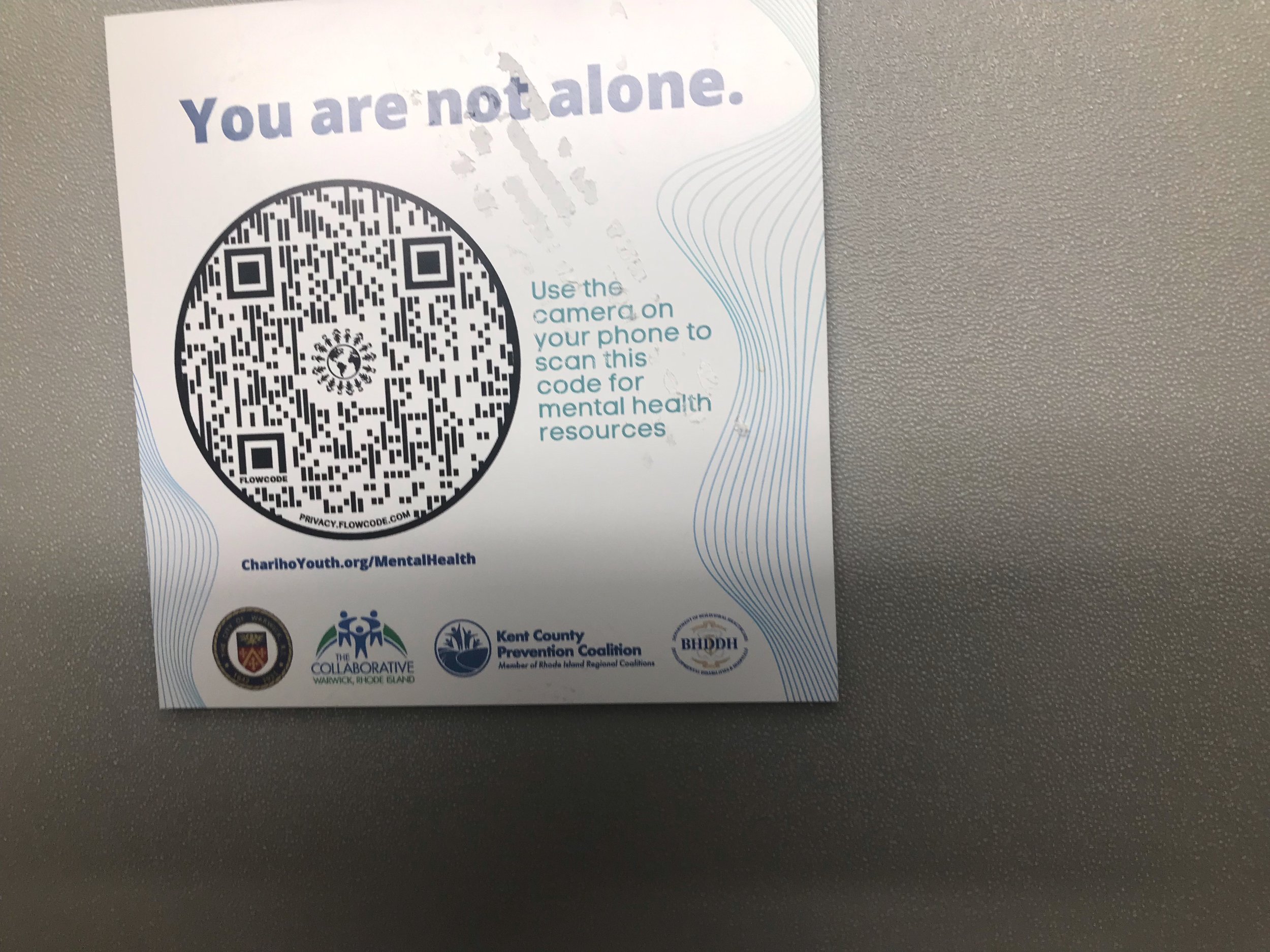
While I appreciate the effort behind this poster- imagine the jolt in reading the words “you are not alone”… as I was the only person in the public library rest room and this poster was on the back of the stall door.
Alone versus loneliness.
According to the Centers of Disease Control, “Loneliness is the feeling of being alone, regardless of the amount of social contact.”
Alone means, “separated, apart, or isolated from others. Alone is the physical state whereby you are physically by yourself while lonely is the emotional state. “
Sometimes loneliness and being alone can be interconnected, and at other times it isn’t. From the CDC: “Social isolation is a lack of social connections. Social isolation can lead to loneliness in some people, while others can feel lonely without being socially isolated.” Two different things yet they do play a part to one another. Over time, those who are physically alone can lead to loneliness.
We saw that recently with the isolation during Covid lockdown. It took its toll on certain members of the population, specifically our elderly. Having had a cognitively-impaired parent isolate during that time, we saw the effects of isolation on her. While it wasn’t the immediate cause of her death, it certainly contributed to it.
I heard someone say recently that it is ironic: in today’s society we have all these devices and distractions that can keep us connected, yet more people today feel lonely and that they do not have any significant connection.
Why do we feel alone? Why do we have the need to feel that we are apart of something even if we are not physically with others? There is some basic need for us to belong.
Recently, our little niece was having a slightly difficult time in finding a friend in school. She had just started kindergarten. She asked her grandma to pray that she find just one friend. Part of the problem was, while she wanted someone to hang out with during recess, she did not want to do what everyone else was doing. (Living in the hot south, she, like Ferdinand the Bull, wanted to sit under a tree. Meanwhile all the other little tikes wanted to run around like banshees.) She did find one friend to sit with her and now is perfectly content. (As she told her grandma, you can stop praying for me, thank you very much!)
The problem for her was the “in between time” at school: before class began, during lunch and recess, etc. The time when one is allowed to socialize/talk and play and doesn’t have to adhere to a set class routine.
I get it. When I was in school, I did not like that in-between time either. It always seemed to me that the other students all seemed to know each other and got along. There was an unspoken understanding among them. I was the odd man out. I may have been surrounded by lots of children, yet I felt all by myself.
At times, I have felt that way even as an adult. Whether it was at a social club, the local pool or even in church. Of course, while I have many things in common with those surrounding me, I always felt slightly different and alone in my outlook and lifestyle. Even in my family I can feel alone.
Does that make us lonely? Sometimes not. It isn’t such a bad thing to be “your own person”. In fact, we want our children to grow up to be self-assured and to not just follow along with the crowd. We want them to feel comfortable on their own due to their own choice, not because they are lonely.
Mind you, even though I believe that we need to have connectedness and community, connection still is dependent upon how we are wired- introverted or extroverted or some where in between.
Once again, it is the balance of life. To feel comfortable with being alone and not feel that one has to go along with the crowd just because everyone else is “doing it”. But also it is important to feel part of a whole/group. We long to belong and to know that we are not traversing life alone.
As we age, it is important to cultivate friendships yet it is harder to do so. The natural environment of meeting new people is limited. No longer do we make friends through a new school year and class or through a work environment. That is especially true for people who now work remotely. Depending on the location, being a newcomer can be difficult. It is hard to break into set relationships. Many people are set in their ways and set in their friendships.
That is why Facebook seemed like such a good idea- connecting with people that you might not normally connect with. But without that in-person, reality check-in, one can really hide what is going on in one’s life. Facebook and social media and the like can just show the best-of highlights. Sadly that keeps us more apart and lonely because it is a relentless deluge of “keeping up with the Joneses”. One in which more people feel that they are on the outside looking in to the wonder, beauty, “having it all” lifestyle of those “in the know”- influencers.
What is the cure for loneliness? Is there one? Should there be? Will it always be part of our human condition?
According to Laura Santos a cognitive scientist and psychology professor from Yale University, 60% of Americans have reported feeling lonely since Covid. Yet Dr. Santos has noted that the feeling of loneliness has been on a steady linear increase since the 1970’s. Not surprising loneliness has increased along with the decrease of group behaviors: clubs, or third places (outside work and school) where people can meet. She notes that it is not just the elderly or older people but college students, surrounded by other college students who have reported increase in loneliness. She suggests that the social clubs, bowling, gathering for knitting, etc are all things that need to be reinstated to engage with one another and to counter the feeling of loneliness by the feeling of belonging.
According to the UK Red Cross site, here are some suggestions if one feels lonely:
Reach out to others.
Get involved in your local community.
What about you? Are you alone? Lonely? Have you ever felt lonely in the middle of a crowd?
There are times when I relish being alone. Time to regroup, replenish and think my thoughts. At other times, I do feel lonely. When that happens I try to reach out to close friends and family. But I also have tried to reach out to someone else who might also feel lonely.
I have heard the story told of the late Princess Diana. When she would enter a room or gathering, she most often would find the person who seemed shy and sitting alone. She would make a point of reaching out and speaking to that person. Having been shy herself, she recognized those feelings in others.
Most importantly, I think we do need to recognize that we are never alone: God is always with us. Of course, sometimes it is very difficult to feel God’s presence, but that doesn’t mean that God isn’t here. Many times I have to remind myself that God is always with me and never leaves me alone. We never have to feel that we are going it alone and that what we are experiencing doesn’t matter. It does. Especially to the One who created us.
One of our favorite bands: The Fisherman’s Friends. Even though some of the lyrics to the shanties are sad, singing them seems to lift one’s spirits.
https://www.mentalhealth.org.uk/our-work/public-engagement/unlock-loneliness/15-things-do-if-youre-feeling-lonely
https://www.redcross.org.uk/get-help/get-help-with-loneliness
https://www.pbs.org/newshour/show/why-americans-are-lonelier-and-its-effects-on-our-health#:~:text=It's%20often%20talked%20about%20as,on%20a%20pretty%20regular%20basis.
Wanting God's Best

While I love the Metro, it can be quite confusing.
Over the summer I travelled south via train to visit our one son. Any time one has to use mass transit, it is always an adventure. It never fails that when I am traveling or visiting places that I will be asked for directions or help from fellow travelers. On this visit, there was a young Polish couple that approached me about using the D.C. Metro. It was rewarding to help them and to be the face of welcome to our little patch of the world. I always think how would I feel if I were a foreigner in a foreign land and needed help. And, of course, their English was far superior than my Polish (nieistniejący).
As I was traveling and watching the various vistas roll by, I thought how blessed and grateful I am that we are living where we are. Many years ago, our hearts were wishing to live in a different location close to where our son is now living. As I traveled down to see him, I was so grateful that God didn’t heed that original plea. What I thought was the best, turns out to not be.
Not only is our current location beautiful and charming but it suits our lifestyle. The location where we thought we wanted in VA, would've exhausted us in no time. There is a different rhythm and pace in both places, the RI being preferable to us.
I thought of other times that I prayed fervently for various situations for myself and others: fruition of dreams, moves, career decisions, health. My prayers were more like kicking and screaming wanting my will, what I thought was the best outcome. I did not always pray- “Thy will be done”, rather I prayed for God’s rubber stamp of approval on my plans. Yet I am glad that God did His will anyway. It was all in God’s good timing. It was just a shame and a waste of time for me to be so obstinate to be in control. If only I had let go and let God? I would’ve saved myself from so much heartache and wringing of hands.
Currently I am continually praying for family members and their various situations: health, broken dreams, seemingly insurmountable situations that cannot be solved, yet Thy will be done. I want God’s best for them- solutions and plans that I do not know.
Yet it is hard to have God’s will be done and not be impatient or confused over His plans and timing. We know of a family that has been totally slammed with tragic news upon tragic news. The husband/father of three young adult daughters has ALS. This gentleman’s prognosis and deterioration has been fast and cruel: He needs help breathing and cannot communicate hardly at all as his muscles, even the smallest ones, do not work. His wife was in a horrible car accident and was determined to be brain dead. The family had to make the painful and heart wrenching decision to remove life support. What is the best for those people? What they are experiencing doesn’t sound like the best. These are the times when one cries out, “Why? Why is this happening? Don’t you care God?”
For many people, it is enough to turn one’s back on God.
Yet.
Don’t we want the best for our loved ones? For ourselves? Why would we turn our back on the One who has the plan for our lives? Wouldn’t the Creator of all know what is best for His creation? While we may never know why this family has had to suffer, the Creator has the large picture in view. He didn’t cause those issues and He is walking right beside those daughters.
Selfishly, I want God’s best for my life and for the lives of those I love. As Peterson’s The Message says, “do what’s best” is the interpretation of The Lord’s Prayer of “Thy will be done.” Some skeptics will say that in following God and believing in Him, we put our brain aside. Yet following and believing God is our choice. Allowing God to have complete control. “Thy will be done” is a choice. To ask Him to do what is best in the situations we find ourselves.
What about you? How are you in choosing to let God be in control? How are you in letting anyone be in control?
I know that I struggle with the idea of control. Heck. I do not like to ski because there is a component of “letting go” and letting the limbs, snow and skis have some fluidity. One has to relax and not be rigid in one’s descent. Like so much of life, the more we tighten control over items, situations, even people, the more trouble and problems occur.
Choosing to allow God to have His will for our lives is kind of like traveling the train. The destination may be pre-determined but how I behave and enjoy or not enjoy the ride is my choice.
Stitch in Time
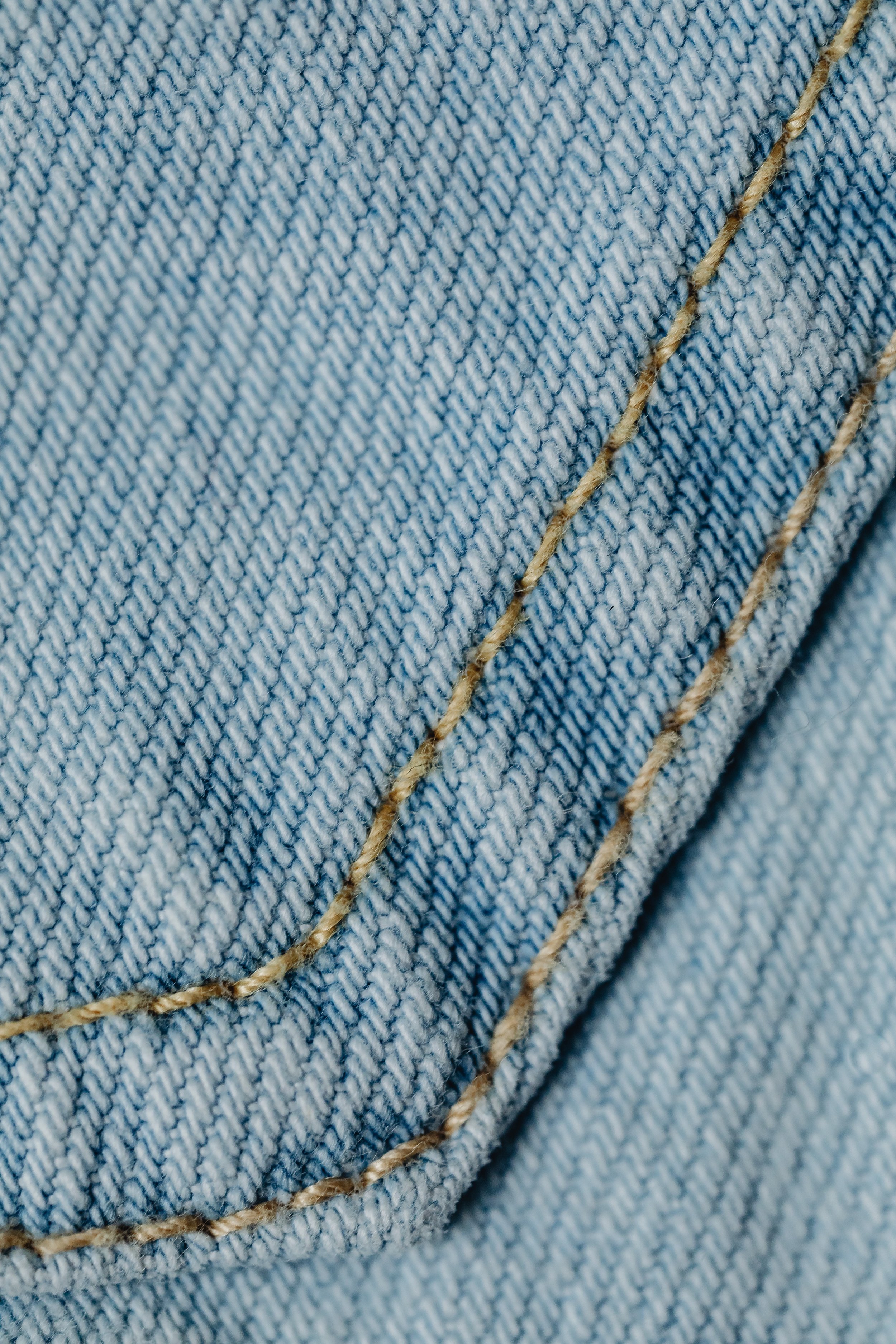
Recently I was trying to remove a patched logo from a jacket and had to undo the stitching. It was not too difficult but took some time. The stitches were close together and so I had to use very tiny scissors to get under the thread to break the bond. What got me was how tenacious those stitches were- they were no more than 2 mms apart yet when only one was still connected I could not remove the top piece of material. I had to break all the stitches in order to remove it.
I’ve also been doing some weeding-pulling out crab grass, purslane and spurge along our sidewalk. What got me was how tenacious those weeds were. Even weeding after a rainstorm, one would think it would be easy to pull them out. Not so much. Just one little tiny thread of a root cements it to the sidewalk.
In both those instances, I wasn’t able to eliminate the items I wanted, the logo or the weeds, until all of it was free from what has holding it back.
It made me think of those habits or items that hold us back: addiction, toxic relationships, pride, stubbornness (which really is a subset of pride), clutter, irrational fear, slothfulness (one of my favorite seven deadly sins- perhaps because I have an affinity?) Many times it is just one tiny little issue with those items that keep us tethered to behaviors we do not want to do.
Psychology talks about getting rid of things that do not serve you well: physical items like clutter and stuff or emotional responses that stir up past (big or small) traumas. When Pope Gregory in the sixth century and then Thomas Aquinas in the twelve spoke to the seven deadly sins it was to rid oneself of spiritual habits that do not honor God. To break those holds on us that keep us from truly flourishing.
Breaking the hold on habits, behaviors or thinking that harm us is hard. If they didn’t have some type of “benefit” for us (mostly the release of feel-good dopamine) we would not have the problem- we wouldn’t allow it to have a foothold. Interestingly there are many different suggestions and numerical amounts for ridding bad habits and promoting good ones: “7 (or 5 or 3 or 12) ways to rid yourself of bad habits”. Bottom line- we need to determine the habit, why we want to change it, work in increments to do so, and give ourselves a break if it doesn’t happen instantly. (See the following sites: https://www.health.harvard.edu/blog/how-to-break-a-bad-habit-202205022736 https://newsinhealth.nih.gov/2012/01/breaking-bad-habits )
Yet sometimes we cling to things or ideas because it is our lifeline. We cling to hope that our loved one will get better or that solvent financial times are ahead. We cling to the item (perhaps too many items) so that we can remember that loved one or hold on just in case we need the item due to unstable financial times. Supposedly when we cling to things (tangible or not) it is because deep down, we all long for happiness, security and meaning. And those are not bad reasons or attributes per se. Who wouldn’t in a crisis hold on to our loved for as long as we could.
Yet, like everything else, we can sometimes be too extreme, perhaps too greedy (ah, those 7 deadly sins again) and hold on for too long to these habits. We need to break the bad habit bond in order to move along and flourish. Sometimes it is a matter of just rethinking or reframing what we are doing.
I think of my “schedule” that I try so desperately to maintain. The plans that I have for each week. Yet if I am honest, I do not think I ever had a week that went according to my schedule or plan- even when I was a kid. I get so annoyed at myself for not being “disciplined” enough. That scheduling habit, albeit a good practice has become like the tenacious threads that keep me bound in an ever frustrating loop: the hope and promise of the dawning of a new week, the written plan with daily goals, the unfolding of each day and situations that arise to change that plan, the reflection and frustration at the end of the week that not much was accomplished, and the hope that next week will be better. Only to have it loop over and over again.
In thinking about reframing the schedule, I have decided to not get so het up about it. Instead of daily goals I am thinking in more broad strokes- overarching monthly ones. I am interested to see what will transpire by cutting myself some slack.
What about you? Are situations, activities, relationships, thought patterns binding you to behavior that you need to change? Have you thought about what needs to happen for that change?
On the website psychology-spot.com they offer this example:
Do this exercise: Take a coin in your hand and imagine that it represents the thing, person, or goal you are holding on to. Lock it in a tight fist and extend your arm with the palm of your hand towards the ground.
If you open your fist or loosen your hand, you will lose the coin. If you keep your arm extended and your fist closed for a long time, you will also lose the coin because you will get tired of maintaining that tension. The same happens in life. You hold on to, but the more you press, the more you exhaust yourself and the more you push away what you want.
The good news is that there is another possibility: stop clinging. You can let go the coin and still keep it. With your arm still extended, turn your palm up. Open your hand and relax it. You will see that the coin is still there. (https://psychology-spot.com/holding-on-to-something-meaning/ )
Once again, it is the paradox of God’s economy. That which we lose, we find.
The 2024 Edition of All God’s Creatures is out! This year I have eight devotionals included. Click here to order from Guideposts if interested.
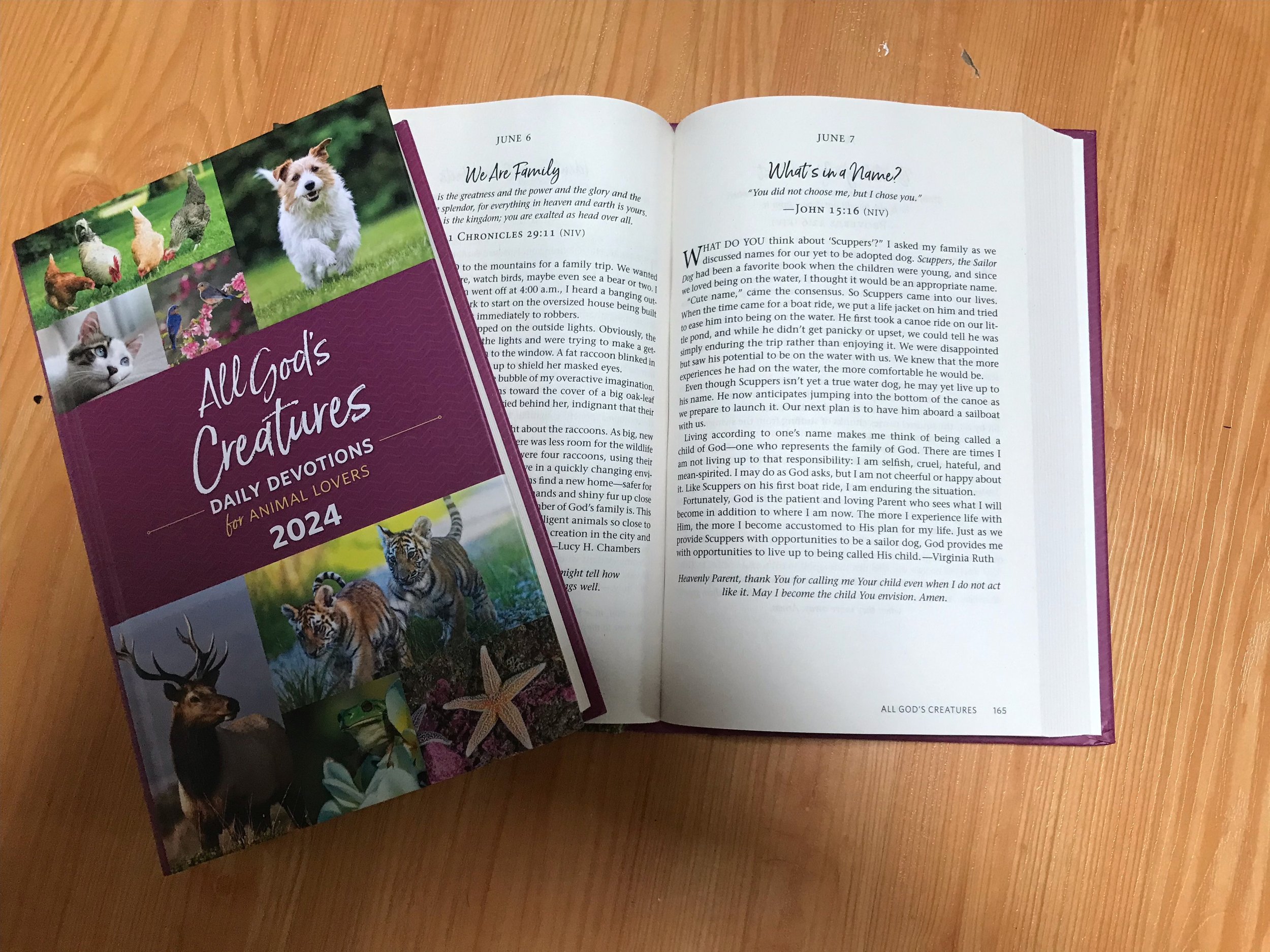
Garden of Benign Neglect
On a past Sunday, our reverend used this expression, “garden of benign neglect” to describe her garden and gardening styles. Due to the combination of her lack of gardening experience and a medical hiatus from her experienced gardener husband, her relatively newly planted garden has not been growing this year. The neglect wasn’t intentional, it was just the way things panned out.
I’ve been thinking about that phrase: benign neglect. According to the dictionary.com, benign neglect means “an attitude or policy of ignoring an often delicate or undesirable situation that one is held to be responsible for dealing with”. In some ways it is easier for me to take the words separately- neglect: fail to care for properly (verb) or the state or fact of being uncared for (noun); benign- gentle and kindly, not harmful in effect.
What in my life have I benignly neglected? Not intentionally mind you, but because of the nature of various situations in life. The well-meaning plans to have people over for dinner? The thought of helping others in their time of need? The exercise regime for good health? The specific “this is what I mean” communication among family members? All ideas that are mulled over in my brain yet somehow do not make it into actionable plans.
All situations that, in my head, might seem that I intend to do, yet I realize that I haven’t. Is it, like the definition, that I am ignoring an undesirable situation? Maybe. Some of the outcomes I enjoy (having people over), while others might be considered undesirable- exercising at 5:45 am.
Or is my neglect due to a lack of inertia? And perhaps the inertia is needed. Maybe I am self-consciously deciding to not act.
What to do about it? In the case of the garden- sometimes benign neglect is beneficial. There are years where the garden does well to be fallow. To be ignored but not in a harmful way. Fallow years allows the nutrients and soil to return to a healthy balance.
There is a whole psychological movement about laying fallow for our emotional well-being. Bertrand Russell called it fruitful monotony. Adam Philips called it fertile solitude. Walt Whitman called it loafing.
In the video For the Life of the World: Letters to the Exiles one of the “chapters” is about having wonder https://www.letterstotheexiles.com/taxonomy/term/47: To take a day and loaf, to explore, and to be a child again- looking at the world in wonder. We are such transactional people and have this inbred desire to be doing things that are “useful”. But what this video tries to explain is that we are doing something when we take time to wonder, we are pondering: we are enjoying the creation of the Creator. Once again the paradox of God: when we take time to be fallow, or to honor the Sabbath, or take time to wonder, then we are able to invigorate our other times, becoming more “useful” and productive.
When that video was shown to different groups, this chapter on wonder was the one that struck a chord with people. Probably because we are an obsessive culture on productivity and “doing” something all the time. Or maybe that is just me- difficult for me to just “hack around” as my husband and his friends used to do when they were kids. Ironically, I need to intentionally plan to not plan. How sad is that? But I also recognize that it is like so many things- the more you do it, the easier it becomes.
What about you? When was the last time that you took a day for wonder? A season of benign neglect, that you laid fallow plans and expectations?
This month of August is a good time to practice wonder. To give ourselves permission to loaf, hack around and see the world with eyes of wonder. To benignly neglect our agendas and to-do-lists and to once again see the world of wonder. I am game to try. What about you?
“We need to rediscover the beautiful. Perhaps the greatest thing we can do is to behold. Behold our God. Behold his creation.” ~Makoto Fujumur, For the Life of the World.