
Adaptation
This year as it has in the past 25 years, the town of Mt. Olive, NC dropped a pickle from the Mt. Olive Fire Department Tower 23 to mark the ringing in of the new year. 2026 will mark the centennial of the Mt. Olive Pickle company which sponsors the drop.
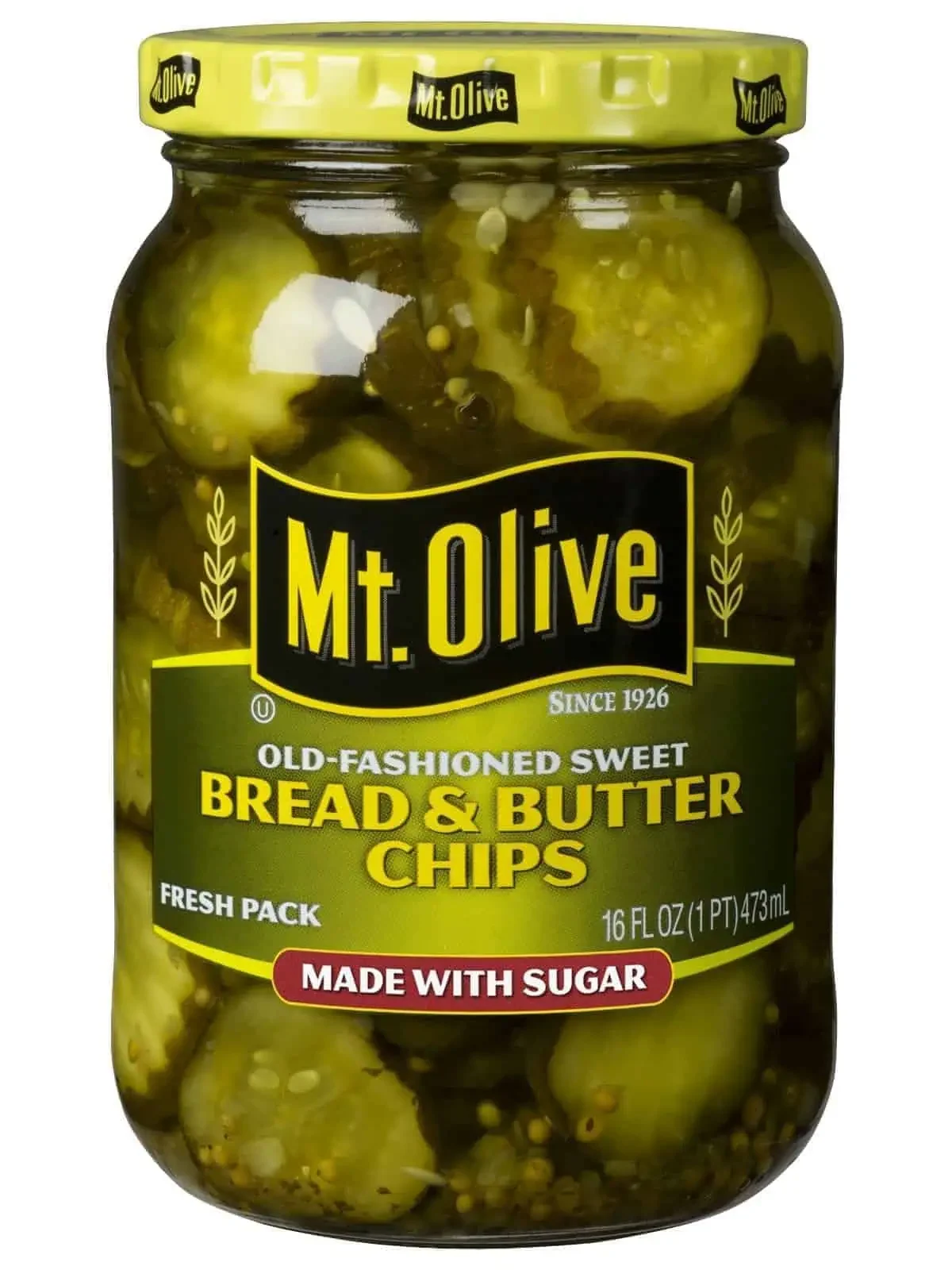
The company was originally started when an immigrant from a nearby town noticed that the surplus of local cucumbers were going to waste. He and another friend came up with the idea of brining the cucumbers and then selling them to other pickling firms. While that plan did not take off, a group of local people saw potential in the idea and decided to start their own pickle company. Thirty-seven business men put in the capital for the company. They called it a “community proposition”. The two gentlemen who originally came up with the idea became the factory superintendent and the company salesman, respectively. 100 years later, the company is still privately owned and has become the #1 pickle brand in the US.
Making lemonade out of lemons. Or, pickles out of excess cucumbers.
I love to hear stories of imagination, adaptation, and finding another solution. Finding repurpose.
Such was the case for Play-Doh. Originally, it was a putty-like substance for cleaning wallpaper. In the days before WWII, wallpaper would attract dirt and soot from coal and wood stoves/heaters. The cleaning compound which was made by a soap company, could be rubbed over the walls to clean the soot. After the war, new, easier to clean vinyl-type wall paper was introduced. Simultaneously there was a move from coal stoves to oil and natural gas, which reduced interior soot. There wasn’t a need for the compound and the company almost went out of business. The nephew of the inventor of the cleaning substance was hired to help keep the business from bankruptcy. The nephew’s sister-in-law was a nursery school teacher who had read an article that the wallpaper substance provided good modeling clay for students. And so, the nephew pivoted the company into making a child’s toy with the sister-in-law’s inspiration for the use and new name, Play-Doh.
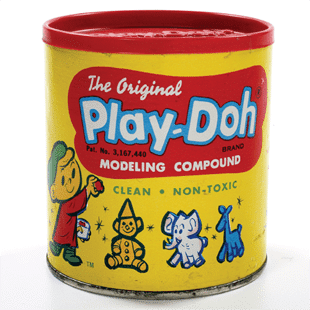
For those of you who grew up with the ubiquitous childhood modeling clay, remember the scent? Apparently the scent is so distinctive, in 2018 Hasbro (the toy company who now owns it) trademark registered the scent with the USPTO. It is described as “"combination of a sweet, slightly musky, vanilla-like fragrance, with slight overtones of cherry, and the natural smell of a salted, wheat-based dough.” Originally, it only came in an off-white color but shortly after marketing it to children, it was offered in blue, red and yellow. I remember upon first receiving Play-Doh for Christmas, (maybe I only received it once, but it seems to me it was always a stocking stuffer) keeping the colors separate for a little bit of time, but eventually I would have a massive ball of multicolor flecks and odd shades. There always seemed to be crusty dry pieces attached to the outside that never quite reintegrated with the rest of the mass.
Turns out, another childhood stocking stuffer was also a repurposed product- Silly Putty. Silly Putty was originally made to be an experimental rubber replacement. During WWII, America couldn’t access the rubber plants needed for tires, equipment, etc. Scientists were tasked with finding a replacement. While Silly Putty has a lot of rubber properties, it wasn’t quite the rubber replacement that was needed. Instead, it became marketed as a child’s toy, especially when it was advertised during the Howdy Dowdy Show.
It seems as if I have been lately hearing these types of stories of items that on first blush, appeared to be potential failures. For whatever reason, circumstances changed and the item wasn’t needed. Those people who invested in the items (not only financially, but time and resource-wise) could have given up. They could have decided that their past was wasted and that there was no hope for the future.
But someone was able to see the potential and adapt to the new reality.
It makes me wonder how adaptable am I? All of us at times either get ourselves into situations or have situations thrown at us that requires some adaptation. Situations that make what we are currently doing obsolete, irrelevant or not fully meeting new demands.
What about you? How adaptable are you to changes? Either in your life or in the world around you? Go with the flow? Dig your heels in? Find a new marketing strategy, like PlayDoh and Silly Putty? Turn an excess into a benefit, like Mt. Olive Pickles? When life gives you lemons, do you readily make lemonade? Or do you find yourself holding a rotting mess?
I would love to think that I make lemonade out of disappointment, hurt, or failures. That I have the hutzpah to keep going even when the going gets tough. But that can be quite hard. Especially when life throws us curves and difficulties. If we live long enough and with intentional empathy, we learn that no one goes through life without difficulties. Some people can adapt easily and others struggle.
According to various psychology articles, one can take that which we’ve negatively experienced and transform it into a positive future through what is called cognitive reappraisal. It is more than revisionist history. It is taking reality- based information and purposefully reframing the explanation of what happened in the past. It is in the reframing that we can find purpose for the past situation and can then, face the future.
According to Psychology Today, “Cognitive reappraisal—generating a positive, even absurdly incongruous, reinterpretation of a negative event— often underlies benign humor. And in fact, researchers find that the use of benign humor—pointing out the bright side of adversities—is good at both down-regulating negative emotion and amplifying positive emotion.
Below are some questions to think about when we are trying to repurpose our past and make cucumbers into pickles. Experts identify several questions you can ask yourself to stimulate a positive reappraisal for negative situations:
Are you engaging in some form of cognitive distortion, such as catastrophizing?
What is the evidence supporting your automatic appraisal of the situation?
Are any positive outcomes possible from the situation?
Are you grateful for any aspect of the situation?
In what ways are you better off than before the situation occurred?
What did you learn from the experience?
I don’t know about you, but I know so many people who are feeling discouraged- that their lives have not turned out the way they planned and/or thought. They are discouraged in the macro (world) and micro (individual) nature of life. For me, I am grateful for the Sovereign God who controls both the macro and micro in the world. I look at the questions of cognitive reappraisal and also ask, “What is True, what is Good, what is Honorable, what is Pure, what is Lovely? What in this situation do I know is of God? What is God teaching me in the situation?
If anyone is in the repurpose/adaptation business, it is God. God can take any of our problems, excesses, outdated, unused or worn situations and make them new.
Organize (D)
Word of the Year.
I am sure that you have seen and heard of those who have one word that represents their goal for the year. I have written about it in the past. It is an interesting concept. On one hand, it does help keep one focused on a goal or reflection. Yet, on the other hand, it can limit the scope of possibilities for the year.
Sometimes, choosing these words take a long time of reflection. One might not even be able to choose a word for the year until March. Other times, the word is constantly showing up in one’s life- as if the cosmos has already decided for you.
For me, the word this year is “organize(d)”. Seems as if that word is popping up all around me.
Just recently, we have a neighbor who said that while his mother and sister were visiting, they were critiquing his cabinets and telling him that he had to “get organized” before the birth of his son. From what I have seen, this friend is quite organized but it made me wonder about our home. Perhaps the frustration that I have been feeling recently, is due to the fact that I cannot find anything where I “think” it is located.
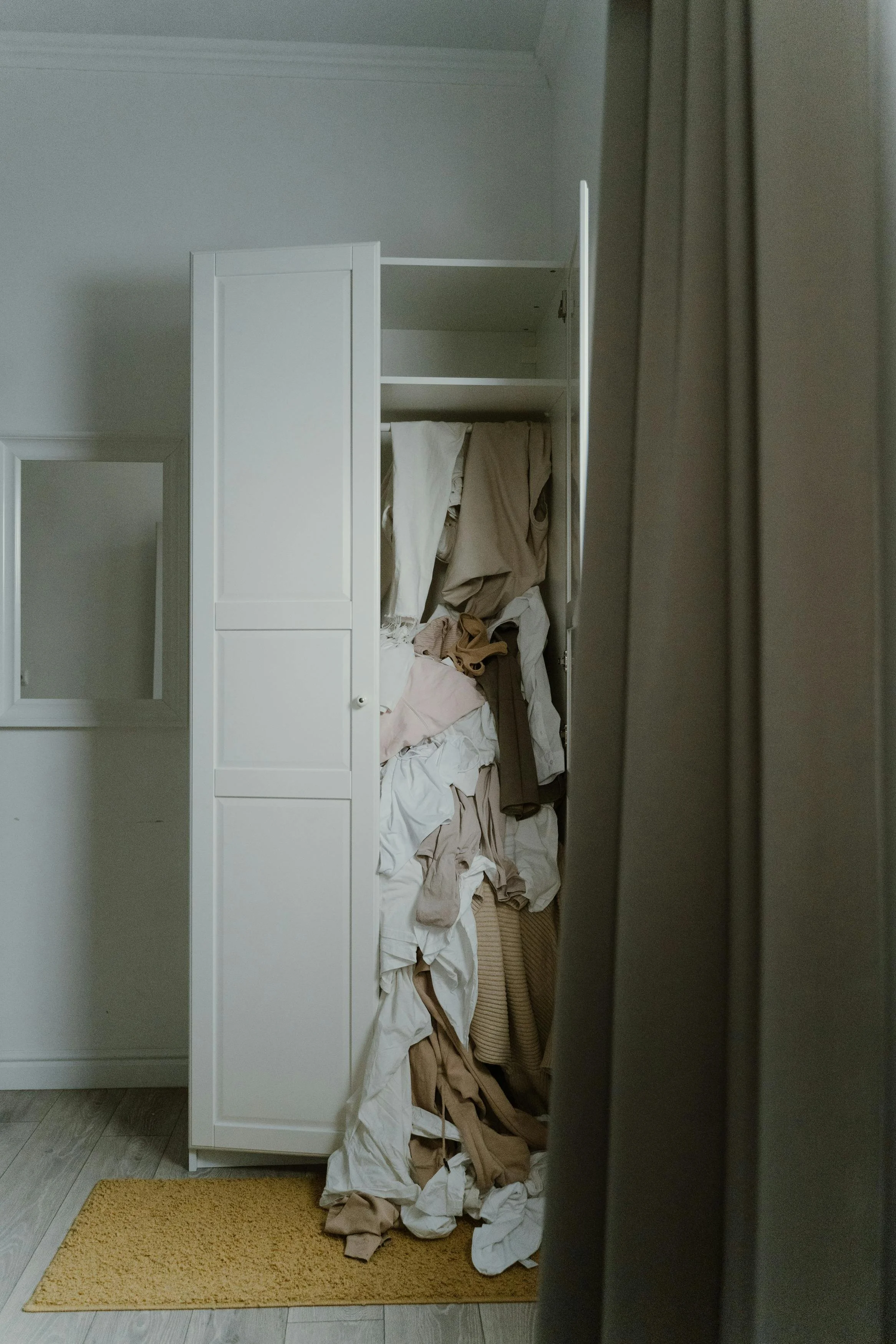
Lest you think otherwise, this is NOT how our cupboards look but it is how they seem to me when I am trying to find something.
Looking at our basement, I realize that we need to “get organized”. We have lived in our current home for three years. Once the initial renovations were completed, we put away all the items from our numerous cardboard boxes. At that stage of the move, we just wanted the boxes emptied and the items behind closed doors. “We’ll sort and arrange those things later,” as we pushed the bulging closet doors with our hip.
Well, later has come. We need to get organized!
I have been thinking about that word: organize(d).
The Cambridge Dictionary defines organize (or organise- UK spelling): to do or arrange things, plans, ideas, etc., according to a particular system so that they can be used or understood easily.
What I like about the word “organize” is that it is a verb, and that when acted upon, items or ideas can be easily grasped- physically or intellectually. I think of how much time I waste and the frustration of not knowing where some item is. Or, because of too much “stuff” in the way, I do not want to go through the cupboard or closet to find the said item and so I do without or I have to purchase another. What a waste.
And so, this year, I am going “to get organized”. I am so tired of looking at my to-do list and not completing it. I write the item on the list and then keep transcribing it to another list. My failure to complete the list is partly because I do not have a plan in how I will accomplish the task and so I do not know how to begin.
But, as I have written before and as I have recognized, there is a balance between organization and some type of serendipity especially as it comes to schedules and accomplishing goals. I don’t want to be so regimented and so bound by an organizational structure that I cannot be spontaneous. Yet I cannot be completely spontaneous because then I will not accomplish anything.
In my recent Education for Ministry class at our church, we were discussing the word organize(d) and the word associations with it. “Structure” was the association that we came upon. We then looked at the pros/cons of the word structure. One of my classmates felt that structure is limiting to creativity. And while there is some truth to it, I find that structure- broadly based- aides and guides creativity. For how many of us, do better in editing/correcting a written document rather than starting with a blank page? It is much easier to write when one is given a topic or direction rather than carte blanche for anything.
And so, I need to “get organized” this year. I want to do so in our home. But I have also been thinking about “getting organized” with my health and physical care, in my maintenance of relationships and in my writing. The idea of getting organized is really about intentionality. What do I find important and how will I intentionally do what I need and want to do?
What about you? Do you have a word of the year? Do you want to get organized? How are you going to go about it? Is the organizing a physical one? A mental one? Or a spiritual one? The word “organize” also contains within it, the actions of planning and execution. Perhaps it is not so much the organizing that I need, but the planning and then, more importantly, the execution and completion of that plan.
How are you planning on living this year? How are you going to intentionally live into that plan?
What is the word that will help you achieve that?
Waiting
How are you with waiting?
One would think, we would be better at waiting the older we get. But it seems not so much. Well, at least in my experience of aging parents and, admittedly, my aging self. I seem to be more and more impatient with the “I don’t have time for this” mentality.
I remember in the last decade or so of their lives, my parents and in-laws could be impatient. It was strange because, except for my mother who always seemed a little impatient, the other three seemed to have the patience of Job.
Ask anyone who has had to transport an elderly loved one, and you will get an example of elderly impatience. The process of getting the elderly person in and out of the passenger seat, especially if the elderly person has a walker, rollator, wheelchair or any type of mobility aids, should be the new Olympic sport: one has to park the car; unhook one’s seat belt, double checking that one has pocketed the car keys (getting locked out of the car by a happy-button-pushing passenger does not make for a pleasant experience); run to the back of the vehicle; open the trunk and remove said medical assistive device; unfold and ensure that it is properly set up; wheel it to the passenger side of the car; open door, maneuvering the device in just the right place; lock the wheels (a crucial step- trust me), reach over to unhook elderly person from their seat belt. Then immediately change one’s body movements-slow down your actions (if not, your anxiety will transfer to the situation and the elderly person) and gently help them swing their legs over the side of the car ledge (protecting their head from hitting the top of the door frame) in order to have them stand and transfer to the chair or to place their hands on walker, ready to walk to the entrance of the doctor’s office or store.
This is the ideal set-up when the elderly person sits in the seat waiting for you to open the car door and help them unhook the seat belt.
What generally happens is that the elderly person starts to feel for the door handle as you are turning into the parking spot in order to open the passenger car door as soon as the car stops. “Just wait and I’ll be there to open the door for you in a sec.” you request in a gentle voice. Most times the request goes in one ear and out the other (or maybe just not “heard” at all.) Which then requires you to move through the process at double speed all the time requesting, “just wait, please” until your voice becomes an Ethel Merman bellow, “HOLD ON.”
It always amazed me that the same person who would take for-ev-er to walk from his room in the assisted living wing to the dining room less than thirty feet distance (I would trip over my feet trying to slow down my stride) could be out of the car with feet dangling or upper body dangling (if he forgot to unhook the seat belt) in a matter of seconds.
I kind of wonder- is this another sign of the circle of life or at least the bell curve of life? We start out as impatient infants and we end up as impatient elders with an apex of seemingly rationality in our adult years. There is an interesting 2024 study archived in the National Library of Medicine that seems to conclude that older adults, more so than younger adults are more susceptible to be influenced by the impulse of others. Of course, the researchers note that there are other studies that show quite the opposite. Regardless, it made me think of both my mother and mother-in-law. Both women were strong individuals with strong opinions and were never swayed by others’ opinions. And yet, in their old age, they were influenced by what the other women were doing, wearing, saying in their respective retirement communities. They were impatient to have those experiences. Many a time, I found myself taking one of the parents on an expedition because they had to do something that they had heard the others talking about. I have fond memories of taking my ninety-two year old mother-in-law jeans shopping. She got it in her head, after seeing some of the other residents wearing jeans, to purchase a pair for herself.
In some ways, why not be impulsive and somewhat rash? Time is not on one’s side.
Although, it is not just the young and elderly who are impatient. Most of modern society are more and more impatient and do not want to wait. We have devised ways around the waiting (pay for the express lane or fast pass lines) or ways to be “entertained” while we wait (short videos on Tik-tok/Facebook, etc.) We can blame our smart phones, technology, and social media outlets for causing our impatience and distraction but we seem to not be able to get out of the cycle. The truth is, we have let those tools rule our lives or at least a good part of our days.
Many years ago I went to a talk at our church. The speaker was discussing violence and television shows and the effect on children. There was concern about what to do about it since all the studies concluded that the violence on the television wasn’t good. The response- do more studies. I came home and said to my husband- I don’t think we need more studies. It seemed simple to me- just turn off the telly. Don’t watch the violent shows.
I feel the same way with our ever quickening technologies- they keep pushing us to think, react, and make decisions faster and faster, which doesn’t seem like a sustainable long term plan. Of course, there are situations where the new technology is a God-send to people. But the overall, day-to-day experience is not good in the long run- physically, emotionally, mentally even spiritually. While the modern technology has connected us globally, it also has divided us more-a modern tower of Babel.

This is the Advent season, the season of waiting. Waiting expectantly for the birth of the Messiah- the One to save us from sin and oppression. For those who follow Jesus- we know the story, we know the outcome and we know why we wait. But do we know how?
Do we wait with wonder and awe- that the God of the universe cares so deeply about each one of us, that He came to earth and dwelt among us? To rescue us from sin and death, if only we believe? How do we respond to that? Do we share that Good News with others? Do we wait expectantly for peace and joy, that can only come from God? Is there a place for impatience? Should we be impatient and demanding that justice be done? For those who are lost, to be found? For those who are hungry, to be fed? For those who are marginalized, to belong?
As our priest has challenged us this Advent season- is God waiting for us? During this Advent season, is God waiting and expecting more from us? To be more loving, more kind, more gentle, more merciful? Is God waiting for us to be more patient- with ourselves, our families, our neighbors, even our enemies?
So, how are you at waiting? Are you waiting for God to do something in your life? Are you waiting for a Savior? Is God waiting for you?
Sticks and Stones....
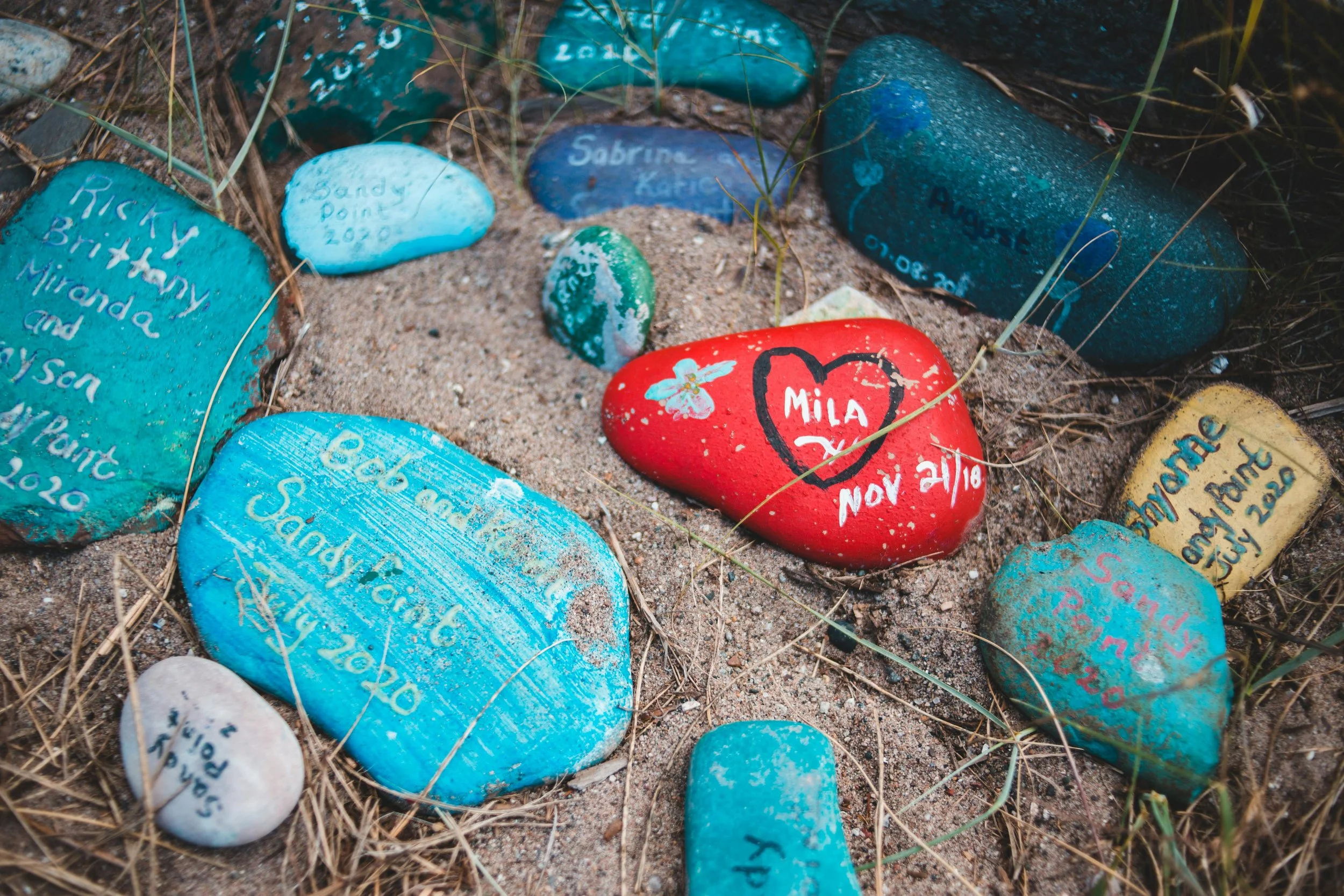
“Sticks and stones will break my bones but names will never hurt me.”
I remember saying those words to some knuckle head on the elementary playground. You know how it goes, a dumb little oyster says something mean, then another escalates the situation with some type of slur. Silly and untrue words but they can take hold and shape young minds. I know that words did hurt me.
Recently I “found” a book our son had left in our home as I was tidying up from the Thanksgiving holiday. It is called, The Know-It-All: One Man’s Humble Quest to Become the Smartest Person in the World, by A.J. Jacobs. Quite a claim by Mr. Jacobs. The title alone was off-putting to me but did pique my curiosity. I found that the parts that I read to be interesting.
The author organizes the book alphabetically, picking out words and entries from the Encyclopedia Britannica and writing about that subject along with some personal stories. Under “Q”, the entry “Quaker” caught my attention. Initially the word was a slur used against this religious sect for their “trembling” or quaking during worship. The group took the slur and turned it into their own- using it to identify themselves. Apparently the Methodists had the same thing happened to them. They were derided for their theological “methods” and were called Methodists. Again, the group turned around the slur, using it as their name. He goes on to mention similar examples. The term “queer” was once derogatory and now it is used as a group description.
I have been thinking about names and the descriptions that we call one another and ourselves. Are we defined by those words? Are they used as a weapon? Or as a compliment? Do those words limit us or expand us? Do they keep us from our true potential?
Do words matter?
I would say yes. Most definitely words matter. Words spoken, while they may not physically break any bones at the time, can do damage- emotionally, mentally and spiritually and eventually, they could possibly do physical damage. Negative words can reduce us to inactivity. Tell a person that they cannot do something (too dumb, too slow, too young, too old) and eventually, they won’t do it.
Interestingly a new study led by a team of Virginia Tech neuroscientists looked into how people interpret the significance of words. They mapped a person’s neurotransmitters (dopamine, serotonin, norepinephrin) while displaying for the subjects emotionally-charged words.
“Unlike animals, humans can understand words, their context, and meaning…Our findings suggest that these chemicals are released in specific areas of the brain when we process the emotional meaning of words. More broadly, our research supports the idea that the brain systems that evolved to help us react to good or bad things in our environment might also play a role in how we process words, which are just as important for our survival.”
There is also an interesting article from the Bonn Institute discussing words, journalism and the influence words have on our thinking and therefore our actions. Especially for journalists, words matter. We have seen it from both sides of the political aisles-what people say and write can harm others. A certain description for a group or person can change the whole context of the story and/or facts.
So, what can we do when words we hear or even say to ourselves are harmful? Especially when we let negative words impact our thoughts and therefore our reactions to ourselves and others. The National Health Service in the UK has a slogan: Catch it, Check it, Change it.
Catch it: Know what to look for- do we even realize that we are experiencing negative thoughts or I would add, hearing negativity? Sometimes we are so surrounded by negative comments, we begin to believe that is the only way to think. Types of unhelpful thoughts include:
Always expecting the worst outcome from any situation.
Ignoring the good sides of a situation and only focusing on the bad.
Seeing things as either only good or only bad, with nothing in between (black and white thinking).
Considering yourself the sole cause of negative situations.
Check it: Rather than immediately accepting this thought and feeling even worse, take a moment to check it. Try asking yourself:
How likely is the outcome you're worried about?
Is there good evidence for it?
Are there other explanations or possible outcomes?
Is there good evidence for alternative ways of looking at the situation?
What would you say to a friend if they were thinking this way?
Change it: Look back to what you were thinking about? How can you change the narrative in your head?
Instead of the situation being all bad, is it possible to think- okay, sometimes that is true but mostly it is not.
To see one positive in the situation- then maybe see one more until you can counter 1 negative thought with 3 positives?
One of the tools they suggest is a thought record. Click here to read how to set one up.
What I like about the record and some of the tools on the NHS website is that they give you permission to explore your thoughts. Just because someone told you something recently or even long ago, doesn’t mean you have to define yourself with it. You can let it go or even just hold it at bay for awhile, while you process it.
The other tool that the NHS mentions is a way to handle worry: One way to keep worries at bay is to allow yourself a set amount of time (say 15 minutes) to worry about a situation. After the 15 minutes are up, then move on to something else and don’t pick that worry back up until the next block of time that you give yourself to worry about that situation- say the next day. After a while, there may not be the need to have a block of “worry time”.
I “think” I am generally a positive person but I must say that I sometimes struggle with remaining positive. Those negative thoughts sometimes come out of the blue. I have to step back and ask myself- from where is this coming? Are the thoughts true? Some yes? If so, how can I honestly confront them? But if mostly, no, then what do I know? Can I turn those negative words into something positive? I have to remind myself that I am a beloved child of God’s and that God has a purpose and plan for my life. God also wants me to enjoy life and to enjoy each moment, not be weighed down by lies and negative thoughts.
What about you? Are there thoughts or words that run through your head? Are there descriptions that people have given you, that now define you? How accurate are they? Can you turn around that statement or word? Are there people who bring you down or lift you up?
As we are in the beginning of the holiday season, we need to be kind to ourselves and one another. For supposedly a season of goodwill towards all, sometimes the season can be filled with more bah-humbug than fa-la-la-la-la. People can be more like Grinch and Scrooge than like Jesus, especially in families.
One of the things I love about this time of year is the reminder that Jesus came to earth- Incarnate, God with us. Yes, God came to rescue us but I also think of the time Jesus was on earth, that He enjoyed being with us. While Jesus lived on earth, we experienced a brief glimpse of heaven on earth- when we communed with Jesus/God as God intended in the Garden of Eden. God uniquely created each one of us- to know Him and to enjoy God and I would add, His creation of others and the world around us. We do so by the way we treat one another- in deeds and in words. Ultimately, if we use kind words with others, we will use kind words for ourselves. And visa versa. We can change the way we frame our outlook and eventually we can change the interaction with others: No longer will names hurt us and others, because the names that we use are life affirming.
Interesting articles:
https://news.vt.edu/articles/2025/01/research-fralinbiomed-words-0106.html
https://www.bonn-institute.org/en/news/psychology-in-journalism-2
https://www.nhs.uk/every-mind-matters/mental-wellbeing-tips/self-help-cbt-techniques/reframing-unhelpful-thoughts/
Pick Yourself Up, Dust Yourself Off, Start All Over Again...
Well. I had my 15 minutes of shame. Actually it wasn’t that bad just disappointing.
I did have my meeting with a person in acquisitions for a publishing house regarding my book proposal. While I prepared as best I could, in essence it was a “don’t call us, we’ll call you” type of meeting.
Yes. I did learn some things with this process and yes, I will continue on with the manuscript and yes, I will try and get it in the hands of some other publisher. But for now I feel kind of bummed, embarrassed and silly.
Have you ever tried for something and been disappointed with the outcome? Stumbled, fallen, not made the mark? You get up and look around, hoping no one saw the tumble.
Of course, I am aware of the people who have stumbled, fallen, not made the mark and then, after persevering for a while, sometimes years, things fall into place and they have their dreams realized. The writers who have tons of rejection notices to their name, only to have someone pick up their manuscript and now they are best-selling authors. Or the film script that gets rejected for years only to finally be picked up and becomes a blockbuster, Oscar winning film.
But I also think of those creatives who keep plugging along with their writing, music, painting, acting, film making and never get picked up. Yet they keep going. Doing it for the love of creating. Many times what they create is just as good, even better than what is in the “successful” realm. Their work may not touch millions but they may touch the one in a million person who needs to hear what they have to say.
It is an interesting place to be- the soul shaped desire to create just for creating itself. Knowing that if one doesn’t do any creating, one’s soul is chipped away, like water dripping on a stone- eventually holes will form and the stone changes shape. To stay “in shape”, to stay sane; therefore, one needs to create.
But, one also creates for others- to be seen and heard and experienced. If one is fortunate enough, to change the world’s perspective for the good through the art of creation. In order to do so, the created work has to be out there for all to see. Keeping it under a bushel doesn’t help anyone.
And so, I will press on. But there are no words at this point when one is feeling disappointed.
My experience has me thinking-what is the best way to be with others when they are disappointed? Telling platitudes and expressions or examples of others having gone through the same situation, really doesn’t help. There is a period of wallowing in self-pity that I think we go through- (Well, at least for me- that shows you how shallow I am!)
I have found that there are two things that help me navigate disappointment: working on some household project and helping someone else. The former helps me to process what has taken place all the while doing some mindless task. The latter helps me to put my disappointment into perspective. So while I am wallowing, I feel that I have at least accomplished something.
What about you? Any disappointments lately? How did you navigate the situation? Do you have a ritual or routine that helps you? What do you do to pick yourself up, dust yourself off and start all over again?
Here is the wonderful Diana Krall singing a rendition of the Jerome Kern and Dorothy Fields song. Is Ms. Krall’s husband- Elvis Costello-on the guitar behind her? https://youtu.be/_p_JxDGVqXg.
Here’s the segment from the Fred Astaire and Ginger Rogers film, Swing Time that Kern and Fields created for the 1936 film: Click here. Enjoy. It is hard to stay wallowing when Fred and Ginger kick up their heels.
Do Something
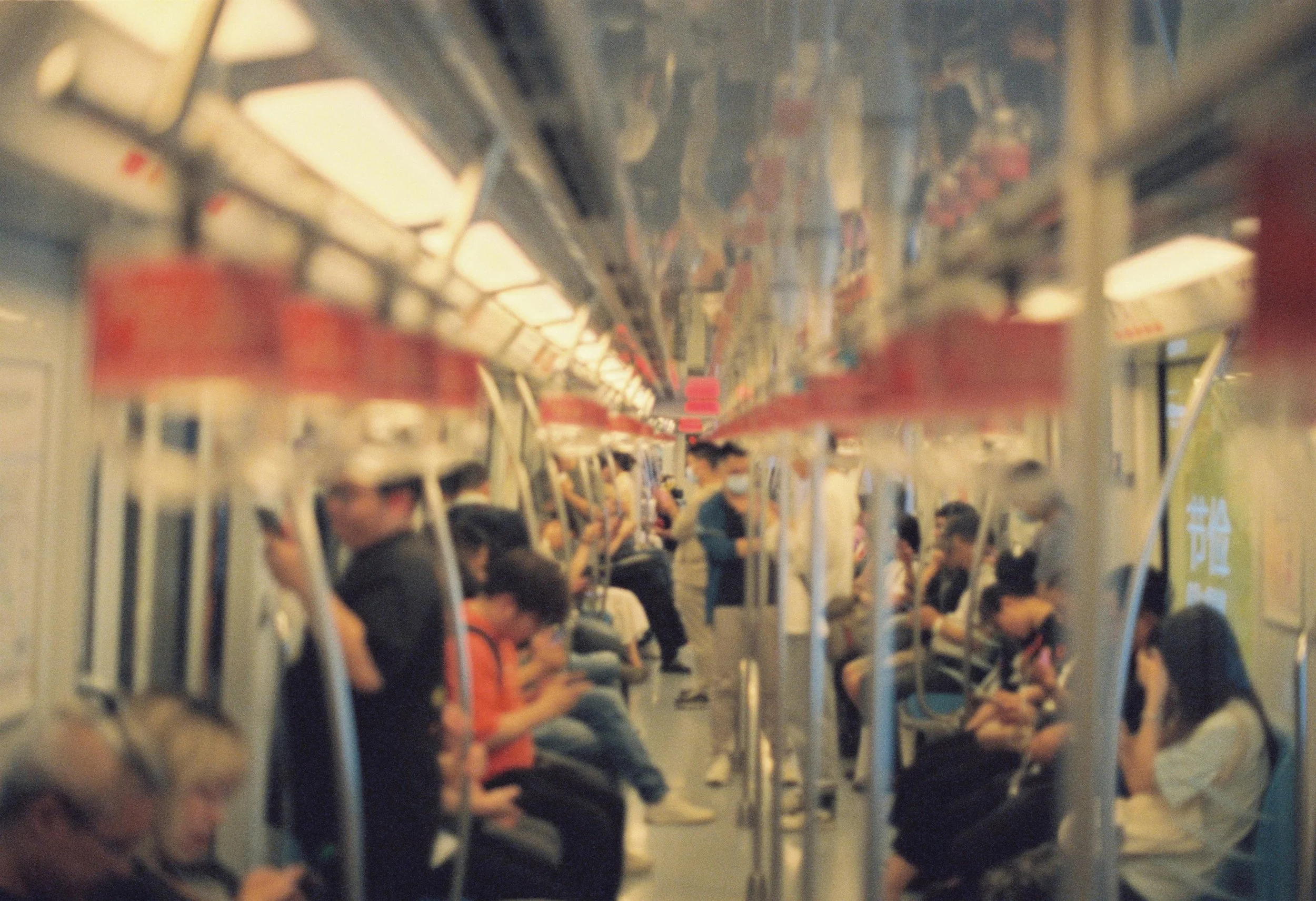
What is the one thing you can do? Give up your seat? Literally? Figuratively?
“No one can do every thing, but every one can do some thing.”
In the last month I have heard that expression in different ways and in different venues- in a radio interview, during news reports and in my church class. Regardless of how it was conveyed, it has made me wonder, what is the “do-some-thing”, that I can do.
My grandmother was a do-some-thing kind of gal. She wasn’t any one “special” except in the eyes of those who loved her and those she encountered. She was generous, encouraging, interesting and interested in others. She looked for the good in all situations. She saw needs and she did what she could to meet those needs regardless of her age and circumstances.
In her last twenty years of life (she lived to be 97) she lived near my parents in Massachusetts. At that point in her life, she was a widow and fiercely independent. (She lived alone in her home until the last two weeks of her life when she was hospitalized.) Every day she would drive to the beach to “sniff the salt air”. But she also went there to pick through the trash and recycling looking for bottles and cans that had deposits. Those she would redeem at the store and use that money to pay for postage to send items of clothing (she either made or bought at a local charity shop) for a charity she had supported for years: Christian Appalachian Project. I never knew why she picked that project but she was faithful in supporting it for years. It was one of the some things that she did for others.
Recently in our church class we were talking about all sorts of global and personal situations. One of the participants shared about his father. His dad was another one who did what he could for those who were around him. He said that while his dad was very much aware of what was going on in the world, he didn’t focus on that. Rather his father focused on doing what he could for the people around him.
I’ve been thinking about how I can help those who are in need around me. How can I be a blessing to someone else? I have shared before that I have a small bin in the front of our home to collect non-perishable food items for a local food bank. That seems to be a tangible, easy way for me to help. My neighbors and friends have been very generous. The box also reminds me and keeps me accountable to pick up a couple extra boxes of pasta, cans of beans, hearty soups, or cereal when I go to the store.
Of course, isn’t that what we can do? Impact those we can, however temporarily. Regardless of our circumstances, we should make life’s journey less of a burden and more of a blessing for someone.
We may never know what those expressions and actions of kindness, niceties and quite frankly, manners will impact someone else. But the science is showing that these kindnesses can benefit us: helping others benefits ourselves more than we know. When we help others-serotonin, dopamine, oxytocin, and other endorphins are released. These substances help us feel good. In my case of collecting the items for the food pantry, it is just a short walk to the food pantry from my home and it brings me such joy to pull my little wagon full of food there.
Science is proving that which God knows and knew when God created us: It is more blessed to give than to receive. On so many levels. Sadly, those who are takers in this world will never realize that benefit. Because ultimately besides all the physical benefits of giving, that benefit of blessing brings peace and love.
There is a line in the old movie, “While You Were Sleeping” that I think about whenever I think about small actions of kindness. One of the characters is despondent thinking that he hasn’t done anything significant or special in his life. Another character who has watched him for years says encouragingly, “You give up your seat every day on the train.” He replies, “Well. But that’s not heroic.” To which she replies- “It is to the person who sits there.”
What about you? Do the problems and situations of the world get you down? What is going on in your neck of the woods? is there anything, even some little thing, that you can do to help? Or, perhaps you already are doing some thing. What have you been doing? How can that encourage someone else?
In these times of difficulty for so many people and while global situations may seem overwhelming, maybe we should take a step back. Maybe we just need to do- some-thing for the people around us who need help. Our do-some-thing might not require much effort: We just need to pay attention to what is going on around us and have a little imagination. Perhaps, all we need to do is give up a seat for someone who needs to sit down.
A Few Ideas:
Having a holiday party? Ask guests to bring one non-perishable item for the local food pantry.
Start an ongoing collection box in your neighborhood for non-perishables for your local food bank. Or, if you live in an area where your vegetables are still growing- plant some extra vegetables in order to give away the fresh produce.
Pray for others. What better gift to give to someone else, than to bring their petitions to the One who created all of us and knows exactly what we need and what needs to happen in our lives.
Blue Car
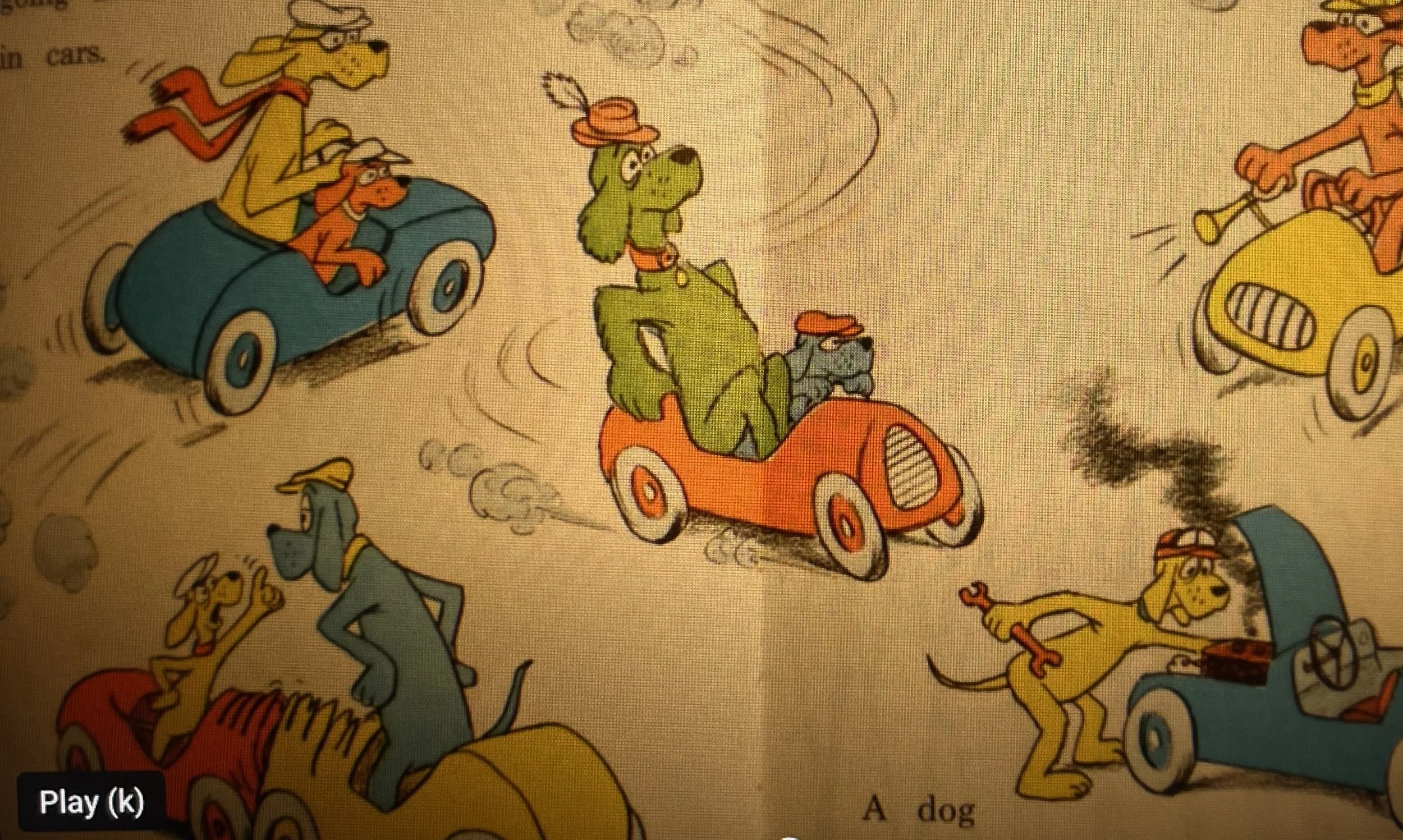
Notice the blue cars? Or does the red or yellow capture your attention? [From the classic- Go, Dog, Go by P.D. Eastman]
I could use your help.
I am working on a book proposal and I would like to see if you think the book idea is a good one? I have heard back from a variety of people that the concept is something they would like to read. But, as I am learning in the publishing business, it is difficult to get a book published. (The emphasis in that sentence is business.) And so, a book proposal is mostly a business proposal- how many readers, aka buyers, can one expect? While there is nothing new under the sun, one of the questions that is asked- is this book relevant to today’s readers?
My working title is Walk, Pray, Connect: A 40-Day Walking Prayer Guide to Building Community. In explaining the need for it, I would ask you to imagine:
Say you have a new blue car. Have you ever noticed that you will start to notice lots of blue cars everywhere? You may start to wonder, where were these blue cars before?
Apparently, this awareness is called the frequency illusion or Braeder-Meinhof phenomenon. “A cognitive bias in which a person notices a specific concept, word, or product more frequently after recently becoming aware of it.” A person can selectively focus on certain things while filtering out others.
The book I am writing is hinged on this idea: if we are intentionally thinking and praying about our community by focusing prayer in a specific category- we are more likely to notice neighbors in that category. That awareness can then be developed into an interaction and engagement with one another.
Henry David Thoreau said “The mass of men lead lives of quiet desperation.” Not only are we wanting fulfillment in our lives but we also long to be known and seen. Sadly in the modern world, we are more alone than not: we are rugged individuals busy with doing things yet not investing in relationships. In many communities, we do not even see our neighbors much less know them. This “loneliness in the crowd” isolationism has detrimental effects to our physical, emotional and spiritual well-being: social loneliness can increase one’s risk of heart disease, stroke, Type 2 diabetes, depression, anxiety, suicidality, self-harm, dementia and early death.
When God created humans, God created Adam (human) first. “It is not good for man to be alone,” so God created Eve (life), thus the first community was established. And “it was good.”
I am proposing a book that explores prayer walking in one’s neighborhood that systematically incorporates a different prayer in each walk. It is a 40 day journey broken down into 8 weeks of 5 walks each week. Each week has a different topic (life stages, life events, circle of relationships, career/work, physical, emotional, spiritual, God’s best). Within those weeks are 5 tailored prayers. For example, in the first week, called life stages- days 1-5 will have prayers for pregnancy/infants, children, teenagers, adults, and elderly respectively.
It doesn’t need to be a walk- it could be the school run drive, the work commute, the grocery run drive or even just sitting in one’s house and imaging those who live around them. The point is that one takes time each of the 40 days to pray for something specific in one’s community.
Of course, the ideal would be that one would walk- the benefit of the physical activity in conjunction with a mental/spiritual exercise is great. Even more so if there is accountability by walking with another person, or even a dog. If one does walk in one’s neighborhood, the idea that the specific daily prayer would remind one to notice the demographics and issues of one’s neighbors. It is this awareness that is the first step in reaching out.
The book is a direct response from my experience in our past neighborhood. An excerpt from the preface of the book:
“We lived in an urban/suburban neighborhood for twenty-six years. The neighborhood street was a semi-circle (two entrances to the “circle” from the main road) The detached homes were built before WWII and were pretty close together, with our driveways right next to the adjacent neighbor’s property. Our neighbors were intergenerational: some houses contained young families while many were occupied by older folks who had lived there as children and bought their homes from their parents or grandparents. We moved there when our sons were quite small. It was a perfect neighborhood for us: the street was closed to through traffic yet walkable to school, church, library, restaurants.
There were many neighborhood children with whom the boys could play. After we moved in, I got to know the neighbors around us. Yet through the years, I never walked along to the other side of the “circle”. I always walked to the street exit closest to our home and the children that were our kids’ ages all lived around our side of the circle.
As the years rolled by, I am embarrassed to say that I didn’t even know the names of those on the other side. One woman in particular would walk around to our side of the neighborhood and always compliment my garden if I was out working in it. We would engage in that type of light discussion. It was only through another neighbor who told me the reason the woman would walk was because she lost her husband to cancer and was bereft. I felt terrible. Not only did I not know that her husband was sick, I didn’t even know she had a husband! It seemed that even the newer neighbors on “my side” of the circle knew the names of the owners, their children, their pets’ names, and those on the “other side”. How did I get so divorced from knowing my neighbors?”
When we decided to move, I vowed that I was going to get to know my neighbors. So, before and during our move, my husband and I prayed for our new neighborhood. We prayed for neighbors we hadn’t even met yet. As we walked our dog through our new neighborhood we would offer silent prayers for the occupants of the homes we passed.
Because of that mindful intention, I was more aware of my neighbors and the various stages of life. For example, I noticed those homes that contained young children as seen by abandoned scooters, balls, bikes, on the front yard or those homes with “temporary” ramps for disabled family members. In many cases, I have been able to meet those neighbors by praying for opportunities to slowly engage with one another. While I cannot say that I know all my neighbors, I have been able to build some meaningful connections.
What about you? Have you ever systematically prayed for your neighbors? If so, what happened?
Would you be willing to read a book that guides you in that intentional awareness? If so, please let me know in the comments or email me (virginiaruth010@gmail.com) Ever grateful, Virginia
Composting Squash
Do you know where your garden vegetables grow? Local farmer? Commercial grower? Your own backyard? Does it matter to you if they come from uniformed tidy rows?
What if your vegetable came from an unexpected place? Would you eat something from the compost bin? How would you feel if you had an unruly squash plant laden snaking out of your compost bin? Would you eat the squash?

Our volunteer squash.
We have a compost bin in the back corner of our yard. In it, we add vegetable waste, egg shells, coffee grounds, grass and leaves. In time, it turns into beautiful soil. Earlier in the summer we noticed the telltale signs of a vine and squash-type leaves curling out from under the bin. Rather than pulling them, I thought we should wait to see what, if anything, would develop. I was thinking that it might be a stray pumpkin courtesy of the squirrels who love to devour our porch pumpkins and spread the “love” all over the yard.
So I was thrilled to see squash blossoms and then to see the development of delicata squash. I guess we must’ve put the “innards” of a squash from last year into the bin. Who knew that it would take hold and grow? The compost bin is in the back corner of our yard, behind our shed. We do not water that area nor do we tend to it. Yet even with those conditions, it just grew.

Discovered on a dog walk. These impatients decided to bloom where they landed- in the middle of a brick stoop.
Bloom where you are planted. A cutesy saying, but is true or a bunch of bunk? Can one bloom when planted anywhere? When one is in an unfavorable space? First of all, can one even grow, forget about producing any blossoms or fruit? Will that fruit be edible?
I know many people who feel that they are stuck. Physically, emotionally, or spiritually. They are in a place where there is no room for growth or even any type of development. They seem to be dumped in a heap of unwanted, rotting things. For them, it seems as if there isn’t any positive goodness in their lives. The way they arrived in this place may have not been through anything that they did or didn’t do- it just happened through circumstances or choices of other people.
But in the words of W.H. Auden- goodness exists. For in the heap of discarded things, growth and opportunity abound. Sometimes it is just that we sometimes do not see it- the microbes and worms that eat, regurgitate and create good, healthy, regenerative material. An environment that is then conducive to growth. And once grown and developed, the outcome produces life. It just might occur where we don’t expect it- in the middle of a compost heap.
What about you? Do you feel stuck in the compost heap of life? How did you get there? Any idea? If you let it, can the situation shape and mold you into a healthy beginning. Can it produce strength and resilience? Can that be used to cultivate a change and a movement forward? Can that movement forward produce growth?
Even if one is in a compost heap, opportunity abounds. We sometimes just have to wait and see.
Make Tea, Not War
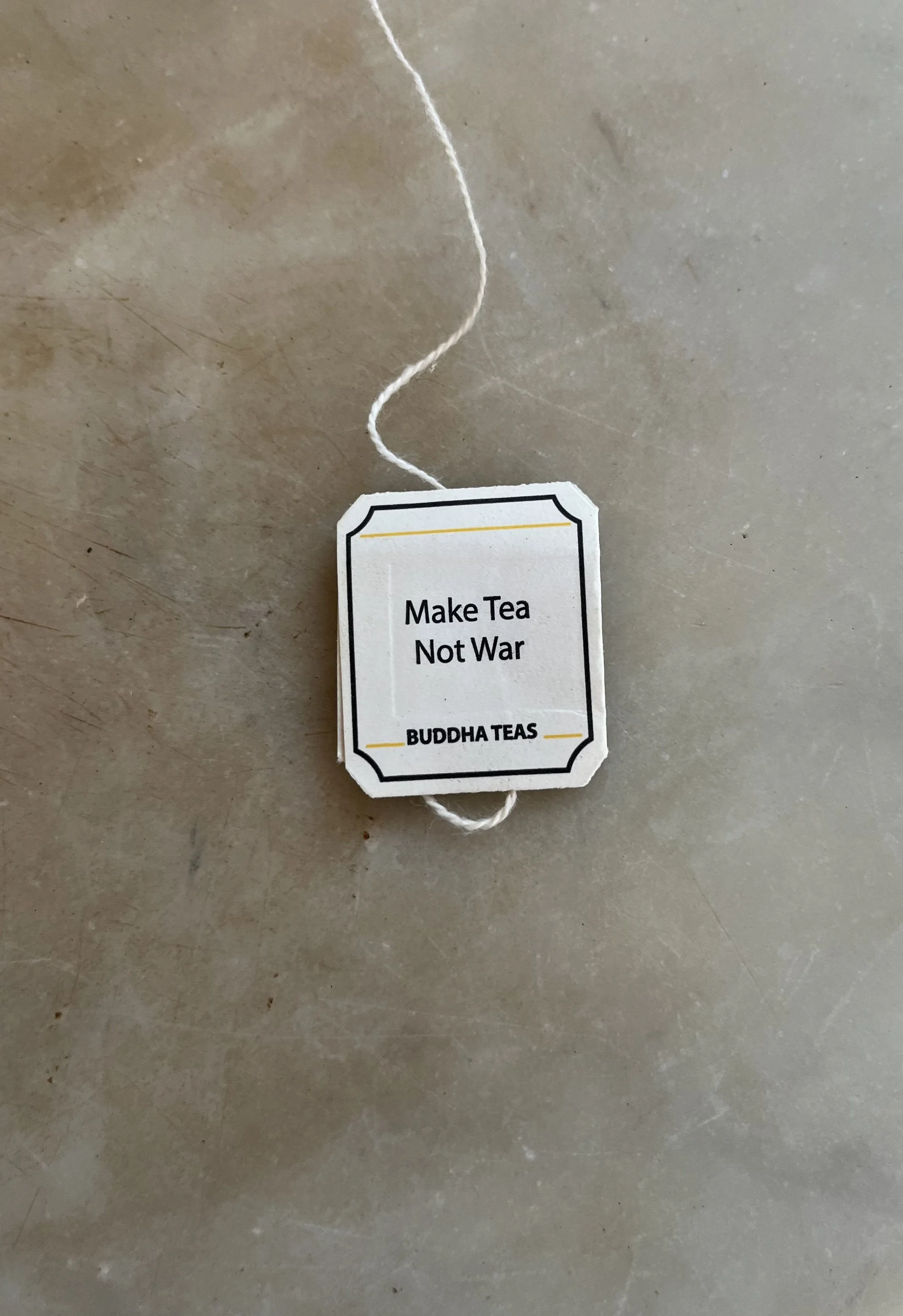
There is an Arab-Bedouin tradition called “sulha”, meaning the meal between enemies for the purpose of reconciliation. It is a informal conflict resolution practice that includes four elements: forgiveness, reconciliation, ritual and honor. It is based on the fact that eastern tradition sees a conflict, not as an individual issue but a wider one including whole tribe or family. So it is the whole tribe or family that needs to come together in the resolution. This is done by agreeing upon an elder in the community who will act as mediator and guide the parties through the process. Aseel Al-Ramahi, an advisor to the Chief Justice of Bahrain says, “Whereas westerners know the primacy of law, the Arabs know the primacy of interpersonal relationships."
The whole practice is based on trust, humility and mercy. Trust in the one Jaha or well-respected elder who represents the parties and helps bring the parties to some type of consensus. Humility, since the one who has caused the conflict comes to the table in the spirit of humility and not one of gloating. And mercy. The aggrieved, while having the right to seek revenge, demonstrates the magnanimity of forgiving the other. Because as people living as they do in community, it is important to have interpersonal relationships.
The western tradition with our rugged individualism sees conflict as a perceived problem between one or two people. The problem is solved by one overtaking the other, whether that is through force, political gain or “winning” the debate. There is no consensus. It is an “all or nothing”event. In some ways, it is no wonder we have thrown ourselves into this uncompromising pit with no way out.
I think of Jesus and the many times He taught over a meal, including and especially “the last supper”. It is amazing to me, the fact that the one who betrayed Jesus (Judas) was present at that meal and that Jesus included him in the conversation of communion through the bread and wine. Jesus shows the ultimate in sulha (or peace). Imagine if we knew our mortal enemy was sitting among our group of closest friends. Would we be so magnanimous to include him in our act of love and forgiveness? Jesus, God present on earth, was the epitome of interpersonal relationships. Jesus would do anything, including dying, in order for us to have a relationship with Him. Any animosity that might be between us- namely our sinful animosity towards God- is gone due to Jesus’ ultimate death and resurrection. The thing is, the communion table, the place of sulha has as its wise elder, Jesus. It is only through Jesus that we can have wholeness and peace.
What about you? Would you break bread with an enemy? Have you ever had to do that? What happened?
I wonder in the seemingly increasing climate of hostility in which we live, perhaps we need to start thinking of sulha and the importance of interpersonal relationships over the right to be right. I am wondering what it would look like if we approached those with whom we disagree with a spirit of humility, mercy and grace. If we were willing to sit down, have a meal and let the God in me commune with the God in you.
Come From Away

Over the summer we attended the musical production, Come From Away, which was playing at our local playhouse. The majority of the cast were part of the original 2017 Broadway show. In addition, in the audience that night was one of the real-life “characters” who then gave a Q&A afterwards.
Come From Away is the story of the people and visitors to Gander, Newfoundland during and immediately after the 9/11 attacks. In the twentieth century, Gander had been the stop-over refueling place for transatlantic flights. The town grew up around the airstrip. During WWII it was heavily used, but in the intervening years as airplanes traveled farther distances and didn’t need to stop to refuel, Gander returned back to a small island community of hearty, self-sufficient souls.
When all the airspace in North America was grounded after the first attack on Tuesday morning, September 11, 2001, all international flights to the US were diverted to Gander. In a space of very little time, the town had to receive an additional 7,000 internationals deplaning from 38 planes, plus 11 dogs, 9 cats and 2 bonobo apes. What follows in the musical is the story of the next five days or so as the towns people opened their homes and hearts to these strangers.
The experience changed the life of one of the passengers, “Kevin”, who is one of the stories featured in the musical. The real Kevin was the gentleman who spoke after the show. Shortly after returning to his home and company in Texas, he started giving his workers money on 9/11 to do some good- to “pay it forward”. He also started a non-profit, payitforward9/11.org that encourages random acts of kindness:
Our vision is to help develop communities where harmony grows through individual "pay it forward" actions, and the ripple effect they cause.
Our mission is to promote random acts of kindness and compassion every September 11th to honor lives lost in the 9/11 attacks by performing three good deeds for strangers, asking them to pay it forward by doing the same and creating a ripple effect. [From the website: https://www.payitforward911.org/]
Watching the musical had me thinking. Namely, would I be so generous and open of my home and heart to strangers in need? There was a lot of fear and speculation among the passengers which the musical touched upon. But the generosity of strangers overrode the fear and brought the people together. In the Q&A that followed, it was evident that real community and connection among some of the passengers and the Newfoundlanders developed and because the characters are based on real people from Gander, there even developed a connection with the cast of the show and their real-life counterparts. Just playing the role of these remarkable people changed the performers. Many of the former passengers, Newfoundlanders and musical cast are still in touch with one another.
Watching the show brought back memories of the past. I remembered a pervasive fear during those September days- could you trust someone who looked like those terrorists or anyone who is “different”? I also remembered the connection that pulled communities together- the helping of those who were afraid. There are definitely bad apples in the world. But there are also many generous souls, who think, what if that were me? What if I were stranded in a place where I knew no one, didn’t even know where the place was located and didn’t even speak the language?
As the musical unfolded, they shared the story of a plane of African people. In divvying up the passengers among the different housing options-school, churches, homes, camp grounds- these folks were to be transported to stay at a Salvation Army camp ground. By the time all the arrangements were made, it was late at night. The Africans were extremely frightened from having to travel a distance from the plane, in the pitch dark, with a bunch of strangers who didn’t speak their language. At first they refused to get off the bus until one of the workers recognized that one of the ladies was carrying a Bible. The Newfoundlander asked to see the Bible and then proceeded to find Philippians 4:6 to which he pointed in the text and shared with the woman. Even though the Newfoundlanders and the Africans couldn’t speak to one another, the Bible verse calmed the fears of the group. “Be anxious for nothing.”
I think if I were those passengers, I would’ve clung to my Bible too. I would’ve been frightened and anxious. Please Lord, help me, I would’ve been praying. Keep me safe. If I were one of the Ganders, I would’ve also been frightened and anxious. Please Lord, guide me, I would’ve been praying. Protect all who are opening their homes and are vulnerable to the strangers. I would’ve been wondering- what is happening in the world? When the planes were first grounded, all parties- Newfoundlanders and passengers- had no idea what had happened. They may have been anxious, yet instead of shutting down and wallowing in their anxiety, the people of Gander had compassion for those who landed and opened up their town.
I think of how Jesus, God dwelling with us on earth, reminded us to welcome the stranger, to care for those who are vulnerable, to do for others what we wish were done for us.
I think now of these troubling days when people are frightened- from what they have heard or seen or just anticipate. For those who are frightened of others who may not look, sound or believe what they believe. Frightened individuals, who are strangers in a strange land. Do we turn away, shutting down and wallow in our anxiety of those who are “different”? Or do we meet that fear with love- love for our fellow humankind? Are we willing to do for them what we would like to have done to us in the same situation? To have compassion (a stirring in the belly) on those who may not be as we are.
What about you? Have you ever been in a situation that depended upon the kindness of strangers? Have you ever been kind and supportive of a stranger? What happened? Have you ever had to communicate with strangers without using words? What was the common language?
The people of Gander were no more special than you or I. Perhaps they just had a little more faith in one another. We all have opportunities to help those around us- regardless if we know them or not. This month, we are coming upon the 24th anniversary of 9/11. May you be inspired to practice kindness to those around you- especially to the stranger in a strange land. For when you think about it, we all come from away.
You Win Some... You Learn Some.....

I was listening to some collection of music on Spotify. I think it was called “Coastal Grandma”. (At first I was a little put-off by the age implication that the digital DJ “suggested”, but it turned out that it had songs that I really liked. One of the songs, can’t remember by whom, had a line- “win some, learn some”.
I had to think for a minute. Such a nice take on the expression, “you win some and you lose some”. It takes the connotation of losing and creates an opportunity: one can learn so much when things aren’t always the best outcome. It is in those “losing” opportunities that we learn about ourselves and others. We also can learn about our relationship to God. For some, the greatest learning occurs when we have “failed”.
Many, although I suspect most “famous” people, have had their share of failures: Madeleine L’Engle- her Wrinkle in Time book was rejected many times, now a classic; Michael Jordan- considered the greatest basketball player was cut from his high school basketball team; Albert Einstein was a terrible student, his parents thought he was developmentally delayed- didn’t speak fluently until he was nine; Steven Spielberg had such poor grades in school he was rejected to University Southern California all three times that he applied; Abraham Lincoln lost many elections before winning any, Oprah Winfrey was fired from one of her first television jobs.
I know when I “fail” I am embarrassed- I want to just curl up and be left alone. When I “lose some”, I want to lash out in anger or cry about the injustice of it all. Some times the “losing” causes great pain: loss of a dream, person, goal, or the way things were.
In those times, I can feel angry and bitter at God- Why? What are You doing? I thought You promised? I think- erroneously- that God has abandoned me in my failure. I treat my relationship with God conditionally as if God is only with me when I “win” or are successful. (Which, if I am honest, can be read- when I get what I want.) Yet, so many times God doesn’t give us what we want but rather what we need. Sometimes what we need is to rely on Him more- to lean towards or lean-on God.
Recently, a new friend from our current church preached for our vacationing rector. She shared some words from the writer, retreat leader and conference speaker- Joyce Rupp. Ms. Rupp had written a list of “40 Questions that our Lean-to God asks us.” These are questions that help us when we “lose some”. Here are just a few:
Will you believe that I love you without any reservations?
Will you trust Me?
Will you let Me be your strength?
Will you allow My grace to move within you?
Will you open up your heart?
Will you come to Me in prayer so I can empower you?
Will you place your hand in Mine?
Will you drink of the living waters I bring to you?
Will you take refuge in the shadow of My wings?
Will you talk with Me about what is really difficult for you?
Will you wait patiently for Me to revive your spirit?
Will you allow Me to walk with you?
Will you rest your weariness on Me?
Will you give Me your ache so that I can heal you?
Will yuou accept My compassion?
Will you be quiet enough to hear Me?
Will you believe in the power of My resurrection?
What about you? Have you ever felt that your life is a win some, lose some experience? With more of the emphasis on lose some? Do you wonder where is God in all of this? How can you turn a “lose some” into an opportunity of learning something?
You are not alone. Many of the giants of the faith- think Abraham and Sarah, Isaac and Rebecca, Jacob and Leah and Rachel, Moses, David, Jonah, even Jesus (if you apply the world’s definition of success to Him) would all have had the experience of “lose some”. Yet, it is in those moments of loss, that God’s all encompassing presence can be found. Lessons can be learned. And that is something to celebrate as a win.
Confucius said…
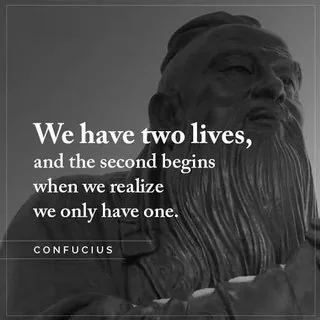
Recently I just heard someone repeat the above Confucius’ quote. It is a sentiment that can be expressed in many different ways: You only get one go around on this merry-go-round of life; Carpe Diem; Make the most of today; You only have one life to live; We only have now.
It is kind of sad that generally, those who realize that life is incredibly short are those who are of a certain age and have more life behind them than in front. Or those who have experienced chronic illness or tragedy at a younger age. In either case, it is a question of staring down mortality and realizing that this is it. Today. Here and now.
Why do we think we have all the time in the world?
Of course, there are hours and days that seem to drag on. And on. And on. Mostly, those are times of unpleasant or difficult situations. Those are the days that seem to never end.
Or we think that once we have achieved … (fill in the blank) or obtained… (fill in the blank), THEN we can move on or do something. I know I have felt that way and have delayed truly living my life. Even with doing something small like starting a writing task, home project or inviting neighbors to dinner. But if we wait for everything to be “perfect” with “perfect conditions”, nothing will happen. The book won’t get written. The room won’t get painted. The opportunity to meet new friends will be gone.
I’ve been thinking a lot about how I spend my days and ultimately my life. On one hand, I realize that if I die tomorrow, that is it- I have done all that God wanted me to do. Yet I feel that I am not ready to die. I feel like I have more to offer and to do. As always, it is a balance of life: to recognize that we only have today and that we shouldn’t waste the day but to also realize that we should not feel stressed and “burn the candle on both ends” in trying to achieve everything. All at once.
It is interesting to see all the books and articles written about “how to have a fulfilling life”. (Google it and you will be amazed at what pops up.) Almost all of the resources talk about purpose and meaning in one’s life. Or living an authentic life. Sometimes, in my global, practical thinking mode I laugh. Only in a society of excess- excess of time and resources, can we do this navel gazing: how to be happy and fulfilled. When one is struggling to survive, these type of existential questions might not come up. And yet. These are questions that have plagued humankind since the beginning of time.
I think this search for meaning is part of our God-shaped vacuum in our souls, to paraphrase Blaise Paschal. But just because one may be filling one’s soul with God, it doesn’t mean that purpose, meaning and authenticity comes automatically. It is still a struggle to be in the world but not of it- to not be influenced by others but be the influence on others that God called us. We can do that by being kind, good, charitable, humble, and loving. By working heartily at whatever task God has called us. It might even require us to look at some of the articles by learned peoples to help us get the most out of living the best life God wants for us. Or studying what some of the ancients have written. After all, God put them on this earth and gave them a purpose too.
What about you? Do you ever wonder about your life? Do you feel that your life is fulfilled? Authentic? Filled with meaning and purpose? Are you in the world but not of it? How do you practice that?
“Teach us to number our days so that we may truly live and achieve wisdom.” Psalm 90:12 (The Voice)
I have heard the expression, “the days are long but the years are short” in relationship to rearing children. I think that applies to our lives. I don’t know about you, but I am ready to live my authentic life- fully filled with and for God.
Shameless Plug: I received my copy of two books that I have had the privilege to contribute to both of them.
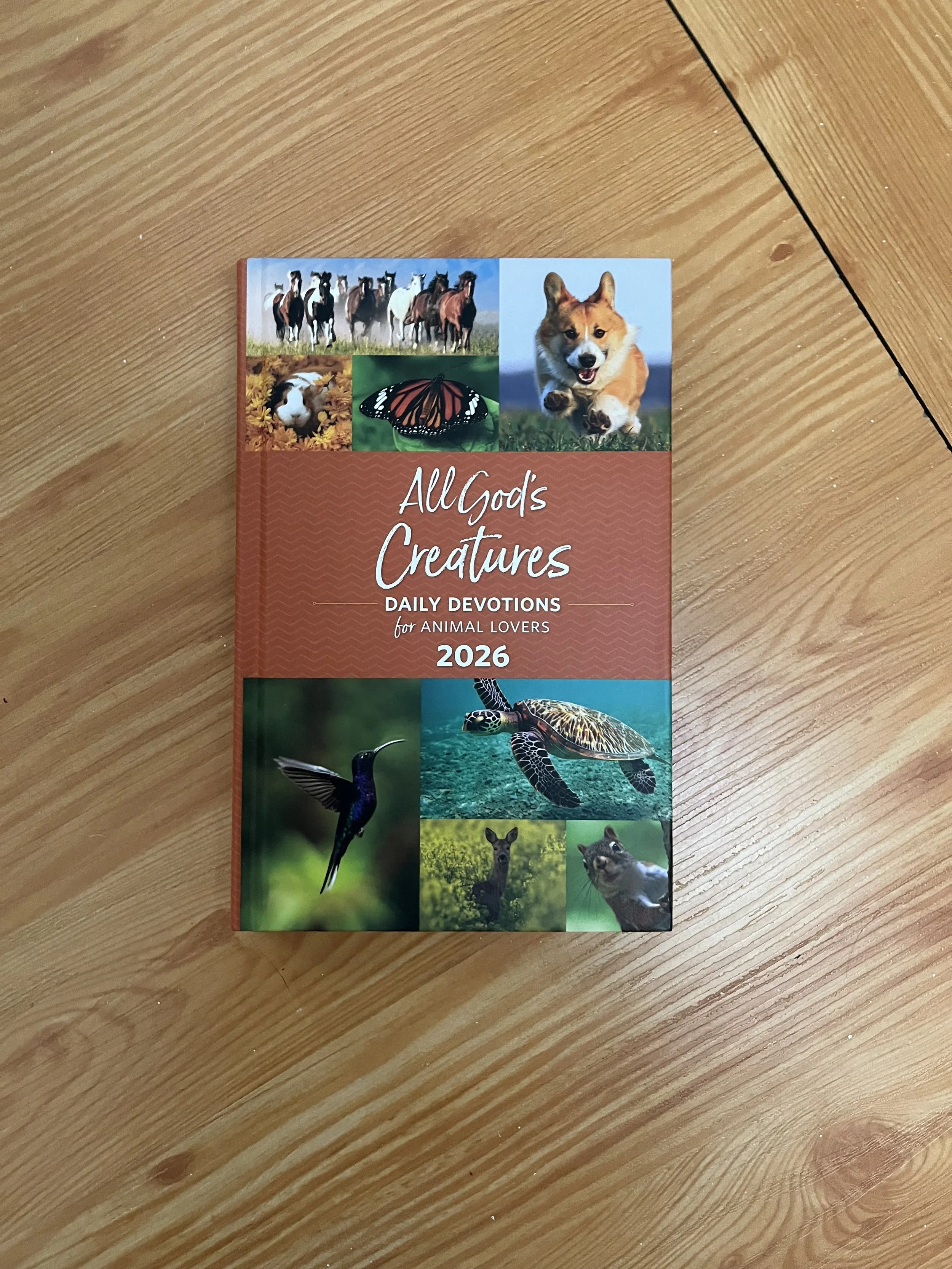
According to my editor, the All God’s Creatures devotionals are now available at: www.guideposts.org/shop. 15% discount. Use code: AUTHOR15. Official release date September 9 but can be pre-ordered at Amazon, etc.
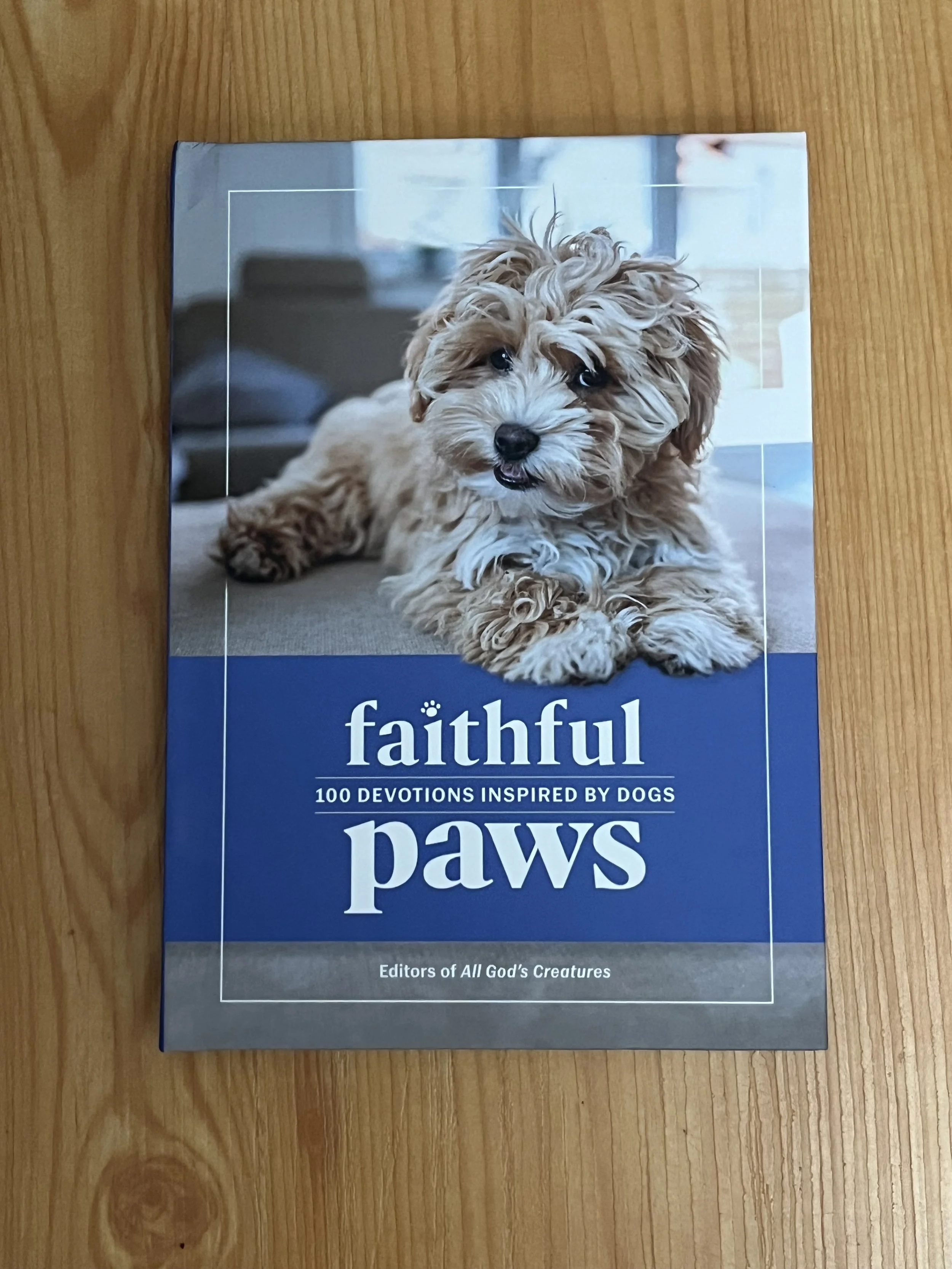
Also available at: guideposts.org/shop. Wide release to retailers (Amazon, etc) on October 14.
La Passeggiata

Recently, I watched a video from a woman whom I have followed over the years. She started out as a sustainable fashion blogger and it has been interesting to watch her “business” grow. I am fascinated by the younger generation and how adaptable they are in living out the kind of life they want. This gal, because she is online and uses the web for her “office” can work anywhere. She travels to Europe for stints of three months or so (I am sure that it is tied to the visa timeframe) and then returns to her native Canada for a period of time.
Her visits abroad are an interesting mix of travelogue, philosophy and lifestyle. In one of her latest youtube videos she shares some things she learned while in southern Italy. These are lessons she wants to continue when she returns back home.
I think we all can relate to being away at a new place and experiencing some type of new routine or experience that resonates with us. We want to bring it home and continue that experience and emotion. While that is admirable, I wonder can we sustain it? But then, I wonder why can’t we? What is it that when we return home we revert back to living life in a way that may not truly resonate with us or that we want to continue?
Is it because we have responsibility at home and potentially lack thereof when we are on holiday?
One of the things that she wants to incorporate into her post holiday life is the practice of la passeggiata: the after dinner evening stroll. It is common for those in the southern Italian community to stroll after dinner. Partly it is a way to see and be seen but it is an opportunity to exercise which is good for one’s total (physical, emotional, social) health.
Having just been on a little holiday myself, I’ve been thinking about routines. How we do we develop one? Can we add or subtract to them? Why do some routines stick and others do not? In looking at some of the literature, it appears that a routine is different from a habit. A habit is some action that is associated with a cue. For example, hand washing after using the restroom is a habit. The cue to doing the handwashing is using the bathroom.
On the other hand, routines do not require conscious effort or thought as it does not depend upon a cue. (Though I think it might be a question of semantics. My dad had a routine for his meals- breakfast, lunch and dinner. And while there didn’t seem to be a cue, he seemed to just know when it was 8am, 12pm and 6pm.)
When we get in a certain routine, we go about our day without much thought. Our routines, because we do not have to think about them, become the foundation for whatever work, play, or schedule that we have. Some routines we cannot change or at least not during certain stages of our lives: feed the children, clean up after ourselves, manage our health, walk the dog, go to work, etc.
When on holiday, our routines can be quite different. The dog may be boarded so we do not have the dog walking responsibility or our meals are being provided through a hotel, restaurant, or another family member. We might find that our routine is the pattern of the place we are in. I know of people who have gone to other towns and have been surprised that restaurants are not open all the time: they might close after the luncheon crowd and not open until later in the evening, or close earlier in the evening so that a late supper is not an option. For those travelers, their normal eating routine has to change.
I wonder about my blogger gal. How much can she practice the routine that she had in Italy when she returns to Canada? I think it is admirable to want to incorporate some things that resonated with her.
Her thoughts made me think of our home routine and possible ways to change it. Not so much as adding habits, but possibly changing the structure of our days. Life situations have a way of changing our routines: living with someone else, having children around, losing a partner or roommate, retirement. My husband and I haven’t had a life change situation in a while but I am thinking of changing up our daily routine or at least changing the pattern of some days of the week. For instance, on evenings when we have activities/meetings, try to have our dinner mid-day. Doing so will change the routine of our meal prep- making more food some nights so that the lunch/dinner will be leftovers freeing us up from meal prep in the middle of a work day. We have come to an age where eating “continental” right before bed doesn’t feel right.
What about you? Any routines from trips or holidays that you have incorporated into your regular home routine? What are they? Why did you make the decision to incorporate them?
Another routine I would like to incorporate is la passeggiata: getting outside after dinner, walking and seeing one’s neighbors. Seems like such a nice way to end the day.
Summer Plans

Summer savory. An annual. Wonderful reminder that the enjoyment of summer is here today, gone tomorrow.
What are you doing this summer? Any summer plans? Do you find the days flying by?
I don’t know about you, but I cannot believe that it is July already. I still have a winter to-do list that I haven’t finished. A woman from church said that her husband sent her a photo last week of a store that was putting out Halloween items already. That is just wrong. Although, once this weekend is over (Fourth of July), the back-to-school items will begin to fill the shelves.
Summer is a good time to make some plans lest the time flies by and we discover in the fall that we haven’t done anything that we wanted. But it is also a good time to give ourselves permission to “do nothing”. To savor the summer and whatever activity we find ourselves doing. I love the word savor. Besides the definitions related to taste and smell it also means “to delight in.” Just saying the word seems to slow down the mind and view whatever one is savoring in a new light.
I am trying to savor my time. To be present and in the moment. But I have to really work on it. I am not good at savoring. I struggle with always feeling that I have to be “productive” and thinking what is next on the agenda. I am trying to learn to allow time to unfold as it will.
When I do savor the time, I find I am much more relaxed and the experience is much more meaningful. For instance, I have been swimming for exercise this summer. (Very generous neighbors allow me to swim in their beautiful pool. I tell my husband I am heading to “The Club” because it is even nicer than any club pool setting.)
But instead of just checking “the exercise box” each time I swim, I am trying to intentionally enjoy, “to delight in” the whole experience: the water on my skin, the beautiful setting of the pool and backyard, the blue sky and the birds chirping around me. I find my mind wanders and I think of different things. Savoring allows me to process and create. It gets me out of feeling like I am in a rut and reactivates my mind. It slows me down and lets me appreciate my surroundings. When I walk home, I feel that I have been restored.
Some ideas for savoring the summer :
Take a digital break: whether it is for a weekend (yikes!), day or 1/2 day, see if you can manage your day like it was 1988- pre-world wide web.
Pack some water, a snack, a good book, a blanket or chair, or even better, one of those portable nylon hammocks and find some shade in a nearby park/beach/wooded area. Read for at least an hour. Although if you are like me, you will more than likely have a nap rather than a reading session.
Meander through an art museum- let the beauty of the subjects speak to you.
Peruse some periodicals in your local library. Read the ones that aren’t “highbrow” unless you really want to.
Teach a young person how to play jacks, marbles, the card game “War” or any other childhood games.
On a rainy day- work on a puzzle, crossword or watch an old movie. Click here for the 50 Best Classic Movies (or so says Town and Country Magazine.)
Write a short-story. Click here to find 52 prompts.
Find a pad and pen and doodle. See what words, ideas, or pictures form on your page.
Plan a meal from the bounty of a local farmers’ market.
Simplify your schedule. Leave an evening free to sit outdoors- see if you can find any lightening bugs or watch a meteor shower. Click here for a calendar of meteor showers in 2025.
What about you? Any thoughts/plans for this summer? Are you planning to “not plan”? How can you savor the moments whatever they might be- whether it is a longtime in the making planned trip or a spontaneous day off?
This is the summer to savor.
Panic Attacks

Have you ever had a panic attack? Difficult breathing? Sweating? Feeling like you are going to pass out?
About ten years ago, our family- my husband, our two sons and myself- went sailing. Bear in mind, we have been on all types of boats and have never had any problems. We feel quite comfortable on them. All of us are strong swimmers. But for some reason, on that day, I just panicked. It was a little blowy but it wasn’t a gale force storm. The boat was heeled over but that’s what boats are supposed to do. In addition, it was a larger sailboat (with a keel) which would be pretty difficult to capsize. (Not like the sunfishes of my youth.) My husband and sons are very good sailors and I trust them on the water. While I knew all of those practical things my body still experienced panic- I was sure we were going to capsize and go into the brink.
When my husband and I were first dating and then first married (sans les enfants), we had a sailboat in addition to weekly crewing for a racing boat. While I had a VERY BASIC understanding about sailing, I really did not know what I was doing. During a race, I would be told to “hold this, pull on that, or sit on the high (or low) side”. I am one of those people who does not like doing something without knowing the why behind the action and so, while the experience was fun I didn’t get the full enjoyment out of it.

You know you live by the water when the neighborhood play ground contains real boats.
Where we live now there are many sailboats. At this point we do not see ourselves as sailboat owners (two kayaks and a canoe are enough play toys) but we have received invites to sail. I do not want to have a panic attack during an outing and want to feel comfortable on a boat so that I can enjoy our friends and the experience. There is a local sailing school which offers adult classes to learn to sail. I decided that I needed to conquer this fear/panic head on and so have enrolled in classes. I have had three lessons thus far. We start with “chalk talk”- the instructor gives us the theory while we are on the dock and then we are assigned a boat- usually two students with one instructor. The boats are great for students- they are “self-righting”- meaning that you cannot heel over too much without the boat correcting itself and remaining upright. The first night out, I did feel somewhat panicky but so far with each subsequent evening out, I feel a little more comfortable. Hopefully when I am through with these sessions, while I may not be ready to take on the America’s Cup, I will feel okay to go out and cruise around.
Recently, I’ve been reading about the increase of anxiety in our society. Apparently there is a difference between anxiety and panic. While some of the physical features are similar (increased heart rate, hyperventilating, sweating, trembling, GI difficulties) anxiety is more of a state of being: feeling of pending doom, irritable, difficulty sleeping, feeling weak or tired. Panic is part of one’s flight or fight mechanism: in addition to the similar physical features of anxiety, panic can feel like one is choking, having chest pain, palpitations, or experience dizziness. Some people have limited-symptom panic attacks and might even have them infrequently. Usually the onset of a panic attack is sudden and doesn’t last too long. Anxiety can become chronically paralyzing by the worry of all sorts of things. There is a deep feeling that if one worries about an item, one has more control over the outcome and that the mental worry will even prevent the outcome from happening. While we know that this is magical thinking and doesn’t happen, we do it nonetheless.
I found an interesting article by David Rosmarin, PhD, ABPP about anxiety in the business community. Turns out that employees are very anxious today. No surprise. I would say, everyone I know is anxious today especially regarding one’s employment (or lack thereof). We are very uncertain about our futures. Yet, how do we go about dealing with it? Dr. Rosmarin suggests that we take a page out of elite athletes and some corporate heads: uncertainty (which can lead to anxiety) needs to be reframed as a key to innovation as well as a mindset of positive energy which drives us forward. The idea is that anxiety is not because something is wrong but rather something important is at stake (athletic performance, business profits, etc.). We should look at anxiety not as a disease but as a powerful emotional signal. He writes:
“The problem isn’t anxiety itself. The problem is how we respond to it. Business leaders often interpret uncertainty, nervousness, or emotional struggle as signs of dysfunction. That misinterpretation is costly. It prevents leaders and teams from harnessing anxiety as fuel for growth, connection, and sustained performance.
Here’s what it could look like to embrace anxiety as part of a healthier corporate culture:
First, corporations should make space for anxiety, instead of immediately trying to eliminate it. Leaders who name their own discomfort (without oversharing) create psychological safety for others to do the same. This builds trust and authenticity.
Second, leaders should normalize uncertainty. Anxiety intensifies in secrecy. Acknowledging that no one has all the answers can foster humility, more adaptive decision-making, and provide permission for team members to take calculated risks.
Third, anxiety should be connected to purpose. When team members get the jitters, it’s because they care. Reframing anxiety as an expression of core values can transform fear into energy and action.
By weaving anxiety into leadership conversations — not as a flaw but as a feature — we move toward a more human-centered culture, one marked by connection, vulnerability, and resilience.” (https://adaa.org/learn-from-us/from-the-experts/blog-posts/consumer/why-corporations-should-embrace-anxiety)
What about you? Have you ever felt panicky? Do you suffer from anxiety? Do you know what prompts it? Is it work related? Or something else? Have you ever spoken to anyone about it? A professional? What can you do about it?
I like the suggestions from Dr. Rosmarin. When we are anxious it is because we care deeply about something. I think of the anxiety that I have sometimes when I think about our one son’s future. For me, I have to constantly re-frame my thinking and turn him and his future over to God. Pray More, Worry Less, as the pillow in our living room suggests.
Meanwhile, I continue with my sailing lessons and do a lot of praying while on the boat!
Creativity
Would you consider yourself a creative person?
There are people whom everyone says, “Oh, she’s soooo creative.” They are the kind of people who can elevate any item to a work of art. Folks who can plop down the grocery bags in an aesthetically pleasing manner. Or people who go about life, truly thinking “outside the box”. No matter the situation, these folks are guaranteed to have thought of a different way to achieve an outcome.
Many years ago, a talented and creative friend designed elaborate birthday parties for her children. She even had a Cinderella-themed birthday (sans any premade Disney items) complete with a mini-van make-over to resemble the royal carriage.
While I would say I am somewhat creative, my talent lies more in taking what I have and making the best of it- either reusing or repurposing it. Although I think one can train oneself to have an artistic eye. The more one looks at something beautiful (bearing in mind that beauty is in the eye of the beholder), the more one is attune to seeing and responding to the world with creativity.
When I was a kid, I had a “craft box” containing all sorts of arts and crafts: colored pencils, paints, pastels; clay; bits and bobs of string, ribbon and small fabric; glitter; glue; small shells and pebbles. I had the items all arranged in small cigar boxes that fit just so into a larger cardboard storage file box with a hinged lid. To accompany that, I had an old wicker beach bag that contained sketch note books and small canvases. Every summer I would pack it along as we went on summer holiday. My intention was to do some artistic endeavor. (I had visions of being an “artiste”!) Some years I was productive. Other years, not so much. Regardless, I had to have it with me. My brother would get so frustrated with me. “Are you bringing that d*** box again this year?” (Never understood why it bothered him so much, he brought his guitar.) In fact, I had the box up until our boys were young and then I incorporated my craft items with theirs. Now that they are out of the house, I have upgraded to a craft cabinet.

Oil on Canvas. National Gallery of Art, Collection of Mr and Mrs. John Hay Whitney, 1998.74.5 Photo credit: ©National Gallery of Art.
I found an interesting article extolling the virtues of creativity- that creativity is bidirectional with well-being: a person’s well-being was found to promote creativity and creativity is conducive to well-being. Basically, when one is happy and content and feels good, one is in a better position to be creative. Being creative produces feelings of being happy and content.* In some ways, there goes the theory of the miserable and suffering artist.
I’ve been attending a virtual lecture series offered by the Museum of Fine Arts in Boston. It is an in-depth look at Vincent Van Gogh and his portraitures- namely the Roulin family. The Roulin’s (Papa, Mamman, two sons and baby daughter) all sat and were painted by Van Gogh. The time spent with the Roulin’s was during the last years of his life. One of the MFA lectures, the discussion was about Van Gogh’s mental status, physical ailments and his genius. There is lot of speculations about his mental and physical illness (es). One of the comments from the expert was that in looking at VanGogh’s final paintings and comparing the same subjects from earlier works, he does not seem to be painting under mental stress. For him, painting was his saving grace. It made him happy.
I know I shared this before, but I am a big believer that all of us have creativity. Some, maybe more than others but nonetheless, we all are creative beings. Madeleine L’Engle used to say that when we create, we become co-creators with God. I think that is true. God is Creator. We are formed in His image- containing attributes of His. Therefore, we all have a creative side. When we create, we become part of the Divine.
Children create. For them creativity is playing. It helps them figure out the world- drawing a picture of their family, home, pets, what they are experiencing or something from their imaginations. Children sing. They make up tunes and words. Children tell and even act out stories. They write poems or recite nonsense verse. All of their “creation” is beautiful in their own way. Unfortunately, many children have had their creativity stifled by a (well-meaning) parent or teacher who criticized the endeavor for not being stylistically accurate.
As adults, we have the opportunity to be creative, not only in the traditional fine arts but also in the way we live our lives. Some people are creative in the way they garden, arrange flowers, style their clothes or decorate their home. Others in the way they arrange a contract, fill out an excel spread sheet, care for their car, hammer a nail, photo their children, lay a table and present a meal or creatively come up with a solution to a problem.
What about you? What is/was your experience with any creative endeavor(s)? Did you ever have an adult '“criticize” your work as a child? How can you lay that aside and challenge yourself to try again?
The New York Times has a fun little creativity challenge this week: every day do some type of creative activity. Monday- draw doodles. Tuesday- write a poem. Wednesday- daydream. Thursday- do 10% more. Friday- try one new thing. The idea is to help one get unstuck and use some divergent and alternative thinking.
https://www.nytimes.com/interactive/2025/well/creativity-drawing-art.html
Why not try it? I am. After all, we are approaching summer- the time when I need to get out the “craft” box. There is something about summer and the opportunity to try something new. Maybe I will get creative this year.
* https://pmc.ncbi.nlm.nih.gov/articles/PMC8305859/
Read Any Good Books Lately?

Ahh… So many books... So little time... Picture of the Morrin Centre in Old Quebec City, Canada. Built in 1808, it was originally a prison, then became a college and now is a library/culture centre.
What have you been reading lately? Do you read or listen to books?
I just finished Barbara Kingsolver’s Demon Copperhead. Great book. A page turner. At first, I was a little hesitant to read it since I had heard others describe it as a difficult read. The difficulty is not in the writing or pace of the book but rather in the topic- the beginning of the opiate crisis in this country, especially how it hits poor communities, in this case, southern Virginia.
Kingsolver based it loosely on David Copperfield, a book I started but had to put down because the treatment poor Davey received from adults was appalling and upset me. Kingsolver’s book reminded me slightly of the Tara Westover book, Educated. Mostly because both are set in modern day, rural, poor areas. Demon Copperhead makes one think about the crisis and how one treats those young children in the foster system. I am glad that I read it.
What about you? Do you have a summer reading list? Or is that too much of a reminder to school and the (dreaded) required summer reading. I never did read all of Moby Dick. Near us, the town of New Bedford, MA has a 25- hour Moby Dick read-a-thon in January. Different individuals take turns reading a chapter. Friends of mine have gone and say it is a wonderful experience. Some day…
Where do you get your book lists? Goodreads? Podcasts? Library? Friend recommendations? Do you have criteria about your reading selection? A yearly book quota? Types of books to read? Length of books? Do you keep notes about the books you read?
There is something about a book. A book represents possibilities. Picking up an unread book, there is a feeling that something wonderful is about to happen. Between the pages so many things can occur: the learning of something new; the transportation to a different place and time; the possibility of living vicariously through a character; the thrill of well-chosen words on a page that convey just how one is feeling.
There is something so luxurious about reading- to sprawl out on the couch, bed, or hammock and languish over a book. In my birth household, while reading was encouraged, it was to be done after the work was finished or before one goes to bed. So, it is very hard for me to sit during the day and read. To do so, I must either be sick in bed or experiencing a rainy day on vacation. Yet, if I wait until I am ready for bed to read, I do not get very far in my book- after a page or two the book slips out of my hand. Fortunately a book has only hit me in the face a couple of times. To read a book during the day seems like a safe and productive activity to me, yet one I am trying to embrace.
Currently, we are on holiday in Old Quebec City, Quebec Canada. We are staying in a renovated portion of a church- the baptistry. It is a beautiful stone building but has very odd angles especially at the ends where this baptistry was located, which makes for interesting and innovative storage areas in the home. Because we are on holiday, we are reading. There is a large comfy couch on which to read: a history of the city, a political satire from the 1970s (funny, how things never change- spot on to what is going on in our country today), a book about an art thief. One of the places we plan on visiting is the Morrin Centre. It is currently a lending library but in its former life was a prison and even a college. Seems appropriate given our reading material.
Next up for me is the book, James by Percival Everett.
Happy Reading!
Ping Pong Diplomacy and other simple acts

I heard an interesting story on the BBC radio talking about how the game of ping pong was instrumental in changing the course of diplomacy. The year was 1971 and the US had little interaction with China since the 1949 revolution. There had been no diplomatic ties, little trade and few contacts between the US and China. Yet, due to a single act of kindness, the US Ping Pong team was the first delegation in decades to visit the country.
According to the BBC story, one of the nine American players missed his bus to the World Championship being held in Japan that year. A Chinese player invited the American to join them on their bus which was also traveling to the tournament. From that little interaction a friendship was formed. In less than a week afterwards, the Chinese government invited the US team to China and to play in exhibition matches. In turn, those exhibitions paved the way for US and Chinese diplomatic interactions.
In listening to the story, I was reminded that it is the little things in life that make the big difference. I also am reminded that it doesn’t take much, or not as much as one would think, to make a change in the world.
Dr. Erica Chenoweth is a public policy professor at Harvard. She has co-written a book: Why Civil Resistance Works: The Strategic Logic of Nonviolence Conflict. In it, she and her team of researchers looked at all world conflicts- violent and non-violent campaigns from 1900- 2006. They were surprised that the most effective for lasting change were those non-violent campaigns. And what was more surprising it didn’t take that many people- 3.5% of the population to affect change. There just has to be certain criteria and preparation in place.
Dr. Chenoweth’s findings suggest that the individual can make a difference. She was researching conflicts and political campaigns. I think her research can also be applied to various societal norms: it doesn’t take that many people to affect change. I think of Nancy Brinker, sister to Susan G. Komen. Nancy made a promise to her sister to do something to help the women in the hospital who had breast cancer. Suzy Komen wanted the waiting rooms to look better. Nancy Brinker did more than that. After Suzy died, she established the Susan G. Komen Foundation in 1982. Two years’ later was the first Race for the Cure with 800 participants. By 2014 there were over 150 race events worldwide and the foundation has raised billions of dollars for research.
Nancy Brinker is a mover and shaker. But we all have the opportunity to make an impact with our actions. I think it is a matter of concentric circles- little actions, kindnesses, steps that each of us take daily which can/may lead to more people being kind and thoughtful which in turn can lead to a change in society. Individually, it is a good practice to intentionally do kind, small actions. Obviously, it is good for the recipient but more importantly it is good for the one doing the kindness. There is a feeling of goodwill (as well as all the “feel good” endorphins, dopamine, serotonin) for oneself and others. It provides purpose (as in Nancy Brinker’s case) and brings people together in a sense of belonging and community.
In the past it would’ve been called positive peer pressure (not sure if it is still called that): the group norm affects the individual behavior and visa versa. One’s friends or peers encourages one to engage in positive and beneficial behaviors.
Recently, my sister returned from a trip to Norway. She said that Norwegians are very much engaged in practicing sustainability. They have an unofficial campaign: “five items per year” which encourages individuals to purchase only five new (to them) items a year. For the one thing newly purchased, another item has to go. (Presumably for someone else to find “new”.) She said that a friend might comment on a new jacket- “Is that new?” one might ask. “What did you get rid of?” Positive peer pressure encourages the individual to think sustainably and intentionally before purchasing something.
What about you? Do you practice any small actions? What are they? Have you seen any impact from them?
A couple of months ago, I had an idea of putting two plastic storage boxes on my front lawn with a sign on them saying that I was collecting for our local food bank. The idea came to me as I was walking our dog and remembering that at our previous home, various neighborhoods would have food drives. Someone on the street would have a collection sign and box. So, I placed my box on our lawn, sent out an email to my friends in my neighborhood bookclub, invited them to purchase an extra can or box whenever they went to the store, asked them to fill the box and to share the idea of gathering food with their networks. In the past couple of months, we have collected over 150 pounds of food for the local food bank.
The other day, I was alerted by a neighbor that my boxes were missing. Not sure if a newly hired, ambitious trash collector picked it up or if someone took it. Regardless, my boxes were gone. I sent a note out to the local “Nextdoor Neighbor” site asking if anyone inadvertently took the boxes, to keep the food if they need it but please return the boxes. Meanwhile I put out another box.
I received a message from a woman who wanted to help with the cost of the new boxes. Instead I encouraged her to start her own collection box in her neighborhood.
Little things and positive peer “pressure”. I remembered how one person made a difference in my old neighborhood. Hopefully I am making a difference in my current one. And now there might be impact in another neighborhood.
While my food box may not change global relations like the US Ping Pong team or lead to global medical research, the thought behind those acts of kindness are the same. It only takes a simple act- sponsoring a charity race, giving a ride to one who needs it or putting out a box for food - to be part of change.
Bloom
The other day as I was walking our dog, I went passed a house that had lawn work done last fall when they had ripped up and removed the lawn, graded it, put in a stone wall and then put down sod.
As I strolled past, I noticed shoots of green- tulips were emerging through the sod. They were randomly placed and didn’t look like they had been planted anytime recently. I tried to recall what the front looked like before the project. I think there were small gardens where the plants were emerging. The tulips either were planted there before the new lawn was put in or a squirrel decided to bury some bulbs when the ground was disturbed and it was only dirt.

Either way, nature always amazes me in its resilience.
Bloom where one is planted they say.
Many people today are having trouble doing just that. There is much upheaval and uncertainty for many. I know folks who feel like those tulips- they used to be in a known area but then bull dozers and rakes removed their comfortable setting and were replaced with something different.
When things have been upended in our lives- loss of job, devastating health diagnosis, loss of a loved one, financial ruin- how do we go forward? Do we continue on and try to do what we are supposed to do? Do we find that which is holding us down is too hard to push away like the sod overtop of the bulbs?
Do we accept what has happened and look for new pathways to explore?
Over Lent, our church offered a Lenten series through the 24/7 Prayer organization (www.prayercourse.org) The website offers a study about unanswered prayer. Over a series of five weeks, we looked at the last few days of Jesus’ life and how Jesus experienced unanswered prayer. One of the examples they give is the kintsugi bowl- a bowl made by Japanese artisans that is intentionally cracked and repaired with gold. It is to represent resilience in the face of adversity and hardships.
When we feel that we are broken beyond repair, God shapes us into something beautiful, mending that which is cracked. But, as the video points out- God doesn’t heal our scars, no more than Jesus’ scars were removed on His resurrection. We bear our scars because God can make something beautiful out of our brokenness. I like to say that God is the ultimate recycle-er/re-purpose-er.

A kintsugi bowl.
One of the speakers for the series has and continues to suffer with epilepsy. It was initially diagnosed after a brain tumor was discovered. She has lived with this debilitating condition for over twenty years. Yet, even as she has prayed for healing, she asks God for strength for each day. Her prayers are more short-lived- focusing on her day-to-day life. As she says, if she waited for complete healing (and she does still pray for that), she would be putting her life on hold.
Talk about blooming where one is planted.
What about you? Do you feel like your life is in pieces? Will you let the Master make something beautiful out of it? Are you willing to be “molded” into something different rather than be in a waiting mode?
Or perhaps you feel more like the tulips- trying to bloom regardless of the conditions?
Maybe our lives should be a little of both- continue blooming where we are until we are moved into a different, albeit better location. Either way, we are encouraged to trust in the One who has our best interest in mind, who loves us unconditionally and will make something beautiful out of our brokenness.
Spring Wonder
Is it spring where you are?
We have had some teaser days but nothing to consistently feel like spring weather even though the calendar officially says it so. But we do see more outdoor activities: more and more folks are out walking or jogging; children are riding bicycles, scooters and skateboards. Every day the daffodils grow a little taller or open a little wider depending upon their sun placement and every time I walk the dog, I’ll see yet another potted tulip placed on someone’s front steps.

It reminds me that we all long to be outside and in nature- in whatever form that might take. We all know or have heard that being out doors is good for our physical, emotional, mental and even spiritual health. I thought it is interesting that even “The American Bar Association, the U.N. Standard Minimum Rules for the Treatment of Prisoners (Nelson Mandela Rules), and the Association for the Prevention of Torture all recommend a minimum of one hour outdoors daily, weather permitting, as part of minimum humane standards for detention and incarceration.” Being outdoors is a criteria of humane standards.
For children, being outdoors and engaging in physical activity are inextricably linked. According to the World Health Organization, children need between one to three hours of outdoor play a day. It can be in the form of smaller increments but the point is that they need to be outside and playing- preferably free form and a non-organized form of play. Organized sports are wonderful but there is something intrinsic and soul-satisfying if one gets to play and explore the natural world unencumbered with any type of agenda. It provides wonder.
Recently the local radio station was speaking to an author, Thor Hanson about his new book, Close to Home. In it, he talks about retraining our senses to reveal hidden natural wonders- many in our own backyards. If we slow down and open our eyes, we will see the beauty and wonder of the world, right at our fingertips.
It made me think about my relationship with being outdoors. I love being outside. Although, when the weather is damp, cold or rainy, I may not be so anxious to be there. Yet, I am really trying to practice the adage, “It’s not bad weather. I am just inappropriately dressed.” and to try and be comfortable by appropriate dress in whatever the climate situation may be. There are some days when I have been holed up in my office that I start to feel just a little bit claustrophobic. I go outside, see the wide expanse of the sky and the sunlight on the water and feel so much better. In a strange and paradoxical way, the vastness of the world around me puts my worries and issues into perspective: I am not the only thing in the world, yet I have the blessing to be part of this beautiful existence.
Still, in the spring, I get anxious for all that I need to do, especially outdoors. Instead of enjoying the gardening and being in awe of new life and creation, I become very dogmatic in having to do certain actions. I forget to slow down and observe.
Year ago, we watched a series called: For the Life of the World: Letters to the Exile. My husband had seen it first through a men’s retreat. There are seven episodes- Exile, Love, Creative Service, Order, Wisdom, Wonder and Church- all to help one gain insight into being in the world but not of it. What always struck my husband was when the men reviewed their time and what were some take-aways and likes, almost all felt that the episode on wonder was so important and what was lacking in their lives.
I can relate.
What about you? Do you have “play dates” in your calendar? What can you do this spring to get outside more? How can you bring more wonder into your life?
What I like about being outdoors is that, if we keep our eyes open, we will see wonder all around us. As Mr. Hanson describes in his book, one doesn’t have to travel very far to see fantastic and interesting things in nature. We just need to get outside and “play”.