
Organize (D)
Word of the Year.
I am sure that you have seen and heard of those who have one word that represents their goal for the year. I have written about it in the past. It is an interesting concept. On one hand, it does help keep one focused on a goal or reflection. Yet, on the other hand, it can limit the scope of possibilities for the year.
Sometimes, choosing these words take a long time of reflection. One might not even be able to choose a word for the year until March. Other times, the word is constantly showing up in one’s life- as if the cosmos has already decided for you.
For me, the word this year is “organize(d)”. Seems as if that word is popping up all around me.
Just recently, we have a neighbor who said that while his mother and sister were visiting, they were critiquing his cabinets and telling him that he had to “get organized” before the birth of his son. From what I have seen, this friend is quite organized but it made me wonder about our home. Perhaps the frustration that I have been feeling recently, is due to the fact that I cannot find anything where I “think” it is located.
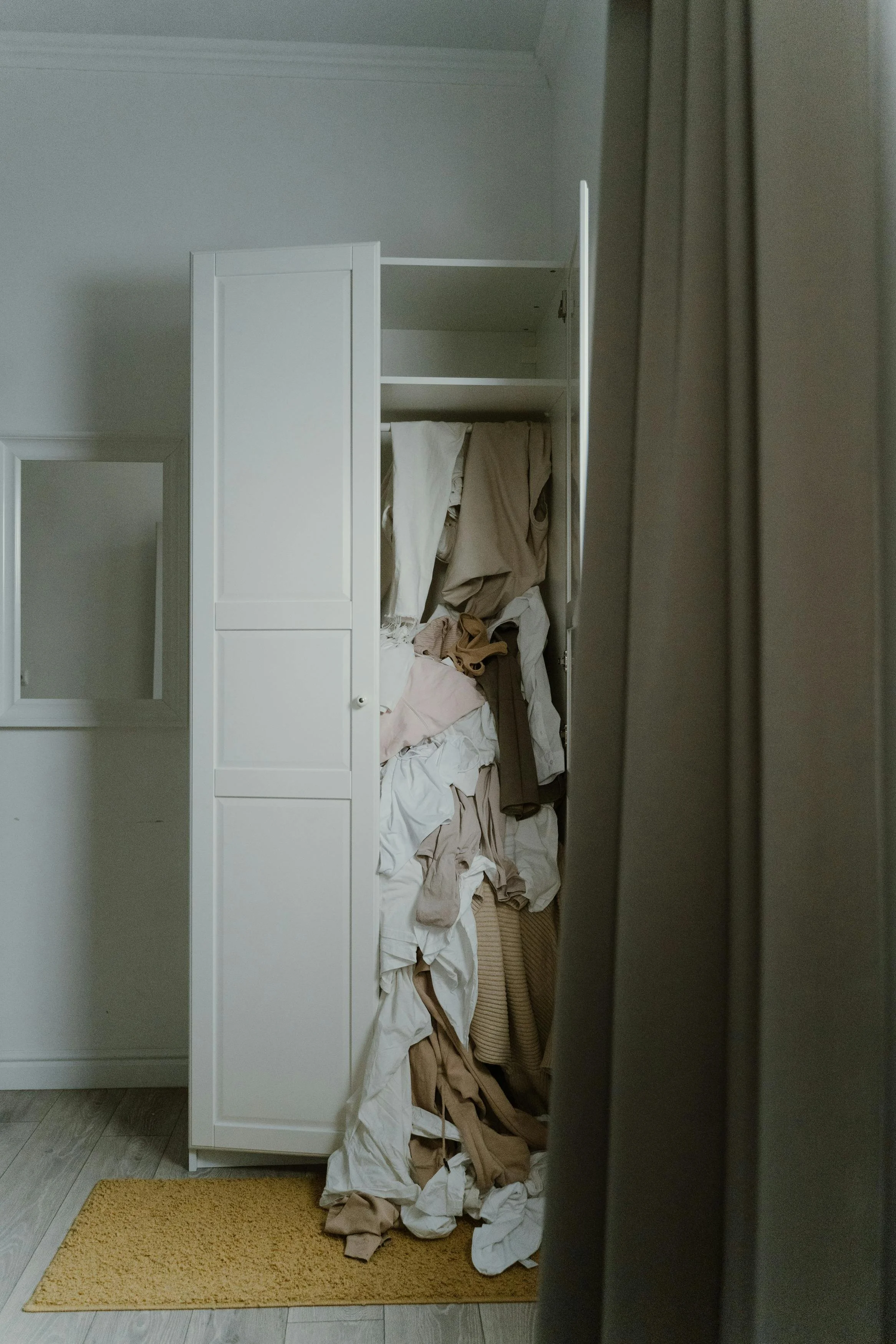
Lest you think otherwise, this is NOT how our cupboards look but it is how they seem to me when I am trying to find something.
Looking at our basement, I realize that we need to “get organized”. We have lived in our current home for three years. Once the initial renovations were completed, we put away all the items from our numerous cardboard boxes. At that stage of the move, we just wanted the boxes emptied and the items behind closed doors. “We’ll sort and arrange those things later,” as we pushed the bulging closet doors with our hip.
Well, later has come. We need to get organized!
I have been thinking about that word: organize(d).
The Cambridge Dictionary defines organize (or organise- UK spelling): to do or arrange things, plans, ideas, etc., according to a particular system so that they can be used or understood easily.
What I like about the word “organize” is that it is a verb, and that when acted upon, items or ideas can be easily grasped- physically or intellectually. I think of how much time I waste and the frustration of not knowing where some item is. Or, because of too much “stuff” in the way, I do not want to go through the cupboard or closet to find the said item and so I do without or I have to purchase another. What a waste.
And so, this year, I am going “to get organized”. I am so tired of looking at my to-do list and not completing it. I write the item on the list and then keep transcribing it to another list. My failure to complete the list is partly because I do not have a plan in how I will accomplish the task and so I do not know how to begin.
But, as I have written before and as I have recognized, there is a balance between organization and some type of serendipity especially as it comes to schedules and accomplishing goals. I don’t want to be so regimented and so bound by an organizational structure that I cannot be spontaneous. Yet I cannot be completely spontaneous because then I will not accomplish anything.
In my recent Education for Ministry class at our church, we were discussing the word organize(d) and the word associations with it. “Structure” was the association that we came upon. We then looked at the pros/cons of the word structure. One of my classmates felt that structure is limiting to creativity. And while there is some truth to it, I find that structure- broadly based- aides and guides creativity. For how many of us, do better in editing/correcting a written document rather than starting with a blank page? It is much easier to write when one is given a topic or direction rather than carte blanche for anything.
And so, I need to “get organized” this year. I want to do so in our home. But I have also been thinking about “getting organized” with my health and physical care, in my maintenance of relationships and in my writing. The idea of getting organized is really about intentionality. What do I find important and how will I intentionally do what I need and want to do?
What about you? Do you have a word of the year? Do you want to get organized? How are you going to go about it? Is the organizing a physical one? A mental one? Or a spiritual one? The word “organize” also contains within it, the actions of planning and execution. Perhaps it is not so much the organizing that I need, but the planning and then, more importantly, the execution and completion of that plan.
How are you planning on living this year? How are you going to intentionally live into that plan?
What is the word that will help you achieve that?
Blue Car
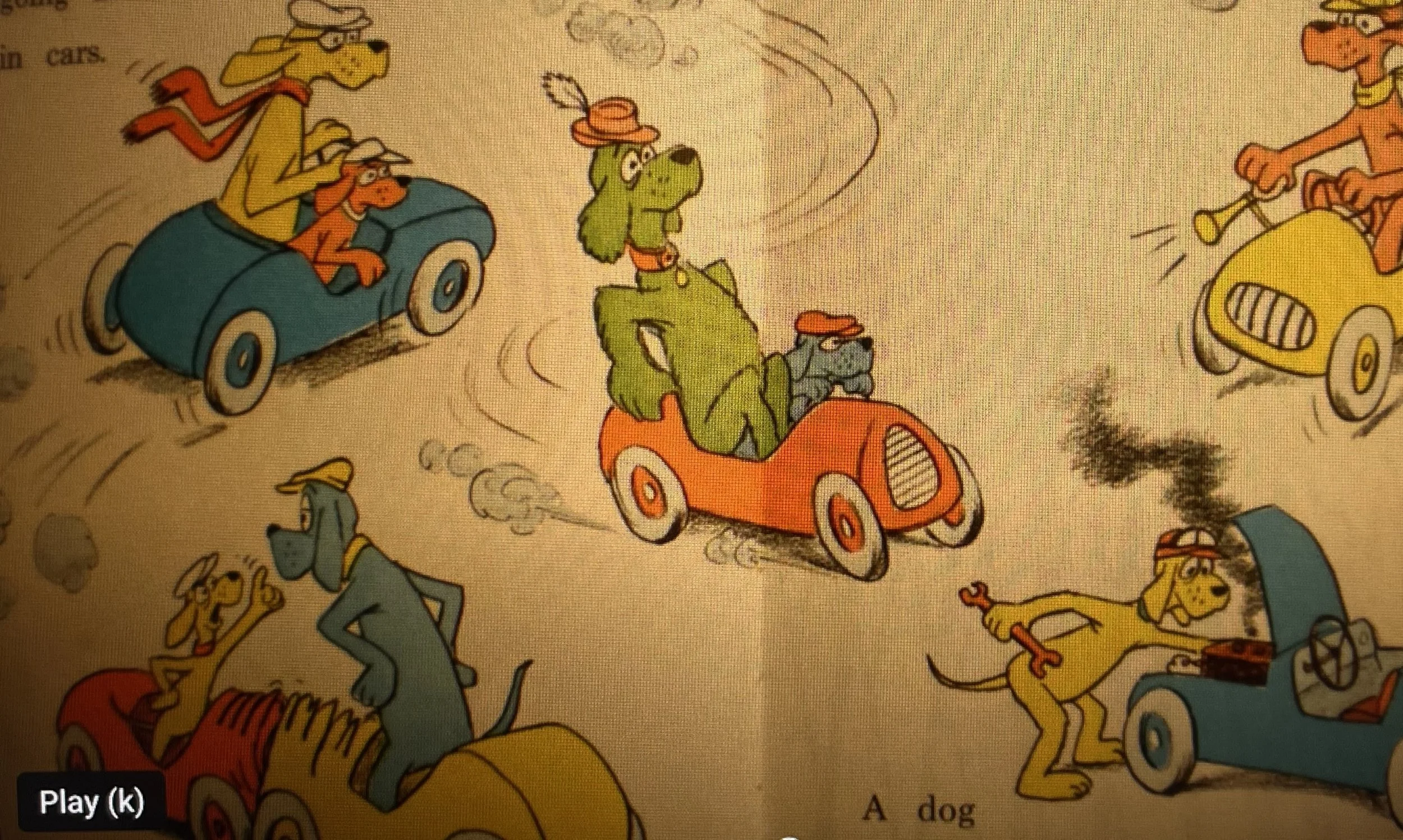
Notice the blue cars? Or does the red or yellow capture your attention? [From the classic- Go, Dog, Go by P.D. Eastman]
I could use your help.
I am working on a book proposal and I would like to see if you think the book idea is a good one? I have heard back from a variety of people that the concept is something they would like to read. But, as I am learning in the publishing business, it is difficult to get a book published. (The emphasis in that sentence is business.) And so, a book proposal is mostly a business proposal- how many readers, aka buyers, can one expect? While there is nothing new under the sun, one of the questions that is asked- is this book relevant to today’s readers?
My working title is Walk, Pray, Connect: A 40-Day Walking Prayer Guide to Building Community. In explaining the need for it, I would ask you to imagine:
Say you have a new blue car. Have you ever noticed that you will start to notice lots of blue cars everywhere? You may start to wonder, where were these blue cars before?
Apparently, this awareness is called the frequency illusion or Braeder-Meinhof phenomenon. “A cognitive bias in which a person notices a specific concept, word, or product more frequently after recently becoming aware of it.” A person can selectively focus on certain things while filtering out others.
The book I am writing is hinged on this idea: if we are intentionally thinking and praying about our community by focusing prayer in a specific category- we are more likely to notice neighbors in that category. That awareness can then be developed into an interaction and engagement with one another.
Henry David Thoreau said “The mass of men lead lives of quiet desperation.” Not only are we wanting fulfillment in our lives but we also long to be known and seen. Sadly in the modern world, we are more alone than not: we are rugged individuals busy with doing things yet not investing in relationships. In many communities, we do not even see our neighbors much less know them. This “loneliness in the crowd” isolationism has detrimental effects to our physical, emotional and spiritual well-being: social loneliness can increase one’s risk of heart disease, stroke, Type 2 diabetes, depression, anxiety, suicidality, self-harm, dementia and early death.
When God created humans, God created Adam (human) first. “It is not good for man to be alone,” so God created Eve (life), thus the first community was established. And “it was good.”
I am proposing a book that explores prayer walking in one’s neighborhood that systematically incorporates a different prayer in each walk. It is a 40 day journey broken down into 8 weeks of 5 walks each week. Each week has a different topic (life stages, life events, circle of relationships, career/work, physical, emotional, spiritual, God’s best). Within those weeks are 5 tailored prayers. For example, in the first week, called life stages- days 1-5 will have prayers for pregnancy/infants, children, teenagers, adults, and elderly respectively.
It doesn’t need to be a walk- it could be the school run drive, the work commute, the grocery run drive or even just sitting in one’s house and imaging those who live around them. The point is that one takes time each of the 40 days to pray for something specific in one’s community.
Of course, the ideal would be that one would walk- the benefit of the physical activity in conjunction with a mental/spiritual exercise is great. Even more so if there is accountability by walking with another person, or even a dog. If one does walk in one’s neighborhood, the idea that the specific daily prayer would remind one to notice the demographics and issues of one’s neighbors. It is this awareness that is the first step in reaching out.
The book is a direct response from my experience in our past neighborhood. An excerpt from the preface of the book:
“We lived in an urban/suburban neighborhood for twenty-six years. The neighborhood street was a semi-circle (two entrances to the “circle” from the main road) The detached homes were built before WWII and were pretty close together, with our driveways right next to the adjacent neighbor’s property. Our neighbors were intergenerational: some houses contained young families while many were occupied by older folks who had lived there as children and bought their homes from their parents or grandparents. We moved there when our sons were quite small. It was a perfect neighborhood for us: the street was closed to through traffic yet walkable to school, church, library, restaurants.
There were many neighborhood children with whom the boys could play. After we moved in, I got to know the neighbors around us. Yet through the years, I never walked along to the other side of the “circle”. I always walked to the street exit closest to our home and the children that were our kids’ ages all lived around our side of the circle.
As the years rolled by, I am embarrassed to say that I didn’t even know the names of those on the other side. One woman in particular would walk around to our side of the neighborhood and always compliment my garden if I was out working in it. We would engage in that type of light discussion. It was only through another neighbor who told me the reason the woman would walk was because she lost her husband to cancer and was bereft. I felt terrible. Not only did I not know that her husband was sick, I didn’t even know she had a husband! It seemed that even the newer neighbors on “my side” of the circle knew the names of the owners, their children, their pets’ names, and those on the “other side”. How did I get so divorced from knowing my neighbors?”
When we decided to move, I vowed that I was going to get to know my neighbors. So, before and during our move, my husband and I prayed for our new neighborhood. We prayed for neighbors we hadn’t even met yet. As we walked our dog through our new neighborhood we would offer silent prayers for the occupants of the homes we passed.
Because of that mindful intention, I was more aware of my neighbors and the various stages of life. For example, I noticed those homes that contained young children as seen by abandoned scooters, balls, bikes, on the front yard or those homes with “temporary” ramps for disabled family members. In many cases, I have been able to meet those neighbors by praying for opportunities to slowly engage with one another. While I cannot say that I know all my neighbors, I have been able to build some meaningful connections.
What about you? Have you ever systematically prayed for your neighbors? If so, what happened?
Would you be willing to read a book that guides you in that intentional awareness? If so, please let me know in the comments or email me (virginiaruth010@gmail.com) Ever grateful, Virginia
Spaciousness

The vastness of the ocean…
What have you learned this past year? Anything? Or has this year been one of endurance- just get through it? Have you spent anytime in reflection? Has anything become important to you? Health? Time? Family? Friends? Faith?
The other Sunday I heard a poet being interviewed on Krista Tippett’s On Being. It was a rebroadcast from an earlier show. The poet was using a word she had heard from a Japanese student: yutori- meaning living with spaciousness. The whole concept of the word is to live life in the moment and not be rushed or pressed for time. An example of yutori is when you leave early to get somewhere in order that once there, you can have time to look around. Yutori is an intentionality to our schedule that allows us to be present and not rushed. In essence- to give yourself wiggle room.
The concept of living with spaciousness resonated with me. I need to remember it especially during this transition of moving out of isolation/Covid time into a new “normal”. I view my life with the demarcation of pre-Covid, rushed and feeling that I did not have any time and Covid, a feeling that time is not rushed at all. This past year, I have found it is easy to lose track of time when there are no set appointments or schedules. I have no clue to the day of the week, much less what day of the month it might be. In fact, I am hesitant to go back to any pre-Covid type of schedule and am anxious to have re-gatherings. Not so much for any type of contagion but rather the fear of being sucked into the vortex of the tyranny of the urgent and all things that scheduling appointments, meetings, and gatherings entail.
One of the blessings of the Covid shut-down is that I have had to slow down. I didn’t realize how much my schedule was packed until it no longer was. I have had time for reflection and thinking.
I have been thinking that I would like to extend the concept of living with spaciousness to more than just my day planner. I would like to experience spaciousness in my thoughts, my time, my actions and to some extent, my physical surroundings. It is interesting that Covid has brought not just a halt to our schedules but also provided us with the physical reminder of buffers. For just like we need to distance ourselves to remain healthy, we need the idea of distancing with our thoughts, actions and even physical surroundings- to give ourselves space to thrive. It is in those spaces that we give ourselves latitude to plan, to dream, to build relationships, and to live into our purpose.
For me, I find writing in a journal the best way to buffer my thoughts. I can remove the “stuff” that is swirling in my brain and leave room for other ideas to take shape. It is through the journal that I can lay out my future plans and give myself time and space before enacting them.
I also find that when I have physical space- lack of clutter around me, I can concentrate better. Perhaps you have noticed, many are de-cluttering during this time. Whether intentional or just following society’s home improvement trend, it is not a bad idea. It is literally providing spaciousness in one’s home/office which can also be incorporated for post-Covid living. Providing “distance” with our belongings lets us see what we have and to decide what we need and don’t need.
I like one of the explanations to needing to declutter- If you have to move things around to accomplish a task at home or office or feel overwhelmed by all your things, then you might want to think about de-cluttering and adding some “space” to your physical space. Of course, now that whole households- work spaces and school rooms- are under one roof, de-cluttering may take on a whole different meaning and form. The psychology of clutter can be tied to procrastination- sorting and tossing out an item can be unpleasant to people and avoided at all costs. The more things pile up, the more out of control one feels and the more one avoids the inevitable. But, the benefits of tackling clutter can outweigh those inertia feelings.
I also like the idea of building space into our schedules. In the pre-Covid time management plan, it would be suggested to add travel time in-between meetings. But, with teleworking, it still is important to place time blocks into our days. Our son is taking medical school classes online. He says many of the professors go over the allotted class time because they think the students don’t have to move from one classroom to anther. With everything back to back, they have no time to digest what is being taught much less shift papers around before the next barrage of information is given.
But we could practice implementing travel time into our schedules. If one “arrives” early for a meeting or gathering (even if it is social), there is time to take a deep breath, think about what is going to happen, perhaps say a prayer or two before engaging in conversation or activity. Maybe before any interaction we should always take some time to say a mantra, quote or Bible verse. Even if it is just a reminder to “choose to be kind” before we enter into a new situation.
I think one of the true tenets of living with spaciousness is in providing space for others to grow. It might mean that we give others space to make mistakes as well as space to succeed. Living with spaciousness is not just in how we manage our time but in how we give others room to be the best version of themselves.
What about you? What lessons from Covid have you learned? Anything you want to continue in the post-Covid world? How are you with your time? Do you live with spaciousness? If so, what does that look like?
Yutori is also defined as “a state with sufficiency and ease”. I don’t know about you, but that sounds like a good state of mind to me.
Teach us to number our days, that we may gain a heart of wisdom. (Psalm 90:12)
Bucket Learning List

What type of activities/experiences/learning would you put in your bucket?
Recently I heard someone speak about her “bucket learning list”. I think by now, the term bucket list is pretty much universally used to describe those activities or experiences that one wants to do during one’s lifetime.
What I like about this new expression is the emphasis on learning. What subjects do you want to learn in your lifetime? I have found that when I think about it, the list continues to grow and grow. If I give myself permission and if I had enough resources and time, my learning appetite is insatiable.
I think I would want to thoroughly learn about all educational subjects: Literature from all countries (e.g. English Lit, French Lit, South American Lit, Russian Lit. etc.); History- especially the interconnectedness of the events happening simultaneous throughout the world, Fine Arts- music and art history, appreciation, as well as the mechanics of painting and performing music, Latin, Greek and Hebrew (to be able to read the Bible in its original form), Romantic Languages (although my track record is not so hot), Astronomy…
In addition I would want to learn how to do basic carpentry, master gardening, the proper way to use cooking knives and chopping techniques, science/chemical reactions of cooking, salsa dancing lessons, interior design…
This is just a partial list that I compiled in two minutes.
What about you? What would be on your bucket learning list? How would you go about learning that information? Do you need to find more information about the educational opportunities in your community? Do you have friends who are “experts” in a specific field? Could you meet and trade information? What does your local community college offer? Parks and Recreation counsel? Local library? If attending classes are not in the budget, what about systematically going through the subject books in your local library? (for instance, all the biographies on all the United States Presidents.) Or, systematically go through YouTube videos on a subject. As you start looking at information, intentionally look at opinions or information from opposite viewpoints.
One of the greatest gifts that God has given us is the gift of curiosity and learning. If these things do not come naturally to you, cultivate it- start by looking at your world as if seeing it for the first time. You will be amazed at what you learn and see.
The Greeks have said, “to marvel is the beginning of knowledge and where we cease to marvel we may be in danger of ceasing to know.” ( E.H. Gombrich, Art and Illusion)
Fill that bucket by marveling at all the things you can learn.
Words?

Sometimes when I have too many projects going on in my head, I have difficulty in communicating what I want to say to others. I will start a conversation and either pause grasping for a word or jump from one train of thought to another. My son will look at me, raise an eyebrow and say, “Words?” (He is twisting the conversations that we, as parents used to have with him and his brother when they had an altercation with one another- Use your words (rather than fists) we would admonish.) What he is trying to do is get me to slow down and use the right word to describe or convey instruction.
Do you find yourself at the start of each year with a whole host of plans? Things you want to do and want to change? Do you also find yourself at the middle of the year, or even one month into the year, frustrated that nothing has happened?
For 2019 I would encourage you to use your words or more specifically to think of one word- one word to describe your intention, focus or meaning for your life this year. One word that will help you change to become the person you want to become. There is a book, (which I haven’t read yet but has been recommended by others) that describes the process- My One Word by Mike Ashcraft and Rachel Olsen. (For more information, click here)
From the My One Word website:
Step 1: DETERMINE THE KIND OF PERSON YOU WANT TO BECOME
The first step is to simply take some time and decide what kind of person you want to be at the end of this year. This goes beyond simply being healthier and wealthier, but it must drive deep into your soul. What about the condition of your heart? What about the person that God Himself has created you to be?
Step 2: IDENTIFY THE CHARACTERISTICS OF THAT PERSON
Get a picture of that person and then simply identify their major characteristics. Is that person gentle? Is that person generous? What are the qualities of the person you want to become?
Step 3: PICK A WORD
Once you have a list of the characteristics, simply pick a word. There might be fifteen things that you want to change, but you must resist the temptation to promise you will do them all. Instead, simply commit to ONE WORD.
This will provide you with a lens to see the changes you need to make as well as a way to determine whether or not change is actually happening. Understand that this process is hard, but staying focused on your word will help you to struggle in the right direction so that you can actually see God working in your life.
Different folks that I know have chosen the following words over the years: joy, love, peace, early, submission, present, resist. There is no right or wrong word, just one that resonates with you. My word for the 2019 is focus. While I am a pretty disciplined person, I have a tendency to put others’ needs in front of my own, so much so that I avoid doing what God has called me to do, all in the name of helping others. For what seems like good work really is not so great: I hide behind this “selfless” act and never rise up to the challenge that God has for me. So for this year, I intend to focus on what God is calling me to do- concentrate on my writing.
What about you? What is your word for the year? Rather than have a list of resolutions, why not concentrate on applying one word to your daily life?
Many blessings for 2019. Thank you for joining me on this journey and in reading this blog. I hope to have many exciting new writing projects to share with you in 2019. If you feel that any of my words are worthwhile, please share these posts with others.
What Are You Intending To Do Today?
When I introduced my then boyfriend (now husband) to my family, my brother asked John in no uncertain terms- "What are your intentions towards my sister?" Partly he was joking but partly because he truly wanted to know.
I like the word intention- a determination to act in a certain way and intentionality-the fact of being deliberate.
Have you ever thought about your intentions? I like the image of deliberately doing something. The simple definitions for intend are-to plan or have something in mind. It connotes a decision on one's part that only that individual can make. It is the beginning of the process to achieving something. The Olympic athletes are intentional about their workouts. The practices don't just happen willy-nilly. Successful people, whether we are talking "worldly" or "spiritual" success, are intentional about their lifestyle- what they do, with whom they interact, where they spend their time.
"The road to hell is paved with good intentions", is a quote attributed to Samuel Johnson. (There is debate whether or not it is truly his or perhaps Saint Bernard of Clairvaux). The point of the proverb is this- while it is good to have intentions, there needs to be another step in achieving those goals. Or to quote another saying- "just do it". Many of us say we want to do such and such or that we decide this is how we will act, speak, behave, plan, etc. but many times we never proceed with the next step of doing the actual work to achieve it. We then end up living in the hell of disappointment with ourselves. "Why can't I get anything done?", we lament.
Intentionality takes the thought process to another level. Sure we can formulate a plan or goal in our mind. I think of intentionality as the grit and deep down determination that we are going to do it. It is an inner resolve. It is if in our mind's eye when we are intentionally going to do something we become like Scarlet O'Hara at the intermission portion of Gone With The Wind: "As God is my witness, I will never go hungry again."

I was thinking about this word this morning as I was wondering about my own intentions? Not only what do I want to achieve this summer, but am I intentionally doing things, controlling my schedule, choosing activities and work that pushes me along the path of my purpose and plans?
What can I intentionally do today that would move me along my purpose?
One thing about which I need to be intentional is working in community- reaching out to friends, family and neighbors. As I have mentioned before I am basically shy and introverted (Some of you might be surprised by my declaration. Yes, I can certainly meet and greet people and do enjoy people but left to my own devices I am more the observer than the participant) I need to reach out to others in a way that is fitting for my personality (one on one, notes of encouragement, etc.)
I will be intentional:
- Sending encouraging emails or notes to those whose names have been on my heart
- Looking for ways to speak to my neighbors more than the precursory wave
- Treating my writing as a full time job
What about you? What are your intentions? First name them. But then next, how will you go about doing them? What intentional actions can you do? Are there any resolutions in your life that you will, "As God is your witness, never or always do..." What can you do each day to remind yourself of your resolve and intentions? What are you intending to do today?
Practice Intentional Acts of Encouragement
I am all for practicing random acts of kindness but lately I have been thinking about intentional acts of encouragement. I read a little vignette recently of a woman who said although she was physically disabled and couldn't do much in the way of helping others, she could think and pray for their needs. She offered her service of prayer to her local church.
I thought Wow! Here was someone who could just close down and concentrate on her own needs yet she was willing to reach out to others. Too often when we think only of ourselves and we become isolated. Yet by her intentionality I am sure she felt part of a larger community.
It made me think of two times in my life when I received contact from people I didn't know too well who offered me prayer and encouragement.
A long time ago I was part of a book club. I really enjoyed it but sometimes I was a little intimidated by the books, the discussions, and some of the other members and their opinions. I always felt that I had so much to learn and that I was so inept in sharing my rudimental thoughts. Out of the blue one of the very opinionated members called me. She didn't talk very long. She just wanted to say that she valued my opinion and that it was a joy having me in the group. Then she said, "That's it. That is what I wanted you to know."
At first I was taken aback. So unexpected and so brusque like her personality. But I cherished what she said and I was gob-struck that she actually called me to tell me what she was thinking. I know that many times I think of others through out the day but I very rarely let them know the positive thoughts I have about them. I wonder what our society would look like if people said the positive things directly to the ones about whom they are thinking? We are very quick to say our displeasure but what if instead we were quick to say our good thoughts?
Once I was in charge of a volunteer group that was charged with coordinating the emergency needs of others. It was very stressful and intense. Many times I felt inadequate and overwhelmed. On one particular time when I really felt at the end of my rope wondering how I got myself into this group and questioning why I felt God had called me to this ministry, I received an email from a couple I didn't know too well. They had taken upon themselves to systematically pray for the various ministries and groups and especially for their leaders. That week the group for which I was responsible was at the top of the list. They wanted to know how they could pray, what specific things and especially for me, what did I need? Again, I was speechless.
In psychology there is a benefit for positive thinking. It changes one's brain chemistry which in turn is good for our health. Yet I believe that prayer to God goes beyond the idea of positive thinking. Prayer is a way to hand over our worries to one who is a lot larger than we are and who is in total control. Prayer can change circumstances for whom we pray and it changes us as we pray. That is not to say that we just ask and God provides everything like a cosmic genie in the bottle. The process of praying helps redefine our requests, helps us put our life's circumstances in perspective, helps us in our attitude towards the one for whom we pray and helps us to be part of one another's lives by drawing us closer to one another.
How about making today, the day that you practice intentional acts of encouragement? Pray for the people you meet, whether they be familiar to you or not. Intentionally pray for those who are in positions of leadership- a boss, a manager, a teacher, a principal, a politician, etc. Let those around you know that you are praying for them. Let people around you know what they mean to you. Doesn't have to be a long discourse, just a simple, "I really enjoy your quips and sense of humor, " for example.
What would your life look like if you practiced intentional acts of encouragement?