
Sticks and Stones....
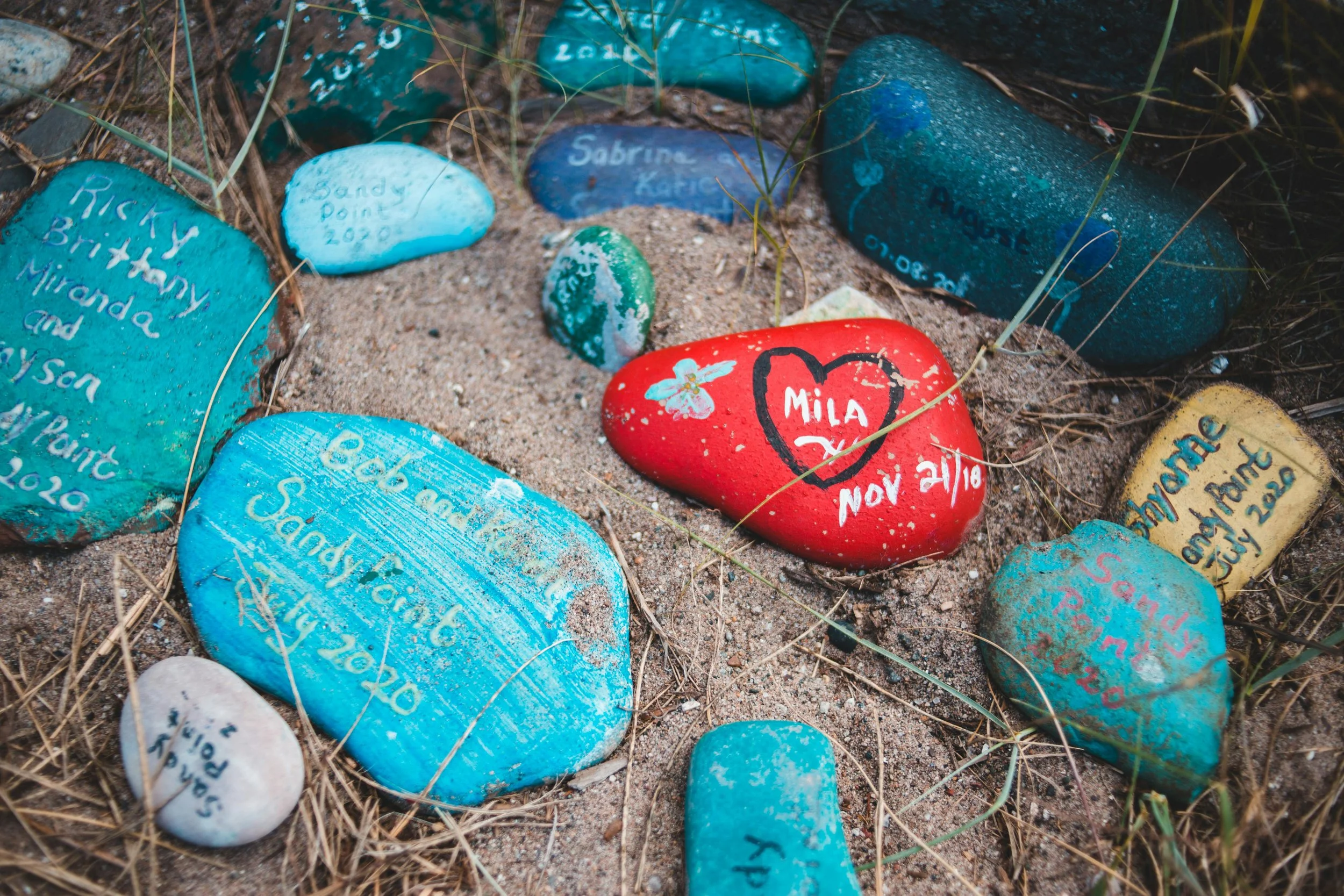
“Sticks and stones will break my bones but names will never hurt me.”
I remember saying those words to some knuckle head on the elementary playground. You know how it goes, a dumb little oyster says something mean, then another escalates the situation with some type of slur. Silly and untrue words but they can take hold and shape young minds. I know that words did hurt me.
Recently I “found” a book our son had left in our home as I was tidying up from the Thanksgiving holiday. It is called, The Know-It-All: One Man’s Humble Quest to Become the Smartest Person in the World, by A.J. Jacobs. Quite a claim by Mr. Jacobs. The title alone was off-putting to me but did pique my curiosity. I found that the parts that I read to be interesting.
The author organizes the book alphabetically, picking out words and entries from the Encyclopedia Britannica and writing about that subject along with some personal stories. Under “Q”, the entry “Quaker” caught my attention. Initially the word was a slur used against this religious sect for their “trembling” or quaking during worship. The group took the slur and turned it into their own- using it to identify themselves. Apparently the Methodists had the same thing happened to them. They were derided for their theological “methods” and were called Methodists. Again, the group turned around the slur, using it as their name. He goes on to mention similar examples. The term “queer” was once derogatory and now it is used as a group description.
I have been thinking about names and the descriptions that we call one another and ourselves. Are we defined by those words? Are they used as a weapon? Or as a compliment? Do those words limit us or expand us? Do they keep us from our true potential?
Do words matter?
I would say yes. Most definitely words matter. Words spoken, while they may not physically break any bones at the time, can do damage- emotionally, mentally and spiritually and eventually, they could possibly do physical damage. Negative words can reduce us to inactivity. Tell a person that they cannot do something (too dumb, too slow, too young, too old) and eventually, they won’t do it.
Interestingly a new study led by a team of Virginia Tech neuroscientists looked into how people interpret the significance of words. They mapped a person’s neurotransmitters (dopamine, serotonin, norepinephrin) while displaying for the subjects emotionally-charged words.
“Unlike animals, humans can understand words, their context, and meaning…Our findings suggest that these chemicals are released in specific areas of the brain when we process the emotional meaning of words. More broadly, our research supports the idea that the brain systems that evolved to help us react to good or bad things in our environment might also play a role in how we process words, which are just as important for our survival.”
There is also an interesting article from the Bonn Institute discussing words, journalism and the influence words have on our thinking and therefore our actions. Especially for journalists, words matter. We have seen it from both sides of the political aisles-what people say and write can harm others. A certain description for a group or person can change the whole context of the story and/or facts.
So, what can we do when words we hear or even say to ourselves are harmful? Especially when we let negative words impact our thoughts and therefore our reactions to ourselves and others. The National Health Service in the UK has a slogan: Catch it, Check it, Change it.
Catch it: Know what to look for- do we even realize that we are experiencing negative thoughts or I would add, hearing negativity? Sometimes we are so surrounded by negative comments, we begin to believe that is the only way to think. Types of unhelpful thoughts include:
Always expecting the worst outcome from any situation.
Ignoring the good sides of a situation and only focusing on the bad.
Seeing things as either only good or only bad, with nothing in between (black and white thinking).
Considering yourself the sole cause of negative situations.
Check it: Rather than immediately accepting this thought and feeling even worse, take a moment to check it. Try asking yourself:
How likely is the outcome you're worried about?
Is there good evidence for it?
Are there other explanations or possible outcomes?
Is there good evidence for alternative ways of looking at the situation?
What would you say to a friend if they were thinking this way?
Change it: Look back to what you were thinking about? How can you change the narrative in your head?
Instead of the situation being all bad, is it possible to think- okay, sometimes that is true but mostly it is not.
To see one positive in the situation- then maybe see one more until you can counter 1 negative thought with 3 positives?
One of the tools they suggest is a thought record. Click here to read how to set one up.
What I like about the record and some of the tools on the NHS website is that they give you permission to explore your thoughts. Just because someone told you something recently or even long ago, doesn’t mean you have to define yourself with it. You can let it go or even just hold it at bay for awhile, while you process it.
The other tool that the NHS mentions is a way to handle worry: One way to keep worries at bay is to allow yourself a set amount of time (say 15 minutes) to worry about a situation. After the 15 minutes are up, then move on to something else and don’t pick that worry back up until the next block of time that you give yourself to worry about that situation- say the next day. After a while, there may not be the need to have a block of “worry time”.
I “think” I am generally a positive person but I must say that I sometimes struggle with remaining positive. Those negative thoughts sometimes come out of the blue. I have to step back and ask myself- from where is this coming? Are the thoughts true? Some yes? If so, how can I honestly confront them? But if mostly, no, then what do I know? Can I turn those negative words into something positive? I have to remind myself that I am a beloved child of God’s and that God has a purpose and plan for my life. God also wants me to enjoy life and to enjoy each moment, not be weighed down by lies and negative thoughts.
What about you? Are there thoughts or words that run through your head? Are there descriptions that people have given you, that now define you? How accurate are they? Can you turn around that statement or word? Are there people who bring you down or lift you up?
As we are in the beginning of the holiday season, we need to be kind to ourselves and one another. For supposedly a season of goodwill towards all, sometimes the season can be filled with more bah-humbug than fa-la-la-la-la. People can be more like Grinch and Scrooge than like Jesus, especially in families.
One of the things I love about this time of year is the reminder that Jesus came to earth- Incarnate, God with us. Yes, God came to rescue us but I also think of the time Jesus was on earth, that He enjoyed being with us. While Jesus lived on earth, we experienced a brief glimpse of heaven on earth- when we communed with Jesus/God as God intended in the Garden of Eden. God uniquely created each one of us- to know Him and to enjoy God and I would add, His creation of others and the world around us. We do so by the way we treat one another- in deeds and in words. Ultimately, if we use kind words with others, we will use kind words for ourselves. And visa versa. We can change the way we frame our outlook and eventually we can change the interaction with others: No longer will names hurt us and others, because the names that we use are life affirming.
Interesting articles:
https://news.vt.edu/articles/2025/01/research-fralinbiomed-words-0106.html
https://www.bonn-institute.org/en/news/psychology-in-journalism-2
https://www.nhs.uk/every-mind-matters/mental-wellbeing-tips/self-help-cbt-techniques/reframing-unhelpful-thoughts/
10 minutes and 38 seconds

With my faulty memory, I sometimes wish everyone wore a name badge…
Recently I heard an interview with the author, Elif Shafak about her novel, “10 minutes and 38 seconds In This Strange World.” The title is how long the main character, who has been murdered, has to reflect on her life. The author had heard that it takes that long, 10 minutes and 38 seconds after the heart stops for the mind to stop thinking.
The novel becomes a telling of the main character’s story as she reflects on her life: her life is one of the forgotten. The author uses the Cemetery of Companionless in Istanbul, Turkey as inspiration. Apparently the cemetery is the final resting place for people with no name, no history or no “societal significance”. The buried receive just a number.
While it is a fictional story, the fact that there is an actual place for the buried nameless seems so sad. How awful to think that a person containing an entire life: loves, losses, ideas, etc., is reduced to just a number and no name.
It also made me think of the conversation that Imani Perry had with Krista Tippett on a recent On Being broadcast. Ms. Perry has written a book, “Breathe” which began as a letter to her two sons but really is for all black children and how to negotiate growing up. In the interview she recounts a story of racism that her one son encountered during preschool. A listener asks Ms. Perry in light of that encounter, what could’ve been done differently. Ms. Perry says, it starts with just saying hi and getting to know one’s name.
Knowing people’s names. Such a valid endeavor- to acknowledge what someone is called and to recognize someone’s worth in order to recognize the God in each one of us. After all, our purpose on this earth was to name and care for all that was created, even ourselves. In all cultures and all religions, names are important.
My Tuesday Women’s Bible Study has been studying the Biblical patriarchs. Interestingly that in the complex story of Abram, Sarai and Hagar, neither Abram or Sarai called Hagar by her name. They refer to her as their servant: she is known for what she does and not who she is. They have reduced her to being an heir surrogate and nothing more.
Do we do that to others? Do we assume we know who they are by what they do? Even the most “well-known” individuals (doesn’t that expression imply that a person is known even by complete strangers?) complain that they are not the people who others think they are.
In some ways, the ancient attitude of Abram and Sarai would go well in today’s society. One of the first things people seem to ask one another, “What do you do?” Almost before learning a name and certainly before learning about the character or personality of a person. I know that when I was a stay-at-home mom, I encountered many people who, once learning that my “job” was staying home, would move on to speak to someone else. They would barely ask my name and most certainly didn’t get to know me. It was as if I had either a contagious disease or immediately determined that I was totally not interesting.
Names. Knowing one’s name. It means so much more than what one does. In ancient times, names represented or foreshadowed a personality characteristic. It does so today. If you don’t think so, what is the first thing that comes to your mind when you hear the name, Adolf? Machiavelli? George? Ringo? Paul? John? Martha? Add someone’s last name and one can really identify the characteristics and personalities. And this is just the name. Imagine if we take the time to get to know the person behind the name?
I have a confession to make: I am terrible at remembering names. With initial encounters of people, I can remember pretty much everything a person has told me about themselves, even down to the details of where each one of us stood, clothing worn and expressions used. But what their name is, I blank. I am especially poor at it if there is no other context in which to associate the name.
I am trying to make more of a concerted effort in remembering people’s names. Even remembering character names from stories. Partly I have trouble with pronunciations. If I cannot pronounce the name, I cannot remember it. Not that I am excusing myself, but I do find that some of the more foreign sounding names or interpretive ones, I have such trouble remembering. But it is so disrespectful not to call someone by their name.
What about you? How are you with names? Remember them? How do you remember them? Do you interject a person’s name in the middle of conversations, “So, Mary, what did you think of the play?” Do you name associate? (I am always a little leery with that technique. I think I have shared this story before: My dad had a co-worker with a last name Longacre. He once was introduced as Mr. Shortmeadow.)
What do you remember about people? Their personality? Their names? Their profession? Or are people just a nameless face?
It makes me think of Hamlet’s line, “to be or not to be…” Shakespeare didn’t say, “to do or not to do…” Our being is tied up in our names. We need to honor the “be” of others. What better way than to start by remembering names.