
Gardening
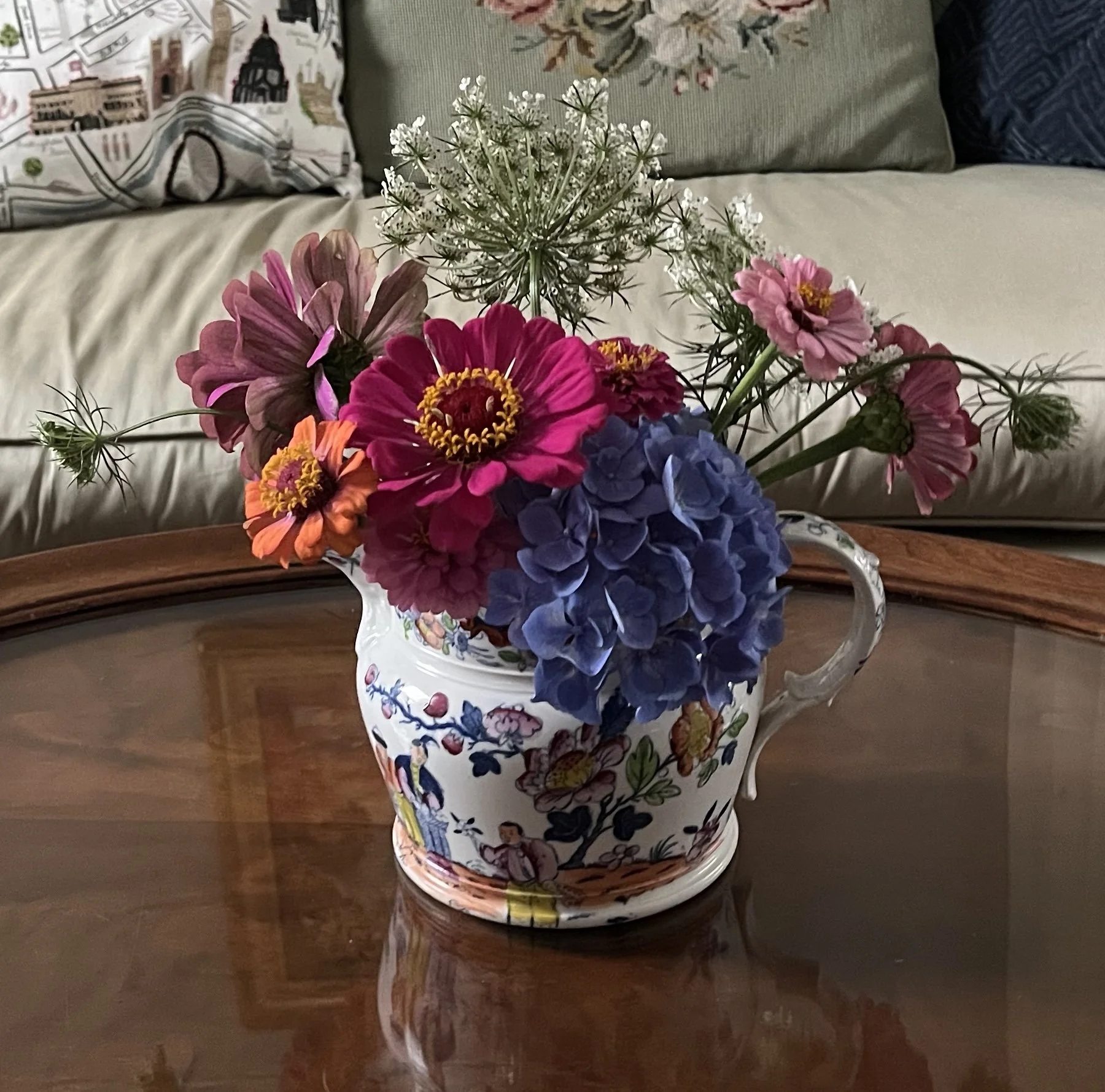
At our get-away cottage, we have a fence that runs along the property line on both sides of the back yard. When we bought the house, the fence on the north side ran right against the grass and was just the perfectly location to start a shade garden. I had envisioned a row of hydrangeas growing along the fence and so I dutifully edged out a bed, turned over the dirt, and planted my propagated hydrangeas.
Unfortunately, all the plantings in that bed have not taken. Now after several years of planting other hydrangea plants, I am wondering about the soil. I’ll need to have it tested (which I should’ve done in the first place).
This past Sunday we read about the parable of the sower. The sower spread seeds on rocky, thorny, and good land. It was only on the good land that sustainable growth occurs. It occurred to me that if the sower wants to have a sustainable crop, she has to prepare and tend to the soil in order to receive and grow the seed. I think of how many times we want to skip the tending step (ok, namely I want to skip steps). I want to go right to the reward of the beautiful flowers rather than working through the preparing, planting, weeding, and tending the space.
As our priest was sharing her sermon about the parable, I started thinking about the preparation and process that we need in order to be ready for any growth, whether that is growth in our spiritual, emotional, mental or even physical lives.
Test the soil: See what pH you have and if you need to do anything to augment it. Starting new endeavors sometimes requires a test run. We might need to give ourselves a set amount of time (six months, one year, etc) to see if the new endeavor takes hold, if it is really for us or if we are truly called to it. Other we might need to find out more information about what we want to do.
Prepare the beds: Turn over the soil. Get rid of weeds, roots, or stumps- anything that will impede the development of the plant. Sometimes it is getting rid of habits, certain harmful relationships or even physical “stuff” that prepare us for receiving something new.
Add compost: Compost is taking that which is discarded and seemingly worthless and letting time turn it into black gold. What have we experienced in the past, that which might seem worthless, discarded or rotten could possibly become something that prepares us for the new future.
Know the plants: Right plant for the right growing situation: Like knowing the soil, it is good to know ourselves and what we need to flourish.
Water and fertilize: Generally we can’t just stick plants in and watch them grow. We have to provide nutrients. To keep them from getting parched. I think of our spiritual life. We need to keep watering and fertilizing our knowledge of God through the reading of scripture and through prayer. We need to be connected to God so that when times are tough, we have a foundation to see us through.
Weed and Deadhead: Usually a weed makes it self known quite early in its growth process. That is the time when it is easiest to remove it. But one needs to be vigilant and to observe and remove it in a timely fashion. Same with removing spent blossoms- in doing so one can reap the reward of a second bloom.
Enjoy the bounty: Nothing makes my happier than to see a jumble of cut flowers from my garden spilling out of a pottery jug. The colorful flowers remind me to enjoy and celebrate every moment, for their blooms are fleeting.
Put the garden to bed: As the seed and plant finishes its cycle for the season, it is time to let it rest and rejuvenate. There are times when we may not seem to be growing but the fallow season of rest is just as important as the growing season. Shrubs and trees planted in the fall use that fall/winter season to grow deeper into the ground. We do not see any growth above, but much work is being done to establish roots.
What about you? What kind of soil do you cultivate? Are you producing good plants in your life? If not, what do you need to do?
The one thing about gardening that I always have to remind myself: it is an organic process. Just like life. While I might strive to get it right each season, there is always something that I will learn, need to correct, or figure that I will just try again.
Tending the Garden

The NYTimes article caught my eye: The Health Benefits of Gardening. While I have always espoused and stated that being outside in nature and mucking about in the garden is good for us, it is nice to have validation through different research studies. The benefits make sense, especially to anyone who has worked in a garden: increases physical health- all that raking, shoveling, toting, digging, bending; increases well-being- feeling a sense of purpose, meaning; fostering connection- to one another (especially in community gardens or gardening clubs) and to nature; lowering cortisol (stress hormone); bolsters immunity- getting one’s hands dirty and the exposed microbes.
I love to garden. I love to see things grow. But most of all, I think I just like to play in the dirt.
In moving to a new home, I have been thinking about what type of garden I would like to have. We have finished most of our indoor renovations and it is time to focus my attention on the outside. The house is over 100 years old and is in New England. I have always been partial to cottage gardens and while the house isn’t exactly cottage looking, it does have that certain feel to it.

I decided to make a small cottage garden in the front yard. Last year I was able to put that in. Surprisingly, it is not doing too poorly in a year’s time. This year, I plan to have our veg patch and some herbaceous borders in the side yard as that gets the best sun. While I have always been a “gardener” (very loosely stated since, as I have said, I really just play in the dirt), our previous home was quite shady and so I could never grow any vegetables.
This side yard is quite sunny. We’ve put in some raised vegetable beds. One of the local nurseries offers a CSA (community supported agriculture) with seedlings rather than the typical harvested fruit or vegetable. We received seedlings in April (cool weather crops), May (warm weather crops) and will receive some in August (fall crops). So far, so good. We have enjoyed lettuce and some of the herbs. Broccoli is coming along and the peas will need to be picked sometime this week. I can’t say that we have had a high yield, but we haven’t had the million dollar tomato either- You know how it goes, you spend lots of time, effort and money for plants, soil, containers and all you receive for your labors is one pathetic tomato.
What tickles me each and every time I tend to the garden are the lessons learned:
It is easier to pull out a small pokeberry weed than one that has been established.
Some seedlings have similar characteristics as the adult plant-in the way it looks or smells.
Certain seedlings, are hard to tell what they will develop into. Rest assured they will be weeds.
Some people’s weeds are others’ perennials.
If you do not mark a plant, you will forget what was planted there by the next season, or even the next week.
Pruning and cutting out dead wood is necessary for healthy plants.
Plants (dividing) and its “offspring” (fruit, blossoms, veg)- need to be shared. Not only is it healthier for the plant, it is healthy for the giver and receiver.
Deadheading and tidying up the garden throughout the garden season keeps the garden looking fresh.
Plants need a good beginning: healthy soil, water, sun, space (not too crowded).
Consistent watering is key.
Different plants have different growing requirements. The right plant in the right location will thrive.
Mulch covers a multitude of sins.
I like the word tend: to watch over; pay attention; stand by in readiness to prevent mischance; serve, cultivate; foster. In the archiac meaning, tend was to listen. Tending a garden makes me think of the word tender- that we are gentle and caring for the little patch of the world within our care.
But I also wonder what the world would look like if we tended to the large garden we call earth. To be tender to all the inhabitants- not just the flora and fauna but the animals and people. What if we really listened to those around us? Paid attention? Are we willing to stand by in readiness to prevent mischance happening to our neighbors or community? Do we watch over the people in our care?
What about you? Are you a gardener? What have you learned?
For all the jokes about oldest professions, gardening is the oldest. Adam and Eve were given charge over the earth. Not to abuse the earth through careless decisions but to be stewards of it- seeing to the well-being of all that lives and grows on it. All that we have developed as human kind is a marvel but I can’t help wondering if we have removed ourselves too much from the natural world. Perhaps all of us should, in our own way, begin tending to garden.
Firm Foundations*

Ahh. If only my sewing was this straight forward…
Recently I have been working outside in our back and side yards. While the previous owner had some gardens, it is not quite to my taste and so I am re-evaluating, making decisions about which plants to keep in place or move and “designing” (more like talking out loud to myself as I wander through the dirt) what I would like to plant.
One of the things I have uncovered is landscape fabric. It seems to have been used everywhere on the property. I have only used landscape fabric once in my gardening life. We put it under the sand in laying our brick patio at our previous home. As a tool for flower garden beds I must say that I am not a fan.
It makes it very difficult to dig into the dirt to either turn over the soil, mix in nutrients, remove plants or to put in new ones. I will have to remove all the material before I begin with any plans.
As I was removing the fabric and trying to augment the soil in the one side garden it had me think about foundations: what are our basic structures that we build upon? Physically, mentally, emotionally, spiritually? Are they foundations that hinder or help?
Foundations call to mind material. We need solid materials with which to work. Whether that is good soil, healthy plants, adequate nutrients as well as well-made and appropriate tools for the job.
Just recently I had to pick up some gardening gloves (Do other people go through gloves as quickly as I? I general get large holes in the fingertips of my fore and middle fingers.) As I was in a discount odd-lots type of place, I bought some gloves. When I got home I discovered two left hands. Sometimes you can reverse the gloves but in this case, the palm side had different fabric than the meshy back so as I quickly discovered one couldn’t do that. I had tried using them but got pricked and poked when I was cutting back a thorn bush.
I have also been doing some sewing- making curtains and pillows for the house. Turns out, the type and quality of the fabric matters as to the ease and correctness of the sewing. As is typical of me, I was trying to “use up” some leftover fabric from cut down curtains in our mudroom. The curtains were ones that I had picked up at a thrift store. I liked the pattern and they worked with the decor of the room. But I should’ve paid attention to the type of material. They were made of a non-natural material and so, continually frayed and almost dissolved under the cutting and sewing of it. A simple, easy project turned into one that was fraught with some blue air.
All of these incidences remind me of the adage that I have heard my whole life and do try to espouse: quality and good foundations are key to things lasting, saving time and money in the long run and in general, looking good. It is a principle that can be applied across the board. Think of food prep in cooking- fresh, quality ingredients, prepped and ready to go as well as using a quality kitchen tool (not necessarily the latest gadget) will produce a tasty quality meal. Certainly it applies to my sewing and gardening.
It can also apply to our physical and mental health. According the UK’s Mental Health Foundation the following are good foundational practices: (Click Here to view website.)
Get Closer to Nature. (Download here for a brochure describing interesting ideas)
Learn to Understand and Manage Your Feelings
Talk to Someone You Trust For Support
Be Aware of Using Drugs and/or Alcohol To Cope with Difficult Feelings
Try to Make the Most of your Money and Get out of Debt
Get More Sleep
Be Kind and Help Create a Better World
Keep Moving
Eat Healthy Foods
Be Curious and Open-Minded To New Experiences
Plan Things to Look Forward To
But more than the physical and mental, what about our spiritual foundations? I think of China and their official atheism. While they do allow some religious practice, according to the Council on Foreign Relations, the Communist party (of which there are more than ninety million party members) prohibits party members from holding religious beliefs and practicing in public. In 2017 the CCP paper warned members that putting faith in religion was “spiritual anesthesia”. What a shame because spiritual belief is a core foundational value for all societies. Without some type of belief system, society is traveling without a centerboard- skittering in one direction then another. We are designed for some type of belief system and if we choose to not have anything, it will be filled. We may think we have no system but nature abhors a vacuum. In some ways it is no surprise that with a vacuum of spiritual beliefs, the Communist Party has put that energy into power and material items (so much for their utopian idea of all people and monies distribution are equal). Things that will be destroyed and have no lasting value.
Since my life viewpoint is Christianity, for me spiritual foundations are key. But, when you think about it, all spiritual philosophies have these types of components (in parenthesis):
Praise and Worship God (attitude of gratitude)
Reading/studying of the Bible (reading inspirational words)
Prayer (communication)
Service to Others (get out of our heads)
There are more spiritual foundations, called spiritual disciplines that not only provide a foundation but also growth- solitude, tithing, fasting, to name a few. All are practices that develop spiritual character.
What about you? Do you have any foundational practices in your life? What are they? Have any changed over time? Have you ever had to “make do” with the wrong tool, material or process? What happened? Alternatively, ever have the right tool, the right material and process? How did that go?
As I am finding with my gardening, sewing and to some extent the house remodeling- firm foundations are important. Sometimes we have to re-evaluate those foundations- are they hindering more than allowing for growth? Are there any new practices that can be adopted?
We need to look for foundations that are solidly built and that have stood the test of time. It is through those strong, core practices that we can grow and thrive. Not only when times are difficult (which will come to all of us at some point) but when times are good.
*Firm Foundations makes me think of the old hymn:
How firm a foundation, ye saints of the Lord,
Is laid for your faith in His excellent word!
What more can He say than to you He hath said,
To you who for refuge to Jesus have fled?
“Fear not, I am with thee, O be not dismayed,
For I am thy God, and will still give thee aid;
I’ll strengthen thee, help thee, and cause thee to stand,
Upheld by My righteous, omnipotent hand.”
“When through the deep waters I call thee to go,
The rivers of sorrow shall not overflow;
For I will be with thee, thy troubles to bless,
And sanctify to thee thy deepest distress.”
“When through fiery trials thy pathway shall lie,
My grace, all sufficient, shall be thy supply;
The flame shall not hurt thee; I only design
Thy dross to consume, and thy gold to refine.”
“E’en down to old age all My people shall prove
My sovereign, eternal, unchangeable love;
And then, when grey hairs shall their temples adorn,
Like lambs they shall still in My bosom be borne.”
“The soul that on Jesus hath leaned for repose,
I will not, I will not desert to his foes;
That soul, though all hell should endeavor to shake,
I’ll never, no, never, no, never forsake!”
(1787- George Keith, R. Keen)
Happy Gardening
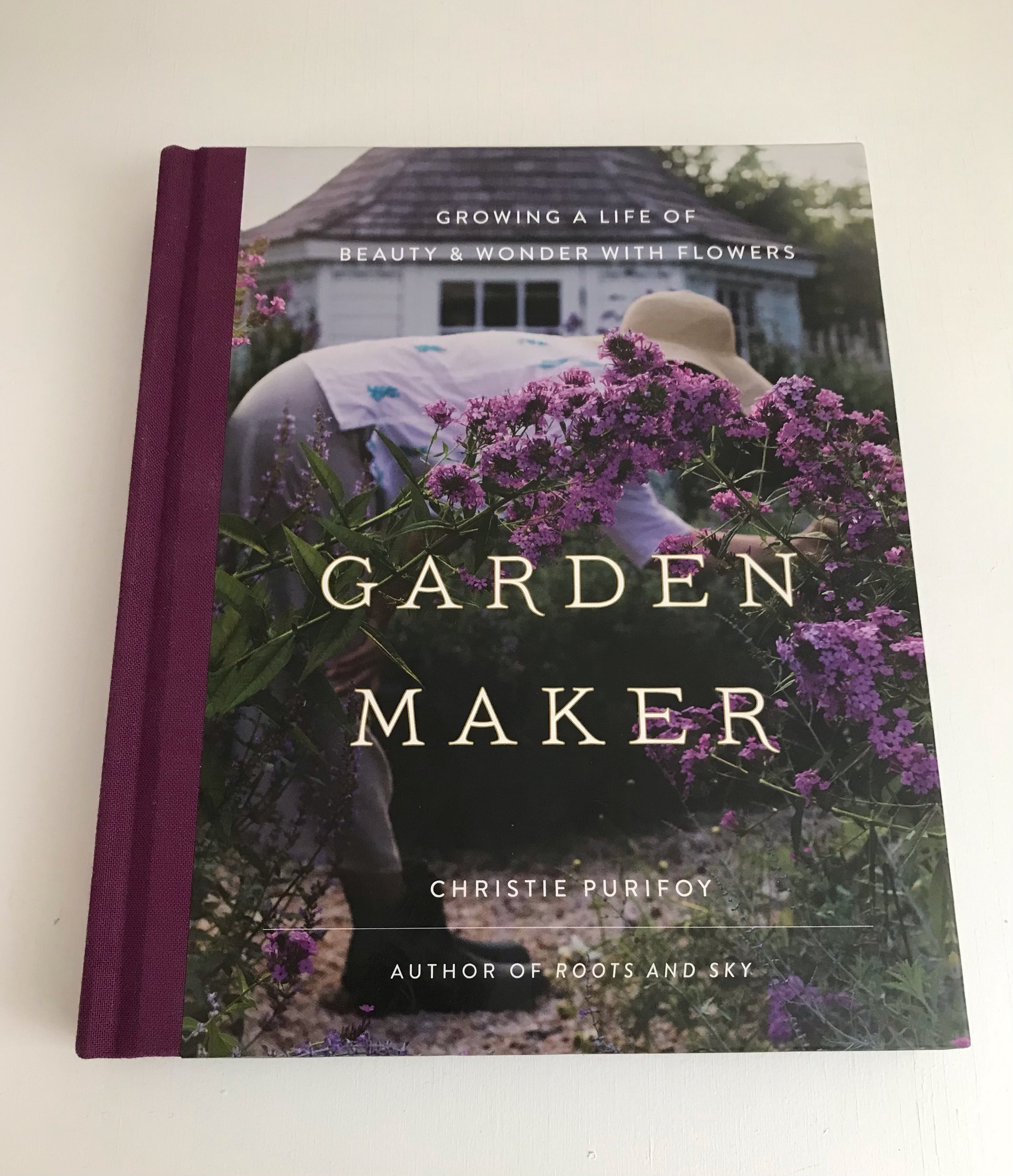
My dear friend gave me this book. I have been enjoying reading it- not only for the gardening advice but also for the life lessons.
Are you a gardener? Do you like to feel the warm earth in your hands? The smell of soil and mulch? Revel in the warmth of the sun on your shoulders and face?
While the contractors still have a punch list for finishing the house remodel, we have finally moved in most of our items, unpacked the boxes and have put away our things. It is now time to turn my attention to the outside of the house: the side and front yards. I have so many ideas in my head but I know that I need to edit them down. So, I’ve tried to make a list of what flowers I like, what flowers will do well in our location and what would look appropriate/in keeping with our older home. I also want to reduce as much of the grass/lawn as possible, add wildflowers for the pollinators and perhaps try my hand at vegetables.
Over the years I have read a plethora of gardening books, magazines and articles. There is nothing more satisfying than turning the glossy pages containing brightly colored, beautifully photographed lush gardens. I am a sucker for cottage gardens. Probably due to watching too many English murder/dramas in my youth, but I absolutely love the look of cut wild flowers overflowing in a ceramic jug- bringing that wildness indoors.
Regardless of the style, the “experts” recommend that one starts with a plan and a garden design. While I would love to have a plan, I am really a what-the-heck, just-plop it-in, type of gardener. When I have tried to design a garden, I start with the intention of beautifully drawn, recognizable plants, all set in an easy to follow garden plan but alas, I generally end up with a page of scribbles.
What I like about gardening is that there are so many life lessons. One learns how to: be patient, be creative, stop and witness wonder, share, nurture a living thing, stay optimistic, foster hope. In addition, there are so many physical and mental benefits of being outside and working “the land” even if that land is a small terracotta pot: reduce stress, improve immune system, lower blood pressure, improve mental clarity, among other things.
What about you? Any gardening plans this spring/summer? Have you ever designed a written plan? What are your favorite plants? Favorite style?
If you have never grown anything or think you cannot grow anything- give it a try. If I can grow plants, you can. Years ago my husband made a cold frame for me so that I could overwinter some plants and get a head start on the spring seeds. Our boys referred to it as “the death chamber”. Need I say more? Gardening produces persistence.
NEWS: Just received my copies of Guideposts, Angels On Earth, May/June 2023 containing my article-“The Fun Starts Now”.
Small minded

Single grains of sand compose the beautiful beach…
I have been finally getting around to doing some gardening: weeding, trimming, getting our porch and patio set-up and watering. The gardening hose has been and continues to be the bane of my gardening existence. It is such a pain to lug it around and I never have known it not to leak around the spigot or sprayer/sprinkler connection. We have tried the collars to tighten it and while they work for a while, it inevitably will drip.
So this Saturday, as I was hosing off the collection of detritus from the patio chairs, I wasn’t even thinking about the drips from the connection of the hose to the house. On a quick glance, it appeared that things were tight. It was only later when I was coiling the hose around the hose holder, that I noticed a standing puddle of water on the ground. It appears that the hose was leaking at the house connection, ever so slightly.
Got me thinking of how small things, whether positive or negative can add up to either wonderful situations or a disaster.
A stitch in time saves nine.
Look after the pennies and the pounds will look after themselves.
Don’t put off until tomorrow what you should do today.
One year’s seedings makes seven years weeding.
In Proverbs 6:10 the Hebrew wiseman admonishes the reader that little sleep/little naps can lead to a little idleness and before you know it, problems arise. It is in the small things that we deceive ourselves by telling ourselves that it is just small and therefore not necessarily worth noting. But if we are not careful before we know it, disaster has befallen us.
Just one more drink.
A quick glance at the text while driving.
What harm in texting the female colleague about non-work things?
It’s just a coffee meeting ...
There are many positive and negative references in the Bible of small things leading to larger ones. One may only have a small faith- like a mustard seed yet it may develop into something mighty. One might only have small provisions-five loaves and two fishes yet that can supply one’s needs. One might only have small stones yet they can topple the giant. One might use the tongue- a small body organ yet it can do a world of damage.
It sometimes takes a lot of effort and control to monitor the little things in life. Just like breaking down a large project into smaller ones helps accomplish it, so too is the inverse: maintaining and keeping things under control with smaller tasks prevents it from becoming too large and unwieldy.
What about you? Have you ever had something build up to the degree that was too much? How did you handle it? Do you practice preventative maintenance with your home? Your health? Your relationships? What are some expressions about small things that you know?
When it comes to keeping a handle on life’s predicaments, perhaps it is helpful to be “small-minded”?
Preventive Pruning

My overgrown bush in desperate need of pruning.
With all the rain and warm temperatures that we have had this growing season, our hydrangeas and other bushes have just burgeoned. I realized that if I do not prune them back now, there might be a problem during the winter and into the spring. In the past when I missed the opportunity for fall pruning, I found that the first real snow or icy rain would bend and possible break the canes and branches. Preventive pruning and shaping are key to healthy plants.
It makes me think of the things in my life that I may need to prune: attitudes, time management, commitments, lifestyle choices. Not that we know or can predict the future but sometimes we do have an inkling of what is coming down the pike. It might be that there is a known change on the horizon- a new member of the household, new home, home renovation project, new job responsibilities, a move or new living situation with family members. For those situations, it might be necessary to prune back on commitments in order to be more flexible to whatever may arise.
In the upcoming months we will have numerous home renovation projects as well as I will have scheduled surgery. I have been preparing for the projects by getting much of the prep work done now because as it would happen, I will be on physical restrictions for the time when I would've been doing the prep work. I know that if I don't cut back with other activities I won't be prepared for what lies ahead.
I haven't ever had this specific combination of events before but I have had others that as things unfolded, I chastised myself for not working ahead and being more prepared. In most case, what I needed to do (in hindsight) would've been possible if I had only cut back on something or pruned out an attitude of laziness.
"If only", becomes my refrain:
"If only I had cleaned the fans before I put them away would it be much easier when I need to get them out on the first really hot day of spring."
"If only I hadn't been so prickly when she asked me a simple question we wouldn't be in this strained relationship."
"If only I had pruned back the hydrangeas then all these branches wouldn't have broken."
"If only I hadn't committed to teaching this class, we could've gone away."
"If only I had run more I would've been prepared for the 5K."
What about you? Have you ever had the "if only" mind discussions? Did you learn anything for the future about making choices, cutting back or pruning out activities or habits? Are you aware of any impending life changes? What can you do to prepare for them? Do you need to cut out certain activities before you can take on new ones?
"An ounce of prevention is worth a pound of cure." Wise words spoken by Benjamin Franklin. He may have been speaking about fire prevention but applies to so much more. (Fun fact- he was the one who invented the lightning rod but never sold it, just provided the instructions on making one so that all people would benefit.)
Gardening Perspectives

The garden last year.
This weekend was beautiful in the Mid-Atlantic. Hopefully it was just as nice in your neck of the woods.
Yesterday, I had a small window of opportunity to work outside in our gardens. I don't know why it is, but getting some dirt under my fingernails feels good to my soul. It appears our neighbors must feel the same way because they were out in full force, digging, planting, mowing and mulching.
We have some newly-moved-in neighbors to the south of us and had our first seasonal chat over the back fence about gardening plans and projects. As new owners of a home that has been neglected for over ten years it was interesting to hear their plans. Already in just an afternoon they had put in some serpentine shaped herbaceous beds lined with stones along the corners of the square back yard. I commented how much better the yard looked. "Oh thanks but we have a long way to go."
Later as I was working on my yard I thought about our little chat. When I glanced over I could see how much improved their yard was becoming over the way it was. Before there were weed infested spots with patches of hard dirt, overhanging dead limbs from balding evergreen trees and a space under the deck filled with rotting wood, half- decomposed dry leaves and rusted old gardening tools. Now they have a clean blank "canvas" under the deck, a lovely sitting area surrounding a fire pit and trimmed trees.
I know that when I am in the middle of a gardening project all I can see is the task at hand; elimination of weeds, division of out of control hostas, tidying up stone gardening paths, etc. It also seems to be the time when I notice other projects that I cannot get to; scraping and painting the exterior of our screened porch, sorting and eliminating gathered gardening material and never to completed projects e.g. reusing the wood from an arbor for part of a potting bench.
Yet if I am truly honest it is not a bad as I think. As much as I think that I have so much to do and things are not "finished", I have had neighbors and passers-by comment about our inviting back yard. For them they see the overall effect of shrubs, plants and sitting spaces. They don't see the weeds popping up between the patio stones.
I think that sometimes we need the perspective of looking at a situation from another's point of view. For instance we might feel that we are not handling a difficult situation well, yet someone else seeing what we are going through might notice our quiet strength. By looking at a situation through the lens of another, we might be able to be encouraged by his/her handling of a similar situation. In this world of "sandwich generation" I have seen how some of my friends have handled moving an elderly parent and I am able to glean encouragement and practical help from their experience.
Other times we are too close to a situation to have perspective. We need to give distance to the problem. I noticed that too yesterday as I was upstairs getting ready to come out to work on the yard. While there, I glanced down on the back yard from one of the upstairs windows. The gardens looked quite different from that view. As I looked down I thought, "I need to move the garden statue over a couple of feet behind the pond. If I move the crepe myrtle bush I can open up some space over there..." That birds-eye view helped me correct some issues that were bugging me but I couldn't quite figure out before.
What about you? Are you going through a situation that needs perspective? Can you step back and give yourself some distance to the problem? Can you talk to others (friend, family or neighbor) and find out what they think? Can you gain some gardening perspective?
Let It Be, Let It Bloom...

See the comparisons: The bush in the foreground was one I trimmed back and removed the dead leaves and brown stems. The bush in the background I did not- in fact I did nothing to that bush. You can see with which one I had to tinker and which one that I l"et it be and let it bloom."
My hydrangeas are coming along this year. Not as many blooms as last but still have some nonetheless. I didn't think we would have any. We had an unusual spring which caused a concern in our area that the hydrangeas were ruined. We had had a cold snap after the bushes started leafing out and with the frigid temperatures, those early leaves turned brown and shriveled up. On almost all of the branches the leaves didn't arrive and so the bushes looked a mess, just brown twigs sticking out of a few green and brown leaves.
Many of my neighbors were concerned and worried that their bushes were dead. They were panicking to do something about it: should we cut off the old twigs, pluck off the browned leaves, pull the bushes out?
O ye (me) of little faith. My experience is that hydrangeas are quite hardy. The bushes I have were all taken from cuttings of good New England stock. At least that is what I initially said. I should've left well enough alone and listened to my own advice.
After hearing my neighbors talk and seeing how they had "cleaned up" their bushes, I panicked too. I started looking at my bushes with the dead leaves and instead of seeing the growth process, I envisioned dead bushes. I thought I had better clean up the plants by cutting back the twigs. For a time being the bushes looked okay but now when they should be in bloom and all the others that I didn't touch are, I am upset with myself. Why did I mess with them? I succumbed to peer pressure and didn't go with my gut instinct.
In some ways, no harm, no foul. The bushes will come back in full bloom next year. But they are a physical reminder to me that I shouldn't get so caught up with what others are doing and saying. I need to trust my own instinct. I also should remember that most of life is for the long haul, not the temporary and short-lived experiences. So by cutting a little "dead" wood now and not allowing the branch to come back on its own and on its own time, I have missed out on a better bloom.
What about you? Have you ever succumbed to a trend or fad? Have you ever listened and then done, what others were doing? How did it work out? Have you ever trusted your own instincts regardless of others? Have you ever just let something be?