
Back in the Day

Have you heard of the expression, “Back in the day…”. Back in the day, times were simpler. Back in the day, this place was hopping. Back in the day I could eat anything and not gain weight.
Recently, I have been hearing from different folks, in different settings, all referring to some type of back in the day. The theme through all these laments is a wistful look at the past and how much better things were than in the present experience.
I get it. I have been in new settings where the people in the new situation don’t know my past, my background or even what I looked like. There have been times when I want to preface every explanation- “if you knew me then…, if you knew my family history…, I used to…” Many of us end up driving through life looking at our rear view mirror. I know that I have been guilty of that at times.
I had once heard a gentleman say, if you drive a car by constantly looking in the rearview mirror, you cannot go forward for very long without running into something.
As much as I miss some things from the past, I don’t want to stay there. I need to look forward. I need to live into my present reality.
It makes me think of the Hebrew people and their journey out of Egypt. For much of their time in the wilderness, they kept looking back at their time in Egypt and not seeing their present and future reality. While the past was slavery and their present and future was freedom, all they could see was the familiar provisions of the past and missed the miraculous present provisions.
I wonder, when I concentrate on missing the past, what am I missing that is right around me?
Of course, we should be retrospective at times. That can help in our current understanding. But to be continually focused on retrospection, will not move us forward much.
What about you? Do you think of situations, “back in the day…”? Do you lament a past? Are you so focused on what is behind you that you miss what is happening before you?
The thing is, most times the “back in the day” wasn’t so great. Just like the Israelites “forgot” about the horrors of being enslaved in Egypt, we can forget that the good ole days weren’t necessarily always so good. But, we can, with hope, look to our present and future, knowing that if we at least focus on where we are headed, there is a good chance we can get where we are going in one piece.
Fall Lilacs

Strange Times.
In early October I was lamenting that my lilac bush was already dropping leaves. Most of the other deciduous trees and bushes in our yard hadn’t even begun to turn and droop much less drop all of their leaves. I was afraid that perhaps I would lose this bush that I had nurtured from a wandering transplant.

This past week I was in the yard cutting some sedum, hydrangeas and grasses to make an autumnal bouquet. As I was passing the lilac bush I smelled a faint waft of a familiar floral scent and looked up to notice that there was a bloom on the barren branch of my lilac. Here it was, the middle of fall when most of my garden is cycling down and preparing for winter’s rest and my beloved lilac was having a swan song. Of course, we have had some unseasonably warm days and most probably this poor little bud got confused.
I like to think that it was a brief moment to remind me that even in the midst of times that are seemingly slowing down and declining, there is always the possibility of growth.
I don’t know about you, but there have been episodes lately when things seem so bleak. There is much in the world that supports that way of thinking: all the social ills, extreme weather and its effects, wars, famines, diseases, pandemics and that is just on the global scale. While many of us may not live in such day-to-day extremes, the images and information that we receive about it can weigh heavily on our minds. Sometimes if we dwell on our own situations-health, family’s health, finances, relationships, responsibilities- we can feel the weight of a bleak future. I know that I have felt that way at times. Times when life seems overwhelming and the foreseeable future seems to offer no hope.
That plucky little lilac bloom reminded me that there is a cycle of new beginnings in the future. In our neck of the woods, we are fortunate to experience four seasons- approximately three months dedicated to each of the seasons. I am grateful for that cycle in weather. For just when I think that I am done with one type of meteorology, a change comes along in the air and we will be experiencing cold crisp days or long languishing hot ones. With that change in the air becomes a difference in my attitude and expectations. I see new possibilities and opportunities with the changing seasons.
I like to think that my lilac was a blooming rebel and that “she” knew that lilacs bloom in the spring with all the others, but she decided to take advantage of the unseasonably warm spell and do her thing and make it her time: to blossom and spread her spring joy of scent and sight. She showed the world, or especially me, that there is hope even in the count down to a respite winter- when the trees and bushes and plants are resting.
For there is always hope. Hope in the future. Hope in God’s provision. Hope that, though we cannot see what is round the corner or what the next cycle of life will bring, we can be assured that life goes on and that God is in control. The pattern of the seasons and of our lives ebbs and flows. Sometimes we are storing up energy in preparation for our “time” (aka purpose), sometimes we are resting after an episode of our “time” and sometimes we may be in the middle of our “time”- blooming like crazy.
What about you? Do you feel that your leaves have dropped? Too soon? What encouragement do you need to bloom? Where can you get that encouragement?
So while I know that lilacs don’t usually bloom in fall, I like the idea that they can: A lilac blooming way ahead of schedule can carry me through the dead of winter and give me hope for the beginning of another spring.
Climbing Stairs
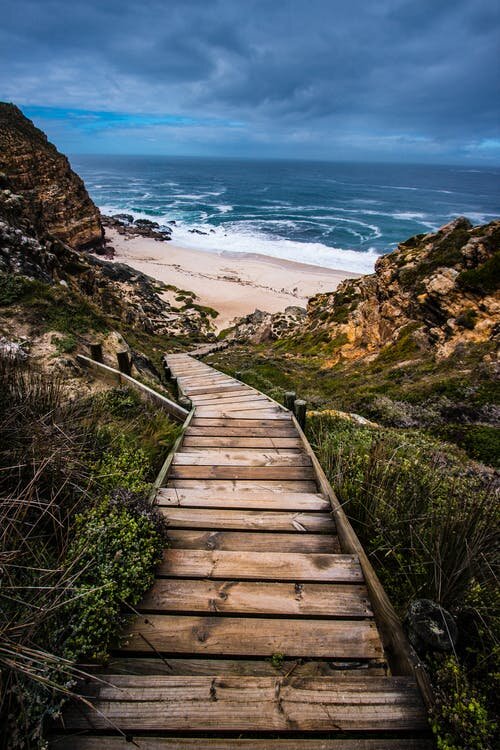
Twice now in the last week, while I was walking up the basement steps carrying the laundry basket I experienced an odd sensation of not knowing where the next step was located. The basket had occluded my vision and so as I stepped up I was not really seeing where I was going. I just stepped where I thought was the next step. Even though I had enough lighting to see where I was going, I still couldn’t quite see the path.
It made me think of our walking through this pandemic. While we may carry on the best way we know how, there are still obstacles that prevent us from knowing if where we once trod is still the right footing. We go through the motions but our vision and our footing has shifted- Our understanding of staying healthy has changed. Our gathering space is different. Our priorities are rearranged. Our time lines and schedules are obsolete.
I am thinking of how the pandemic has shifted my focus. Things about which I used to be concerned have no place in my mind’s eye now. For that I am grateful. I realized how much time and energy I have spent on mundane and shallow thoughts. When I start fretting about insignificant ideas, I remind myself that in the long run, in light of the pandemic life/death scenario, these thoughts are not worth the time.
The pandemic has underscored my need to be following God in faith. No one and nothing else can guide me safely along.
I find that I have to walk by faith and not by sight (2 Corinthians 5: 7). I have to trust God in and with my future plans and I have to learn (and relearn) what God’s path is for me. Circumstances may obscure my vision but I have to trust God where I place my next step. As many times as I may say this- I still have to remind myself daily to trust God.
The thing about stepping in faith is that the more we do it, the easier it becomes. I couldn’t tell you how many times I have walked up and down our basement steps in the twenty five years we have lived in our home. Yet, I am familiar with each step- each creak, worn wood, height from one to another. While I wouldn’t intentionally do it, I could blindly walk up and down them as they are so familiar.
What about you? Have you ever been limited by what you have seen and not seen? What was that experience like? What did you learn from it? How are you walking by faith? Stumbling? Sure-footed?
Is It Better Not to Know?

Do you worry about your future?
This past Monday there was a news story about genetic testing for babies. There is an underlying question in the report pondering whether the testing is worthwhile: what are the positives and negatives for this scientific advance. Certainly there is the benefit of predicting certain genetic diseases- a person would have counsel to know what he should do or not do in certain situations. It also helps the parents in their prediction of genetic problems. If the baby is susceptible not only would there be guidance for that situation there is a likelihood that the parents or other family members are susceptible too.
The news story made me think about the future for in essence, the testing is not saying that one would actually contract the disease or exhibit the problem but that there is a possibility of it.
So, if you would be told your future, right now, would you want to know?
I don’t know if I would. (This is a big revelation coming from me, the person who is notorious for reading the back of the novel first.) I think that if we knew our future before it organically unfolded, it might be too much for us to handle. Too overwhelming. Possibly too depressing.
I think there is a reason that we cannot predict the future and that there are no guarantees with human existence- just the guarantee of death and taxes as Mark Twain once quipped. I think that God wants us to trust Him with our future- whatever that may be.
If we knew about all the blessings and honor and wonderful things that would be bestowed upon us, would we become insistent and expectant ? Would we feel entitled? Would we be prideful? Would we start believing our own press and that our success (es) are due to us and us alone? Would we enjoy the moments of our lives? The struggles, the relief from the struggles, the accomplishment of having struggled?
Or if we knew that disaster would befall us, would we resist taking risks? Would we be fearful to commit to relationships or to community participation knowing that they may break down some time in the future? Would we be forever a pessimistic people? Lacking hope?
Amy Grant has a song called “Better Not to Know”. It tells the story of a time when she had planted fruit trees on her property with the thought that this would be a good legacy of her inherited money from a grandmother. Unfortunately she sold the property as part of her break up with her first marriage and lost those trees. Years later the new owners called her up to ask if she would like to pick some of the harvest. As she describes it, that fruit was the sweetest she had ever tasted. More than a song about trees taking time to develop, it is a song about appreciating the now and all the ups and downs of life, not worrying about the future and trusting that what will be, will be.
When I think of the conundrum about genetic testing, I don’t know what I would do if that were an option for me and my family. I certainly see the wisdom in knowing a situation and preparing the best for it. Yet I cannot help wonder if too much information can confuse the issue and cause undo anxiety.
The only thing that we ever had to decide on a potential future problem was during the time I was pregnant with our boys- amniocentesis was the current medical advance and an option in some cases. There was a thought that we might have to have it done, if a sonogram showed any concern. (thank goodness, everything presented fine) If we were asked about whether we wanted the testing done, we would’ve said, we will take our chances. We were not going to do anything about the birth- terminate or not- and so we would work with whatever God gave us.
Fortunately, we were blessed with two healthy boys. With today’s medical options, I think if having testing done in order to have, say, in-vitro surgery for a condition, we would have to weigh the options. And I am certainly not equating a scientific method to crystal ball gazing. But to make a decision based on a future possibility- I think I would still take my chances.
Two Bible verses come to mind: Jeremiah 29: 11- “For I know the plans I have for you, says the Lord.” and Matthew 7: 34- “Therefore do not be anxious about tomorrow, for tomorrow will be anxious for itself.”
When I start worrying and thinking about the future, I find those two verses comforting. God knows our plans. He knows our future as He knows everything about us. If we trust Him with those plans, we cannot possibly go wrong. He doesn’t say that the future will be easy and at other times He reminds us that the way is difficult. But, we can rest assured that in trusting the One who spoke creation into being, who conquered death and all our fears and sins and who knows our past, present and future is the approach that gives us peace.
What about you? Do you think it is good to know the future? Are you a big planner? How has that helped or hindered your future? Do you read the end of the novel first?
Is it better to know or not to know?
Click here to hear the song: Better Not to Know
We sowed our seeds
Watered with tears
Waiting for signs of growth
Took months of days
And then took years.
We took our steps
We took our falls
Somewhere along the way
We just got lost
And we lost it all.
But nothing ventured, nothing gained
The risk of living is the pain
And what will be will be anyway
Oh, it's better not to know
The way it's gonna go
What will die and what will grow.
Goodbye more than hello
It's better not to know
Those tiny stems became these trees
With dirt and storm
And sun and air to breathe
Like you and me.
And some fell down
And some grew tall
And those surviving twenty winter thaws
Have the sweetest fruit of all.
But innocence and planting day
Are both long gone
So much has changed
And if we had to do it all again
Oh, it's better not to know
The way it's gonna go
What will die and what will grow.
Oh, nothing stays the same
Life flickers like a flame,
As the seasons come and go
Goodbye more than hello
It's better not to know
Is it better, better not to know?
Is it better, (is it better), is it better?
We sowed our seeds
Watered with tears
Oh, it's better not to know
The way it's gonna go
What will die and what will grow.
Oh, nothing stays the same
Life flickers like a flame,
As the seasons come and go
Goodbye more than hello
What comes of what we sow
It's better not to know
It's better not to know
We sowed our seeds
Watered with tears
Review
I have been reviewing and looking over my past posts with the intention of pulling together thematic ideas for a book. The thought is to try and "work smarter" by using ideas I have already begun to explore and flesh out. But, I have a tendency to not look back on my work. Once created, any work is once and done.
Through this review I am noticing duplicate themes: not only that, but also duplicate exact topics. I am either passionate about a certain subject (which can be true) or I am a very slow learner (alas, which can also be true). I know that what I wrote was in earnest about what I was feeling and experiencing at the time.
By the repetition of my ramblings, it seems as if I haven't learned anything yet. I thought that I was moving forward in my quest for becoming more of the person God has made me to be. I thought that I had improved or completed some of my personal and professional goals.
Apparently not.
I am reminded of the quote by George Santayana: "Those who cannot remember the past are condemned to repeat it."
I am also reminded of the idea that keeping one's eye on the past is like driving a car by looking in the rear view mirror. It won't take too long before you hit something. (mangled version of a statement by Rick Warren)
What are we supposed to do? Never look back? Always look back? Resign ourselves to circular travel?
Once again (as I have previously written) it all comes down to balance. Balancing the remembrance of the past with the expectation and hope for the future. Having just celebrated Easter, I am reminded of the nature of people. Holy week is divided almost mid-week by the Last Supper which was the celebration of the Passover meal. Every time Christians celebrate communion or eucharist or the new covenant they are also (maybe not so noticeably) remembering the old covenant of the Passover. It is in looking forward to the unhindered relationship with God that we reflect on where we have been. We remember our state of dis-grace so that we can appreciate and enjoy our new state of grace.
What about you? Have you ever looked at the things which worried you in the past? If you would review your Christmas letters or past journals, would you find that you are writing about the same things? Are the topics the same- year in and year out? Do you feel that you are in a rut? Are you stuck in doing the same ole, same ole? Or are you the rolling stone gathering no moss as you keep moving forward? Are you the shark mentality- keep moving or you can perish? Either way, are you happy with that situation? What can you do about it?
I think reflection is good, both as individuals and as a society. It keeps us accountable. We have responsibilities for our actions and the remembrance of the past keeps us in check not to repeat detrimental action (or so we hope).
Refection also helps to understand new situations as they arise. Sometimes we may be in a quandary how to respond to the new predicament and we need the context of what has gone on before. We need to view the new through the lens, and possibly the actions of the old in order to accomplish our current and future goals.
In visiting the Nantucket Whaling museum some years ago, they had a display of old fashioned hand tools that the sailers used to carve up the whale once they harpooned and killed it. The tools were designed to get the most out of the carcass. The docent remarked that a few months prior to our visit a beached whale had died on the shore. They needed to clear the beach and wanted to remove sections of the whale for scientific study. None of the modern tools could accomplish what they wanted. They had to come to the museum and borrow some of the display tools. It was only through using the past could the present be helped.
I think in order to keep the balance, we do need to remember the past. To remember and learn from it.
However we cannot be heavy laden with that side of the balance. We need to reflect on what is on that side of the scale and move forward, learning what we should and shouldn’t do.
One thing that was eye opening in looking over past posts was that I could see growth and stagnation. It has helped inform my decision of my life choices for the couple of months. I am realizing that some of the things I haven't completed yet, need to get done. No more mucking about.
I think that is one of the blessings in keeping a journal. One can look back to see answered prayers, concerns, joys, cries of the heart. The blog has become a journal of sorts. I notice what I have commented upon and the date and it is a good remembrance of things done.
If you don't, I would encourage you to keep a journal. Try it. It doesn't have to be a lengthy epistle, just lists of what you are thinking would suffice. It would be interesting if you could keep it for at least a year so that you can go back and see what has happened in a year's time- your thoughts and reflections. If the journal is too daunting, why not jot a view things down each day on your calendar? Perhaps three words to describe your day? Three things for which you are grateful? Or have as a goal?
If you don't journal, do you have some record, demarcation or milestones of your past? Do you reflect on them? If so, does that inform how you go forward?
The Future is Now

Yesterday there was an interesting opinion in The New York Times Review section- "The Suburb of the Future" by Alan M Berger, a professor of landscape, architecture and urban design at Massachusetts Institute of Technology. What I found most interesting was his discussion of the use of technology to aid us in our future living environments.
While he didn't describe a "Jetsons" lifestyle (although the use of autonomous cars, delivery drones, smart energy efficient utilities, seems like it to me) rather I felt that what he described seemed to be much like an old-fashioned English village: common foot paths, public access areas, safe pedestrian walk ways, limited car access, car pull overs.
In some ways what he is describing is using the best of all that we know and love about our current existence: choosing the best of our technology yet not losing that which makes us human. We do not have to live like the sterile futuristic apocalyptic portrayals in movies or books.
I sometimes think we feel that in order to go forward there has to be amnesia of what has been past. It is that all or nothing mentality. I know of some people who, once books and information were online, they decided to rid their house and business of all "hard copies" of books, pamphlets, files, etc. They embraced the entire digital lifestyle. If that is what works for them, then by all means, do it. However, I find that doing anything in extremes very rarely results in being satisfied with anything.
I don't think we will ever be the futuristic society we think we can be. We may try to be extremely independent with our non-human encounters, but we still are needy of one another. We need and long for the human connection- to be known to one another. Sometimes the only way to do so is the time immemorial way of speaking face-to-face, eye-to-eye.
For all our trying to tame and control our landscapes, we still have the need to have access to green space and fresh air of nature's "wildness". The concrete jungle doesn't satisfy our inner soul.
We want to be conscientious in our care of our environment yet still have all the modern amenities. Just look at the areas who were hit by this latest spate of hurricanes. We certainly need our human invented alternatives of air conditioning and electricity to better our lives. We don't have to live like it is the 1800's yet if we continue living the way we have without any care to the resources we are using, we might not have a future.
He proposes that we will use technology in smart ways that will be conscientious of our environment, in how we distribute our goods and services and how we arrange our home situations. The future planners will "find beauty in the utilitarian." As Professor Berger says at the end of his article, "Planners need to view cities, suburbs and exurbs...as regions, with one integrated environmental and technological system. It's rare that such a profound change of vision for the future is so close to being achievable."
It got me thinking. Do I embrace the future and its changes? If I did, what would that look like? How can I take the best of what we currently know in science, sociology, medicine, psychology, etc. and still not lose sight of basic humanness? Can I find beauty in the utilitarian? What can I choose to make the most of the future I envision and embrace?
What good things can I glean from the past and tweak them to be used in the future?
What about you? What things from your upbringing or past experiences can help you in your present and future? Did you have a troublesome time as a child? Has that provided strength and resilience as you go forward in your life? What social norms do you like? Do you have to practice all the ones that society currently says everyone is doing? Can you pick the things that resonate with you so that you can create the future you want?
It is exciting to see the future unfold. What I find encouraging is that we live in a time that we can shape some of what our future holds: we can choose what we bring with us.
Future Strength
Have you ever been in one place, say a meeting with a specific purpose, and something will be said that causes you to have a "Eureka!" moment? It is some statement or idea that transcends the immediate reason for the gathering and can be applied to other aspects of your life.
Such was the case for me recently. I was at a church meeting and the activity at hand was to look at the church's strengths and how that would determine its future. We were doing a process called "appreciative inquiry". As they briefly explained the theory and rationale behind the process I was struck with how much the process would help not just a group but an individual.
The idea is that the group reflects and discovers the strengths of the organization and then through a series of questions, begin to dream and design a future based on those strengths. A group is cautioned that a fixation on organizational weaknesses doesn't move the organization into the future. While that may be beneficial at some point, the purpose of dreaming and vision casting should be based on its strengths.
I wonder if our societal tendency to navel gaze and self-help would be better served if we concentrate on our individual strengths rather than improvement of our weaknesses? It makes me think of the French women philosophy of accepting their physical flaws and concentrating on showcasing their positive physical features.
I am thinking of all the times that I have made my "self-improvement" lists. Mostly they are comprised of physical defects (plan to tone up the upper arms), unwanted behavior (eat more slowly) or character flaws (be more assertive with certain family members) that I want to correct. I think most people have some type of thoughts of self-improvement whether or not you actually list them. If you think you don't have these lists, think to Bridget Jones' diary. One of the reasons readers loved Bridget was that they could relate to her continual attempt at self-improvement. "Reduce amount of cigarettes. Must reduce consumption of alcohol. Don't shag strangers or wait until sober, no matter how ding-dong gorgeous the gentleman may be".
In some ways I think I have wasted way too much energy and time on trying to improve the negative instead of using my time and effort on expanding and improving the strengths. Just think how much farther down life's journey I would be and how much further I would be towards reaching my goals if I didn't worry about and try to correct past items and encounters. Where would I be if I didn't get stuck trying to "fix" something that may never be completely fixed?
It is similar to how I view our house. I think I can be so critical of our house, that I am spending so much time on painting and repairing it to the point that I forget to sit and enjoy the beautiful garden spaces that we have. I can do the same thing with myself and then I wonder why I am stuck and why can't I move forward?
My plan for this year is to focus on the strengths. Embrace it. Don't fight it. And let the weaknesses fall by the wayside.
What would that look like for you? Do you focus on your strengths or weaknesses?
Start Your Week With a Smile
Last week my sister shared with me a video about the "Oldest Hip Hop Dance Troupe in the world". They are called the Hip Op-eration Crew. Visit their website. Their story and the story of Billie Jordan their "dance instructor" is inspirational. Click here to hear BIllie's Ted Talk
What I love about the story is that Billie reached beyond herself, her pain, and her loneliness to help others, the aged in her community, who were also feeling lonely, without purpose, and without hope for a future. Billie believed in these marginalized elderly people and provided an expectation that was missing in their lives. As she says they no longer talk about the past but rather make plans for the future. She has given back to them their dignity and their humanity. They in turn have given those things back to her.
The thing is, not only has the common purpose of the troupe been good for their emotional and mental state it is also providing them with physical benefits. Sure there are healthy issues. The ages range from upper sixties to upper nineties with the average age being eighty. But Billie works with what she has and encourages the troupe to keep striving and doing. As of 2015, after two years from starting the troupe, she hadn't lost any to death and the consensus from their physicians was that they are all in better shape.
As they say under their website's beliefs statement, "Even though their age can limit their dancing capabilities, they are all inspired by the founders of hip hop from the Bronx who believed it’s not about limitations, it’s about possibilities. Regardless of their age and physical ability, they are not letting those limitations get in the way of learning hip hop."
Certainly their story is a great reminder that we are never too old to learn and grow. We are never too old to find purpose and meaning in our lives. We are never to old to strive for healing and wholeness in body, mind and spirit. We are never to old to encourage and inspire others. We are never too old for possibilities.
Click here to see The Crew perform Watch it and be inspired. Guaranteed to put a smile on your face.