
Reveling in Authenticity
Have you ever wondered why people do the darndest things when they are on vacation? Or at least things that seem so surprising. I remember hearing that acquaintances of ours bought a car. At the time I thought why spend your vacation time doing something that could be done during "regular" hours, but then I realized that their scheduled vacation was the only time both parents were together to make a mutual decision.
How many people will try dare devil activities during a holiday- bungie jumping, para-sailing or karaoke? Practice risky behavior- hooking up with strangers, binge drinking or over indulging in food? Over spend budgets- purchase clothes, touristy items, or personal services that they wouldn't do or even think about if they were home?
I've been thinking about this recently. Why, when we are out of our "natural elements" do we do different things? Is it the same rationale for those who like to dress up for Halloween or who like masked balls? Do we all wish we had a different persona? Do we feel a freedom in community anonymity or a freedom in the new and of not having to conform to the usual? To feel that no one in the vacation place knows who we are, our responsibilities, our reputations, etc. and therefore have no expectations?
I know that many days I wish I were someone else- a gentler, wiser, nicer, more attractive self. I am not wanting to be a masked person or one that is different from my core being but rather a clearer version of myself. I guess I am striving to be the person God is shaping me to be.
Yet, shouldn't I try to always be that type of person? Shouldn't I feel comfortable being authentic wherever I find myself? Why should I let a different venue give me permission to be brave in my behavior and decisions?
I think I will try and live each day as if I were on holiday. To live each day as if the lens is becoming clearer on my true self.
What about you? What types of things have you done of vacation that you might never do at home? Do you ever wish you were a different person? What does he/she look like? What is your authentic self?
Finances 101

As Benjamin Franklin wrote to Jean-Baptiste Leroy in 1789 (many years before Mark Twain's attributed quote), “Notre constitution nouvelle est actuellement établie, tout paraît nous promettre qu’elle sera durable; mais, dans ce monde, il n’y a rien d’assure que la mort et les impôts.” or rather, "“Our new Constitution is now established, everything seems to promise it will be durable; but, in this world, nothing is certain except death and taxes.”
Tax season. For most it is met with dread. The process of collecting all the receipts, forms and paperwork is enough to drive someone to distraction. Yet, it is something we all have to do.
When we do our taxes it always gives me pause: Should I have been a better steward with our resources? Why didn't we save more? Did we share enough with others? What the heck did I do/spend with the money we received? Why wasn't I more frugal?
I have been thinking over all the financial advice that I have read and received over the years. I need to revisit how I practice it. It really comes down to some simple steps:
Budget. Every financial advice column talks about a budget and the need to first develop one. You need to get a handle on your income but more importantly, you need to understand where you are spending your money. Some things are non-negotiable but most of us spend money on non-essentials and discretionary spending.
Save. Besides a budget, almost all financial advice talks about "paying yourself first". Personally I believe in giving first (see last point), but saving is up there too. In many incidences it is recommended to have money taken directly from a paycheck and put into a savings account, an IRA or some sort of savings/investment plan. The idea is "out of sight, out of mind" or spending.
Financial Fasting. Many years ago I read about a practice of financial fasting. For a set amount of time, one should spend money on only the essentials- food, shelter, transportation. The thought is to try and live within those parameters for say, a month, and save the rest of your income. This might be a good beginning practice in preparation for setting up an ongoing savings account. Or if you need to get your budget in alignment, financial fasting can help you prioritize what is important.
Give. There are many reasons to be generous with our finances. We are called to be a people who share. I believe that we give in response to our gratitude to God. It is also a faith gesture- we give even when it doesn't seem to make budgetary sense. Somehow in God's economy it all works out. Plus, it does seem as if we should be able to financially live on 80% of our income (saving 10% and giving 10%) or at least strive for that as a goal.
What about you? How are your finances? Is it a source of great anxiety and stress in your household? How can you get a handle on it? Do you need to see a financial counselor? Do you need to give up some area of spending in order to gain some peace of mind? After all, isn't that what it is all about? Financial Peace.
Nastiness
Nastiness. The word itself sounds, well, nasty. It is just one of those words, actions and predicaments that one should avoid. Yet we don't. More and more individuals say and do the meanest things. We see it on social media and reality television. We hear it from our leaders and our family and friends.
This past Sunday's The New York Times had an interesting article called, "The Culture of Nastiness". It looked at our current times and how we are so uncivil towards each other. What caught my eye was a quote by a professor from our town's university. The professor teaches a class, "Mister Rogers 101: Why Civility and Community Still Matter". His premise is that we are a lonely society. We do not engage with one another as we used to and as we should. Consequently we do not have experience working through conflicts with people with whom we must figure out a way to get along.
"Civility is the idea that you're not always going to agree but you still have to make it work... People think, 'If I disagree with you, then I have to dislike you, so why should I go to a neighborhood meeting when it's clear I'm going to disagree with them?'"
How can we stop this societal trajectory towards nastiness? It doesn't take a social scientist to recognize that nothing good will come out of this current course we are on. We see it with the uptick of bullying, harassment, and hate speech. We see it in the ills caused by isolation- anxiety, stress, addictions.
Start with community. Or at least recognizing how much we lack community in our lives. For most adults, the only community tends to be one's work place. That is not to say it is a bad thing but what about the time spent away from work? Or if one is let go from one's job? Where is the community and support? Do we have any interaction with others? How can we cultivate those relationships?
Limit social media. People are so free with comments about others when it is offered under anonymity. If one had to look someone in the eye and say those things, conversations would be quite different. Plus the information given through Facebook and other outlets are the "reel highlights" of someone's life. It is as if we receive the annoying "everything is perfect in our life even our dog" Christmas letter on a daily basis. It totally distorts reality and authentic living.
Monitor the types of images one watches. When all we see are the intense interactions and abusive discussions from reality television or even news programs we subconsciously start to think that way towards others which leads to practicing conversations like that. If we do watch these images we need to keep a reality check in mind- what is a better way to encourage employees to improve performance; is it really necessary to use curse words to speak to a family member; in light of real problems in the world, is the "drama" of a celebs broken relationship necessary?
By balancing the words and images that we receive with conversations and experiences of real people we can combat nastiness. We might not like everyone we encounter but we begin to have some type of understanding of why people think the way they do. We glean a perspective of what is a true crisis and authentic compassion.
The end of the article was quite poignant in that it asks each of us to examine ourselves in our contributions to nastiness. Changing this atmosphere requires more than pointing fingers at "those" people; each one of us needs to honestly admit our role, complacent or active in contributing towards uncivil behavior and then strive for ways to change.
What about you? Do you find yourself hiding behind social media in your opinions? Do you know your neighbors and those in your community? Have you ever been inspired by a reality show to act in the same manner? How did that go?
The word that I like instead is comity. It generally refers to judicial and legal terms. Originally it was a word derived from Latin comitas, meaning "courteousness" (and probably related to the Sanskrit word for "he smiles").
It means courteous behavior; politeness; civility.
How much better is that?
Stuck

Even otters can get stuck between a rock and a hard place.
My grandmother used to say about my grandfather, "I married him because he had his feet on the ground. Little did I know that they were stuck in the mud."
Do you feel stuck? Unable to move from your location? Literally or figuratively? Does it cause you to feel a sense of security or an envelopment of claustrophobia?
This year following my mom's death I have felt stuck. Stuck in a situation of caring for my father that I didn't ask to be in, didn't want to be in but one in which I just find myself.
That's the thing about being stuck. Many times we find ourselves trapped or grounded and it was not due to anything that we may or may not have done. It just happened. For myself I can get quite worked up about it. It's unfair, what did I do to deserve this, why now when I seemed to be going down a different path with my life choices? All these types of questions can go through my mind. Bottom line, it doesn't matter what I think, say or do, the reality is the same: I have certain responsibilities that I need to do.
It has taken me a while to not feel so stuck. I don't know if I am just resigned to the fact or if I have come to some emotional break through. It does make me wonder, what changed? Certainly the situation is the same even a little worse. I have to put some hopes and dreams on hold (again) for a little longer. I am not going to fight the way I feel. Just accept it.
According to Psychology Today when one feels stuck it is important to remember acceptance. Those who accept things that they cannot change have a better outcome. They are not so emotionally restricted and in a strange twist are more open to things eventually changing.
There is the story I heard of someone hiking New Hampshire's Franconia Notch State Park. A staff member pointed out a small path off to the side. It consisted of a few boulders wedged together, leaving a small covered opening to squeeze through. When he mentioned that a number of people have gotten stuck in there, he was asked how he gets them out. He chuckled and said, "Well, we can't move the rocks." Then he explained that he just waits. After about fifteen minutes of struggling, they give up... their bodies relax and they can slip right through.
Lately I am learning to accept the place I find myself. In a sense when I give up the struggle, I can move on because I am choosing to let things be. When I am not questioning and complaining, I find that I can see my situation in a different light. I can reflect on some of the positive and learn to let the negative go. I can then have the feeling of being unstuck.
What about you? Have you learned ways to become "unstuck"? If so, what are they?
It's About Time
Lately with all the busy-ness of my life, I haven't had a chance to tackle any of my winter project lists. The other day I thought I need to get on it and so I set the timer for 15 minutes and knocked off one item on the list.
I know that I have talked about timers before but they really are helpful. It gives you permission for a specific time to do whatever you need to get done. And it gives you permission to stop what you are doing and to move on to something else.
In January's issue of Real Simple, they had an article of things to do if you have 5 minutes, or an hour or one weekend. The idea is that you have a go-to place of things that can be accomplished when you find you have a little extra time. You are able to work towards a goal yet not have to a large chunk of time in order to complete it.
I keep lists on my desk of things that take approximately fifteen minutes or less. Whenever I get a little block of time, I try and check off one of those items.
For example:
- straighten out a couple of dresser drawers
- sew on a button from my mending pile
- organize a pantry shelf
- sort out linen closet
- sort out hall closet
- weed a garden bed
- return a phone call
- send out an email
- get out tools for larger project
What about you? Do you have a never ending "to- do" list? Do you ever wonder when and if you will get around to it? Have you ever used a timer to accomplish a smaller list? Can you break down your long "to-do" list into fifteen or thirty minute projects? Will you give yourself permission to work on a project for that amount of time and when the timer dings, you put it aside?
If you have never used a timer before I would challenge you to try it. It's about time.
Reading Lists

My "upstairs" stack of reading on my bedside table.
Do you have a reading list? Books that you would like to read? Someday? I think I have one somewhere. I am sure that if I did, I would be much more efficient in my book choices and reading time.
What generally happens is that I will hear a book review on the radio. I then frantically look for a pen and paper to write down the title and author before I forget. I end up having all sorts of scraps of paper with scrawled titles and illegible author names. I never seem to find the time to combine those lists either onto a note on my phone or to some central location so that when I go to the library or book store, I have no clue of the books that I thought I wanted to read. I think what I might have to do is go with someone else's reading list, either from the library or one of the nice independent book stores in town.
While I may not have a list, I do have stacks of books at home that I plan to read. Someday. Most are older novels or classics that I have never read. Some are books that my mom gave me and others are ones I picked up at book sales. I do sometimes have a tendency to read books over again. Especially the ones which I can relate to the characters or the setting is such an imagined dream and that I want to return.
If you have never done so, I would suggest that you add the Bible to your reading list this year. While I feel that Bible is a living, God inspired book, it is also a piece of literature. Much of the old Masters paintings are Bible inspired. Knowing the various Bible stories is helpful in greater understanding of art and literature. Last year was the first year that I read the Bible in its entirety. It was life changing in so many ways not the least being that I have a better understanding of references.
What's on your reading list? What stack of books do you have in your queue? Do you like a specific genre? Do audio tapes work for you? Are you an e-reader? Do you like hard back or soft covers?
Sick List
One thing about being sick is that you are forced to be still. It seems as if all I have done these last three days is sleep. When I am awake I can't focus on anything- no reading, no watching television, nothing. Only today have I had enough energy to move around the house. It did occur to me some possible reasons why I got sick and what I can do in the future to prevent it. I list them below as a reminder to myself and as an encouragement to you to not get in the same boat.
1) Get enough sleep. I certainly wasn't getting my required 8 hours of winks a night. Most of that stems from our two, four-footed creatures who decide that the middle of the night is the best time to bark at the passing foxes outside.
2) Get outside for exercise. With all the running back and forth to my father's house I haven't been outside like I normally am. Plus, the afternoon walk for me and my four-footed creatures would ensure that they would be tired and would sleep through the night and therefore I would too.
3) Reduce stress. Ah, the rub. Easily stated, difficult to execute. I have looked over the list of responsibilities that I have for the next six months. Some things are short-lived while others will be ongoing. I have realized that I cannot take on any more, even if it is something as simple as baking brownies for a meeting. That simple action becomes just one more thing in a list of too many things. The proverbial straw that breaks the camels back. Of course, there are projects and people that I want to help but for the majority of things I need to say no for right now.
4) Stop being the little red hen. There are situations in my life when, I don't receive help from those who I think should help me, I become like the little red hen. I will handle it all myself. And then I get annoyed, upset and looking for reasons to get even angrier at the ones who are not helping. In not being the little red hen, I am going to try and ask for help. Or at least state what needs to be done and then let the chips fall where they may. The work might get done, perhaps not the way I thought it should originally be done but if it gets done, then so be it. The work might not get done either and then I need to let things happen as such.
The thing is, most times I practice good habits. Usually I get enough sleep, exercise and have a good diet. It is the stress that gets me every time. Stress affects each of us differently. Regardless on the cause and the effects, stress is one of those insidious situations that sneak up on us. We go along fine, thinking we are handling our situation when out of the blue, we get sick, or have tooth problems, or stomach issues, or insomnia. When I feel under stress I like to list the responsibilities that I have to do and that I want to do. Are there things that can be put off in order to stretch out the responsibilities? I am learning to be more clear with my family and friends of the things I can and cannot do. It still can be difficult. Some people, on hearing that you cannot do something today will decide that you meant forever and will be miffed. I am learning that I can only be clear with what I say. I cannot ensure that the hearer is clear too.
What about you? What would you add to the above list- things that you know if you do not practice you will end up sick and in bed. How do you deal with stress? Do you keep it at bay? Do you feel that your life is overrun by stress? What small changes can you make to lessen the stress? Are there things you can put off, say for the next six months?
What would your sick list be?
Fever
The last couple of days I have been in bed with a fever. It finally broke last night and so I feel a little bit better. I still am exhausted especially in doing the simplest activities. Who knew that a shower would feel like a workout?
The thing about fevers is that it doesn't take that much of a body temperature increase for the bugs and viruses to be killed. Your body was designed for that. The increase temperature of the fever stops the replication of viruses so that our immune system can attack what is currently assaulting our bodies and not be overwhelmed with a new host of reinforcements.
When you think about it, many things can be impacted by just a simple or slight change. One small change does have impact on other things. According to earthday.org "if the entire U.S. did not eat meat or cheese for just one day a week, it would be the equivalent of not driving 91 billion miles – or taking 7.6 million cars off the road. Or as an individual you ate one less burger a week, it would be equivalent of taking your car off the road for 320 miles." That's because meat production produces 1/5 of the green house gas emissions.
There has been other types of research about small changes. Studies have show that a modest weight loss- 5% of body weight- produces heart health gains, lowers diabetes risk, reduces risk of sleep apnea, lowers cancer risks.
There are also the interesting stories of major flubs, all brought to fruition by small problems. In the 1998 Mars exploration, they missed the target for failing to convert English to metric units. The original pictures sent back from the Hubble telescope were fuzzy. All due to a 1/50th of human hair width problem of one of the mirrors.
What does that have to do with us?
I've been thinking about the zero waste advocates (see February 6, 2017 post). They seem so hard core. Is it really feasible for all people to live that way? I am just grateful that my eighty-eight year old father is eating, much less worrying about the packaging it comes in.
But we can do our fair share. If we all tried to reduce our waste- making choices to avoid plastic and reuse what we have, it would be beneficial to all. If we all choose to make small changes the impact can be large. Of course we all have to figure out what works for us and our family. But wouldn't it be empowering to know that we have contributed to change and we didn't have to do too much?
What about you? What types of small changes do you do that have seen big impact? Is there something small you can commit to today? Could you monitor it for a month and see if there are any changes?
Zero Waste

You know how it goes, you start looking up something online which leads to a whole host of links, which leads to other links and before you know it, you find yourself down a rabbit hole of information that you wonder, how did I get here? Many times I groan because the rabbit hole has nothing useful nor is it informative. However the other day I found myself in a place and was interested and excited to be there.
I had found the websites about zero waste living.
"Zero Waste is a philosophy that encourages the redesign of resource life cycles so that all products are reused. No trash is sent to landfills or incinerators. The process recommended is one similar to the way that resources are reused in nature." (wikipedia) The concept was named in the mid-1970's through a company that was collecting and reusing chemicals that were excessed by the electronics industry. It has gone on through the years in government policy of reduce, reuse, recycle. It has morphed into two slightly ideologies: recycling of the product or the reuse of all the product in a high level function. For example, recycle the glass bottle (recovering broken glass) or refill the glass bottle (recovering the entire function of the container).
I found 2 websites that discuss the practicality of living a zero waste lifestyle. This is more than recycling. It is living in such a way that one doesn't produce or contribute to the landfills. Click here for zero waste home. Click here for zero waste girl.
My husband and I have always been interested in living an environmentally focused and friendly lifestyle. For me it began with my grandmother who was an environmentalist before it was a word or philosophy. She was just living frugally, practically and as a good steward of the earth.
While I applaud the efforts of the zero trash movement I really wonder what I can do? Could I go to zero trash? Our family does pretty well with trash or so I thought until I saw the Johnson family's mason jar of a year's worth of trash.
When our boys were living home we generally set out a small trash can each week for trash pick up. We felt pretty good about that. We recycle most of what we bring in. We do most of our cooking from scratch using fresh ingredients from the market and so the can isn't stuffed with plastic packaging. In comparison, we have a dear elderly couple living on our street. On Wednesday night they set out all four of their 33 pound sized trash cans for pick up the next morning. We have always said what possibly could they be throwing out? It is just the two of them. Each week those cans are lined up on the curb. I have never looked under the lids even though I have been tempted. (If I ever did, it would take the fun out of the conjecture!)
So, to read about a family with two teenage boys and one small jar of trash, I wonder how much time and effort they spend in thinking of being zero trash? Has it become second nature without becoming obsessive?
It has given me pause in how we life our lives. I do know that for any change or tweaks to our lifestyle, I have to find ways that this philosophy can work with what I am currently doing. I need to find small steps to integrate into my daily life. In reading over various blogs dedicated to this topic I see some actions we are already taking and am inspired to try some other ones. Click here to be inspired to practice small steps towards zero waste.
For me, it comes to being practical and realistic of our lifestyle, what we need to achieve and how committed we are to the future and to our world. I don't know if I will be collecting our trash in mason jars in the near future but I am definitely more aware of the plastics in my life and will choose to avoid them.
What about you? Have you heard of zero waste? Do you recycle? Do you practice elements of an environmentally friendly lifestyle? What does that look like? How does that impact you and your family? Has living environmentally sensitive impeded you in any way? Does your city or town have stores that practice or are open to practicing zero waste, e.g. buying in bulk, using your own containers?
Are you interested in moving towards zero waste?
(NO) Soup For You!
This winter I have been making a lot of soup. At first I was intimidated and in some respects I still am. (The soup nazi lives in my brain- for all you Seinfeld folks.) My past history of trying different soups, attempting to make my own stock haven't been that successful- dishwater my one son will say.
Alas, I have decided to overcome my intimidation and keep at it. The results haven't been too bad but then again, the food critic is at college right now.
One thing I like about making soup is that I have found that it doesn't take too long. The biggest time is spent prepping the ingredients. After that, I let the simmer burner on my stove take over or use my crock pot on low.
Here are some recipes that I have found to be successful and delicious. As with all my cooking, I may add or subtract slightly to the amounts depending on what I want to "use up" in my fridge. It is more about keeping the quantities in relative balance.
Italian Sausage Soup (quite hardy and satisfying especially on cold nights):
- 1 can 28ounce stewed tomatoes, undrained and mashed (I have used diced tomatoes too)
- 4 cups pared and diced potatoes
- 1 cup chopped celery
- 2 tbs. minced celery leaves
- 1/4 cup minced fresh parsley
- 1 quart chicken broth
- 2 cups water
- 1 cup tomato sauce or juice
- 1 pound hot Italian link sausage (I have used bulk ground sausage and broken it up)
- 1 pound mild Italian link sausage (ditto)
- 1/2 cup chopped onion
- 2 tbs. sugar
- 1 tbs. lemon juice
- 1 bay leaf
- 1/2 tsp. dried whole thyme (I have used fresh- about a heaping tablespoon)
- 1/4 tsp freshly cracked pepper
- 1/2 cup Parmesan cheese, for topping
- 1 loaf garlic bread or other bread of choice to serve with soup.
Combine first eight ingredients in large Dutch oven; bring to boil. Reduce heat and cook on low for 45 minutes. While soup is cooking slice sausages in 1/4 inch circles; do not remove casings. (Or break up the bulk sausage) Brown sausage in a large skillet, drain and pour off all but 2 tablespoons pan drippings and saute onion until tender. Drain well. Add sausage and onion to the tomato mixture. Add all remaining ingredients except cheese and bread. Cook covered an additional 45-60 minutes. Ladle into serving bowls and sprinkle with cheese. Serve with hot bread. Serves 8-12 as a main dish. (I will add a green salad to round out the meal.)
Butternut Squash Soup (Given to me by my dearest friend. She made the soup for me during a time when I needed meals. I have made it numerous times for our family and also to share with others.)
- 2 lbs. butternut squash, peel, seeded and diced. (This takes the most time but not so bad once you get the hang of it. Some markets have pre-diced squash for sale if time is a concession to you.)
- 2 cups chicken or vegetable stock
- 1 cup diced, peeled potato ( I use red potatoes so I do not peel them)
- 1 medium onion, diced
- 2 peeled garlic cloves
- 2/3 heavy cream (or milk)
- 2 tsp chopped fresh dill (I add more of the fresh, depending on how big the squash was)
- 1 tsp cumin
- salt and pepper to taste
Combine diced squash, vegetable stock, potato, onion and garlic. Simmer covered for 15 minutes or until vegetables are tender. Puree 2 minutes until smooth and creamy. (I have invested in one of those immersible wand blenders and it has been fantastic! No lost soup on the sides of the blender if you have to move your soup in batches to and from pot to blender back to pot.) Add milk or cream, dill, cumin, salt and pepper. Simmer soup for 5 minutes. Garnish with dill springs. Serve with green salad or toasted cheese sandwiches. Serves 4.
What I like about making a large batch is that I have some to freeze (I use the ziplock quart containers with the blue twist top), some to eat now and some to give away.
What about you? Are you a soup person? Which are your favorites? Share your recipes below.
The Growth of Forgiveness

Vegetation growing amidst burned log. US Forest Services.
Last week I heard the story of Mary Johnson. She is a remarkable woman who forgave the young man who shot her son. In fact, she founded an organization, "From Death To Life" with the mother of the killer and she calls that young man, her spiritual son.
I cannot even fathom what emotions she went through to get to this place of forgiveness much less to a place of reaching out to others. But it gives me hope.
The part of the story that encourages me is that only after she went through the process of forgiveness and only after she had established her organization was she able to move on. At one of her speaking engagements, she met a gentleman who had reluctantly attended her talk. He had lost his son to murder as well. They connected through the common ground of loss and forgiveness and developed a relationship.
Who knows if Mary would have found Ed regardless of the circumstances in her life, but certainly his and her path converged after their individual tragedies. Mary and Ed wed in 2015 and her spiritual son was a part of their wedding. What a story of redemption of loss.
I love the stories of beauty coming from ashes. It reminds me of the stories of the plants that grow and in some cases thrive in the aftermath of a forest fire. Such are the pines of the northwest. Their cones are very thick and hard and do not release their seeds easily. It is only through the heat of the fire which melts the containing resin that allows the seeds to be released. It is then that new plants can grow.
There are other plants, such as mules' ears and iris which store their energy in their bulbs and roots. When the fire decimates the landscape, these plants thrive in the nutrients produced by the ash and are one of the first to bloom.
These stories remind me that there can be redemption out of destruction. Certainly there is loss, no doubt about it, and it is significant. But, we don't have to stay in the place of loss. We can find the beginnings of growth and a new future.
What about you? Are there things in your life that are preventing you from growing or blooming? Is it due to a devastating tragedy or extremely difficult situation? Has it paralyzed you with bitterness? Do all you see is destruction and loss? Can you see a glimmer of something good that might have arisen? Is there any hope of forgiveness?
It's Arrived!
Shameless plug here-
I received the March/April 2017 copy of The Upper Room. One of my meditations was published on page 54 (April 12 meditation). Below is the picture of the page:


Never Too Late
Ever notice that the best sleep seems to happen right before the alarm goes off? You will be tossing and turning all night, trying to decide should I get up or lie here? and then when you finally seem to settle down and drift into a nice slumber, "EEK, EEK, EEK," jolts you into another day.
You might be making small talk about weather and schedules to someone, when you realize that one of you needs to leave. It is then that the conversation will turn to something deeper and significant.
I have noticed at the hospital bedside or at funerals, individuals who never were around while the patient or deceased were healthy, show up and want to engage in something meaningful. Why do we wait until it is almost, and in some case actually is too late, to tell people how we feel about them?
How come it seems that only in the final hours are we significant and real? Or that in the wee hours we can finally relax? What can we learn from it?
It makes me think that there are only two ways to respond to our reactions-either embrace the lateness or start earlier.
I think in many cases we should start earlier: earlier to bed, earlier in moving the conversation from small talk to something deeper and earlier in the development of our relationships. It would make things much less stressful. No more rushing around feeling that we aren't in our best state of alertness, our best relationships or conversation and certainly feeling that we did our best with our loved ones.
But we shouldn't despair if time is fleeting on us. It is never too late to catch a few winks (isn't that why we don't jump out of bed when the annoying alarm beeps?), begin a meaningful conversation or try and develop a relationship with family and friends.
I am reminded of the jazz band at my parents' retirement center. Both parents were members and my dad is continuing on. The average age of the members is around 85, possibly higher. While I believe all the members played musical instruments when they were younger, they still remain faithful to weekly practicing and performing gigs. As their name suggests,"Never Too Late", it is never too late to pursue what you want, to reach out to whomever and to contribute to life in some way.
What about you? Do you feel that significant things happen to you in final hours? Do you wish you had more time? Have you thought about starting "earlier"? As those hearty octogenarian musicians will testify- it is never too late to begin.
Go Ahead. Name It.
Wednesday I talked about the concept of appreciative inquiry; recognizing one's strengths, building on those strengths and going forward in life. And as much time as I have ruminated on this idea I need to actually do it- I need to go ahead and name it.
Today, I am going to take time to put pen to paper (or type to the computer screen) and list out my strengths. If you have trouble naming characteristics you might want to check out various websites and complete the different psychological tests. Or, just read some of the descriptions to give you some context and descriptions.
Be completely honest with yourself. This is not the time for false pride nor for a "aw shucks" false humility. Think about the complements that you have received over the years. Sometimes we don't see our strengths but others do. If it is hard to get started, think of yourself in smaller terms:
- Mind- What type of learning do you like? Are you a numbers person or do you need to see things through pictures?
- Body- What area of your physical features do you like? Your hair, your eyes, etc.?
- Soul- What areas bring you joy? What activities make you lose your sense of time because you are so enthralled?
- Work- In what kind of environment do you thrive? Working in groups, individually, structured, free-form? Working indoors, outdoors, on the road?
- Relational- Do you get energy from being with people or being by yourself? Do you love to entertain? Are you better communicating verbally or on "paper"?
Knowing my nature, I will probably resort back to some type of self-improvement even with those items identified as strengths as I am always leaving room for improvement. Yet, I do want to concentrate on the strengths first. For instance, I have discovered what my strengths are in my writing and I am only going to concentrate on that for now. I'll be interested to see how far I journey with that.
What about you? Do you know your strengths? If not, will you go ahead and name it?
Future Strength
Have you ever been in one place, say a meeting with a specific purpose, and something will be said that causes you to have a "Eureka!" moment? It is some statement or idea that transcends the immediate reason for the gathering and can be applied to other aspects of your life.
Such was the case for me recently. I was at a church meeting and the activity at hand was to look at the church's strengths and how that would determine its future. We were doing a process called "appreciative inquiry". As they briefly explained the theory and rationale behind the process I was struck with how much the process would help not just a group but an individual.
The idea is that the group reflects and discovers the strengths of the organization and then through a series of questions, begin to dream and design a future based on those strengths. A group is cautioned that a fixation on organizational weaknesses doesn't move the organization into the future. While that may be beneficial at some point, the purpose of dreaming and vision casting should be based on its strengths.
I wonder if our societal tendency to navel gaze and self-help would be better served if we concentrate on our individual strengths rather than improvement of our weaknesses? It makes me think of the French women philosophy of accepting their physical flaws and concentrating on showcasing their positive physical features.
I am thinking of all the times that I have made my "self-improvement" lists. Mostly they are comprised of physical defects (plan to tone up the upper arms), unwanted behavior (eat more slowly) or character flaws (be more assertive with certain family members) that I want to correct. I think most people have some type of thoughts of self-improvement whether or not you actually list them. If you think you don't have these lists, think to Bridget Jones' diary. One of the reasons readers loved Bridget was that they could relate to her continual attempt at self-improvement. "Reduce amount of cigarettes. Must reduce consumption of alcohol. Don't shag strangers or wait until sober, no matter how ding-dong gorgeous the gentleman may be".
In some ways I think I have wasted way too much energy and time on trying to improve the negative instead of using my time and effort on expanding and improving the strengths. Just think how much farther down life's journey I would be and how much further I would be towards reaching my goals if I didn't worry about and try to correct past items and encounters. Where would I be if I didn't get stuck trying to "fix" something that may never be completely fixed?
It is similar to how I view our house. I think I can be so critical of our house, that I am spending so much time on painting and repairing it to the point that I forget to sit and enjoy the beautiful garden spaces that we have. I can do the same thing with myself and then I wonder why I am stuck and why can't I move forward?
My plan for this year is to focus on the strengths. Embrace it. Don't fight it. And let the weaknesses fall by the wayside.
What would that look like for you? Do you focus on your strengths or weaknesses?
Give Yourself The Finger
Last week I attended a lecture given by an educational designer for a program in the city. This program uses Outward Bound and its curriculum to bridge gaps between the youth in the city and the city's police officers. The underlying goal of the day-long program is helping each person understand that others might have a different perspective from oneself.

To emphasis this point, the speaker had us do this exercise:
- Take you right hand, make a fist and extend your pointer finger
- Holding your hand in front of your chest, move your hand with your finger pointed upwards in a counter-clockwise circular motion
- Continue circling your finger counter-clockwise as you raise your hand above your head.
- Look up and see what direction your finger is moving now
Just goes to show you that one's perspective is not absolute.
Another goal of this program is a chance for people on "opposite sides" to get to know each other on a level playing field. The kids and the officers interact in a neutral place- a YMCA or public park. They are not identified by specific clothing or uniform. Both parties have to disarm. They spend the day doing team tasks, talking about stereotypes, sharing a meal together and begin viewing each other in different ways.
When we can put a name and face to someone on "the other side", we begin to see a different perspective. We begin to understand a little bit about what the other is going through. The speaker gave an example from one of the conversation tables where both parties shared openly how they felt about the other. The kids were saying that an officer is intimidating because of his gun. One officer responded that he feels intimated by the kids because, "we rarely see just one of you. There are generally twelve of you traveling around. My gun would only stop one of you at a time."
What about you? How's your perspective? Have you ever had it change? What prompted that? Are there people in your life that you view through a certain lens? Do you need to see life from their vantage point? Do you need a different perspective in your life? Do you feel stuck in your outlook? Do you need to move (literally or figuratively) to see things in a broader range?
When I feel that I am stuck in viewing a situation, I remember "the finger"- the movement of my counter-clockwise hand which appears to be clockwise once I change my vantage point.
Learning from the Past

Deborah Sampson, illustration published in the Female Review, circa 1797.
Have you ever felt that you were called to something else? That you need to go against norm and conventions to be your authentic self?
Yesterday I heard a story of one of the the first female soldiers for our country. At a time when women were expected to tend to the home, be married by age twenty, and had no civil rights, one woman decided to take her future into her own hands.
Deborah Sampson was born in New England of Mayflower stock. Her mother was a direct descendent of Governor William Bradford and her father was a direct descendent of Miles Standish. Unfortunately her father was an impoverished farmer who left her mother with seven children. Deborah's mother couldn't afford to raise her children so they were farmed off to friends and relatives. At the age of ten, Deborah as the eldest was placed as an indentured servant to a farm in a nearby town. While there, Deborah worked hard physically but she was also allowed to read books and became self-educated.
When her service was done, she worked for a couple of years as a teacher and weaver. In 1781/1782 (historians are unclear as to the correct date), she disguised herself as a boy calling herself Robert Shurtliff and enlisted with the 4th Massachusetts regiment. For seventeen months, no one in her regiment knew her secret. She was an ideal soldier- "a remarkable vigilant soldier on her post, [who] always gained the admiration and applause of her officers; was never found in liquor, and always kept company with the most upright and temperate soldiers."
She received a bullet in her thigh and in order to maintain her secret refused medical treatment. She was able to extricate it herself but the wound never properly healed and gave her problems the rest of her life. She was also wounded again with a shot to her shoulder which led to a fever. It was only when she became ill and unconscious did an army doctor uncover her secret. She was not punished for her deception but was praised for her "gallentress".
In leaving the army, she married and had three children and adopted a fourth. In later years she continued to petition the government for a military pension which she eventually received in 1805. (Paul Revere, after visiting her farm, wrote a letter in her favor to the board- see below.) She also had a biography written and went on lecture tours, dressing up in her uniform and speaking about her experiences. She died of yellow mountain fever in 1827 at the age of sixty-seven.
Wow! Quite a lady. I love the independence, the determination, the bravery. She had been dealt some pretty awful cards: Her father disappeared, partly due to a family squabble of mis-inheritance (He didn't get his fair share.) Her mother was left destitute and desperate to care for the children. Whether or not her mom kept with her some of the younger children, we don't know. But Deborah, being the eldest was given away. Did she ever see her family again? What did the ten-year-old Deborah think about that? As she aged did she have any suitors? Did she feel that she had any say in self-determination? What made her decide that she needed to serve her country? Was it to avoid spinsterhood? Did she have a hard time fitting into the "woman's" role after her army service? How did her independence exhibit itself in her role of mother and wife? What did she say in her lectures? Did she inspire others? Was she just a curiosity?
I love stories of individuals who are, true individuals. People who are comfortable in their own skin and in their choices in life. People who are not afraid to go against the norm and societal convention to be true to themselves.
What about you? Any historical person that resonates with you? What qualities do you like? Have you learned anything from the past? Has it affected your future?
Paul Revere, in his letter to Congressman William Eustis wrote:
“Sir, Mrs. Deborah Gannett of Sharon informs me, that she has inclosed to your care a petition to Congress in favour of her. My works for manufacturing of copper, being a Canton, but a short distance from the neighbourhood where she lives; I have been induced to enquire her situation, and character, since she quitted the male habit, and soldiers uniform; for the more decent apparel of her own sex; & since she has been married and become a mother. Humanity, & justice obliges me to say, that every person with whom I have conversed about her, and it is not a few, speak of her as a woman of handsome talents, good morals, a dutiful wife and an affectionate parent. She is now much out of health; She has several children; her husband is a good sort of a man, ‘tho of small force in business; they have a few acres of poor land which they cultivate, but they are really poor. She told me, she had no doubt that her ill health is in consequence of her being exposed when she did a soldiers duty; and that while in the army, she was wounded. We commonly form our idea of the person whom we hear spoken off, whom we have never seen; according as their actions are described, when I heard her spoken off as a soldier, I formed the idea of a tall, masculine female, who had a small share of understanding, without education, & one of the meanest of her sex. When I saw and discoursed with I was agreeably surprised to find a small, effeminate, and conversable woman, whose education entitled her to a better situation in life. I have no doubt your humanity will prompt you to do all in your power to get her some relief; I think her case much more deserving than hundreds to whom Congress have been generous. I am sir with esteem & respect your humble servant,
Paul Revere”
Green Lights
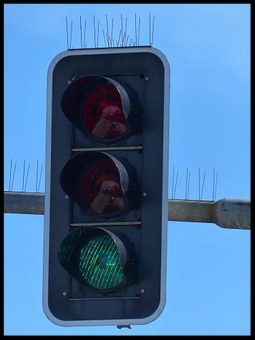
There is a road by my town that, rumor has it, if you traverse the speed limit- 30 mph- you will get all the green lights. In addition, if you travel any multiple of 30, you also will get the green lights; e.g. 60 mph, 90 mph. The theory supposedly was tested out by a gentleman I once knew. It was he that told me about it. Of course, one might get green lights with faster speeds, but one will most assuredly get a speeding ticket.
I was thinking about green lights the other day because on the commute to my father's house, there are a lot of traffic lights. As is always the case, when I am running late I seem to get every red light. Only once have I gotten six green lights in a row, which then had me watching my speed. The passage through of green lights did seem to occur when I was maintaining the speed limit. Perhaps my long ago friend was right. His theory applied not just to that one street but at least to the one on which I was traveling.
There is some connection between green and red lights with good and bad occurrences. It seems as if red lights are connoted with negativity. "I got ALL the red lights on my way here," we whine. It is as if the universe is conspiring against us and the proof is through the traffic light. And, it seems as if there are more red lights, more opportunities to have to sit and wait than not. We have come to expect that at every traffic light intersection, we will be delayed at the light.
Even when we get a green light, we are surprised. "Clean living paying off," my husband will tease if we come upon that elusive green light. Why do we respond that way? Shouldn't we expect green lights all the time? Shouldn't it be equal- the amount of green to red lights?
I wonder if we should change our expectations? From now on, we should expect the green lights on our travels. We could plan our time for red light (no rushing or going over the speed limit) but hope and expect smooth sailing. If it is true with the lights that going the suggested speed gives one through and thorough access, I wonder if there is any application to our own life? Should we be paying attention to how we do things, doing it the "proper" way to eliminate some problems in our life? I think of the adage everything in its place. Certainly when I am organized in my home I do have more time to do things because I am not bogged down with finding the right tool or item. For example, when I am organized with the placement of car keys (few and far between I must confess) then I am not wasting time trying to find the bloomin' keys.
And in our change of expectations, I wonder if we should redefine the burden of the red light? If for some reason we do get a red light, we should not look at it as a bother but be grateful for the stoppage time. We can view that time for preparation for the next thing that we have to do for home, work, or family. We can pray for the people that we see passing us in cars. We can think about what we have to say at the business meeting, the company email or the plan for the household project. We can take a deep breath and view the world around us.
What about you? Have you ever noticed the red and green lights and the percentage of each you get at intersections? Do you see it as a positive and negative or just how it is? Do you find that if you are doing the proper thing (e.g. going the speed limit), things work out (e.g. get a green light)? Or does it matter- you will always get a red light? What kind of attitude do you portray when you get a "green" light in life? When you get "red lights"?
In 2017 I will try to expect only green lights- for me, my family, my friends and loved ones. I like the positivity of that.
MLK Day

"I have a dream that my four children will one day live in a nation where they will not be judged by the color of their skin but by the content of their character." As a mother of two sons, I feel that way. I feel that about anybody and I would defy anyone to say that their dreams are different than that for any of their loved ones. When it comes down to it, character is more important that the color of skin, the contents of bank accounts, or the wielding of power.
Today is Martin Luther King Jr. Day. For some today is just a day off. For others it represents acknowledgement of a struggle that is still happening. I am embarrassed to say that I do not know too much about Dr. King. Just snippets of information: I have heard bits of his speeches. I once had a psychology professor who had been a doctoral student with him. I had attended a seminar in which his daughter was one of the main speakers. I know of his marches and his assassination. But I have never really learned about the man.
In looking at the transcripts of his various speeches I was struck with his speech: The Three Dimensions of a Complete Life given at New Covenant Baptist Church Chicago Illinois, April 9, 1967.
His three dimensions result in:
1) Loving yourself and doing the best job you can: "If you can’t be a pine on the top of a hill: Be a scrub in the valley—but be the best little scrub on the side of the hill".
2) Loving your neighbor: "Now the breadth of life is the outward concern for the welfare of others, as I said. And a man has not begun to live until he can rise above the narrow confines of his own individual concerns to the broader concerns of all humanity."
3) Loving God: "We must move beyond humanity and reach up, way up for the God of the universe, whose purpose changeth not....As I come to my conclusion this morning, I want to say that we should search for him. We were made for God, and we will be restless until we find rest in him. And I say to you this morning that this is the personal faith that has kept me going"
"Go out this morning. Love yourself, and that means rational and healthy self-interest. You are commanded to do that. That’s the length of life. Then follow that: Love your neighbor as you love yourself. You are commanded to do that. That’s the breadth of life. And I’m going to take my seat now by letting you know that there’s a first and even greater commandment: "Love the Lord thy God with all thy heart, (Yeah) with all thy soul, with all thy strength." I think the psychologist would just say with all thy personality. And when you do that, you’ve got the breadth of life.
And when you get all three of these together, you can walk and never get weary. You can look up and see the morning stars singing together, and the sons of God shouting for joy. When you get all of these working together in your very life, judgement will roll down like waters, and righteousness like a mighty stream.
When you get all the three of these together, the lamb will lie down with the lion.
When you get all three of these together, you look up and every valley will be exalted, and every hill and mountain will be made low; the rough places will be made plain, and the crooked places straight; and the glory of the Lord shall be revealed and all flesh will see it together.
When you get all three of these working together, you will do unto others as you’d have them do unto you.
When you get all three of these together, you will recognize that out of one blood God made all men to dwell upon the face of the earth" .
(Excerpts from Dr. King's speech: Three Dimensions of a Complete Life.
What about you? Do you know about Dr. King? What are your memories or observations? How do you celebrate MLK day? What about his speeches inspires you?
Forever Treasures
Last week when I was walking to town during my "cracker dog" moment (see January 9th's post) I noticed an area that is undergoing construction. Or rather, it is the side of the road that is housing the construction equipment for the construction work being done across the street. This equipment parking area is all torn up with deep ruts in the ground and bushes and small trees toppled over. Where the equipment hasn't torn up the area, the weeds and neglect of care have the other areas overgrown and looking quite desolate.
If I hadn't known what was there before, I would've thought that the equipment people were just parking in an abandoned lot.
Thing is, this was once a small, beautiful and beautifully maintained garden in memory of a prominent garden club member. By the looks of the neglect, it seems as if I may be the only one who has remembered it and her.
Now there may be plans to which I am not privy of revitalizing the garden once the construction across the street is complete. I certainly hope so.
And I couldn't help but remember the story of Englishman Roger Bannister the first man to run a mile in under four minutes. Never had it been done before. The closest was Gunder Hagg from Sweden who, in 1945 ran a mile in 4:01.4. Yet, on May 6, 1954 Mr. Bannister ran it in 3:59.4. I sure that he was elated as were all the running fans. And he probably thought that it might be some time, like the nine years it took him, before someone would break his record.
Thing is, in less than a year Australian John Landy broke that record with a time of 3:58.0
Just goes to show you that our accomplishments and tributes don't stay around for very long.
The neglected garden and the breaking of sporting records are gentle reminders to me to not put my hopes, my dreams, my sense of self all into the basket of accomplishment. For if I do, someone else will push me out or dash my hopes and dreams. There will always be someone else who surpasses our accomplishments like setting a new record or there will always be something that is more pressing than maintaining a piece of unused land like building a new shopping site.
I need to think of myself more than what is achieved. I need to remember the words of Jesus; not to store up treasures on earth that can rust, but lay up treasures in Heaven.
What does that look like? For me it means working towards and contributing to a purpose greater than myself. To know that I have made a difference in the world but that I don't rest on my laurels of whatever contribution that might be. To not be overwhelmed, smitten or too confident in what "I've" produced, created or acquired. To realize all can be lost in an instant and it is the intangible things like relationships, character, and truth that withstand.
It is hard. We are society that takes great pleasure in celebrating, almost deifying those who are "accomplished" aka "successful". Certainly there is a time for recognition and celebration. I am all for the kudos and the reaping of the benefits from working hard. But that shouldn't be the raison d'etre. One hopes that one would be recognized for one's work but there are so many people working hard and never getting any type of recognition or thanks.
Even though the garden was a fitting tribute to our town gardener, it didn't take long before it was destroyed. At the time the memorial garden was commissioned it was big deal because she was pretty prominent in town helping to shape the gardens around public buildings. Yet it is not the garden that I focus on. I remember her because she was kind and helpful. When we had our first house and I wanted to venture into gardening, she recommended some books to us. We still have the books and I think of her fondly whenever I refer to them.
What about you? Can you think of accomplishments, either for yourself or others that have been surpassed? If it was your own, how does that make you feel? What kind of treasures are you storing? Earthly or heavenly?