Flip Phone February

Remember these?

Flip phone February.  Perhaps you heard this “new” description of the month.  No, it is not a new Hallmark card series- although they seem to have a card for every occasion.  Rather it is a month-long attempt to practice a different and, according to researchers, healthier behavior. It is in line with dry January, sober October, dry July: a small commitment in behavior, just thirty days or so, in order to receive some health benefits. 

This past month my “smart” phone was not acting too smartly.  It turned out the cellular data connection of the phone was not working at all and so I could not make and receive calls nor communicate texting with SMS. After many phone calls and much conversation with our phone carrier, it was determined that I needed to receive a replacement phone but it would take about two weeks to resolve. 

So I pulled out the old portable telephone (thank goodness we didn’t get rid of it during the move) and plugged it into the jack attached to the incoming internet box which is attached to the breaker box in the basement. All of which is behind an access panel. Due to its location, it was a little awkward using the phone. If we removed the portable from its base, we had to return it to its recharger every night. Having not used the phone in this house, it was strange to hear a muffled phone ring. We would wonder outloud, “what’s that sound"? Then it would dawn on us, “the phone!” and we would dash downstairs, hoping to get to the phone before the caller hung up.  

When my cell phone first stopped working, I  panicked.  How was I going to communicate? I was waiting to hear back from some workmen and their means of communicating was texting. There was a new group in which I was involved and I was afraid I would miss messages of upcoming events (again using texting).  Being new to the area, I didn’t know many of the people’s email addresses, regular addresses, much less their last names. If they tried contacting me and I didn’t respond, I didn’t want them to think that I was ignoring them.

Once I let go of the idea that I didn’t have to respond immediately to any texts and that if folks needed to get me, they could, I relaxed. I kind of enjoyed the two week reprieve.

Having just dealt with the smartphone problems a recent NY Times article* caught my attention. The author talked about trying a flip phone for a month.  

I thought is that even possible?  The repeated comment from the carrier was that I needed to update to a new phone (not go “backwards”) because my old phone would soon not be “supported”. While waiting in the carrier store, I was amazed at the bombardment of all the new phones. It seems as if what really is updated is the speed in which the advertisements can be sent to us -faster, in better color and “more realistic”. The upgrades are for things that I am pretty sure I don’t want.

As the author of the article points out, she was tied, maybe addicted, to her phone. By scaling back to just a flip phone, she felt she had more time, felt physically better and eventually (took her family and friends a little bit of time to adjust) led to better relationships because she was actually calling and talking to them. There was a down side- her work, some of the items in her house, even her car required having apps. She had to find other work arounds and that took time.

Around the same time I heard a radio interview with a physician, Dr. Romie Mushtaq, the author of The Busy Brain Cure.  Her premise is that we need to reset our brains.  A lot of our ills comes from our technology: blue screens, overstimulation, having to always be “on” 24/7.  She goes in depth about many physical ailments and how, by buying her book and program, one can feel better in 6-8 weeks. While I am a little suspect about an individual having the miracle cure - which is usually self-promotion, she does offer some universal suggestions that the writer of the NYTimes article also suggested:

  • Important to not look at the blue screen (or any type of blue screen- monitor, TV) at least 45 minutes before bedtime.  

  • Limit the number of interactions of looking at the phone. Ironically, there is an app that records the amount. But, that might not be a bad app to have in order to assess how much we are tied to our phones. 

In the beginning of those two weeks, I was fussed and bothered about the whole phone debacle.   When I finally let go of the fact that I wasn’t missing anything (the people who needed to get in touch with me were still able to do so) it was kind of nice.  I didn’t feel the pressure of having to check my phone regularly and felt somewhat free. Almost as if I were on holiday.  I realized that while I wouldn’t say I was “addicted”, I certainly was no longer using the smart phone as a tool. The tool had become my master- dictating my schedule, even my moods.

What about you?  Has your phone become a tech appendage? Does it dictate how your day is arranged? Have you ever had your phone inoperable for a while?  What happened?  Did you learn any lessons?  What were they? 

I am back in the smart phone world. My phone was replaced and so far, all is working fine. While I still look at my phone, I am finding I am not doing so as frequently. I realized that before I was looking at it, more from habit that any desire for new information.  I just needed to break that habit. While I don’t know how practical the flip phone February might be- switching over to a different phone for a month- I do know that when I had to be without a smart phone, it was rather nice. 

*https://www.nytimes.com/2024/01/06/technology/smartphone-addiction-flip-phone.html 

Expectancy

One of my dearest friends gave me a lovely book for my birthday: Emmanuel: An Invitation to Prepare Him Room At Christmas and Always, by Ruth Chou Simons. It is a 25 day devotion to be read during advent.

From the first words in the introduction, the book has been speaking to my heart. On Day 1, Ruth Simons talks about the difference between expectancy and expectations. For most of us I would imagine, we live our life with expectations. I know that I do. The expectation of how things will work out with relationships (family, friends), activities (jobs), or future plans. We expect certain things to happen in a particular order of cause and effect: if you work hard, you will be rewarded with such and such… Or if you plan well, things will go according to that plan. Unfortunately life doesn’t always work out that way. Or at least when our expectations don’t match the outcome we can become frustrated and bitter. Sadly many a Christmas the emotion is more mad than merry.

Christmas is definitely fraught with expectations: from holiday decor and gifts to the “perfect” family gathering. From my experience, those expectations are almost never realized and leads to disappointment. As a friend once quipped, “if you want to be happy, lower your expectations.”

But for me, the idea of expectancy changes the expectation. Advent is a time to pause and prepare for Christ’s birth. When I stop thinking of my expectations of Christmas and focus on Emmanuel (God with me) I am in an expectant frame of mind: what is God up to and how can I join Him? I can be excited about the future because I know that I am in good God’s hands.

As Ruth Simons writes:

Expectations leave us weary and discontent, believing we deserve more or better. They always leave us unfulfilled and doubtful about whether God is for our good. But expectancy is anticipation mingled with joy. It’s believing God is who He says He is while waiting patiently for His good to be revealed, however He chooses to reveal it.

What about you? Do you carry expectations for Christmas? What are they? Have you ever thought about a posture of expectancy? What would that look like for you?

My Christmas prayer for you (and for me) is that we experience the joy of Christmas that comes from our reconciliation with God through Jesus. It is when we are hand in hand with God that we can experience true joy.

“Expectancy sets our sights on God’s promises rather than the empty pursuit of all that cannot truly satisfy in this season. When we turn from expectations to being expectant, we will never be disappointed because God never disappoints.” ~Ruth Simons.

Merry Christmas.

Think on these Things…

Thinking of flowers especially wild flowers uplifts me and brings me joy.

One of my favorite Bible verses is Philippians 4:8 “Finally, brethren, whatever is true, whatever is honorable, whatever is right, whatever is pure, whatever is lovely, whatever is of good repute, if there is any excellence and if anything worthy of praise, dwell on these things.

If ever there was a need to dwell on these things is now.

Lately, I couldn’t understand why, when life is really pretty good, I was feeling “considerably rumpled in spirit”. It dawned on me that my listening to the news was having a negative effect on my thoughts. There is such despair and hopelessness regarding wars, climate, and hatred towards one another. I thought about all the negative thoughts entering my mind by the bombardment of one story after the next.

According to HealthyBrains.org- part of the Cleveland Clinic-our brains produce 70,000 thoughts per day. (Although I do wonder about that number and the definition of “thoughts”? Some days I wonder if I have any thoughts swirling in my grey matter and others, I cannot keep up with all them.) There are some numbers on the internet suggesting that approximately between 50- 80% of our thoughts are negative. Wonder why that is? Are we just hard wired to think negatively or is it due to our experience? A nature versus nurture of thoughts?

Regardless of the percentage of negative thoughts, the research also is clear that negativity is not good for our overall health. Besides the mental health aspects of depression, anxiety, and stress, there is also the physical aspects of negativity: high blood pressure, digestion problems, reduced immunity, headaches, fatigue, and dramatic changes in metabolism.

According to Johns Hopkins medicine, positive people are thirteen percent less likely than their negative counterparts to have a heart attack or coronary event. People who are positive, even with a history of family cardiac issues and the most risk factors, are one-third less likely to have a heart attack or coronary event within five to twenty-five years than those who are negative.

I believe the writer Paul knew the benefits of positivity when he encouraged people to think of these good things. Dwelling on the good, beautiful, praise worthy, and honorable are all traits of God. When we think of those things, we are tuning into the Creator of the universe and therefore filling ourselves with beneficial thoughts. If for anything, we are getting out of our own heads and our own spiral thinking.

In the Old Testament, the psalmist also encourages thinking of these good things: praise to God every day. It is good to praise the Lord and make music to your name, O Most High, proclaiming your love in the morning and your faithfulness at night, to the music of the ten-stringed lyre and the melody of the harp. (Psalm 92: 1-3.) What a good piece of sound advice to have a positive thought the first and the last thought of the day.

Granted, a lot of the pessimism that we hear may not be so much our individual “inner critic” but rather the state of the world around us. In most of those situations we have no control or say over the events. Yet when we keep hearing about it, we can start feeling bleak and helpless about things that we do have control over- our thoughts.

I liked some of the “life hacks” from the Forbes article.* Here are a few:

  1. When you feel negative, handwrite answers to these questions: “What am I thinking?” “What am I feeling?” Don’t censor your responses. Doing this will help you quickly notice your emotions and any negative self-talk. Then, write down evidence to support and refute your perspective. This will help you to see how you’re framing the situation and challenge you to reframe it. I would also add to this- write down “What do I know?” This is where we can dwell on the truth of the situation.

  2. Carry a picture that brings you joy. Those in the military who have been deployed carry a family picture with them in all that they do—it’s waterproof. Similarly, carry a joyous picture of your human family or perhaps you and your pet. Waterproof it and pull it out when you need a surge of optimism. It works during wars and conflicts, and it will work during the conflicts in your life and mind.

  3. Exercise control over your thoughts. Sometimes, we have thoughts we cannot control. However, much of the time, we can create either a positive or negative inner dialogue. For example, instead of thinking “I’m going to fail,” I think, “I’m going to try this, and if I don’t succeed, I’ll learn something from it.

What about you? What do you think about? What type of thoughts do you general have? Positive? Negative? How does that type of thinking make you feel? How can you turn your negative to positive?

The beauty of God is that He gave us free will and the use of our brains and minds. However, sometimes in our “I know better” mentality, we fill up our minds with things that are not good for us- junk food for the brain so to speak and somethings, that junk can be downright deadly.

We need to dwell on the beauty and wonder of life. To fill our minds with things that uplift rather than depress.


References:

  • *https://www.forbes.com/sites/forbescoachescouncil/2022/06/22/15-hacks-for-pessimists-to-switch-to-a-more-positive-point-of-view/?sh=2f3b406ad066

  • https://www.psychiatry.org/news-room/apa-blogs/rumination-a-cycle-of-negative-thinking

  • https://health.clevelandclinic.org/turn-around-negative-thinking/

  • https://marquemedical.com/effects-of-negativity/

  • https://www.hopkinsmedicine.org/health/wellness-and-prevention/the-power-of-positive-thinking

  • https://www.pewresearch.org/short-reads/2023/09/18/americans-are-more-pessimistic-than-optimistic-about-many-aspects-of-the-countrys-future/

Heirlooms

The other day I was getting ready to store a crib that had been my father’s. Larger than a bassinet but smaller than a regular crib, the crib has wheels and can be easily moved from room to room. It was used as a “day crib”- perfect size for a home’s first floor and putting the baby down for a nap during the day. It was originally used for my dad, then all of his children and most of the grandchildren. It is now being used for the great-grandchildren. I need to repaint it and to spruce it up, but in general it is in great shape and will be available for the next generation.

As I was unscrewing the legs, I noticed that over the years, it had been fixed up as needed: new screws, another layer of paint, new wheels, new mattress, netting affixed to the sides (no gaps in the rungs). In some ways it reminds me of the philosophical question of grandpa’s axe. We call it grandpa’s old axe, but if we have replaced the head and the handle, is it still grandpa’s axe?

But what was clear by the various improvements, was that there was/is no ownership of the crib. Only that one becomes the steward of it- to take care of it and try and leave it in better shape than the last owner.

My parents definitely believed in that adage. Whether one borrowed an item (though that was frowned upon), used something of someone else’s, or even visited a home, store, public building or space, we were taught that one should leave a place better than one found it. I remember many a vacation when we were told to leave the house and wait in the car as mom finished cleaning the rented cottage. Never mind that cleaning was part of the bill- although in later rentals we always received a discount because of the way my mom left the place. While I recognize it as pride, it is not a bad practice. Imagine if everyone truly practiced it- there would be no signs for littering fines.

Recently, we were returning from a get-away weekend to Canada. (One of the many benefits of living in the Northeast). On the Canadian Broadcast Channel they were interviewing Jane Goodall. She is an incredible 89 years young and sharp as a tack. Generally I do not like listening to interviews with conservationists/environmentalists. Not that I disagree with them, but that I find it so depressing. Many times the news is the same- that we are heading to disaster and there is nothing we can do. Yet, this was a fascinating interview filled with hope. Many things she said were worthwhile and notable, namely that our future is in our children/grandchildren and that we can slow down and begin to turn back to tide of lost biodiversity.

What struck me the most- besides her acknowledgement of a Greater Being in charge- is that she sees our roles as stewards of the earth. Yes. We enjoy it while we are here, but we need to leave it better for the next generation. It doesn’t stop with us.

I wonder, do we do that as a nation? While we value the future and future technologies, it seems we do so at a cost. We seem to be more interested in the short gain rather than the long haul. What if politicians truly wanted to leave office with a better/improved state of the nation?

How about as individuals? Do we leave a place better than we found it? Put another way- do we leave people feeling “better than we found them”? Are they blessed because we have been together? Do we leave people in a better way (physically, emotionally, spiritually)?

Being a steward of the future is being the caretaker of heirlooms. Merriam Webster defines heirlooms: something of special value handed down from one generation to another. Certainly the crib is something of special value. We honor it and by association, our ancestors, by caring for it, improving it and knowing that it is not ours. Items that we value and hand down from one generation to another are not necessarily the heirlooms of Antiques Roadshow but heirlooms that we want to preserve, protect and ultimately improve. Yes there are physical heirlooms like our family crib but also our physical environment. The way we tend to to our environment will be handed down to the next generation.

We also have emotional and spiritual heirlooms: truth, goodness, honesty, integrity, faith, hope, love. Ideas and beliefs that are valuable to us as individuals and society.

The value of leaving a place better than we found it is also a special value. There are many ways we can do that and doesn’t take much effort: picking up our trash; moving a grocery cart to its stable; cleaning our curbs and keeping our storm drains free from debris/leaves; walking an errand instead of driving in a car; eating less meat per week; paying attention to our use of precious resources.

We can also do it through our “blessing” of people. One of the most important and easy ways is to pray: for those we meet; for our neighborhood; for teachers and coaches; the service workers we see everyday- salesclerks, service personnel. We bless others when we are being authentic - sharing our lives, the good and the not so good. Blessings can be simple words of encouragement or small thoughtful gestures. It’s a baked good, a cup of coffee or tea and a chin wag. One of the most important heirlooms/blessings we can give our family and loved ones is an introduction to God through our personal relationship with the Creator. The value of leaving an area better than I found it was incorporated into my core, not through my mother mentioning it over and over again, but rather through her actions of doing it. My prayer is that my actions in my relationship with God will be noticed by others- that if I, a total hot mess of an individual, can have a relationship with the God of the Universe, so can they.

Blessing others is easy if we put our selves in someone else’s shoes. Jesus reminds us how to bless others through his words: Do unto others as you would have done unto you.

What about you? Any family heirlooms? What are they? How are you stewarding them? What about non-tangibles? Special values that you want to hand down from generation to generation?

As we approach the holiday times, perhaps it is a good time to reevaluate our heirlooms. What is special to keep and how do we keep it for the next generation?

Stitch in Time

Recently I was trying to remove a patched logo from a jacket and had to undo the stitching. It was not too difficult but took some time. The stitches were close together and so I had to use very tiny scissors to get under the thread to break the bond. What got me was how tenacious those stitches were- they were no more than 2 mms apart yet when only one was still connected I could not remove the top piece of material. I had to break all the stitches in order to remove it.

I’ve also been doing some weeding-pulling out crab grass, purslane and spurge along our sidewalk. What got me was how tenacious those weeds were. Even weeding after a rainstorm, one would think it would be easy to pull them out. Not so much. Just one little tiny thread of a root cements it to the sidewalk.

In both those instances, I wasn’t able to eliminate the items I wanted, the logo or the weeds, until all of it was free from what has holding it back.

It made me think of those habits or items that hold us back: addiction, toxic relationships, pride, stubbornness (which really is a subset of pride), clutter, irrational fear, slothfulness (one of my favorite seven deadly sins- perhaps because I have an affinity?) Many times it is just one tiny little issue with those items that keep us tethered to behaviors we do not want to do.

Psychology talks about getting rid of things that do not serve you well: physical items like clutter and stuff or emotional responses that stir up past (big or small) traumas. When Pope Gregory in the sixth century and then Thomas Aquinas in the twelve spoke to the seven deadly sins it was to rid oneself of spiritual habits that do not honor God. To break those holds on us that keep us from truly flourishing.

Breaking the hold on habits, behaviors or thinking that harm us is hard. If they didn’t have some type of “benefit” for us (mostly the release of feel-good dopamine) we would not have the problem- we wouldn’t allow it to have a foothold. Interestingly there are many different suggestions and numerical amounts for ridding bad habits and promoting good ones: “7 (or 5 or 3 or 12) ways to rid yourself of bad habits”. Bottom line- we need to determine the habit, why we want to change it, work in increments to do so, and give ourselves a break if it doesn’t happen instantly. (See the following sites: https://www.health.harvard.edu/blog/how-to-break-a-bad-habit-202205022736 https://newsinhealth.nih.gov/2012/01/breaking-bad-habits )

Yet sometimes we cling to things or ideas because it is our lifeline. We cling to hope that our loved one will get better or that solvent financial times are ahead. We cling to the item (perhaps too many items) so that we can remember that loved one or hold on just in case we need the item due to unstable financial times. Supposedly when we cling to things (tangible or not) it is because deep down, we all long for happiness, security and meaning. And those are not bad reasons or attributes per se. Who wouldn’t in a crisis hold on to our loved for as long as we could.

Yet, like everything else, we can sometimes be too extreme, perhaps too greedy (ah, those 7 deadly sins again) and hold on for too long to these habits. We need to break the bad habit bond in order to move along and flourish. Sometimes it is a matter of just rethinking or reframing what we are doing.

I think of my “schedule” that I try so desperately to maintain. The plans that I have for each week. Yet if I am honest, I do not think I ever had a week that went according to my schedule or plan- even when I was a kid. I get so annoyed at myself for not being “disciplined” enough. That scheduling habit, albeit a good practice has become like the tenacious threads that keep me bound in an ever frustrating loop: the hope and promise of the dawning of a new week, the written plan with daily goals, the unfolding of each day and situations that arise to change that plan, the reflection and frustration at the end of the week that not much was accomplished, and the hope that next week will be better. Only to have it loop over and over again.

In thinking about reframing the schedule, I have decided to not get so het up about it. Instead of daily goals I am thinking in more broad strokes- overarching monthly ones. I am interested to see what will transpire by cutting myself some slack.

What about you? Are situations, activities, relationships, thought patterns binding you to behavior that you need to change? Have you thought about what needs to happen for that change?

On the website psychology-spot.com they offer this example:

Do this exercise: Take a coin in your hand and imagine that it represents the thing, person, or goal you are holding on to. Lock it in a tight fist and extend your arm with the palm of your hand towards the ground.

If you open your fist or loosen your hand, you will lose the coin. If you keep your arm extended and your fist closed for a long time, you will also lose the coin because you will get tired of maintaining that tension. The same happens in life. You hold on to, but the more you press, the more you exhaust yourself and the more you push away what you want.

The good news is that there is another possibility: stop clinging. You can let go the coin and still keep it. With your arm still extended, turn your palm up. Open your hand and relax it. You will see that the coin is still there. (https://psychology-spot.com/holding-on-to-something-meaning/ )

Once again, it is the paradox of God’s economy. That which we lose, we find.


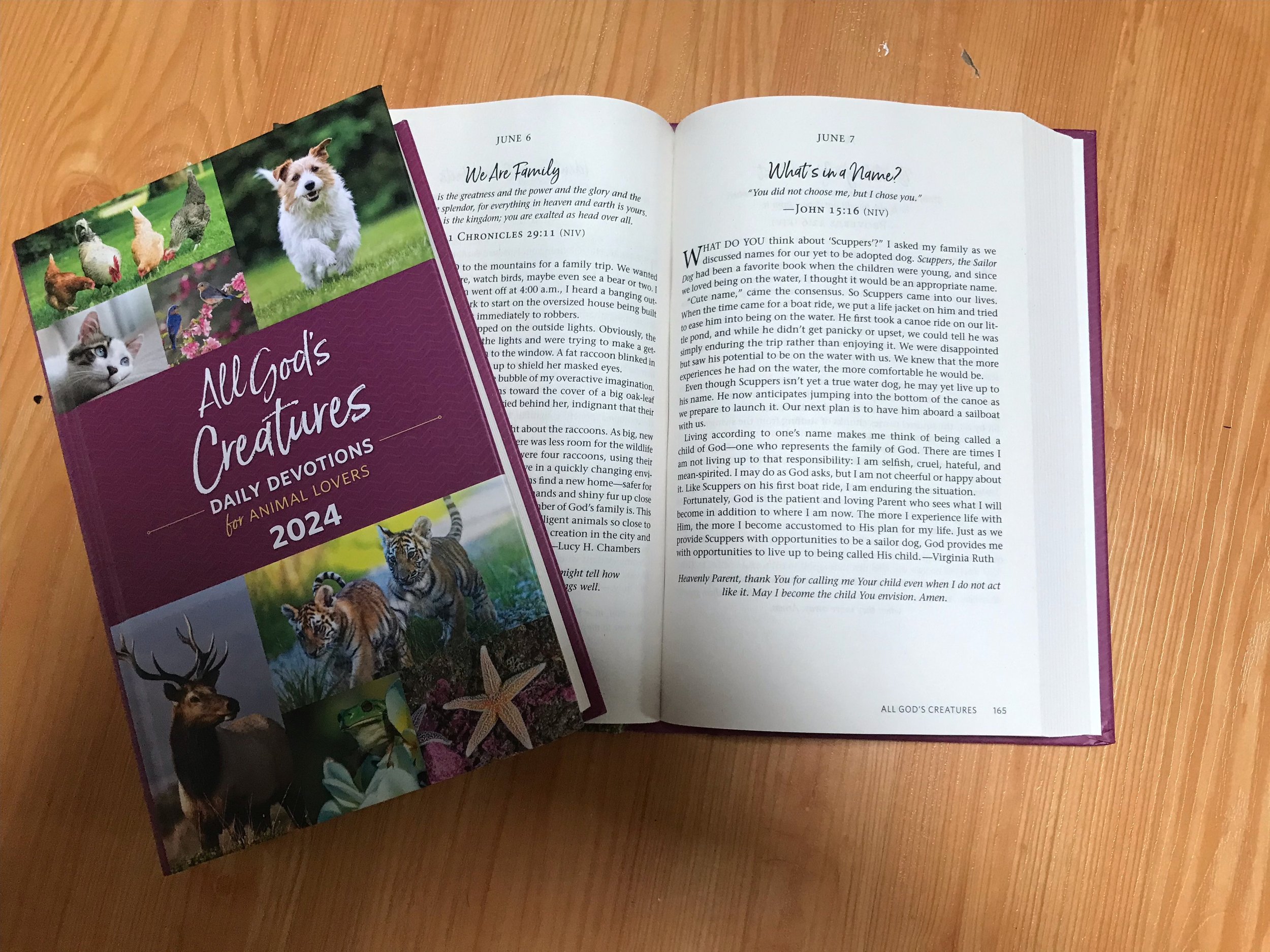
The 2024 Edition of All God’s Creatures is out! This year I have eight devotionals included. Click here to order from Guideposts if interested.


Garden of Benign Neglect

On a past Sunday, our reverend used this expression, “garden of benign neglect” to describe her garden and gardening styles. Due to the combination of her lack of gardening experience and a medical hiatus from her experienced gardener husband, her relatively newly planted garden has not been growing this year. The neglect wasn’t intentional, it was just the way things panned out.

I’ve been thinking about that phrase: benign neglect. According to the dictionary.com, benign neglect means “an attitude or policy of ignoring an often delicate or undesirable situation that one is held to be responsible for dealing with”. In some ways it is easier for me to take the words separately- neglect: fail to care for properly (verb) or the state or fact of being uncared for (noun); benign- gentle and kindly, not harmful in effect.

What in my life have I benignly neglected? Not intentionally mind you, but because of the nature of various situations in life. The well-meaning plans to have people over for dinner? The thought of helping others in their time of need? The exercise regime for good health? The specific “this is what I mean” communication among family members? All ideas that are mulled over in my brain yet somehow do not make it into actionable plans.

All situations that, in my head, might seem that I intend to do, yet I realize that I haven’t. Is it, like the definition, that I am ignoring an undesirable situation? Maybe. Some of the outcomes I enjoy (having people over), while others might be considered undesirable- exercising at 5:45 am.

Or is my neglect due to a lack of inertia? And perhaps the inertia is needed. Maybe I am self-consciously deciding to not act.

What to do about it? In the case of the garden- sometimes benign neglect is beneficial. There are years where the garden does well to be fallow. To be ignored but not in a harmful way. Fallow years allows the nutrients and soil to return to a healthy balance.

There is a whole psychological movement about laying fallow for our emotional well-being. Bertrand Russell called it fruitful monotony. Adam Philips called it fertile solitude. Walt Whitman called it loafing.

In the video For the Life of the World: Letters to the Exiles one of the “chapters” is about having wonder https://www.letterstotheexiles.com/taxonomy/term/47: To take a day and loaf, to explore, and to be a child again- looking at the world in wonder. We are such transactional people and have this inbred desire to be doing things that are “useful”. But what this video tries to explain is that we are doing something when we take time to wonder, we are pondering: we are enjoying the creation of the Creator. Once again the paradox of God: when we take time to be fallow, or to honor the Sabbath, or take time to wonder, then we are able to invigorate our other times, becoming more “useful” and productive.

When that video was shown to different groups, this chapter on wonder was the one that struck a chord with people. Probably because we are an obsessive culture on productivity and “doing” something all the time. Or maybe that is just me- difficult for me to just “hack around” as my husband and his friends used to do when they were kids. Ironically, I need to intentionally plan to not plan. How sad is that? But I also recognize that it is like so many things- the more you do it, the easier it becomes.

What about you? When was the last time that you took a day for wonder? A season of benign neglect, that you laid fallow plans and expectations?

This month of August is a good time to practice wonder. To give ourselves permission to loaf, hack around and see the world with eyes of wonder. To benignly neglect our agendas and to-do-lists and to once again see the world of wonder. I am game to try. What about you?

“We need to rediscover the beautiful. Perhaps the greatest thing we can do is to behold. Behold our God. Behold his creation.” ~Makoto Fujumur, For the Life of the World.

Firm Foundations*

Ahh. If only my sewing was this straight forward…

Recently I have been working outside in our back and side yards. While the previous owner had some gardens, it is not quite to my taste and so I am re-evaluating, making decisions about which plants to keep in place or move and “designing” (more like talking out loud to myself as I wander through the dirt) what I would like to plant.

One of the things I have uncovered is landscape fabric. It seems to have been used everywhere on the property. I have only used landscape fabric once in my gardening life. We put it under the sand in laying our brick patio at our previous home. As a tool for flower garden beds I must say that I am not a fan.

It makes it very difficult to dig into the dirt to either turn over the soil, mix in nutrients, remove plants or to put in new ones. I will have to remove all the material before I begin with any plans.

As I was removing the fabric and trying to augment the soil in the one side garden it had me think about foundations: what are our basic structures that we build upon? Physically, mentally, emotionally, spiritually? Are they foundations that hinder or help?

Foundations call to mind material. We need solid materials with which to work. Whether that is good soil, healthy plants, adequate nutrients as well as well-made and appropriate tools for the job.

Just recently I had to pick up some gardening gloves (Do other people go through gloves as quickly as I? I general get large holes in the fingertips of my fore and middle fingers.) As I was in a discount odd-lots type of place, I bought some gloves. When I got home I discovered two left hands. Sometimes you can reverse the gloves but in this case, the palm side had different fabric than the meshy back so as I quickly discovered one couldn’t do that. I had tried using them but got pricked and poked when I was cutting back a thorn bush.

I have also been doing some sewing- making curtains and pillows for the house. Turns out, the type and quality of the fabric matters as to the ease and correctness of the sewing. As is typical of me, I was trying to “use up” some leftover fabric from cut down curtains in our mudroom. The curtains were ones that I had picked up at a thrift store. I liked the pattern and they worked with the decor of the room. But I should’ve paid attention to the type of material. They were made of a non-natural material and so, continually frayed and almost dissolved under the cutting and sewing of it. A simple, easy project turned into one that was fraught with some blue air.

All of these incidences remind me of the adage that I have heard my whole life and do try to espouse: quality and good foundations are key to things lasting, saving time and money in the long run and in general, looking good. It is a principle that can be applied across the board. Think of food prep in cooking- fresh, quality ingredients, prepped and ready to go as well as using a quality kitchen tool (not necessarily the latest gadget) will produce a tasty quality meal. Certainly it applies to my sewing and gardening.

It can also apply to our physical and mental health. According the UK’s Mental Health Foundation the following are good foundational practices: (Click Here to view website.)

  • Get Closer to Nature. (Download here for a brochure describing interesting ideas)

  • Learn to Understand and Manage Your Feelings

  • Talk to Someone You Trust For Support

  • Be Aware of Using Drugs and/or Alcohol To Cope with Difficult Feelings

  • Try to Make the Most of your Money and Get out of Debt

  • Get More Sleep

  • Be Kind and Help Create a Better World

  • Keep Moving

  • Eat Healthy Foods

  • Be Curious and Open-Minded To New Experiences

  • Plan Things to Look Forward To

But more than the physical and mental, what about our spiritual foundations? I think of China and their official atheism. While they do allow some religious practice, according to the Council on Foreign Relations, the Communist party (of which there are more than ninety million party members) prohibits party members from holding religious beliefs and practicing in public. In 2017 the CCP paper warned members that putting faith in religion was “spiritual anesthesia”. What a shame because spiritual belief is a core foundational value for all societies. Without some type of belief system, society is traveling without a centerboard- skittering in one direction then another. We are designed for some type of belief system and if we choose to not have anything, it will be filled. We may think we have no system but nature abhors a vacuum. In some ways it is no surprise that with a vacuum of spiritual beliefs, the Communist Party has put that energy into power and material items (so much for their utopian idea of all people and monies distribution are equal). Things that will be destroyed and have no lasting value.

Since my life viewpoint is Christianity, for me spiritual foundations are key. But, when you think about it, all spiritual philosophies have these types of components (in parenthesis):

  • Praise and Worship God (attitude of gratitude)

  • Reading/studying of the Bible (reading inspirational words)

  • Prayer (communication)

  • Service to Others (get out of our heads)

  • There are more spiritual foundations, called spiritual disciplines that not only provide a foundation but also growth- solitude, tithing, fasting, to name a few. All are practices that develop spiritual character.

What about you? Do you have any foundational practices in your life? What are they? Have any changed over time? Have you ever had to “make do” with the wrong tool, material or process? What happened? Alternatively, ever have the right tool, the right material and process? How did that go?

As I am finding with my gardening, sewing and to some extent the house remodeling- firm foundations are important. Sometimes we have to re-evaluate those foundations- are they hindering more than allowing for growth? Are there any new practices that can be adopted?

We need to look for foundations that are solidly built and that have stood the test of time. It is through those strong, core practices that we can grow and thrive. Not only when times are difficult (which will come to all of us at some point) but when times are good.


*Firm Foundations makes me think of the old hymn:

How firm a foundation, ye saints of the Lord,
Is laid for your faith in His excellent word!
What more can He say than to you He hath said,
To you who for refuge to Jesus have fled?

“Fear not, I am with thee, O be not dismayed,
For I am thy God, and will still give thee aid;
I’ll strengthen thee, help thee, and cause thee to stand,
Upheld by My righteous, omnipotent hand.”

“When through the deep waters I call thee to go,
The rivers of sorrow shall not overflow;
For I will be with thee, thy troubles to bless,
And sanctify to thee thy deepest distress.”

“When through fiery trials thy pathway shall lie,
My grace, all sufficient, shall be thy supply;
The flame shall not hurt thee; I only design
Thy dross to consume, and thy gold to refine.”

“E’en down to old age all My people shall prove
My sovereign, eternal, unchangeable love;
And then, when grey hairs shall their temples adorn,
Like lambs they shall still in My bosom be borne.”

“The soul that on Jesus hath leaned for repose,
I will not, I will not desert to his foes;
That soul, though all hell should endeavor to shake,
I’ll never, no, never, no, never forsake!”

(1787- George Keith, R. Keen)

Happy Gardening

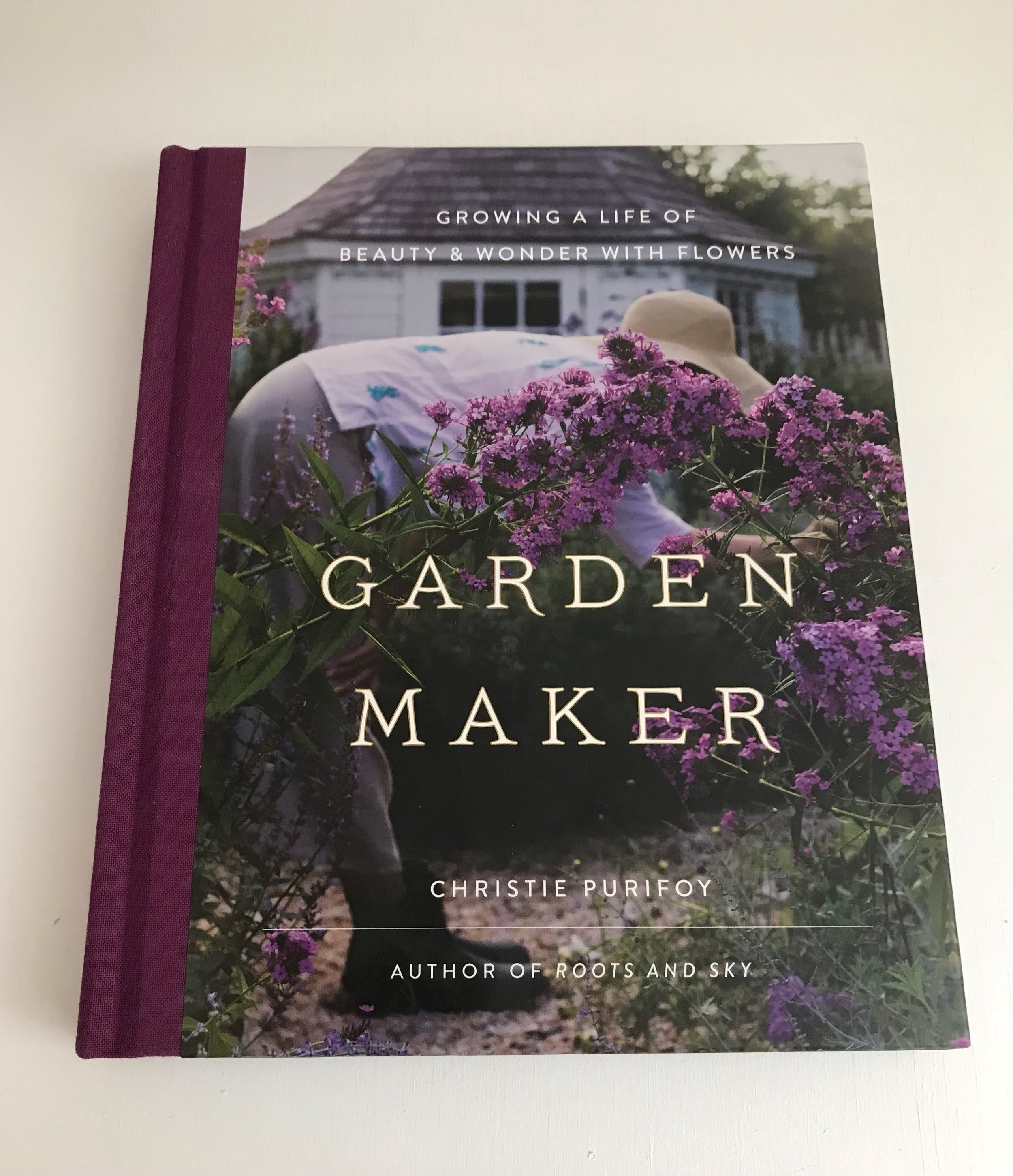
My dear friend gave me this book. I have been enjoying reading it- not only for the gardening advice but also for the life lessons.

Are you a gardener? Do you like to feel the warm earth in your hands? The smell of soil and mulch? Revel in the warmth of the sun on your shoulders and face?

While the contractors still have a punch list for finishing the house remodel, we have finally moved in most of our items, unpacked the boxes and have put away our things. It is now time to turn my attention to the outside of the house: the side and front yards. I have so many ideas in my head but I know that I need to edit them down. So, I’ve tried to make a list of what flowers I like, what flowers will do well in our location and what would look appropriate/in keeping with our older home. I also want to reduce as much of the grass/lawn as possible, add wildflowers for the pollinators and perhaps try my hand at vegetables.

Over the years I have read a plethora of gardening books, magazines and articles. There is nothing more satisfying than turning the glossy pages containing brightly colored, beautifully photographed lush gardens. I am a sucker for cottage gardens. Probably due to watching too many English murder/dramas in my youth, but I absolutely love the look of cut wild flowers overflowing in a ceramic jug- bringing that wildness indoors.

Regardless of the style, the “experts” recommend that one starts with a plan and a garden design. While I would love to have a plan, I am really a what-the-heck, just-plop it-in, type of gardener. When I have tried to design a garden, I start with the intention of beautifully drawn, recognizable plants, all set in an easy to follow garden plan but alas, I generally end up with a page of scribbles.

What I like about gardening is that there are so many life lessons. One learns how to: be patient, be creative, stop and witness wonder, share, nurture a living thing, stay optimistic, foster hope. In addition, there are so many physical and mental benefits of being outside and working “the land” even if that land is a small terracotta pot: reduce stress, improve immune system, lower blood pressure, improve mental clarity, among other things.

What about you? Any gardening plans this spring/summer? Have you ever designed a written plan? What are your favorite plants? Favorite style?

If you have never grown anything or think you cannot grow anything- give it a try. If I can grow plants, you can. Years ago my husband made a cold frame for me so that I could overwinter some plants and get a head start on the spring seeds. Our boys referred to it as “the death chamber”. Need I say more? Gardening produces persistence.


NEWS: Just received my copies of Guideposts, Angels On Earth, May/June 2023 containing my article-“The Fun Starts Now”.

Lead With Love

The other day I heard a story about a woman who wanted to do something for her friend who had cancer. Because of the ordeal of the treatment and illness, the sick woman didn’t have a chance to care for her house the way she liked it to be- well-tended gardens, clean and organized inside. Her husband was doing the best he could but it wasn’t just the way she liked it. And while the woman with cancer wouldn’t complain about the state of things, her friend knew that she would be pleased to have some help.

In a spontaneous gesture, while the sick woman was getting a long treatment, the friend called all the people she knew to come and do a blitzkrieg clean/spruce up event at the house. There were people in each room working as well as outside landscaping. When the sick woman drove up to the house she was just amazed and so pleased. The place looked wonderful and she was very appreciative of her friends. Turned out that was the last time that woman was outside her house looking at it because shortly thereafter she died in the house.

As the woman telling the story said, whenever you have a chance, take the opportunity to show love to others for you never know what is going to happen.

I’ve been thinking about that idea of taking the opportunity to love. Just recently we heard of another teen taking his life. Tragically in recent months we have had a number of friends and acquaintances whose family members have either attempted to end their lives or have succeeded.

In all these cases, I have no idea what was the prompting or the inner turmoil these young people experienced. It breaks my heart that they experienced such pain and hurt. Certainly the parents would give anything to turn back the hands of time.

It makes me realize that nothing else matters except love: we are made to give and receive love. Not that it is easy nor is love our emotional default, especially when we disagree with others or don’t really like them. But when tragedy occurs, it clarifies what is truly important.

But how do we express love? Our culture doesn’t do it very well. We either go overboard and “love” something superficial like an item of clothing or piece of cake or have complete apathy and disregard for things or people that don’t satisfy our desires or expectations.

A glance at the various psychological/well-being websites or blogs on the topic of love finds many similar definitions for “how to show love to others”: active listener; celebrate what makes the person unique; keep one’s promises; show trust; be interested in their interests; practice simple acts of kindness; anticipate the other’s needs; value their opinion; encourage the other; want the best for the other; have the other person’s back. As I read through the various lists, it struck me that once again, there is nothing new under the sun. The Apostle Paul shared a similar type list to the Corinthians.

What the Apostle Paul shared and what has been determined by current psychology: love is an action word. It requires us to do something, not just feel. It is not a feeling that focuses on ourselves and our desires. I like the way The Message describes Paul’s letter to the Corinthians:

Love never gives up. Love cares more for others than for self. Love doesn’t want what it doesn’t have. Love doesn’t strut, doesn’t have a swelled head, doesn’t force itself on others, isn’t always ‘me first’, doesn’t fly off the handle, doesn’t keep score of the sins of others, doesn’t revel when others grovel, takes pleasure in the flowering of truth, puts up with anything, trusts God always, always looks for the best, never looks back, but keeps going to the end….

Trust steadily in God, hope unswervingly, love extravagantly. And the best of the three is love. Go after a life of love as if your life depended on it-because it does.” (1 Corinthians 13, The Message)

Not only does your life depend on a life of love but also the others you come in contact with. As a people reconciled to God and to each other, we need to lead with love and speak (through voice and actions) the language of love to others. Can you imagine how families, neighborhoods, and communities would be if we practiced leading with love? If we showed love when we had the opportunity? If we loved extravagantly?

What about you? Have you ever spontaneously showed love to someone? What happened? What can you do today to lead with love, however great or small, to the people around you? What does that look like?

All of us have the need to belong and to be loved. And all of us have the wherewithal in us to make others feel that they belong and are loved. As is with much of God’s economy that doesn’t “make sense” and turns our logical world upside down, if we lead with love first, love comes back to us.