
Season of Hope

A garden of hope: That brown, nondescript bulb planted in the fall becomes this glorious riot of color.
For a good portion of the United States, spring has sprung. While I am waiting for a little bit warmer nights to put out my spring plants, the air and light during the day is definitely different from the winter’s. The outside temperatures might be similar to a couple of weeks ago, yet the air seems warmer.
This week is Holy Week for those celebrating Easter and Passover for my Jewish friends. It is a time of remembrance and hope. As I have been thinking of the events of both Holy Week and Passover, I imagine what a rollercoaster of emotions during that time for those who witnessed it.
I think of the Israelites and how scared and perplexed they must have been during the plagues and with the final plague: applying blood over their doorways so the angel of death would “passover” the household and spare the inhabitants. They needed to be ready to leave their homes at a moment’s notice and travel to only God knew where. Their only experience with God was through oral stories of the "God of Abraham, Isaac, and Jacob”. They would have heard of the stories of Joseph, his brothers and their moving to Egypt. At that time, there was no law or guidelines of a belief system. It was down to individual trust and faith.
For those followers of Jesus, what a week for them: to see their leader triumphantly riding a donkey on Sunday hailed as a King, by mid-week having the sentiment turn with Him being treated worse than a criminal and receiving the worst possible death-crucifixion. Yet by the following Sunday- the most life-altering event happened in history. No more would humans have to be separated from God. The creation is restored back to the Creator. For those followers of Christ, it came down to trust and faith too.
The ups and downs of emotions and experiences. But after all, isn’t that life? Don’t we all have weeks or seasons of life like that? We can experience the most heart-wrenching sorrow and the most profound joy at the same time. I know that I have. On one hand there is hope for a new day and excitement over dawning possibilities but on the other, there is the loss of what might have been, the people we mourn and miss, the dreams put on hold or ended.
Many of whom I know and love are having tough times: anxiety, profound grief, hurting, despair, major concerns, brokenness, or health issues, to name a few.
In our family we have suffered a recent loss. A week that started out with promise has become profoundly sad. Holy Week and Passover remind me of God’s provision and hope for the future even and most especially, during a time of loss. Both people groups in Old and New Testament experienced loss: for the Israelites, loss of their known home and for the Christ followers the loss of their leader. While their experiences and journeys were hard, God provided for them and led them to a place of joy: for the Israelites the promised land and for Christ’s followers, His resurrection.
While questions abound, “Why God? Why do people have to suffer?” it comes down to trust and faith. Trusting that God, the creator, knows the best for His creation and faith that He will act on that best for those we love. Even though life is a roller coaster, the end is the ultimate Promised Land- communion, community and life with the Creator of all things.
What about you? Have your ever experienced joy and grief in a short amount of time? How did you respond?
For me it is comforting to know that my human experience is not unusual- I am not alone in what life throws my way. Nor are you. For me, this season of spring is a season of hope- while I may not understand sorrows and difficulties, I have hope and faith in the One who does understand. Happy Easter.
Day 29: Words and Pictures: Joy
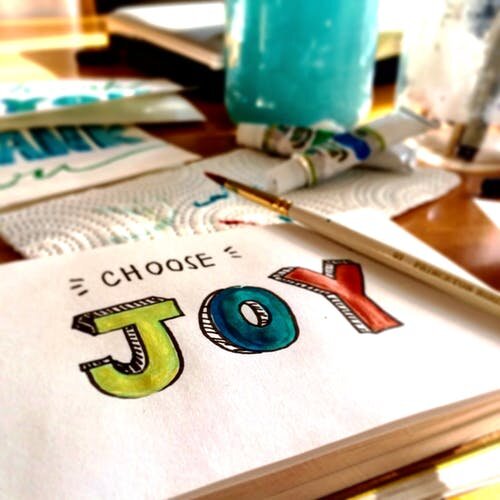
Joy: “a feeling of great happiness; success or satisfaction.”
Joy and its synonyms- delight, bliss, felicity are some of my favorite words. What is not part of the definitions is the state in which joy may occur- joy may be present regardless of circumstances.
Contrary to many of the definitions, I also think that joy is not happiness although the feelings might seem the same, just like a thermostat is not a thermometer although both determine temperature.
A thermometer responds to the temperature around it. If the temperature is warm, the mercury rises. If it is cold, it plummets. Much like happiness. We are happy when our surroundings are pleasant, situations are hopeful, or our health is relatively good. We can become unhappy or miserable if we do not feel well, if we feel hopeless or if times are tough. Just like the outside temperature determines the response of the mercury, the outside conditions of life can determine if we are happy.
On the other hand, a thermostat controls the temperature of the surroundings. It determines the degree of heat or air conditioning that is needed to flow in order to achieve a preset room temperature. It is not controlled by its external surroundings but is internally controlling the temperature. Much like joy.
Joy is a preset state of mind. We sometimes have to choose joy first, before we “feel” it. Joy happens when you are least aware of it or least wanting it to occur. I have heard of many people say that even in the middle of a difficult crisis or struggle there is a peace and joy in their heart.
I know that there have been times when if I just went by the chaotic external circumstances of life I could be justifiably miserable but because I had chosen to concentrate on joy, I felt surprisingly at peace. I wouldn’t say that I am an ebullient (cheerful, full of energy) individual all the time, but my nature leans more towards that than not. Partly it could be my personality, upbringing, etc. But I think a good part of it is because God is in control of my life and that gives me a peace that passes all understanding. I wouldn’t be so bold as to say that I feel that way all the time. Everyday it is the daily sanctification of choosing God in my life, of choosing God’s will over my own, of trusting God with all the details of my life, of letting God control my “thermostat” and of choosing joy.
“Jesus did not promise to change the circumstances around us. He promised great peace and pure joy to those who would learn to believe that God actually controls all things.” ~ Corrie ten Boom. (Survivor of the Holocaust, went on to become one of the great saints in this world, an inspirational speaker and author.)
“Joy is the settled assurance that God is in control of all the details of my life, the quiet confidence that ultimately everything is going to be alright, and the determined choice to praise God in every situation.” ~Rick Warren. (Pastor and author who is not a stranger to struggles and tragedy.)
What about you? Are you a thermometer or thermostat? Happy? Or joy-filled? In the middle of all this individual, national and global uncertainty, who do you think is in control?
Because of copyright, I wouldn’t post a picture of Henri Matisse’s Joy of Life (Le Bonheur de Vivre). Click here to see an interesting video about it.
Click here for more information about Corrie ten Boom.
Click here for more information about Rick Warren and to read his daily devotional.
A Year of Delights

One place that brings me joy- the beach. Winter at sunset. I love the colors of the sky.
Last week I heard a snippet of an interview on the radio. It piqued my interest. The writer Ross Gay has written a book called, The Book of Delights. On his 42nd birthday, Mr. Gay gave himself the challenge to write about something delightful every day for a year. The book contains a collection of some of those delights: nicknames, fireflies, air quotes, garden weeds. As he shared with the interviewer, it wasn’t as difficult as he thought in finding delights around him. At first he thought he would have to really work hard on finding delights, but after a while he realized that he was more attentive to all the delights happening around him.
I love the premise- intentionally looking for things that are delightful in our lives. As with so many things, it doesn’t take much money or effort to be hyper observant, but it does take time. One has to slow down enough to see what is around. As Mr. Gay noted, once he began finding delight in his day, it affected the rest of his day. He also noted that delight is interdependent with others because what he found to be delightful were often personal interactions.
I thought that I would give myself a challenge- to find and write about one thing each day that brings me joy, tickles my funny bone, puts a smile on my face or just is downright delightful. The item can be big or small. It can be an activity, a person, a place, situation or idea. I would like to write @ 300 words, but It doesn’t have to be a specific number of words. If pressed for time it can just be a note, phrase or even a list.
What about you? Are you up for a challenge? Do you think you could find something delightful about which to write each day for a year? If you truly feel you cannot, could you give it a try for 30 days? Or plan on writing just 3 or 5 days/week. If writing is not your thing, how about pictures? What if you took a picture each day of something about which you found amusing or interesting? You could post it each day on whatever social media account you use.
What do you have to lose? You might gain some insight about yourself.
Click here to read the interview. Another person who is uber observant of her life is the actress Sarah Jessica Parker. Her Instagram has various pictures of her observations living and working in NYC. (Click here for her postings.)
A Century of Joy

Playing the violin for ninety-one years....
The other week our son sent this link to us. Jay was part of the crew that shot this video. Click here to watch. It is a video vignette about the "oldest active conductor in the world". Hopefully it will put a smile on your face. It did mine.
What I found inspiring was that this gentleman was doing what he loved. And he did it all his life. What a joy and blessing for him to be exposed to music and to be able to express it and share with others the beauty and mystery of sound. As he says, he was surrounded by music even when "I was in my mommy's belly".
Watching him makes me want to return to music in my life: to have notes and melodies swirl around my head and in my home; to be enveloped and overwhelmed by the emotion of the sound; to be part of the creation of the music.
Watching him makes me envious of his commitment and passion for one thing. I am so in awe of those individuals who have found their calling relatively early in life and have had such dedication to it throughout their lifespan. I think of Jane Goodall, Madeleine L'Engle, Dame Judi Dench, Julia Child (though she was an older adult when she took cooking lessons in France), Paul McCartney, A. Philip Randolph.
While we were on vacation these last couple of weeks, we read a lot of books. One that my husband read and I have started is The Road to Character, by David Brooks. So far I have found it very interesting. "Looking to some of the world's greatest thinkers and inspiring leaders, Brooks explores how, through internal struggle and a sense of their own limitations, they have built a strong inner character."
Brooks talks about these individuals and their call to vocation. He notes that people who take part in their called vocational activities have joy. I think that is what is so appealing in the video of the centenarian conductor. There is joy in Mr. Ed Simons love of conducting and love of music. That is probably what kept him going for so long.
David Brooks uses an illustration from Dorothy L. Sayers (a mystery writer but also a theologian). Ms. Sayers makes a distinction between serving the community and serving the work. “There is, in fact, a paradox about working to serve the community, and it is this: that to aim directly at serving the community is to falsify the work; the only way to serve the community is to forget the community and serve the work.”
As Mr. Brooks adds, "But if you serve the work- if you perform each task to its utmost perfection- then you will experience the deep satisfaction of craftsmanship and you will end up serving the community more richly than you could have consciously planned. And one sees this in people with a vocation- a certain rapt expression, a hungry desire to perform a dance or run an organization to its utmost perfection. They feel the joy of having their values in deep harmony with their behavior. They experience a wonderful certainty of action that banishes weariness from even the hardest days."
What about you? Are you banishing weariness even in the hardest days? If not, what would bring joy for you? Do you need to experience more _____(fill in the blank- music, art, literature, relationship building) in your life? What can you do differently to achieve that?
Do you have a single-mindedness to your work- either career or vocation? Or, like me do you have many interests and passions?
I think the people who have that single-mindedness of purpose are placed in our lives to inspire us. Their interest and excitement in what they do can be infectious. We may not have a life-long interest but we can have a seasonal one. We can strive to perform whatever the task with the utmost perfection so that we too can experience joy with whatever we do. Who knows? We might end up living life to its fullest like Mr. Simons.
Slices of Joy

Recently I finished painting our living and dining rooms. Before I repositioned the furniture I cleaned and waxed our wood floors. As I put the wax on the floor and then wiped it off I was reminded of the Karate Kid movie and that classic scene where the karate master has his student wax his car. The student is furious thinking he is not getting any lessons but rather is working for free. It is only later does he realize the benefits of the wax on, wax off arm movements in his fluid ability to block attacks and his balance skills.
While I haven't learned karate, I have learned that in waxing whether it is for the car or on the floor, it doesn't take that much to provide protection and nourishment. Just a thin layer will do. In some ways it seems counterintuitive with our more is better mentality. We think if a little will protect it, then a lot will be fantastic. The thing is, if you slab on a thick layer, it takes more work to wipe it off and it doesn't protect any better. The first layer against the wood is what gets absorbed. Piling more layers on top will just be wasted when you wipe it off.
Just a thin layer is all it takes to restore and replenish the patina on our car or floor.
I started thinking about other thin barriers or layers that impact our lives: The fragile veil of "normalcy" that separates us from sanity to insanity or the one little drink or pill that begins a tailspin of destruction.
If we think our lives are insignificant because we do not have "big, fancy, over the top" kind of lives, we need to remember that some of the thinnest things make all the difference. Kevlar is a thin layer of material but it can mean the difference of life or death. So too a condom.
We can reframe our thinking into appreciating the thin, small, seemingly insignificant things in life. According to Chade-Meng Tan in his book, Joy on Demand we can successfully change our mindset by practicing "thin slices of joy".
Usually these events are unremarkable: a bite of food, the sensation of stepping from a hot room to an air-conditioned room, the moment of connection in receiving a text from an old friend. Although they last two or three seconds, the moments add up, and the more you notice joy, the more you will experience joy, Tan argues. “Thin slices of joy occur in life everywhere… and once you start noticing it, something happens, you find it’s always there. Joy becomes something you can count on.” That’s because you’re familiarizing the mind with joy, he explains.
Turns out that our brain's basal ganglion is the area where we control habits. The more skilled we become at a particular habit, the easier it becomes to repeat it. We need to have a trigger, routine and a reward to embed this habit into our brain so that we do not have to spend much cognitive ability in doing it. In the case for slices of joy our trigger is the pleasurable moment, the routine is the observation of it and the reward is the continual building of joy.
With practicing slices of joy we are training our brains to notice small things. The more we notice, the more our lives and brains are filled with positive emotions. We are prepared for whatever the day brings because we have practiced the art of noticing slices of joy.
What about you? Have you ever noticed small slices of joy? What are some things that put a smile on your face? Things that I have noticed just this morning: the red streaks of the rising sun filtered through our neighbor's statuesque pine tree, a robin hopping along our garden edge looking for worms, the first sip of espresso, the flutter of clothing drying on the line, the dog with her face turned into the wind catching a whiff of some transient smell, the intricate details of a garden flower. If you can, try and find three slices of joy today. Each day build on that experience. Over time it can become your way of viewing the world.
And that, is significant.
Eclipse(d)

A total solar eclipse is seen on Monday, August 21, 2017 above Madras, Oregon. A total solar eclipse swept across a narrow portion of the contiguous United States from Lincoln Beach, Oregon to Charleston, South Carolina. A partial solar eclipse was visible across the entire North American continent along with parts of South America, Africa, and Europe.
Photo Credit: NASA/Aubrey Gemignani
Last Updated: Aug. 21, 2017
Editor: Gary Daines: Website: https://www.nasa.gov/image-feature/2017-total-solar-eclipse
Yesterday was the day of a total solar eclipse, stretching from the West Coast in Oregon diagonally across America like a solar sash to South Carolina. There has been much discussion about it, much excitement and to some extent much hype.
Unfortunately, my location in the Mid-Atlantic didn't afford me a good location to see the eclipse. We had a lot of cloud cover. Although during the appointed time when we should've experienced about 80% of the eclipse, the sky darkened and there was an odd glow about it.
I have been thinking about the eclipse and word's definition. Astronomy aside, eclipse also means "a reduction or loss of splendor, status, reputation," etc. (noun) or "deprive (someone or something) of significance, power, or prominence" (verb). It also means "to cause to undergo eclipse".
Got me thinking about the things that seem to eclipse me: fear, anxiety, bitterness, disappointment. These are the things that block me from experiencing life and all its glory, joy and beauty and these are the things that I allow to deprive me from being the person I was created to be.
Do you ever feel eclipsed? Have you ever felt a loss of significance, power or prominence? Do you ever feel that you have been deprived?
With all the safety warnings of not looking at the sun, I was reminded of the Greek myth of Icarus who flew too close to the sun with his wax and feather flying contraption. Icarus was instructed by his father to stay on the flight path: to fly not too close to the sea and not too close to the sun. Icarus in his giddiness to fly, did not heed his father's warnings and had a fatal accident when he ascended too high and the heat of the sun melted his wax causing him to fatally fall. The warning of the myth is to avoid complacency and hubris.
What is surprising to me is that in the eclipse video feeds of the places that received totality, that even though it was getting darker, when there was only just a sliver of sunlight showing, there was still light to see. Even with impeding darkness, the sun's rays are powerful enough to shed some light in even the smallest of areas.
It gives me hope that although I may be deprived of living the way I should be, there is still a chance that I can get it right. I can choose whether I will allow those feelings of fear, anxiety, bitterness and disappointment to dominate my thinking and my life. I can choose not to allow hubris to dictate my thoughts: to choose to not think of myself more highly than I really am. For after all, when I am fearful or anxious it is because deep down I think I can control every outcome. When I a bitter or disappointed it is because I think I deserve better. It is all arrogance and pride on my part.
The eclipse reminds me that even though the sun might not be seen for a time, it is still there behind the moon and will shine again soon. I may have things blocking and depriving me a life free of worries but it doesn't always have to be. The sun reminds me of God's promises that He is in control and is always there. When I get anxious (and lately, I have been anxious about many uncontrollable things) I have to remind myself that God is still there, He is in control, He has taken care of things in the past and will do so in the future. I need to recognize my frailty and humanness and give over to His sovereignty.
What about you? Did you watch the eclipse yesterday? What was your reaction? Do you ever feel that things in life are "eclipsing" you? What are they? What do you do to "be safe" during those times?
The sun reminds me that when I put things in its proper place- humbling aligning myself with God- I am free to enjoy the world around me. I am free of fear, anxiety, bitterness and disappointment. The sun reminds me that I do not need to be eclipsed.
Pay Yourself. First.

Do you ever feel frustrated that the things that you need to do in order to stay sane, happy and balanced seem to get relegated to the bottom of the to-do list and ultimately not done?
Lately I have been experiencing that. Certainly we all have experienced temporary crises when we need to focus on matters at hand and we have to let things slide. But when it becomes a lifestyle and the mode of daily operations, there is a problem.
I was reminded by a dear friend to remember to take time to do what I need to do to bring me joy.
First.
It reminded me of the financial advice that one should "pay oneself first, before you pay any other expenses." The idea is that one should put away an amount in savings first and then use the remainder for expenses. If you try financial planning the other way around, saving whatever is left over after expenses, then you will never have amounted much savings. We may be well-intentioned to save but unless we do it first it won't happen.
I think we need to practice that same discipline with our time. First we need to do what is important to us before the time gets snatched away with other matters. Due to various circumstances, it may not be the length of time we want or the mode and mean of our plans. Nonetheless we have to faithfully keep plugging away at what is important to us. Preserve that time, action or deed.
For me the two things that I feel I must do is read my Bible/pray and write. When I don't, I get cranky, depressed and overwhelmed. I get angry with myself for not guarding my time and disappointed over the time "lost" to other endeavors.
When I am able to do those two items daily, my days seem to flow smoothly. I am reasonable, understanding and I am sure as my family can attest, much more pleasant to be around. Some days, I know that I won't be able to spend too much on either activity but a little time goes a long way. Just doing a couple of minutes makes a hectic day seem less crazy.
What about you? Have you ever paid yourself first? In time or finances? What did/does that look like for you? If you are in a place when you cannot pay yourself? Why not? What can be loosened up or rearranged so that you can do so?
The airplane oxygen mask analogy has become a cliche to explain the point of first caring for oneself. (Oxygen Mask Rule: "Should the cabin lose pressure, oxygen masks will drop from the overhead area. Please place the mask over your own mouth and nose before assisting others.” Reason being- there will be no time to help anyone without your mask. Falling from over 30,000-40,000 feet altitude would cause you to pass out within 15-20 seconds if you do not have your oxygen mask on. )
Yet in essence, paying yourself first in time or money is the practical way one can care for oneself and not experience the helplessness of no savings or no time. If we cannot save enough money to bring about financial peace or cannot do the things that bring us joy then we are existing not living.
If I want to live joyfully then I have to pay myself. First.
One Path or Thirty?

The Real Simple article (posted last Friday, December 23) about finishing had an interesting comment that has stuck with me.
One of the reasons, or so suggested by the life coach, the author never finished her projects was that her father modeled a talented yet multiple scattered existence: he had so many work and volunteer projects that he was all over the place. The author's life coach wondered what it would've been like if her dad had focused on just one of his projects and interests. "But what if he'd devoted himself to only the mobile van [providing health care for the homeless], say and instead of just having one van, he'd developed a whole fleet of them to serve the entire country? Wouldn't he have accomplished more? Did you ever wonder if he himself wished he's walked one path instead of 30?"
Wow. Made me think of my own paths. My life's journey is definitely like the "The Ramble" at Central Park. Every time we visit and explore the park, we end up getting "lost" in the ramble located on the west side. Obviously we get out of the park but it always takes longer than expected. So many twists and turns back on itself. I certainly enjoy the views, the birding and the flora and fauna but once I get stuck on one of its trails, I secretly kick myself for having started down that path.
The question of accomplishing more or being more effective has given me pause. I am wanting to challenge myself to see if 1) I can finish the projects that I have started. 2) Be intentional with those projects. Only begin those that keep me on one path. The plan evaluation would be to see if I can accomplish more and be more effective. And, if that is what I want to do. I find that I like variety but I am wondering at what cost?
The path for me this coming year is writing. I am hesitant to reveal my overall life's goals for fear it won't happen. (In the past, I have noticed that when I say I will do something, it generally never happens. When I think about accomplishing something, I am more likely to do it and then surprise others and myself with that accomplishment.)
What about you? Have you ever thought of your life as a series of paths? Do you wander here and there, like Billy from The Family Circus comic strips? Or do you stay on a specific path, never veering left or right? Do you feel that you are effective in your life? Are the distractions of the different paths causing you to not finish what you start? Are the many paths providing joy or frustration? Perhaps 2017 will be the year to challenge yourself to finding a path that provides joy.
How many paths do you traverse? One or thirty? How many paths will you traverse in 2017?
The Season of Joy
I love the word joy. It just has such a wonderful image. What I love about it is that it represents peace that transcends circumstance. It is being able to say, "I am okay even in the midst of trouble. I know that my present circumstance will not be forever and even if it is, there are things that I can learn and change and do about it." It is viewing our situations and problems as opportunities.
I have heard various people talk about happiness and joy lately. Totally unrelated conversations which makes me think that this is a topic in which I need assistance. In each of those discussions the conclusion has been that joy and happiness are different. Happiness is dependent upon surroundings. The focus becomes on achieving and getting things and that those things will provide happiness. Isn't that the crux of the materialistic holidays? Or that happiness has to be a reaction to what has occurred. If the surroundings aren't quite good enough then one is unhappy. Life is miserable until something else happens that may provide a positive reaction. Then we feel "happy".
I think of joy as the serene, gracious wiser sibling. The one who seems to be unruffled and steady during difficulties. The one who remains calm, speaks in a pleasant tone and doesn't fly off the handle. The one who is unfazed if things don't go his way. The one who is content whether he has much or he has little. The one who is confident in all circumstances.
I think of the past to the many times when I didn't exemplify poise in a situation. Times when I certainly wasn't full of joy. Times when I let my unhappiness because "things didn't workout the way I wanted" spill out in my speech. Times when I railed against the "injustice" or aka "not getting the things I wanted" of my life. How ridiculous. How unattractive. How childish.
Joy comes from contentment. Joy comes from hope. Joy comes from God.
The world is is need of joy this season. I am in need of joy this season. What about you? Can you replace happiness with joy this season? This coming year?
Tidying Up
l love the word tidying. It sounds so cute, so benign, so Goldilocks-ish. It is a word that explains what you want to accomplish and how you go about it. It evokes an activity that is not too strenuous nor too ineffective. It is just right.
There was a very interesting article in The New York Times Magazine about the author, Marie Kondo and her book, "The Life-Changing Magic of Tidying Up". Seems that Ms. Kondo has quite a following of people who swear by her methods. Her whole premise is that the items in your household and eventually in one's life should bring you joy.
Like so many ideas that abound, this is nothing new. As I have posted before, the 18th Century English textile designer William Morris felt that one should have only beautiful and useful items in one's home. Basically, only have things which bring you joy. It makes sense that in order to appreciate those beautiful and useful things you have to be able to see and find them. In essence, have a neat and tidy place. But as with all things that seem simple, it is very hard to achieve.
There are a myriad of books on the market about getting organized. There are a ton of organizational tools and systems. They all are a means to the end- getting rid of items in your life that take up valuable space, time and resources. What isn't necessarily mentioned in any of these processes is that in order to get rid of anything you have to sacrifice it. You have to make a choice to remove the said item from your midst. I think there is the rub. We cling to our things. We want it all. Even if something is not useful or beneficial we still want it around, "just in case."
It is not only physical items. We hold on to emotional baggage and mental images that only clutter our lives. For nothing less than to show that we have/had something-an emotional draining relationship, a self-pity party or a poorly acted upon decision. It is almost as if we have to tightly grasp these situations to prove that we exist. Even if it was/is harmful to our psyche, it was/is something nonetheless.
I know for me, it is until things get to the point that I cannot stand the clutter that I will then be ruthless. It is then that I say, "this needs to go". Of course, everyone in our household has a different tolerance point of when things need to go and there too can be the rub.
That's why I like the word tidy. It seems doable. I can work on the emotional, relational, and physical stuff that is cluttering my life. I don't have to do it all in one day. Tidying seems to be a word that is done in smaller increments. I think, "I can talk to that person and straighten out one of our issues." "I can let go and remove the worry scenario replaying in my mind." "I can tidy my office today and start on the corner of my basement tomorrow."
What about you? Do you have a tidy life? What do you do when things get messy? Does the clutter bother you? At what point do you say, "this needs to go"? Do you even notice clutter in your life? What is your method for tidying up?
What is Your Chief Aim?
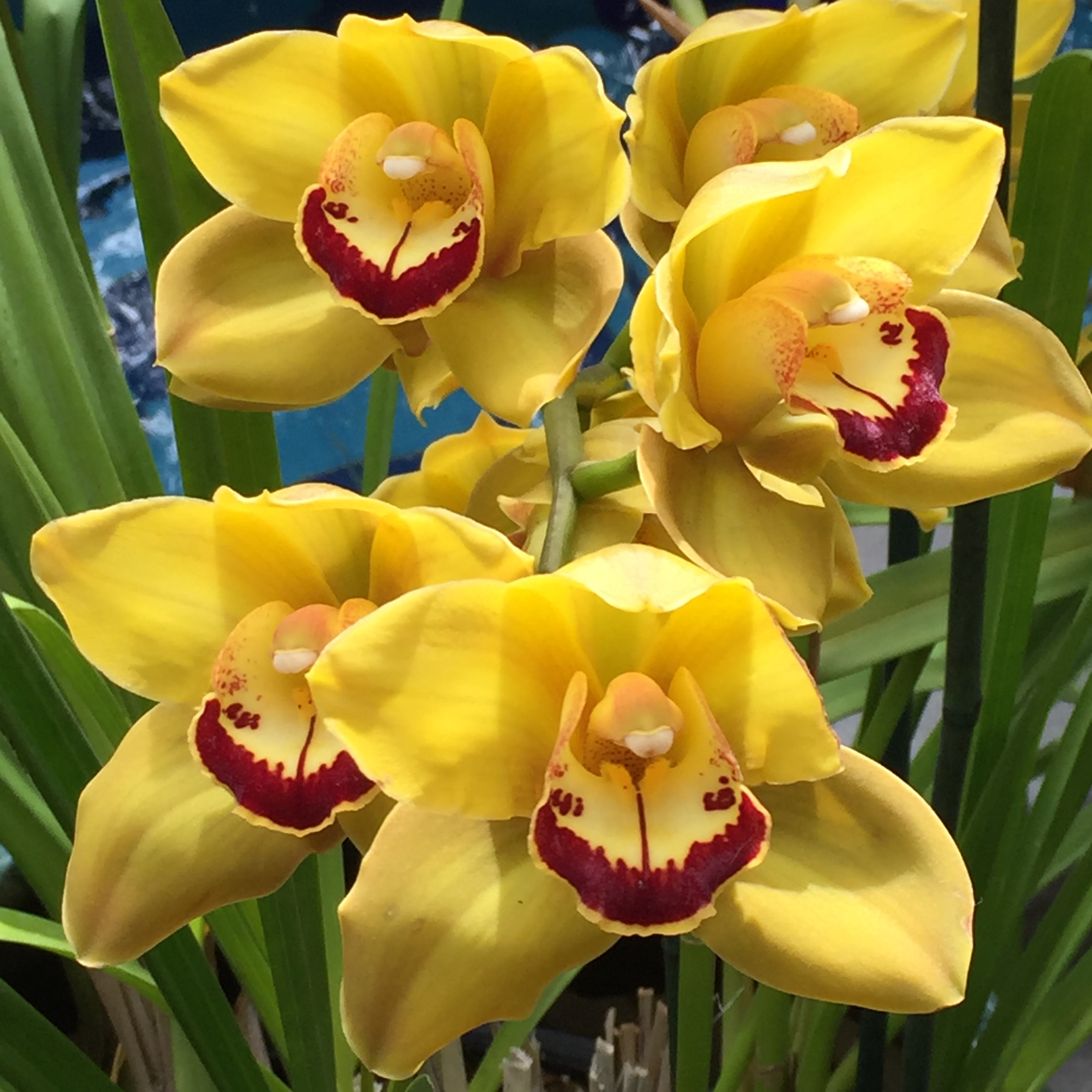
Taken at the US Botanical Gardens in Washington DC. A place where one can see, smell and experience the beauty and joy of our natural world.
If you were pursuing joy in your life, what would that look like? What activities, things, goals would you pursue? Would that pursuit brings you joy? What brings meaning into your life? Are you actively seeking it out?
When I think of joy I think of the Westminster Catechism: "What is the chief aim of man? To know God and to enjoy Him forever."
Granted, the language is a little archaic but I think the lesson is spot on. If only we would truly learn it: It is through knowing God that our lives fall into place. We recognize how He wants us to live and how He wants us to enjoy our lives. Unfortunately there are many who feel that God is a kill joy waiting for us to mess up so that He can do all sorts of bad things to us.
I do not think so. Jesus claimed that He came to bring life and to bring it abundantly. In the Old Testament, the writer of Ecclesiastes reminds us that "however many years a man may live, let him enjoy them all". God wants us to enjoy our lives.
I think God takes pleasure and joy out of His creation. If not, why would He create the platypus, the giraffe or a dog? All of these can bring smiles to our faces. If those things like the birds of the air and the flowers in the field bring delight to Him, how much more does He take pleasure in us, the creature He created in His own image?
And if He created all that fun and delight doesn't He want us to experience the same?
There is joy in that. Joy in the knowledge of God. Joy in the knowledge that He is in control regardless of our current situation. Joy in letting Him guide our lives. Joy in serving Him with our talents, thoughts, treasures and time. Joy in finding our purpose through Him. Joy in the knowledge that God brings meaning to our lives and with it, so much delight.
The Pursuit of Joy

Here is my living example of pursuing joy: mindful intensity while enjoying the moment before experiencing great delight in chasing the resident squirrels.
There are lots of articles and discussions about the pursuit of happiness. There are even movies about it. But I am always struck with the two words: happiness and joy. I question, is there a difference between the two? If so, why? What is the more meaningful word? How does one pursue either happiness or joy? More importantly, is it worth pursuing?
A dictionary definition of happiness is “a state of well-being, a pleasurable or satisfying experience.” The definition of the word “rejoice,” from which our word “joy” comes, is “to feel great delight, to welcome or to be glad.”
Perhaps since I am coming from a Christian point of view, I see joy as a more theological and eternal state of mind whereas I see happiness as a secular and temporal one. In this life so much is advertised that an object- a new car, clothing, drink, home- will be the thing that make us happy and provide the state of well-being. The question becomes when the external item, aka the object, is no longer new or goes away. What happens to happiness?
I see joy as something that is more permanent. One can be internally joyful even in the midst of external chaos. Joy appears to be at peace with the external surroundings. If the surroundings change, joy remains the same.
According to the dictionary definitions, it doesn't appear to be that much of a difference between the two words. But I think so. Happiness might be a state of being, but it seems almost passive. It appears to be reactionary. I am happy when I experience something pleasurable or satisfactory. Kind of like the thermometer. The thermometer registers the temperature around it. It doesn't have any input in changing the degrees, just reacts to the air molecules.
Joy on the other hand is active, a conscious state of being, an action of "to welcome or to be glad". One has to be proactive to practice joy. It reminds me of the thermostat. A thermostat is set for the temperature one wants. The thermostat controls the environment (turning the heat or AC on and off depending upon the temperature). In a sense it is pro-active in achieving the results.
I know that my example of our Jack Russell is a little far fetched. (pardon the pun) However, I do think we can learn a lot from animals and their response to their environment. Sure, all animals react to what is going on around them: put food down in front of them and they will eat, call them to come for a treat or a scratch behind the ears and they will come. Yet, our pets seem to take pleasure, almost rejoicing in whatever situation is put before them. I don't think there is too much thought on what has happened in the past (certainly, there is no consequential learning when the dog in question eats something disagreeable- like a bowl of rising dough- and attempts to do it again forgetting the past groaning and discomfort.) Nor is there too much thought to the future.
Our dogs live in the present. They enjoy each moment as it arises.
So too can we consciously choose to live in the moment and to proactively seek joy. I am choosing this day to enjoy each moment. Whether that is being stuck in traffic, attending at a difficult aka boring meeting, having to do a disagreeable work task or spending time with one of my favorite Jack Russells. I am determined to learn how to pursue and practice joy in my life: to be present and mindful of each moment and to proactively choose to be glad regardless of the circumstances.
What about you?

And here is my living example of practicing being present in the moment. He can lie like that for a good five minutes without moving his legs. We call him doing his "cat" atonic pose.
Personal Epiphany

Sometimes I feel like am like the dormant buds watching the others bloom.
Lately I have been in one of those funks- feeling that all was not well with the world. In speaking to others I know that so many can relate.
Like all the past blog posts on this subject, I tried the usual things to snap out of it- exercise, getting enough sleep, gratitude journal, getting outside in the sun and air, etc. But I couldn't shake the feeling.
This morning as I was brushing my teeth I had the "Aha!" moment. I realized that I have been playing the comparison game and I was losing. You know how it is played. You start to think of people you know or the people you see online or in the media. If you are remotely in their social/business circles they all seem more successful, well-liked, better connections, well-known, better shape, more helpful, well balanced, etc. You name the criteria and those people are always higher on the scale than you. As you get deeper into the misconceptions of the comparison game, you decide that you can never be a player on their level, so you end up living vicarious through what they do or say. You spend more time following them than you do actually living. You become paralyzed to truly live life because it seems that you will never be fast enough, smart enough, pretty enough, wealthy enough, influential enough. Not healthy.
The comparison game can even be played by yourself. You can be so concerned with yesterday or the future, comparing what did happen or thinking what will happen that the present gets overlooked. You are never truly engaged in the "here and now".
Either way it is a vortex in which we get pulled.
I have had enough. I am tired of being pulled down.
My epiphany this morning was that I need to learn contentment. No matter what the circumstances I need to be grateful for my portion and not worry about anyone else's. "Concern yourself with yourself"- the universal words of parents or teachers. How many times have I said that to one of the boys when he would complain that his brother was getting some type of treat over what he was receiving? How often did I hear that in school when one of my classmates would bring to the whole class's attention that Bobby was allowed to go to leave the room to get something from his locker and the speaker did not?
I think I finally got the "aha"- to be content with my lot in life, with my day as it unfolds and with what I feel called to do. It is when I live like that I am filled with joy. That joy spills out in all that I do and say. When I hear what friends and colleagues are doing I can be gracious and happy for them and not enter the comparison realm. I am content with what I am doing and therefore it doesn't matter what others are doing.
Besides being content I need to be vigilant to not even begin the comparison game. I need to shut down those thoughts for they are not productive. It causes me to become stagnant.
For example, the comparison game has semi-paralyzed me with my writing. I read other blogs, follow artists on Instagram, check out websites of authors and before I know it, I haven't done anything that I feel called to do. It is good to keep up with the business but not at the expense of my own work. All it has accomplished is making me feel inadequate, inept and unprepared.
Comparisons have become such a problem for me that I do not even want to host a gathering of dear friends at my home. Our home is small with two barking greeters (once everyone arrives they do settle down quietly). I start worrying that the guests will not be comfortable in their seats or that they will be annoyed by our friendly four-footed greeters. I have lost my confidence in entertaining and in hosting things. All due to the fact of comparing myself to others in the group. "They all have bigger homes, they know just what food items to make, they are more hospitable." That type of thinking just saps the energy and wastes time. It also becomes a self-fulling prophecy. If I start thinking I am not hospitable then I will become inhospitable.
I am always drawn to the people who have a joie de vive. They enjoy what they are doing at the moment that they are doing it. Many of them have a devil may care attitude. They are not worrying about what others think but are experiencing life as best they know how. They are enjoying the now: where they are, what they have, what they are doing, and with whom they are doing it. I think when we concern ourselves with ourselves and what we feel called to do we can concentrate on that exclusively. We do not have to worry about what others are doing or thinking.
For me it requires that I live in the present. It is saying "I will..." I will fill my mind with what is truthful, honorable, beautiful, pure, uplifting, praise worthy and encouraging. I will concentrate on my writing and in learning more about my craft. I will be as gracious as I can. I will invite people over. I will live in the now. I will be more joyful.
What about you? Have you ever played the comparison game? How did it turn out? Do you live in the here and now? How do you do it? Do you live your life with joy?